
Safety
General information, not medical advice
Your prescriber and the leaflet in your pack know your situation. This page does not.
- Follow your prescriber and the leaflet
- Don't start, stop, or change a dose on your own
- Doses and warnings differ by country and product
Imuran Tablet: Uses, Dosage, Side Effects, Precautions and Alternates
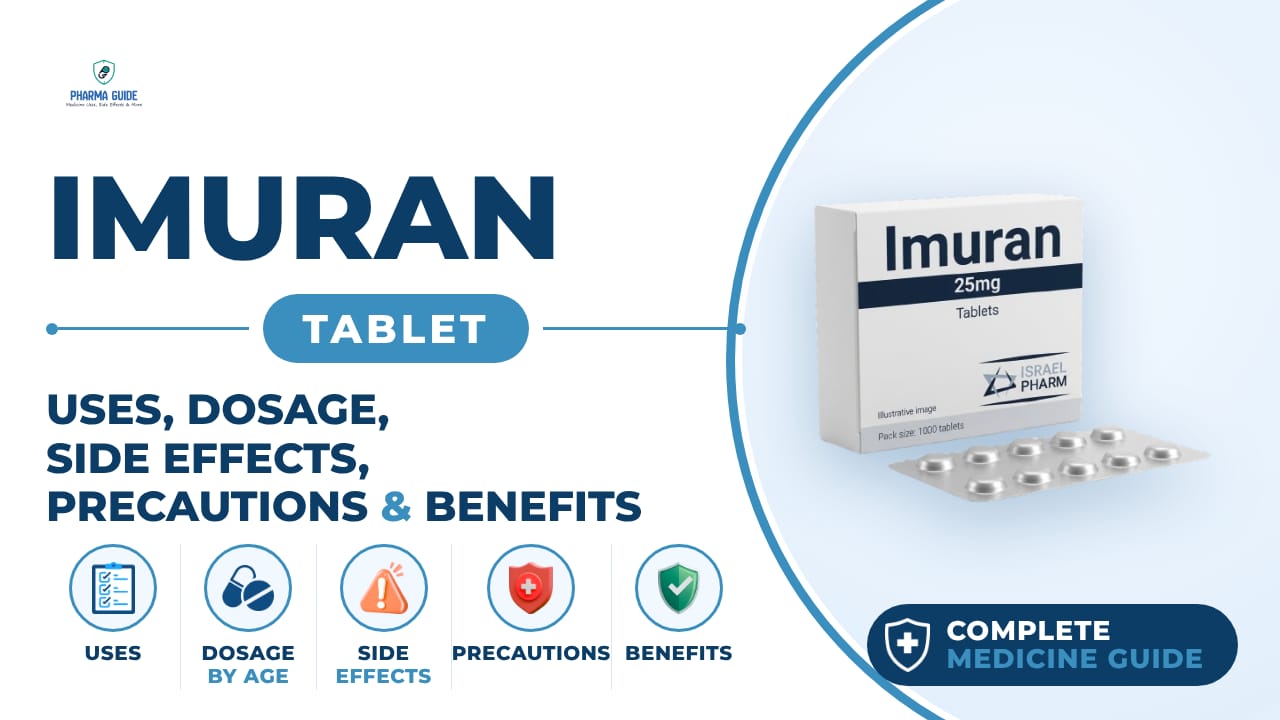
| Generic name | Azathioprine |
|---|---|
| Drug class | Immunosuppressant (antirheumatic / other immunosuppressant) |
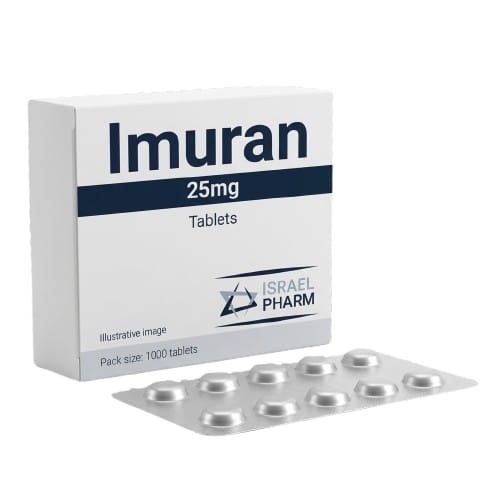
| Forms | Tablet (25 mg and 50 mg film-coated tablets), Injectable form (given by a health care provider) |
Quick overview
Imuran Tablet contains azathioprine, an immunosuppressant medicine that reduces the strength of the immune system. It is used to help the body accept a transplanted organ and to treat conditions where the immune system attacks the body's own tissues, such as rheumatoid arthritis and inflammatory bowel disease. It works by weakening the immune system and making immune cells less active, and it must be taken exactly as prescribed by a doctor.
What is Imuran Tablet
Imuran contains azathioprine, a medicine that reduces the strength of your immune system. It is used to help the body accept a transplanted organ or to treat conditions where the immune system attacks the body's own tissues.
Imuran Tablet uses
- Preventing rejection of a transplanted organ such as a kidney, liver or heart
- Severe rheumatoid arthritis
- Systemic lupus erythematosus
- Chronic active hepatitis
- Certain skin, muscle, and blood diseases
- Inflammatory bowel disease (Crohn's disease or ulcerative colitis)
- Dermatomyositis and polymyositis
- Pemphigus vulgaris
- Polyarteritis nodosa
- Autoimmune haemolytic anaemia
- Chronic refractory idiopathic thrombocytopenic purpura
Benefits of Imuran Tablet
- Helps prevent the body from rejecting a transplanted organ
- Reduces symptoms of autoimmune diseases where the immune system attacks the body
How Imuran Tablet works
Azathioprine works by weakening the immune system and making immune cells less active. This lowers the risk of the immune system attacking a new transplanted organ, and it also slows or stops the immune system from attacking the joints, which helps reduce symptoms of rheumatoid arthritis.
Imuran Tablet dosage
Take the tablets at least 1 hour before or 3 hours after food or milk. Swallow the tablets whole with a glass of water. Do not break, chew, or crush the tablets. Some people can take it with food or on an empty stomach, but should be consistent with the chosen method from day to day; taking after food may help with nausea. Do not stop taking it or change the dose without checking with your doctor first.
If you miss a dose, skip the missed dose if it is almost time for the next one, otherwise take it as soon as you remember; do not double up on doses. Patients with a transplant usually need to take it continuously to reduce the risk of organ rejection. It could take some weeks or months for the medicine to take full effect. Elderly patients and those with kidney or liver problems may need a reduced dose. Dosing for children is generally the same as for adults, though overweight children may need a higher dose.
| Age group | Dose |
|---|---|
| Under 18 years | Not recommended |
| 18–64 years | 50 mg, once/day |
| 65+ years | 50 mg, once/day |
Available forms and strengths
- Tablet (25 mg and 50 mg film-coated tablets)
- Injectable form (given by a health care provider)
Side effects of Imuran Tablet
Common
- Nausea and vomiting
- Diarrhoea
- Stomach pain
- Loss of appetite
- Hair loss
- Skin rash
- Low white blood cell level, which may cause infection
- Tiredness, dizziness or generally feeling unwell
- Sores in the mouth and on the lips
- Changes in sense of smell or taste
- Feeling of ants creeping in or under the skin
Serious
- Allergic-type reactions: rash, itching, hives, swelling of face/lips/tongue/throat, difficulty breathing, wheezing
- Any infection or fever
- Unexpected bruising or bleeding, black tarry stools, or blood in urine or stools
- New marks on skin or changes to existing marks
- Headache, stiff neck and extreme sensitivity to bright light
- Irregular heartbeat
- Muscle weakness, with or without skin rash
- Muscle pain or stiffness
- Severe joint pain
- Kidney problems
- Feeling faint, especially when standing up
- Severe abdominal pain
- Yellowing of the skin or eyes (jaundice)
- Serious skin reactions such as blistering or peeling (including Stevens-Johnson syndrome and toxic epidermal necrolysis)
- Reactivation of hepatitis B
- Signs of blood and bone marrow problems: weakness, paleness, easy bruising, unusual bleeding, infections
- Signs of a serious brain infection (PML): problems with speech, thought, vision, or muscle movement
- Signs of lymphoma: fever, swollen glands, body aches, night sweats, pale skin, weight loss
- Severe liver damage: yellowing of skin/eyes, bruising easily, abdominal discomfort, loss of appetite, fatigue, nausea or vomiting
- Signs of Posterior Reversible Encephalopathy Syndrome: severe headache, vision changes, seizures, confusion
Warnings and precautions
- Do not take this medicine if you are pregnant, may be pregnant, or are planning to become pregnant, as it may cause birth defects. Reliable contraception should be used by you or your partner while taking this medicine.
- This medicine is not recommended while breastfeeding, as small amounts may pass into breast milk and could cause serious side effects to the baby. Discuss the risks and benefits with your doctor.
- People with kidney problems may need a lower dose, as the medicine can build up in the body if the kidneys are not working properly.
- People with liver problems may need a lower dose. This medicine can affect the liver, and your doctor will monitor your liver function regularly.
- It isn't known exactly how alcohol interacts with this medicine, but heavy drinking can weaken your immune response, making infections harder to fight, and both alcohol and this medicine can increase the risk of liver damage. It's best to limit alcohol and check with your doctor.
- Be careful before driving or using machines or tools until you know how this medicine affects you.
- This medicine may increase the risk of certain cancers, including lymphoma and skin cancer. Protect yourself from the sun by wearing protective clothing and sunscreen.
- This medicine can cause a severe drop in white blood cells and platelets, raising the risk of infections and unusual bruising or bleeding.
- This medicine increases the risk of infections, some of which can be serious or life-threatening. Avoid contact with people who have chickenpox or shingles, as these infections can become severe.
- Do not have live vaccines (such as flu, measles, BCG, or chickenpox vaccines) while taking this medicine unless your doctor says it's safe, as they may cause an infection.
- This medicine may cause a serious brain infection that can lead to disability or death.
- A rare, serious type of lymphoma of the liver, spleen, and bone marrow has occurred, mainly in teenagers and young men with Crohn's disease or ulcerative colitis, and it can be fatal.
- Do not take this medicine if you have rheumatoid arthritis and were previously treated with certain cancer medicines (such as chlorambucil, melphalan, or cyclophosphamide), as this may raise cancer risk.
Storage
- Keep tablets in the pack until it is time to take them
- Store in a cool dry place, away from moisture, heat, or light, where the temperature stays below 30°C
- Do not store in the bathroom, near a sink, in the car, or on window sills
- Keep where young children cannot reach it
- If no longer needed or out of date, take it to a pharmacy for safe disposal
When to see a doctor
- Get emergency medical help right away if you have signs of a severe allergic reaction, such as difficulty breathing, wheezing, swelling of the face, lips, tongue or throat, or a skin rash.
- Call your doctor right away if you have problems with speech, thought, vision, or muscle movement, as these may be signs of a serious brain infection.
- Stop taking this medicine and see a doctor straight away if you notice signs of lymphoma, such as fever, swollen glands, body aches, night sweats, pale skin, easy bruising or bleeding, or unexplained weight loss.
- Call your doctor immediately if you have signs of infection, such as fever, chills, sore throat, or pain when urinating, or if you have severe nausea, vomiting, diarrhea, easy bruising, unusual bleeding, rapid heartbeat, or yellowing of the skin or eyes.
- If you think you have taken too many tablets, you need urgent medical attention even if you feel fine — contact your doctor, go to the nearest hospital emergency department, or call a poison control center.
- Talk to your doctor immediately if you experience intense itching without a rash during pregnancy, as this may indicate a liver condition that can harm your unborn child.
- Talk to your doctor immediately if you experience diarrhoea, a localized pigmented rash, or a decline in memory, reasoning or thinking skills, as these may suggest a vitamin B3 deficiency.
Alternatives
- Azahexal
- Azasan
- Azathioprine
Watch the video
FAQs
What is Imuran Tablet used for?
Imuran is used to help the body accept a transplanted organ and to treat conditions where the immune system attacks the body's own tissues, such as rheumatoid arthritis, lupus, inflammatory bowel disease, and several other autoimmune and skin conditions.
How does Imuran Tablet work?
Azathioprine works by weakening the immune system and making immune cells less active. This lowers the risk of the immune system attacking a transplanted organ and slows or stops it from attacking the joints, reducing symptoms of rheumatoid arthritis.
How should I take Imuran Tablet?
Take the tablets at least 1 hour before or 3 hours after food or milk, swallowing them whole with water without breaking, chewing, or crushing them. Some people can take it with food or on an empty stomach but should be consistent, and taking it after food may help with nausea. Do not stop or change the dose without checking with your doctor.
What are the common side effects of Imuran Tablet?
Common side effects include nausea and vomiting, diarrhoea, stomach pain, loss of appetite, hair loss, skin rash, low white blood cell levels, tiredness, dizziness, mouth sores, changes in taste or smell, and a feeling of ants creeping under the skin.
Is Imuran Tablet safe during pregnancy or breastfeeding?
Imuran should not be taken during pregnancy, as it may cause birth defects, and reliable contraception should be used. It is also not recommended while breastfeeding, as small amounts may pass into breast milk and could cause serious side effects to the baby.
General information, not medical advice
Your prescriber and the leaflet in your pack know your situation. This page does not.
- Follow your prescriber and the leaflet
- Don't start, stop, or change a dose on your own
- Doses and warnings differ by country and product
Sources
Video
Related medicines

Injectafer Injection: Uses, Dosage, Side Effects, Precautions and Alternates
Iron products
Injectafer (ferric carboxymaltose) treats iron deficiency anemia and heart failure-related iron deficiency via IV. Learn uses, dosage, side effects, and

Gliclazide Tablet: Uses, Dosage, Side Effects, Precautions and Alternates
Sulfonylurea (hypoglycemic/antidiabetic agent)
Gliclazide Tablet is a sulfonylurea for type 2 diabetes that boosts insulin release. Learn about dosage, side effects, warnings, and precautions.