
Safety
General information, not medical advice
Your prescriber and the leaflet in your pack know your situation. This page does not.
- Follow your prescriber and the leaflet
- Don't start, stop, or change a dose on your own
- Doses and warnings differ by country and product
Inclunox Injection: Uses, Dosage, Side Effects, Precautions and Alternates
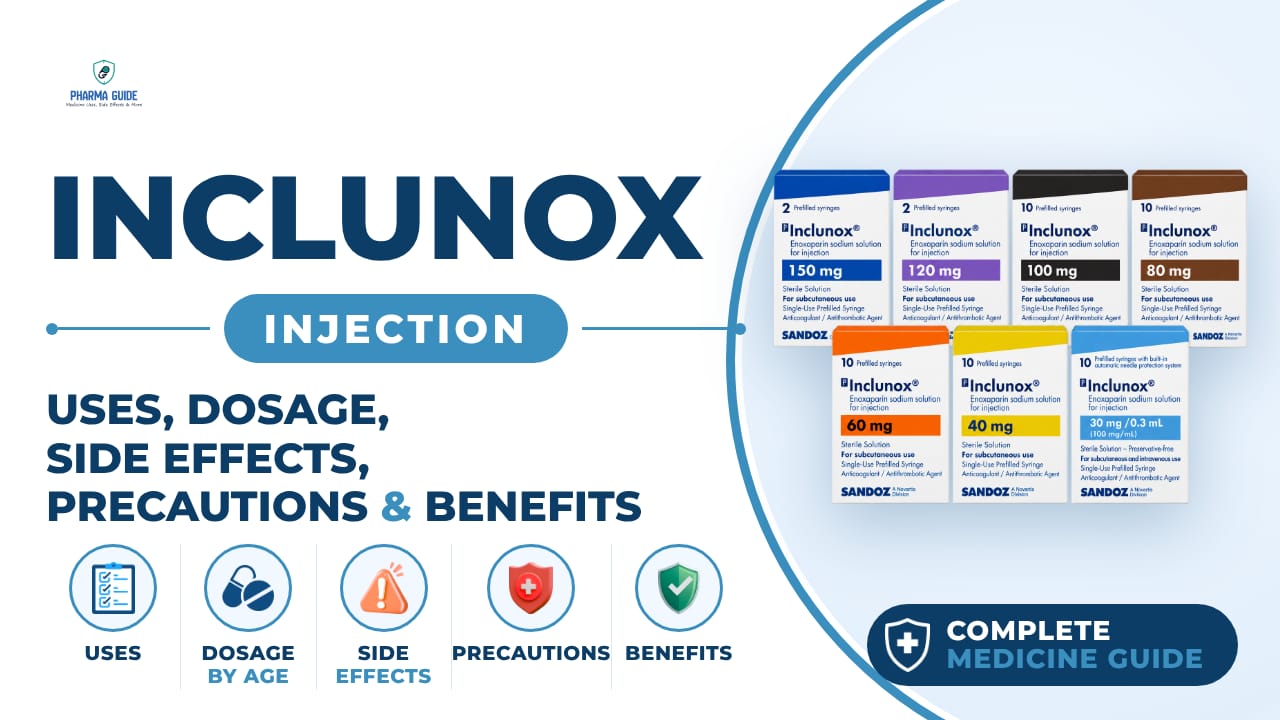
| Generic name | Enoxaparin sodium |
|---|---|
| Drug class | Anticoagulant/Antithrombotic Agent |
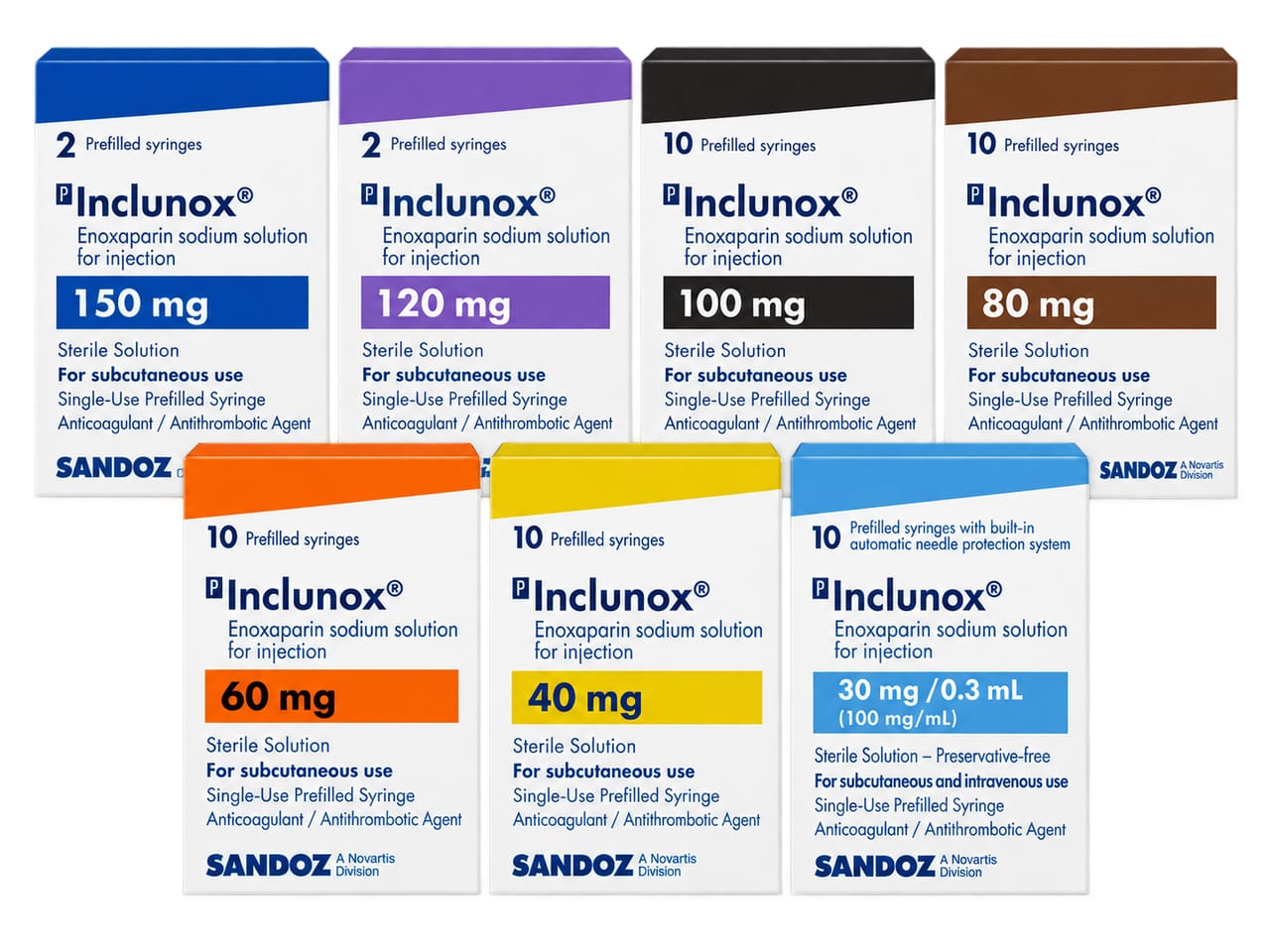
| Forms | Solution for injection in pre-filled syringes (30 mg/0.3 mL, 40 mg/0.4 mL, 60 mg/0.6 mL, 80 mg/0.8 mL, 100 mg/mL), Inclunox HP high-potency solution for injection in pre-filled syringes (120 mg/0.8 mL, 150 mg/mL) |
Quick overview
Inclunox Injection contains enoxaparin sodium, a low molecular weight heparin, and belongs to the anticoagulant/antithrombotic drug class. It is a biosimilar biologic drug to Lovenox, given by injection to help prevent and treat blood clots. It is used in various surgical, medical, and heart-related conditions, and requires careful administration and monitoring to reduce the risk of bleeding.
What is Inclunox Injection
Inclunox is a biosimilar biologic drug to Lovenox. It contains enoxaparin sodium, a low molecular weight heparin, and is given by injection to help prevent and treat blood clots.
Inclunox Injection uses
- Prevent deep vein thrombosis (blood clots) after hip or knee replacement surgery
- Prevent deep vein thrombosis after high-risk abdominal, gynecological, or urological surgery
- Prevent deep vein thrombosis after colorectal surgery
- Prevent deep vein thrombosis in medical patients at risk due to severely restricted mobility during acute illness (such as heart failure, respiratory failure, or severe chest infections)
- Prevent blood clot formation in the extracorporeal circuit during hemodialysis
- Treat deep vein thrombosis, with or without pulmonary embolism
- Treat unstable angina or non-Q-wave heart attack, together with aspirin
- Treat acute ST-segment elevation myocardial infarction (a type of heart attack), including patients managed medically or with a procedure to open blocked heart arteries
Benefits of Inclunox Injection
- Helps stop new blood clots from forming after certain surgeries or during illness
- Can treat existing blood clots in the deep veins or lungs
- Helps manage unstable heart conditions when used with aspirin
- Helps prevent clotting in the dialysis circuit during hemodialysis
How Inclunox Injection works
Inclunox is an anti-thrombotic medicine. It works by boosting the activity of a natural blood protein called antithrombin, which blocks certain clotting factors in the blood. This helps stop new clots from forming and can help treat existing clots.
Inclunox Injection dosage
Inclunox is given as an injection just under the skin (subcutaneous), or in some cases as an injection into a vein (intravenous). It must not be given as an injection into a muscle. For subcutaneous injections, inject into the right or left side of your stomach, at least 5 cm away from your belly button, switching sides each time. Do not press on the plunger before injecting to remove air bubbles, as this can waste medicine. Do not rub the injection site after injecting, to avoid bruising.
If a dose is missed by a few hours, take it as soon as you remember; if it is almost time for the next dose, skip the missed dose and continue the regular schedule; do not double doses.
After hip replacement surgery, treatment may continue with one injection daily at home for an additional period after the initial twice-daily injections in hospital. For heart attack treatment, an intravenous injection may be given first, followed by injections under the skin.
Use exactly as prescribed by your doctor or pharmacist.
Available forms and strengths
- Solution for injection in pre-filled syringes (30 mg/0.3 mL, 40 mg/0.4 mL, 60 mg/0.6 mL, 80 mg/0.8 mL, 100 mg/mL)
- Inclunox HP high-potency solution for injection in pre-filled syringes (120 mg/0.8 mL, 150 mg/mL)
Side effects of Inclunox Injection
Common
- Bleeding or bruising at the injection site
- Pain, irritation, or redness where the injection was given
- Mild local reactions such as hard lumps at the injection site
- Headache
- Hair loss (usually grows back after stopping treatment)
Serious
- Major bleeding, including bleeding inside the brain (hemorrhagic stroke) or into the abdomen
- Severe decrease in platelet count (thrombocytopenia), including heparin-induced thrombocytopenia
- Signs of bleeding such as nosebleeds, blood in urine, coughing or vomiting blood, bloody stools, or bleeding gums
- Spontaneous bruising or purplish/reddish discoloration around the injection site
- Signs of spinal or epidural bleeding such as tingling, numbness, muscle weakness in the lower body, or loss of bowel or bladder control, especially after spinal procedures
- Signs of liver problems such as loss of appetite, dark urine, pale stools, or yellowing of the skin or eyes
- Allergic reactions including skin rash, swelling of lips, face, throat, or tongue, breathing difficulty, or anaphylactic shock
- Bone thinning (osteoporosis) with long-term use beyond 3 months
- Chest pain, shortness of breath, rapid or unusual heartbeat, dizziness, confusion, or abdominal pain
Warnings and precautions
- Do not give this medicine by injection into a muscle, as this can cause serious bruising or bleeding.
- This medicine cannot be swapped unit-for-unit with other heparin products, since they differ in how they are made and how strong they are.
- There is a risk of serious or life-threatening bleeding, including bleeding in the brain or abdomen.
- People getting spinal or epidural anesthesia or spinal punctures while on this medicine are at risk of a spinal or epidural blood clot (hematoma), which can cause long-term or permanent paralysis.
- Do not use this medicine if you have a known allergy to it, its ingredients, or other heparins; active bleeding; major blood clotting disorders; active stomach or intestinal ulcers; certain eye conditions; severe uncontrolled high blood pressure; or a history of heparin-induced thrombocytopenia within the last 100 days.
- Long-term use of more than 3 months may increase the risk of bone thinning (osteoporosis).
- Tell your doctor right away if you are pregnant, since enoxaparin should generally not be used in pregnancy unless the benefits outweigh the risks. There have been reports of birth defects and fetal death in pregnant women using similar medicines, though a direct link has not been proven. Pregnant women taking Inclunox are at increased risk of bleeding and need careful monitoring.
- It is not known if enoxaparin passes into breast milk. Caution is advised when giving Inclunox to breastfeeding women.
- Inclunox should be used carefully in people with kidney problems, since the drug builds up more in the body when kidneys don't work well, raising the risk of bleeding. The dose may need to be lowered for people with severe kidney impairment.
- Inclunox should be used carefully in people with liver problems.
- Heavy, long-term alcohol use is one of the factors that can increase the risk of bleeding while on this type of medicine.
Storage
- Store at room temperature between 15 and 25°C
- Do not freeze
- Keep out of reach and sight of children
- Drop the used syringe into a sharps container; close the lid tightly and keep out of reach of children; dispose of a full container as instructed by your doctor or pharmacist
- Any unused medicine or waste material should be disposed of according to local requirements
When to see a doctor
- Get medical help right away if you notice bleeding or oozing from a surgical wound, nosebleeds, blood in urine, coughing or vomiting blood, or bloody stools.
- Seek help if you notice bleeding gums, unexplained bruising, or discoloration and pain around the injection site.
- Seek medical attention for pain or swelling in the leg, foot, or hip, dizziness, headache, rapid or unusual heartbeat, chest pain, shortness of breath, vomiting, confusion, or abdominal pain.
- If you have had a spinal puncture or spinal anesthetic and notice tingling, numbness, muscle weakness (especially in the lower body), or problems controlling bowel or bladder, contact your doctor immediately.
- If you think you have used too much Inclunox, contact your healthcare professional or hospital emergency department immediately, even if you have no symptoms.
- Watch for signs of an allergic reaction such as skin rash, swelling of the lips, face, throat, or tongue, or breathing difficulties, and seek help if these occur.
Alternatives
- Dalteparin
- Fondaparinux
- Unfractionated heparin
Watch the video
FAQs
What is Inclunox Injection used for
It is used to prevent deep vein thrombosis after hip, knee, abdominal, gynecological, urological, or colorectal surgery, to prevent clotting during hemodialysis, to treat deep vein thrombosis with or without pulmonary embolism, and to treat unstable angina, non-Q-wave heart attack, or ST-segment elevation myocardial infarction.
How is Inclunox Injection given
It is given as an injection just under the skin into the stomach area, at least 5 cm from the belly button, or in some cases into a vein. It must not be injected into a muscle, and the injection site should not be rubbed afterward.
What should I do if I miss a dose of Inclunox Injection
If a dose is missed by a few hours, take it as soon as you remember. If it is almost time for the next dose, skip the missed dose and continue the regular schedule without doubling doses.
What are the serious side effects of Inclunox Injection
Serious side effects include major bleeding such as hemorrhagic stroke or abdominal bleeding, severe decrease in platelet count, signs of spinal or epidural bleeding, liver problems, allergic reactions, and bone thinning with long-term use beyond 3 months.
What are the alternatives to Inclunox Injection
Alternatives mentioned include dalteparin, fondaparinux, and unfractionated heparin.
General information, not medical advice
Your prescriber and the leaflet in your pack know your situation. This page does not.
- Follow your prescriber and the leaflet
- Don't start, stop, or change a dose on your own
- Doses and warnings differ by country and product
Sources
Video
Related medicines
Redesca Injection: Uses, Dosage, Side Effects, Precautions and Alternates
Anticoagulant/Antithrombotic Agent
Redesca Injection (enoxaparin) prevents and treats blood clots like DVT, aids heart conditions, and stops clotting during hemodialysis. Learn dosage, side

Injectafer Injection: Uses, Dosage, Side Effects, Precautions and Alternates
Iron products
Injectafer (ferric carboxymaltose) treats iron deficiency anemia and heart failure-related iron deficiency via IV. Learn uses, dosage, side effects, and