
Safety
General information, not medical advice
Your prescriber and the leaflet in your pack know your situation. This page does not.
- Follow your prescriber and the leaflet
- Don't start, stop, or change a dose on your own
- Doses and warnings differ by country and product
Redesca Injection: Uses, Dosage, Side Effects, Precautions and Alternates
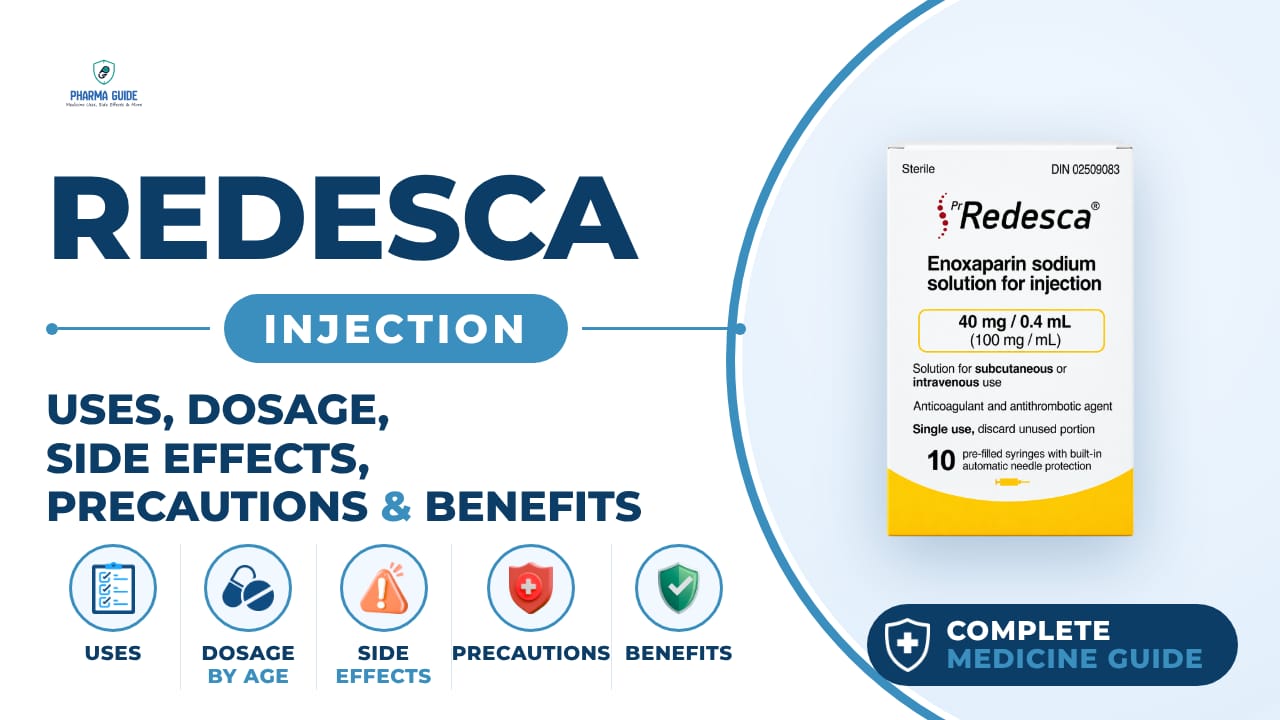
| Generic name | Enoxaparin sodium |
|---|---|
| Drug class | Anticoagulant/Antithrombotic Agent |
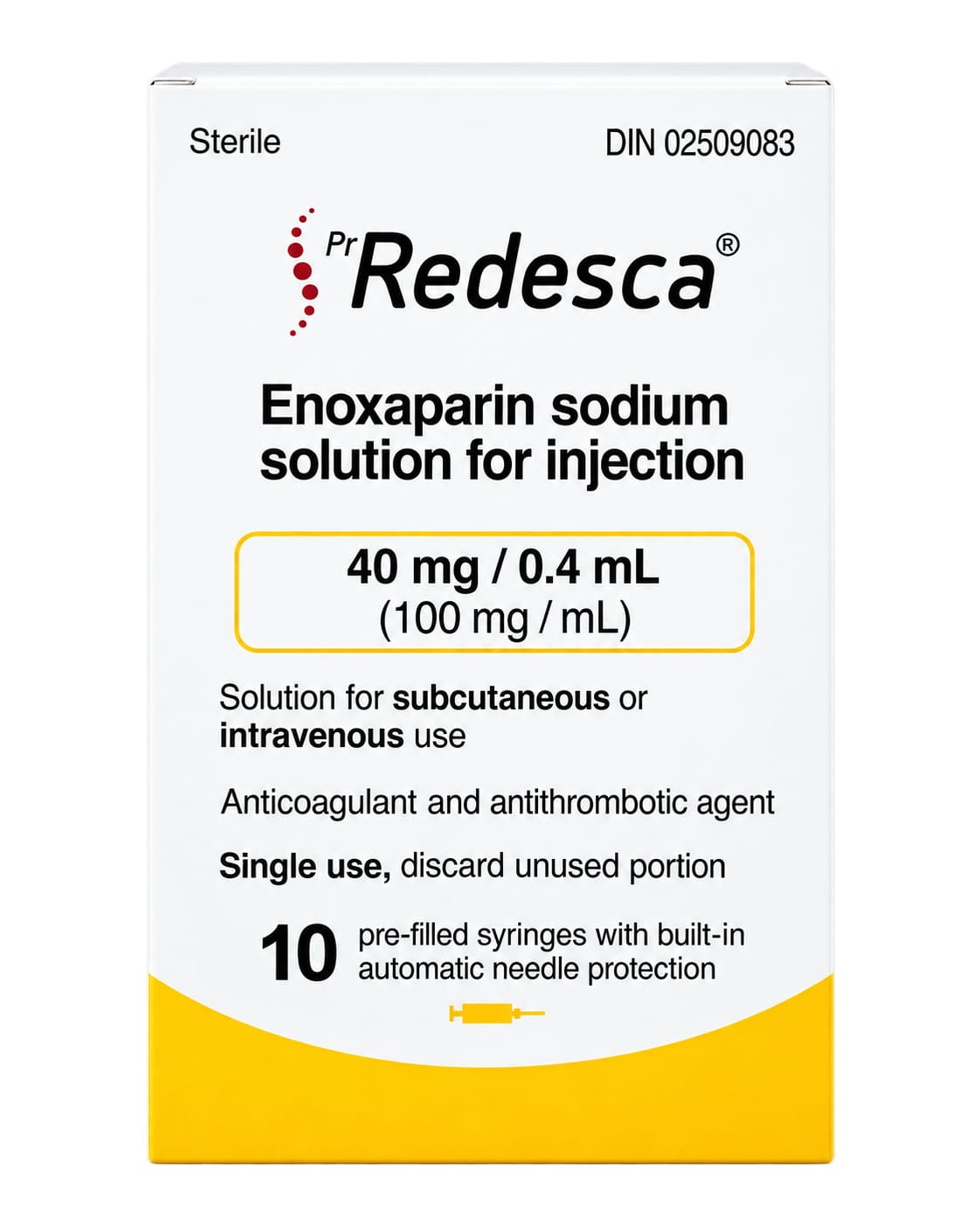
| Forms | Solution for subcutaneous or intravenous injection, Pre-filled syringes, Multiple dose vials |
Quick overview
Redesca Injection (enoxaparin sodium) is a biosimilar anticoagulant medicine similar to the reference drug Lovenox. It belongs to the low molecular weight heparin class and works by reducing the blood's ability to clot. It is used to prevent and treat deep vein thrombosis, manage certain heart conditions, and prevent clotting during hemodialysis. It is given as an injection under the skin or, in some cases, into a vein.
What is Redesca Injection
Redesca is a biosimilar biologic drug that is similar to the reference medicine Lovenox. It is a type of low molecular weight heparin, a medicine that reduces the blood's ability to clot.
Redesca Injection uses
- To prevent the formation of deep vein thrombosis (blood clots), which can occur as a complication of orthopedic surgery such as hip or knee surgery, or of intra-abdominal surgeries
- To prevent the formation of deep vein thrombosis in medical patients at risk due to severely restricted mobility during acute illnesses (such as heart failure, respiratory failure, or severe chest infections)
- To treat deep vein thrombosis with or without pulmonary embolism
- To treat unstable angina and non-Q-wave myocardial infarction, taken together with acetylsalicylic acid (ASA)
- To treat acute ST-segment Elevation Myocardial Infarction (STEMI), including patients who may also have a procedure to open up a coronary artery (Percutaneous Coronary Intervention)
- To prevent clotting in the extra-corporeal circulation during hemodialysis
Benefits of Redesca Injection
- Reduces the risk of blood clots forming in blood vessels
- Can treat existing blood clots in deep veins
- Helps manage unstable coronary artery disease when combined with ASA
How Redesca Injection works
Redesca is an anti-thrombotic medicine. It helps stop blood clots from forming in people who have had surgery or who have a medical condition that limits movement. It can also treat existing blood clots in deep veins or in unstable coronary artery disease.
Redesca Injection dosage
Redesca is usually given as an injection just under the skin (subcutaneous injection); for some conditions it may be given as an injection into a vein (intravenous). It must not be given as an injection into a muscle. For subcutaneous use, it should not be mixed with other injections or infusions.
Inject into the fat of the lower abdomen, at least 5 centimeters away from the belly button and towards the sides, choosing a different site each time. Wash your hands and clean the injection site with an alcohol swab before injecting, without rubbing the skin. Only give yourself the injections prescribed for the full time period specified by your doctor. Do not rub the injection site afterward, to help avoid bruising.
If you miss a dose by a few hours, take it as soon as you remember; if it is almost time for the next dose, skip the missed one and continue your regular schedule; do not double up on doses. After hospital discharge, some patients may need to continue injections at home for a period of time as instructed by their doctor.
| Age group | Dose |
|---|---|
| 18–39 years | Common prophylaxis doses include 30 mg every 12 hours or 40 mg once daily, depending on indication |
| 40–64 years | Common prophylaxis doses include 30 mg every 12 hours or 40 mg once daily |
Available forms and strengths
- Solution for subcutaneous or intravenous injection
- Pre-filled syringes
- Multiple dose vials
Side effects of Redesca Injection
Common
- Bleeding (such as at the injection site, nosebleeds, blood in urine, bloody stools, bleeding gums)
- Changes in liver blood test results
- Headache
- Purplish or reddish discolouration or pain around the injection site
- Spontaneous bruising
- Hair loss
- Hardening of skin or a lump at the injection site
Serious
- Abdominal pain
- Signs of liver problems (loss of appetite, dark urine, light-colored stools, yellowing of skin or eyes)
- Allergic reactions including skin rash, swelling of lips, face, throat and tongue, breathing difficulties, and anaphylactic shock
- Problems controlling bowels and/or bladder
- Tingling, numbness, and muscular weakness, particularly in the lower body, after a spinal puncture or spinal anesthetic
- Chest pain or shortness of breath
- Confusion
- Dizziness
- Pain or swelling in any part of the leg, foot, or hip
- Rapid or unusual heartbeat
- Skin discolouration caused by ruptured blood vessels
- Vomiting
- Bone thinning (osteoporosis) with long-term use (more than 3 months)
- Hemorrhagic strokes (bleeding inside the brain)
- Serious intra-abdominal bleeding
Warnings and precautions
- This medicine must never be given as an injection into a muscle, because this can cause serious bleeding problems.
- Serious or life-threatening bleeding can occur, including bleeding inside the brain or inside the abdomen.
- People getting spinal or epidural anesthesia while on this medicine are at risk of spinal bleeding that could cause long-term or permanent paralysis.
- A serious drop in platelets (heparin-induced thrombocytopenia) can occur and may lead to dangerous blood clots.
- Long-term use of this medicine for more than 3 months may increase the risk of bone thinning (osteoporosis).
- This medicine cannot be swapped unit-for-unit with other heparin products because they are made differently and have different strengths.
- This medicine should not be used during pregnancy unless the benefits outweigh the risks, because it may increase the risk of bleeding for both mother and baby.
- Multidose vials containing benzyl alcohol should not be used in pregnant women.
- It is not known if this medicine passes into breast milk. Caution should be used if it is given to a nursing mother.
- This medicine should be used with caution in people with kidney problems, and the dose may need to be reduced because the medicine can build up in the body and increase the risk of bleeding.
- This medicine should be used with caution in people with liver problems.
- Heavy, long-term alcohol use is a risk factor for bleeding problems while taking this medicine.
Storage
- Store below 25°C
- Do NOT freeze
- Do not store the multiple dose vials for more than 28 days after the first use
- Keep out of the reach and sight of children
When to see a doctor
- Get immediate medical help if you have signs of a severe allergic reaction, such as difficulty breathing, skin rash or hives, or swelling of the lips, mouth, or throat.
- Get immediate medical help if you have signs of a stroke, such as sudden severe headache, loss of coordination, confusion, difficulty speaking or understanding speech, vision problems, or weakness or numbness especially on one side of the body.
- Get immediate medical help if you have signs of bleeding in the stomach or digestive tract, such as bloody, black, or tarry stools, spitting up blood, or vomiting blood or material that looks like coffee grounds.
- Contact your doctor immediately if you suspect you have used too much of this medicine, even if you do not notice any unusual symptoms.
- Tell your physician immediately if you experience signs of spinal bleeding, such as midline back pain, numbness or weakness in the lower limbs, or loss of bowel or bladder control, especially after a spinal or epidural procedure.
Alternatives
- Dalteparin
- Tinzaparin
- Fondaparinux
Watch the video
FAQs
What is Redesca Injection used for?
It is used to prevent and treat deep vein thrombosis, treat unstable angina and certain heart attacks, and prevent clotting during hemodialysis.
How is Redesca Injection given?
It is usually given as a subcutaneous injection into the fat of the lower abdomen, though some conditions may require intravenous use. It must never be injected into a muscle.
What are the common side effects of Redesca Injection?
Common side effects include bleeding, headache, bruising, hair loss, liver test changes, and discolouration, pain, or hardening at the injection site.
What are the serious risks of Redesca Injection?
Serious risks include severe bleeding, allergic reactions, spinal bleeding after spinal anesthesia, heparin-induced low platelets, and osteoporosis with long-term use.
Can Redesca Injection be used during pregnancy?
It should not be used during pregnancy unless benefits outweigh risks, as it may increase bleeding risk for mother and baby; multidose vials with benzyl alcohol should be avoided in pregnant women.
General information, not medical advice
Your prescriber and the leaflet in your pack know your situation. This page does not.
- Follow your prescriber and the leaflet
- Don't start, stop, or change a dose on your own
- Doses and warnings differ by country and product
Sources
Video
Related medicines
Inclunox Injection: Uses, Dosage, Side Effects, Precautions and Alternates
Anticoagulant/Antithrombotic Agent
Inclunox Injection (enoxaparin sodium) prevents and treats blood clots after surgery or heart conditions. Learn uses, dosage, side effects, and precautions.

Injectafer Injection: Uses, Dosage, Side Effects, Precautions and Alternates
Iron products
Injectafer (ferric carboxymaltose) treats iron deficiency anemia and heart failure-related iron deficiency via IV. Learn uses, dosage, side effects, and