
Safety
General information, not medical advice
Your prescriber and the leaflet in your pack know your situation. This page does not.
- Follow your prescriber and the leaflet
- Don't start, stop, or change a dose on your own
- Doses and warnings differ by country and product
Indacaterol Inhaler: Uses, Dosage, Side Effects, Precautions and Alternates
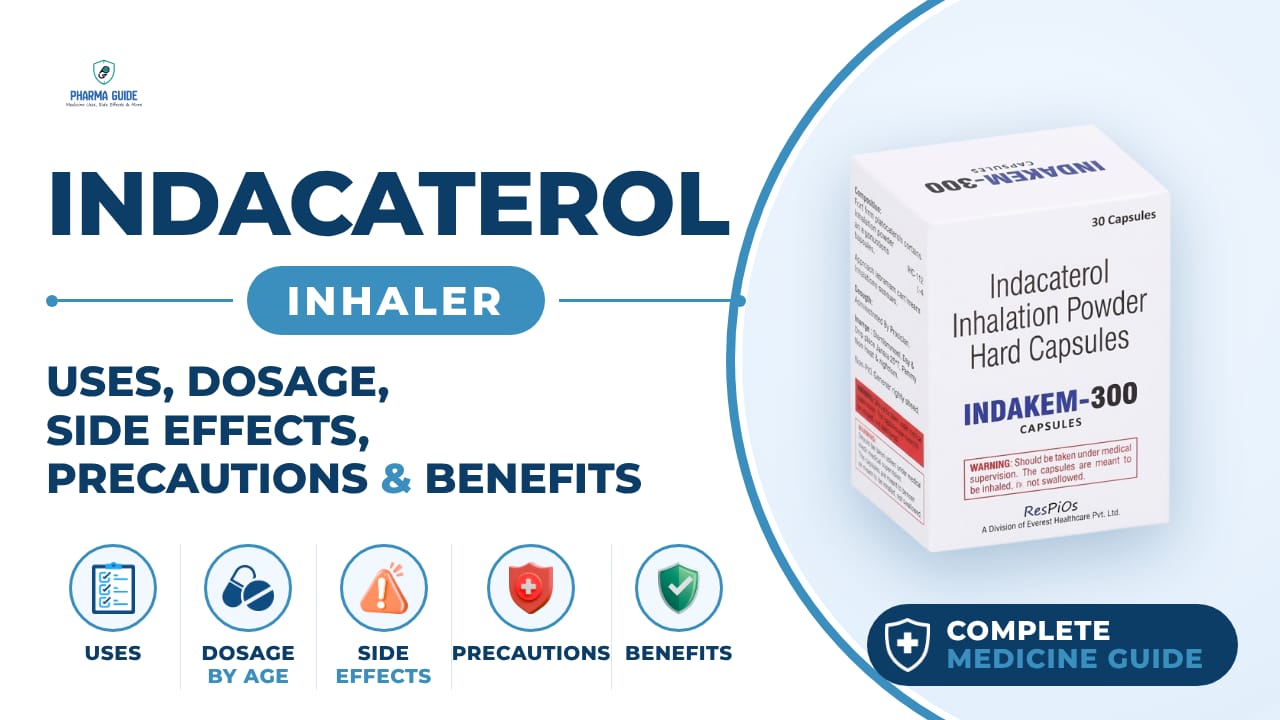
| Generic name | Indacaterol |
|---|---|
| Drug class | Long-acting beta2-agonist (LABA) bronchodilator |
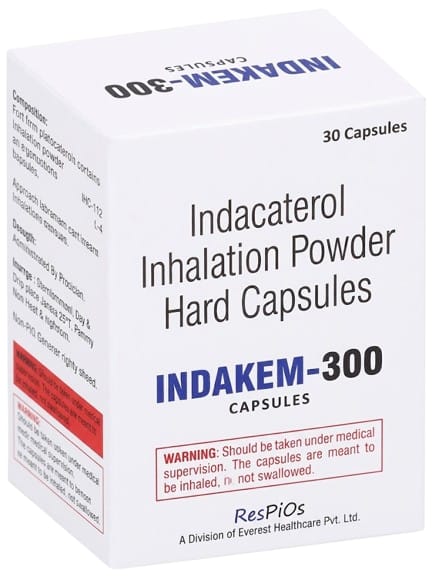
| Forms | Inhalation powder in hard capsules, used with a dedicated inhaler device |
Quick overview
Indacaterol Inhaler (generic name: Indacaterol) is a once-daily inhaled long-acting beta2-agonist (LABA) bronchodilator used for chronic obstructive pulmonary disease (COPD), including emphysema and chronic bronchitis. It works by relaxing the muscles around the airways to make breathing easier, with effects lasting about 24 hours. It is used with a dedicated inhaler device and is not intended for sudden COPD attacks.
What is Indacaterol Inhaler
Indacaterol is a once-daily inhaled medicine used for chronic obstructive pulmonary disease (COPD). It belongs to a group of medicines called bronchodilators, which relax the muscles around the airways to make breathing easier.
Indacaterol Inhaler uses
- Chronic obstructive pulmonary disease (COPD)
- Emphysema associated with COPD
- Chronic bronchitis associated with COPD
- Long-term maintenance of airway opening
- Ongoing management of COPD-related breathing difficulties
Benefits of Indacaterol Inhaler
- Improves lung function (FEV1) over 24 hours with once-daily dosing
- Helps open the airways
- Improves airflow
- Reduces shortness of breath
- Helps control wheezing
- Supports long-term breathing management
- Reduces breathlessness and improves health-related quality of life
- Reduces the need for rescue inhaler use
- Rapid onset of action, starting to work within about 5 minutes after inhalation
How Indacaterol Inhaler works
Indacaterol works by relaxing the muscles in the walls of the small airways in the lungs. It binds to receptors on airway muscle, triggering a chemical signal inside the cells that causes the muscle to relax. This opens up the airways, making it easier to breathe, and the effect lasts about 24 hours.
Indacaterol Inhaler dosage
Inhale the capsule contents once a day, at the same time each day, using the special inhaler provided. Do not swallow the capsules — they are for inhalation only, using the specific inhaler device provided with the prescription. Do not use this medicine to treat sudden COPD attacks; a separate short-acting inhaler will be prescribed for sudden symptoms. Continue using this medicine every day even if you feel well; do not stop without talking to your doctor. Only use the capsules with the inhaler supplied in the same pack; do not use the inhaler for any other capsules. Remove the capsule from the blister immediately before use and handle with dry hands. Do not store capsules inside the inhaler.
If you forget a dose, take it as soon as you remember, but if it is almost time for the next dose, skip the missed one — do not double up. Practice using the inhaler with your doctor, nurse, or pharmacist before using it on your own.
| Age group | Dose |
|---|---|
| Under 18 years | Not recommended |
| 18–64 years | 150 mcg, once/day |
| 65+ years | 150 mcg, once/day |
Available forms and strengths
- Inhalation powder in hard capsules, used with a dedicated inhaler device
- 150 mcg strength
Side effects of Indacaterol Inhaler
Common
- Cough
- Nasopharyngitis (cold-like symptoms)
- Upper respiratory tract infection
- Headache
- Sinusitis
- Sore throat
- Runny nose
- Dizziness
- Muscle spasm
- Muscle or joint pain
- Swollen hands, ankles, or feet
- Chest pain
- Nausea
- Dry mouth
Serious
- Signs of allergic reaction such as rash, itching, hives, swelling of face/mouth/tongue, difficulty breathing or swallowing
- Irregular or fast heartbeat
- Chest pain or tightness
- Wheezing, coughing, or worsening breathlessness right after using the inhaler (paradoxical bronchospasm)
- High blood sugar (feeling very thirsty, hungry, tired, passing more urine)
- Low potassium levels (muscle cramps, weakness, uneven heartbeat, tingling)
Warnings and precautions
- This medicine should not be used alone to treat asthma, as it may increase the risk of serious asthma-related problems, including death, if not used together with a steroid inhaler.
- This medicine is not for treating sudden COPD attacks or acute breathing problems; a separate fast-acting inhaler should be used for that, as prescribed by your doctor.
- Do not use this medicine together with other similar long-acting inhaled medicines.
- This medicine should be used with caution if you have heart or blood vessel conditions, seizures, an overactive thyroid, or are especially sensitive to this type of medicine.
- This medicine can occasionally cause sudden worsening of wheezing or breathing difficulty right after use, known as paradoxical bronchospasm, which can be life-threatening.
- This medicine is no longer sold in the United States; check with your pharmacist or doctor for current availability in your country.
- There is limited safety data on using this medicine during pregnancy. It should only be used if your doctor decides the benefits outweigh the risks.
- It is not known whether this medicine passes into breast milk in humans, so a risk to the breastfed baby cannot be ruled out. Talk to your doctor about the benefits and risks before breastfeeding.
- No dose change is needed for people with kidney problems.
- No dose change is needed for mild to moderate liver problems; there isn't information available for severe liver impairment.
- This medicine is unlikely to affect your ability to drive or use machines.
Storage
- Store the capsules in the original blister in order to protect from moisture and do not remove until immediately before use
- Do not store above 30°C
- Keep out of the sight and reach of children
- Do not use this medicine if you notice that the pack is damaged or shows signs of tampering
- Do not throw away medicines via wastewater or household waste; ask your pharmacist how to dispose of medicines you no longer use
- Dispose of each inhaler after 30 days of use
- Keep the inhaler dry; do not wash it with water
When to see a doctor
- Get medical help right away if you have signs of a serious allergic reaction, such as swelling of the face, mouth or tongue, hives, rash, or difficulty breathing or swallowing.
- Get medical help right away if you have a fast, pounding, or irregular heartbeat, or chest pain.
- Stop using the medicine and tell your doctor immediately if you get chest tightness, coughing, wheezing, or breathlessness right after using it, as this could be a sign of a serious breathing problem.
- Tell your doctor right away if your COPD symptoms do not improve or get worse, or if your short-acting rescue inhaler is not working as well as usual.
- If you think you or someone else has taken too much of this medicine, seek emergency medical care immediately and bring the medicine packaging with you.
Alternatives
- Umeclidinium
- Formoterol
- Tiotropium
Watch the video
FAQs
What is Indacaterol Inhaler used for?
It is used for chronic obstructive pulmonary disease (COPD), including emphysema and chronic bronchitis, and for long-term maintenance of airway opening and managing COPD-related breathing difficulties.
How often should Indacaterol Inhaler be used?
It is inhaled once a day at the same time each day using the special inhaler device provided, for adults aged 18 to 64 and those 65 and older, at a dose of 150 mcg.
Can Indacaterol Inhaler be used for sudden COPD attacks?
No, it is not intended for sudden COPD attacks. A separate short-acting inhaler will be prescribed for sudden symptoms.
What are the common side effects of Indacaterol Inhaler?
Common side effects include cough, nasopharyngitis, upper respiratory tract infection, headache, sinusitis, sore throat, runny nose, dizziness, muscle spasm, muscle or joint pain, swollen hands or feet, chest pain, nausea, and dry mouth.
How should Indacaterol Inhaler capsules be stored?
Store the capsules in the original blister to protect from moisture, do not remove until immediately before use, do not store above 30°C, and dispose of each inhaler after 30 days of use.
General information, not medical advice
Your prescriber and the leaflet in your pack know your situation. This page does not.
- Follow your prescriber and the leaflet
- Don't start, stop, or change a dose on your own
- Doses and warnings differ by country and product
Sources
Video
Related medicines

Injectafer Injection: Uses, Dosage, Side Effects, Precautions and Alternates
Iron products
Injectafer (ferric carboxymaltose) treats iron deficiency anemia and heart failure-related iron deficiency via IV. Learn uses, dosage, side effects, and

Gliclazide Tablet: Uses, Dosage, Side Effects, Precautions and Alternates
Sulfonylurea (hypoglycemic/antidiabetic agent)
Gliclazide Tablet is a sulfonylurea for type 2 diabetes that boosts insulin release. Learn about dosage, side effects, warnings, and precautions.