
Safety
General information, not medical advice
Your prescriber and the leaflet in your pack know your situation. This page does not.
- Follow your prescriber and the leaflet
- Don't start, stop, or change a dose on your own
- Doses and warnings differ by country and product
Indapamide Tablet: Uses, Dosage, Side Effects, Precautions and Alternates
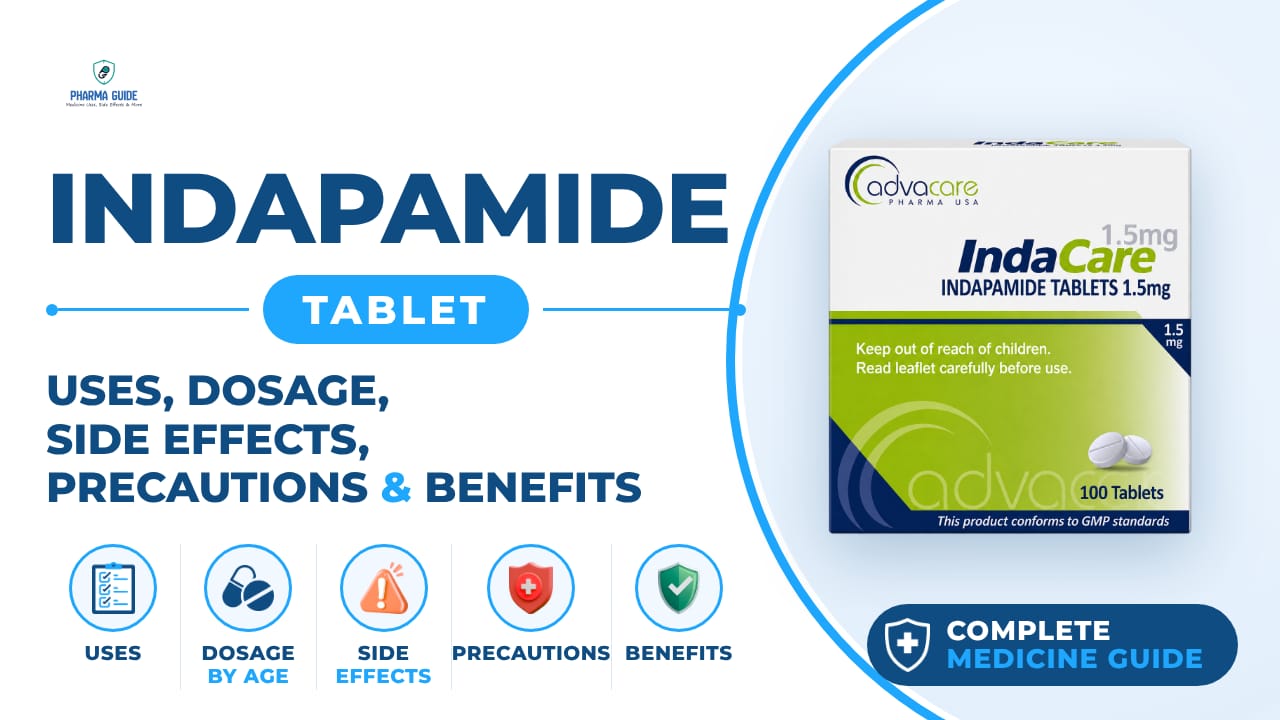
| Generic name | Indapamide |
|---|---|
| Drug class | Diuretic/Antihypertensive agent (thiazide-like diuretic) |
| Forms | Oral tablets (1.25 mg and 2.5 mg strengths) |
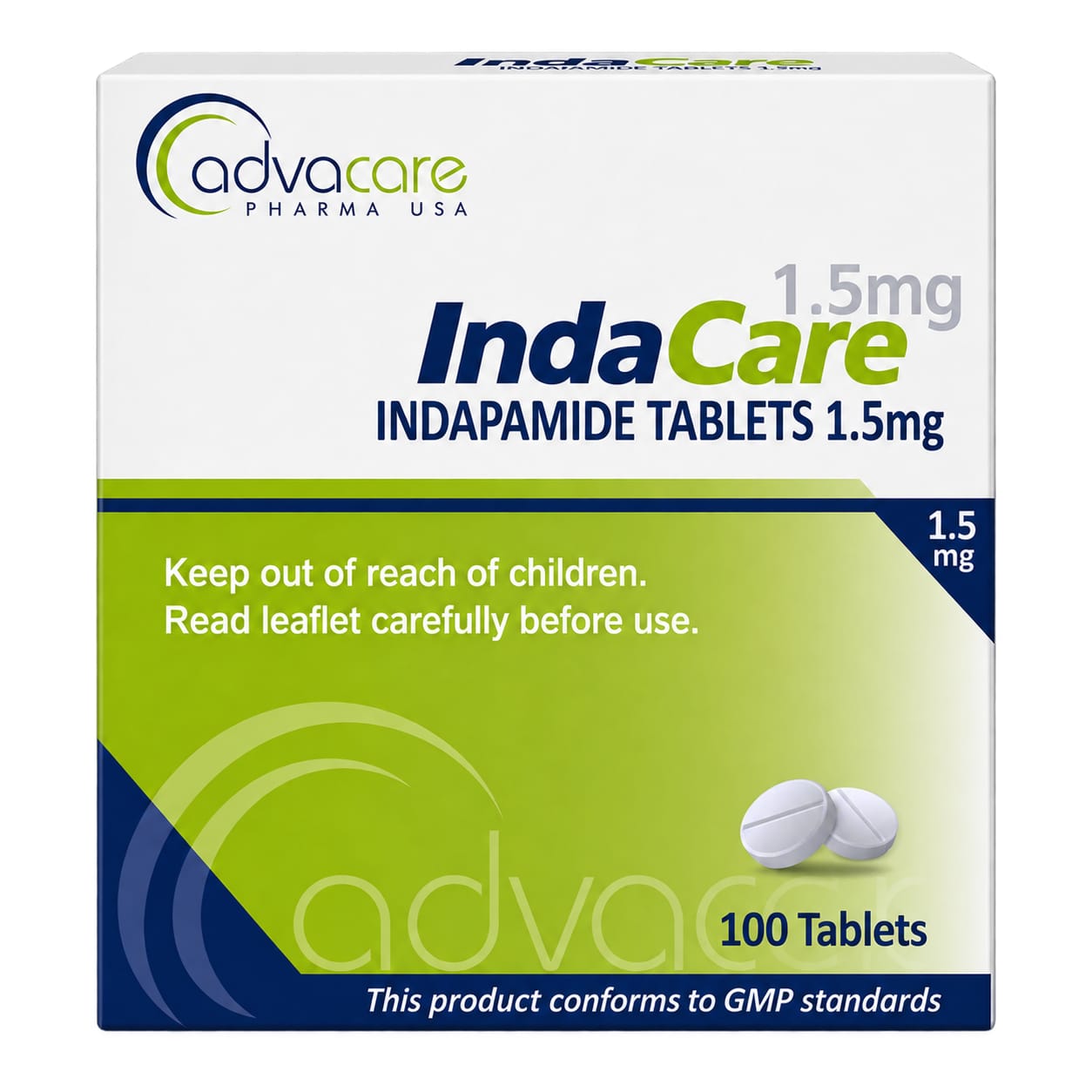
Quick overview
Indapamide Tablet is a thiazide-like diuretic (water pill) used to treat high blood pressure and to reduce fluid buildup (edema) caused by heart failure. It works by helping the kidneys remove extra salt and water from the body through urine, which lowers blood pressure and reduces swelling. It is taken by mouth, usually once daily, and is available as oral tablets in two strengths.
What is Indapamide Tablet
Indapamide is a water pill (diuretic) used to treat high blood pressure and to reduce fluid buildup caused by heart failure. It helps your kidneys remove extra fluid and salt from your body through urine.
Indapamide Tablet uses
- High blood pressure (hypertension)
- Fluid retention (edema) caused by heart failure
Benefits of Indapamide Tablet
- Helps lower high blood pressure (hypertension).
- Helps reduce fluid retention (edema) in some patients.
- Helps decrease swelling in the legs, ankles, and feet caused by excess fluid.
- Promotes removal of extra salt and water through urine.
- Helps reduce the workload on the heart and blood vessels.
- By controlling blood pressure, it helps lower the risk of stroke and other cardiovascular complications.
How Indapamide Tablet works
Indapamide makes you urinate more by helping your kidneys remove salt (sodium) and water from your body. This lowers blood pressure and reduces swelling.
Indapamide Tablet dosage
Take this medicine by mouth at the same time every day. Swallow the tablet whole with water; do not split or cut it. It is recommended to take your dose at about the same time every day in the morning. It can be taken with or without food, as advised by your doctor. Take this medicine at daytime to prevent sleep disturbance.
Keep taking it unless your care team tells you to stop, even if you feel fine. This medicine is not recommended for use in children. Talk to your care team about the use of this medication in children; special care may be needed.
Do not treat yourself for coughs, colds, or pain while using this medication without asking your care team, since some medicines may increase blood pressure.
If you miss a dose, take it as soon as you remember; if it is almost time for your next dose, skip the missed dose and take only the next one. Do not double up.
| Age group | Dose |
|---|---|
| Under 18 years | Safety/effectiveness not established; specialist use only |
| 18–64 years – Hypertension | Immediate-release: 1.25 mg once daily initially; may increase according to response |
| 18–64 years – Edema | Usually 2.5 mg once daily initially |
| 65+ years | Usually start at the lowest effective dose; monitor kidney function and electrolytes |
Available forms and strengths
- Oral tablets (1.25 mg and 2.5 mg strengths)
Side effects of Indapamide Tablet
Common
- Increased urination
- Headache
- Dizziness
- Tiredness or loss of energy
- Muscle cramps or spasm
- Dry mouth
- Low blood pressure
- Itching or rash
- Abdominal pain
- Joint pain, stiffness, and swelling
- Loss of appetite
- Nausea and vomiting
- Irregular heartbeat
- Anxiety, nervousness
- Runny or stuffy nose
Serious
- Severe low blood pressure with dizziness, fainting, or confusion
- Signs of dehydration and worsening kidney function (reduced urination, increased thirst, dark urine, dry mouth, sunken eyes)
- Electrolyte changes such as low potassium, low sodium, low magnesium, high calcium, low chloride, or high blood sugar
- Nearsightedness or vision changes and increased eye pressure (glaucoma), including eye pain, redness, vision loss, or halos around lights
- Severe allergic reaction with swelling of face, lips, tongue, or throat, trouble breathing or swallowing, hives, or rash
- Severe skin reactions such as Stevens-Johnson Syndrome or Toxic Epidermal Necrolysis, with painful skin that looks burned or peels, blisters, or flu-like symptoms
- Inflammation of the pancreas (pancreatitis) with severe upper belly pain and vomiting
- Liver damage with nausea, yellowing skin or eyes, dark urine, light-colored stool, or unusual tiredness
- Gout symptoms such as severe joint pain, redness, or swelling
- Abnormal heart rhythm, seizures, or fast heartbeat
- Signs of low white or red blood cells or low platelets, such as infections, fatigue, fever, unusual bruising or bleeding
Warnings and precautions
- It is not known if or how this medicine could affect pregnancy or harm a baby. Some sources say it should not be used during pregnancy at all, so tell your doctor right away if you are or may become pregnant.
- This medicine passes into breast milk and is generally not recommended while breastfeeding.
- People with severe kidney disease should not take this medicine, and kidney function should be monitored closely during treatment.
- This medicine should be used with extreme caution or avoided in people with liver disease, since it can increase the risk of serious problems including confusion or coma.
- Drinking alcohol while taking this medicine can increase the risk of dizziness, fainting, and very low blood pressure, so it is best to limit alcohol intake.
- This medicine can affect your alertness or coordination. Do not drive or use machinery until you know how it affects you.
- Do not take this medicine if you are producing very little or no urine.
- This medicine may worsen or trigger a condition called lupus.
- People allergic to sulfa medicines may also be allergic to this medicine.
- Your skin may become more sensitive to sunlight while taking this medicine, so protect your skin from the sun and sunlamps.
- Older adults may be at greater risk for certain side effects from this medicine.
- This medicine can cause changes in blood electrolyte and sugar levels that may be serious, so regular blood tests are needed.
- There is a maximum recommended daily dose that should not be exceeded because electrolyte changes can be severe.
Storage
- Store at room temperature between 20 and 25 degrees C (68 and 77 degrees F).
- Avoid exposure to extreme heat.
- Store in a cool, dry place. Keep tightly closed.
- Keep out of the reach of children and pets.
- Throw away any unused medication after the expiration date.
When to see a doctor
- Get emergency help right away for symptoms of a severe allergic reaction, such as swelling of the face, lips, mouth, tongue or throat, trouble breathing or swallowing, or hives.
- Get emergency help right away for signs of severe skin reactions, such as painful skin that looks burned and peels, or blisters in the mouth, nose, or genitals with fever and flu-like symptoms.
- Call your health care provider right away if you have symptoms of pancreatitis, such as vomiting or severe belly pain that spreads to your back.
- Call your health care provider right away if you notice signs of liver damage, such as yellowing skin or eyes, dark urine, or ongoing nausea and tiredness.
- Tell your health care provider right away if you have sudden vision changes, eye pain, or see halos around lights.
- Contact your doctor immediately if you think you have taken too much of this medicine, even if you have no symptoms.
Alternatives
- Lisinopril
- Spironolactone
- Furosemide
- Chlorthalidone
- Hydrochlorothiazide
Watch the video
FAQs
What is Indapamide Tablet used for?
It is used to treat high blood pressure (hypertension) and to reduce fluid retention (edema) caused by heart failure.
How does Indapamide Tablet work?
It helps the kidneys remove extra salt and water from the body through urine, which lowers blood pressure and reduces swelling.
What is the usual dosage of Indapamide Tablet for adults?
For hypertension, the immediate-release form is usually started at 1.25 mg once daily and may be increased based on response. For edema, it is usually started at 2.5 mg once daily.
What are the common side effects of Indapamide Tablet?
Common side effects include increased urination, headache, dizziness, tiredness, muscle cramps, dry mouth, low blood pressure, nausea, and abdominal pain.
Can I drink alcohol while taking Indapamide Tablet?
Drinking alcohol while taking this medicine can increase the risk of dizziness, fainting, and very low blood pressure, so it is best to limit alcohol intake.
General information, not medical advice
Your prescriber and the leaflet in your pack know your situation. This page does not.
- Follow your prescriber and the leaflet
- Don't start, stop, or change a dose on your own
- Doses and warnings differ by country and product
Sources
Video
Related medicines

Injectafer Injection: Uses, Dosage, Side Effects, Precautions and Alternates
Iron products
Injectafer (ferric carboxymaltose) treats iron deficiency anemia and heart failure-related iron deficiency via IV. Learn uses, dosage, side effects, and

Gliclazide Tablet: Uses, Dosage, Side Effects, Precautions and Alternates
Sulfonylurea (hypoglycemic/antidiabetic agent)
Gliclazide Tablet is a sulfonylurea for type 2 diabetes that boosts insulin release. Learn about dosage, side effects, warnings, and precautions.