
Safety
General information, not medical advice
Your prescriber and the leaflet in your pack know your situation. This page does not.
- Follow your prescriber and the leaflet
- Don't start, stop, or change a dose on your own
- Doses and warnings differ by country and product
Inderal Tablet: Uses, Dosage, Side Effects, Precautions and Alternates
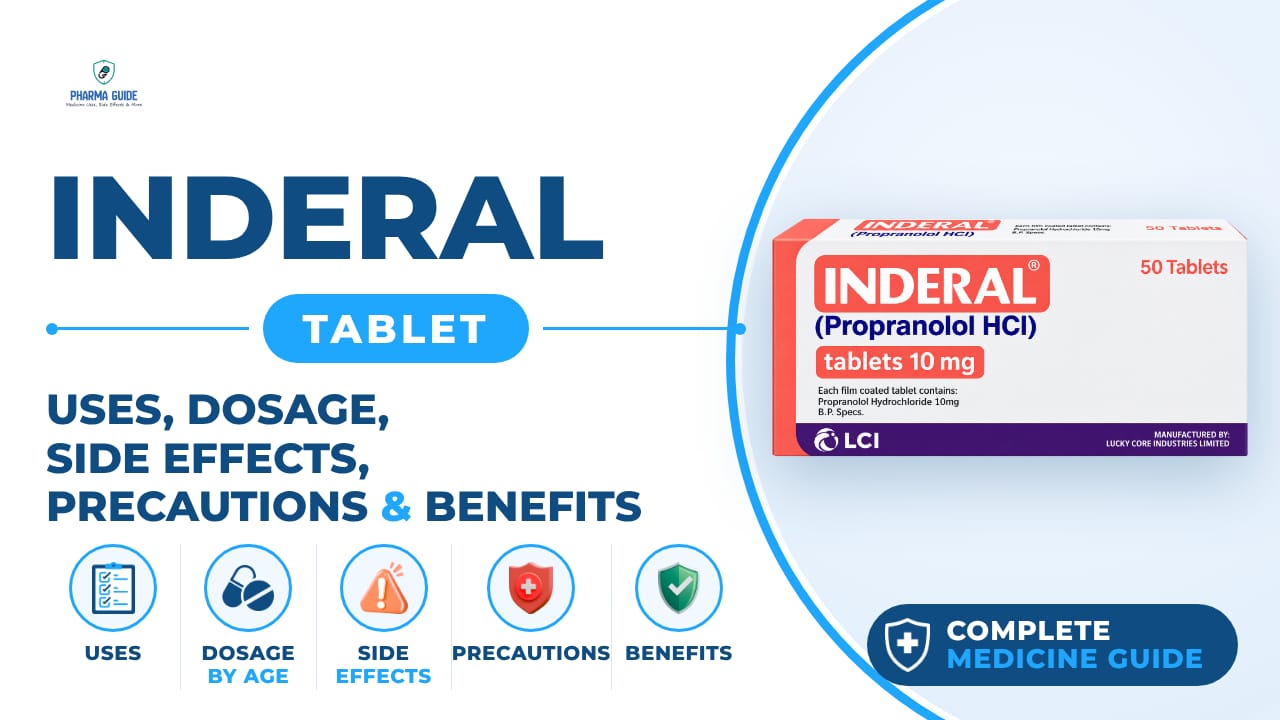
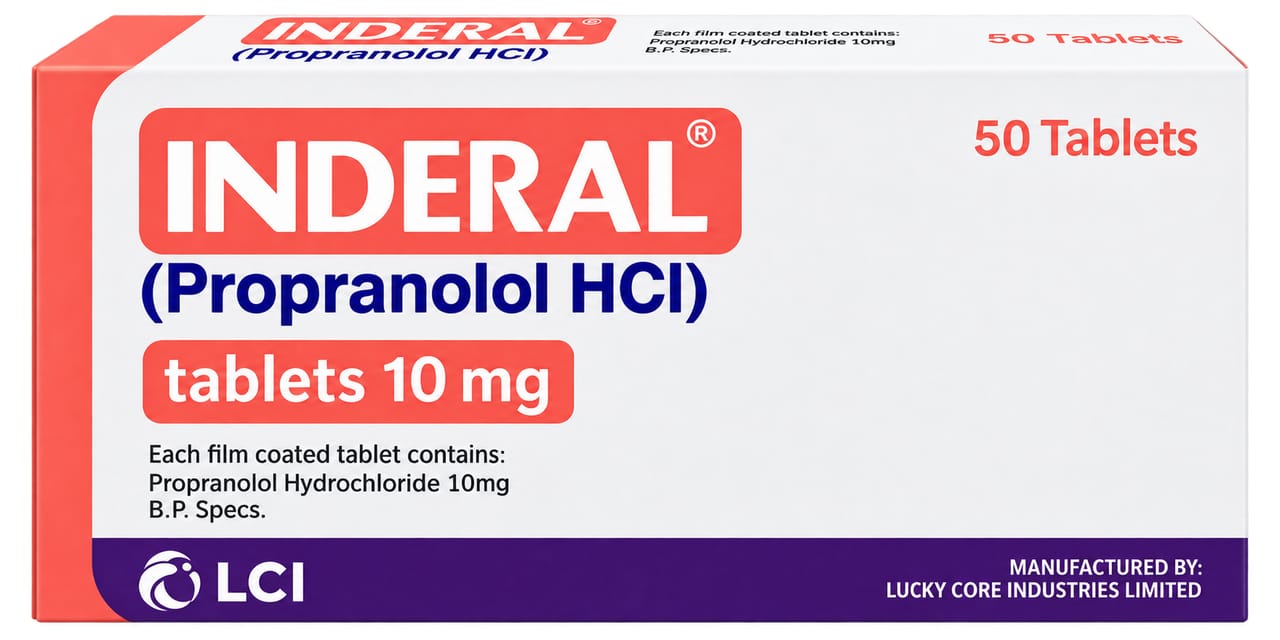
| Generic name | Propranolol |
|---|---|
| Drug class | Group II antiarrhythmics, Non-cardioselective beta blockers |
| Forms | Tablet |
Quick overview
Inderal Tablet contains propranolol, a non-cardioselective beta blocker belonging to the Group II antiarrhythmics class. It is used to treat conditions such as tremors, angina, high blood pressure, heart rhythm disorders, and migraine, among others. Inderal works by affecting how the body responds to certain nerve signals, especially in the heart, which lowers the heart's workload and widens blood vessels. It is available as a tablet and should be used exactly as prescribed by your doctor.
What is Inderal Tablet
Inderal is a beta-blocker medicine. Beta-blockers affect the heart and blood flow through arteries and veins.
Inderal Tablet uses
- Treats tremors
- Treats angina (chest pain)
- Treats hypertension (high blood pressure)
- Treats heart rhythm disorders (arrhythmias)
- Treats or prevents heart attack
- Reduces the severity and frequency of migraine headaches
- Treats hypertrophic subaortic stenosis
- Treats pheochromocytoma
- Treats Fallot's Tetralogy
Benefits of Inderal Tablet
- Lowers high blood pressure
- Prevents angina
- Helps the heart beat more regularly
- Reduces the amount of work the heart has to do
- Widens blood vessels in the body
How Inderal Tablet works
Inderal works by affecting how the body responds to certain nerve signals, especially in the heart. This lowers the heart's need for blood and oxygen, reduces the heart's workload, widens blood vessels, and helps the heart beat more regularly.
Inderal Tablet dosage
Adults may take it with or without food, but take it the same way each time. Do not break, crush, or chew the tablet/capsule; take it immediately after peeling from the strip. Take exactly as prescribed and follow all directions on the prescription label. Do not stop taking this medicine suddenly without checking with your doctor, as your condition may get worse.
If you miss a dose, take it as soon as you remember, but skip it if it is almost time for your next dose; do not take two doses at once. Keep taking this medicine even if you feel well, since high blood pressure often has no symptoms. Doses for children are based on weight, and the dose may change if the child gains or loses weight. Tell your doctor if you have planned surgery, including at the dentist.
| Age group | Dose |
|---|---|
| Under 18 years | Weight/indication-based specialist dosing; no single routine tablet dose |
| 18–64 years | Hypertension: 40 mg twice daily initially; usual maintenance 120–240 mg/day |
| 65+ years | Usually start at the lower end and increase cautiously |
Available forms and strengths
- Tablet
Side effects of Inderal Tablet
Common
- Dizziness
- Tiredness
- Nausea, vomiting, diarrhea, constipation, stomach cramps
- Sleep problems (insomnia)
- Runny or stuffy nose, cough, sore throat, hoarse voice
- Loss of appetite
- Flatulence
- Cold hands or feet
- Rash, flushing
- Hair loss
- Feeling lethargic, lack of energy
- Weight gain
Serious
- Signs of allergic reaction: hives, difficult breathing, swelling in face or throat
- Severe skin reaction: fever, sore throat, burning eyes, skin pain, red or purple skin rash with blistering and peeling
- Slow or uneven heartbeats
- Light-headed feeling, like you might pass out
- Wheezing or trouble breathing
- Sudden weakness, vision problems, or loss of coordination
- Depression, confusion, hallucinations
- Heart failure symptoms: swelling, rapid weight gain, feeling short of breath
- Low blood sugar symptoms: headache, hunger, sweating, irritability, dizziness, fast heart rate, feeling anxious or shaky
- Low blood sugar in a baby: pale skin, blue or purple skin, sweating, fussiness, crying, not wanting to eat, feeling cold, drowsiness, weak or shallow breathing, seizures, or loss of consciousness
- Disturbed sleep, vivid dreams or nightmares
- Conjunctivitis, dry eyes
- Visual disturbances
- Trouble passing urine
- Unexplained bruising
- Mood changes, confusion
- Sexual problems
- Loss of hearing
- Extreme tiredness or breathlessness on mild exercise
- Fast heart beats (palpitations)
Warnings and precautions
- Tell your doctor if you are pregnant. This medicine should not be used in pregnancy as it may increase the risk of the baby's death, and it may affect your baby if taken at any time during pregnancy.
- This medicine passes into breast milk and may affect your baby's heart function. Your doctor may advise you to stop breastfeeding or stop the medicine depending on your condition.
- Use with caution in kidney disease, since the medicine may build up in the kidneys because it is removed from the body through the kidneys. Kidney function should be monitored closely.
- Use with caution in people with mild to moderate liver disease, due to an increased risk of liver scarring (cirrhosis). Liver function should be monitored closely.
- Be careful drinking alcohol while taking this medicine, since it can increase blood levels of the medicine and worsen dizziness or light-headedness.
- Be careful driving or operating machinery until you know how this medicine affects you, since it may cause dizziness, light-headedness, tiredness, or drowsiness in some people.
- Do not use this medicine if you have asthma, very slow heart beats, or a serious heart condition such as sick sinus syndrome or AV block, unless you have a pacemaker.
- This medicine may hide the signs of low blood sugar in people with diabetes. Tell your doctor about any changes in your blood sugar levels.
- Do not stop taking this medicine suddenly, as your condition may get worse. Ask your doctor before stopping.
- Do not use this medicine if you have uncompensated congestive heart failure, cardiogenic shock, severe bradycardia, or a heart block greater than first degree.
- Taking this medicine with an overactive thyroid gland can hide symptoms of the condition, and if untreated, this could lead to a life-threatening thyroid storm. Thyroid function should be monitored closely.
- Avoid high-risk sports such as archery, racing, or shooting while taking this medicine, and check anti-doping rules if you are an athlete.
- Dress warmly in cold weather, especially if outside for a long time, since this medicine may make you more sensitive to cold, particularly if you have circulation problems.
- If you feel light-headed, dizzy, or faint when getting out of bed or standing up, get up slowly.
- If you are about to start any new medicine, remind your doctor and pharmacist that you are taking this medicine, and tell any doctor, dentist, or pharmacist treating you.
Storage
- Keep your tablets in the bottle until it is time to take them
- If you take INDERAL out of the bottle it will not keep well
- Keep it in a cool dry place where the temperature stays below 30°C
- Do not store it or any other medicine in the bathroom or near a sink
- Do not leave it on a window sill or in the car on hot days
- Keep it where young children cannot reach it
- Ask your pharmacist what to do with any medicine that is left over if you stop taking it or it has expired
When to see a doctor
Get emergency medical help if you have signs of an allergic reaction such as hives, difficulty breathing, or swelling of the face or throat, or a severe skin reaction with fever, sore throat, burning eyes, or a painful skin rash with blistering and peeling.
Call your doctor right away if you have slow or uneven heartbeats, a light-headed feeling like you might pass out, wheezing or trouble breathing, sudden weakness, vision problems, or loss of coordination, cold hands and feet, depression, confusion, hallucinations, or signs of heart failure such as swelling, rapid weight gain, or shortness of breath.
Call your doctor right away if you notice signs of low blood sugar such as headache, hunger, sweating, irritability, dizziness, fast heart rate, or feeling anxious or shaky.
Seek emergency medical help right away if you or someone else may have taken too much of this medicine, even if there are no signs of discomfort or poisoning, since an overdose can be severely toxic and cause breathing trouble, dizziness, extreme tiredness, fits, slowed heartbeat, or coma.
Stop taking this medicine and get emergency help right away if you have extreme tiredness or breathlessness on mild exercise, wheezing, difficulty breathing, an asthma attack, or fast heartbeats (palpitations), as these can be signs of a serious allergic reaction.
Tell your doctor immediately if you notice disturbed sleep, vivid dreams or nightmares, eye problems, trouble passing urine, unexplained bruising, mood changes, confusion, sexual problems, loss of hearing, or slow heartbeats, as these are serious side effects that may need urgent medical attention.
Alternatives
- Carvedilol
- Valsartan
- Lisinopril
- Amlodipine
Watch the video
FAQs
What is Inderal Tablet used for?
Inderal Tablet is used to treat tremors, angina, high blood pressure, heart rhythm disorders, migraine, hypertrophic subaortic stenosis, pheochromocytoma, and Fallot's Tetralogy, and to treat or prevent heart attack.
How does Inderal Tablet work?
Inderal works by affecting how the body responds to certain nerve signals, especially in the heart. This lowers the heart's need for blood and oxygen, reduces its workload, widens blood vessels, and helps the heart beat more regularly.
What is the usual dose of Inderal Tablet for adults?
For adults aged 18 to 64 with hypertension, the initial dose is usually 40 mg twice daily, with a usual maintenance dose of 120–240 mg per day. Older adults usually start at a lower dose that is increased cautiously.
Can Inderal Tablet be taken during pregnancy?
No, this medicine should not be used in pregnancy as it may increase the risk of the baby's death and may affect the baby if taken at any time during pregnancy.
What are the common side effects of Inderal Tablet?
Common side effects include dizziness, tiredness, nausea, vomiting, diarrhea, constipation, stomach cramps, insomnia, runny or stuffy nose, cough, sore throat, loss of appetite, flatulence, cold hands or feet, rash, flushing, hair loss, lethargy, and weight gain.
General information, not medical advice
Your prescriber and the leaflet in your pack know your situation. This page does not.
- Follow your prescriber and the leaflet
- Don't start, stop, or change a dose on your own
- Doses and warnings differ by country and product
Sources
Video
Related medicines

Injectafer Injection: Uses, Dosage, Side Effects, Precautions and Alternates
Iron products
Injectafer (ferric carboxymaltose) treats iron deficiency anemia and heart failure-related iron deficiency via IV. Learn uses, dosage, side effects, and

Gliclazide Tablet: Uses, Dosage, Side Effects, Precautions and Alternates
Sulfonylurea (hypoglycemic/antidiabetic agent)
Gliclazide Tablet is a sulfonylurea for type 2 diabetes that boosts insulin release. Learn about dosage, side effects, warnings, and precautions.