
Safety
General information, not medical advice
Your prescriber and the leaflet in your pack know your situation. This page does not.
- Follow your prescriber and the leaflet
- Don't start, stop, or change a dose on your own
- Doses and warnings differ by country and product
Indomethacin Capsule: Uses, Dosage, Side Effects, Precautions and Alternates
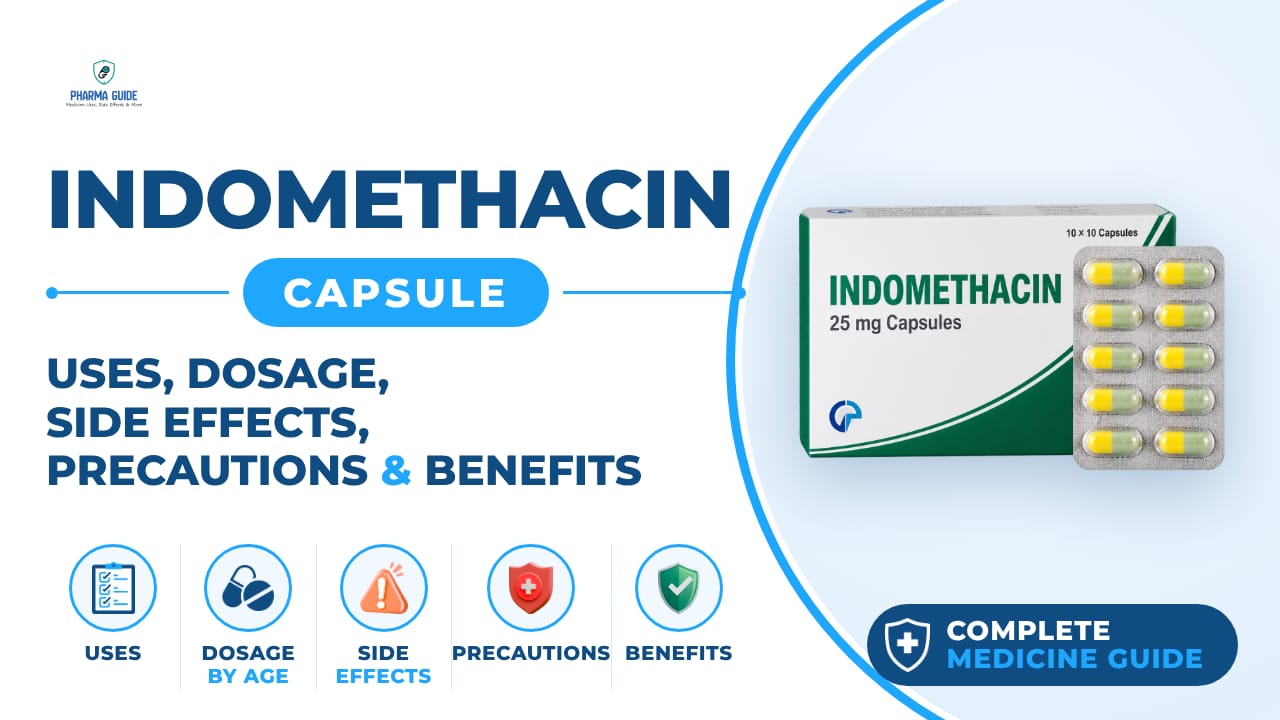
| Generic name | Indomethacin |
|---|---|
| Drug class | Nonsteroidal anti-inflammatory drug (NSAID) |
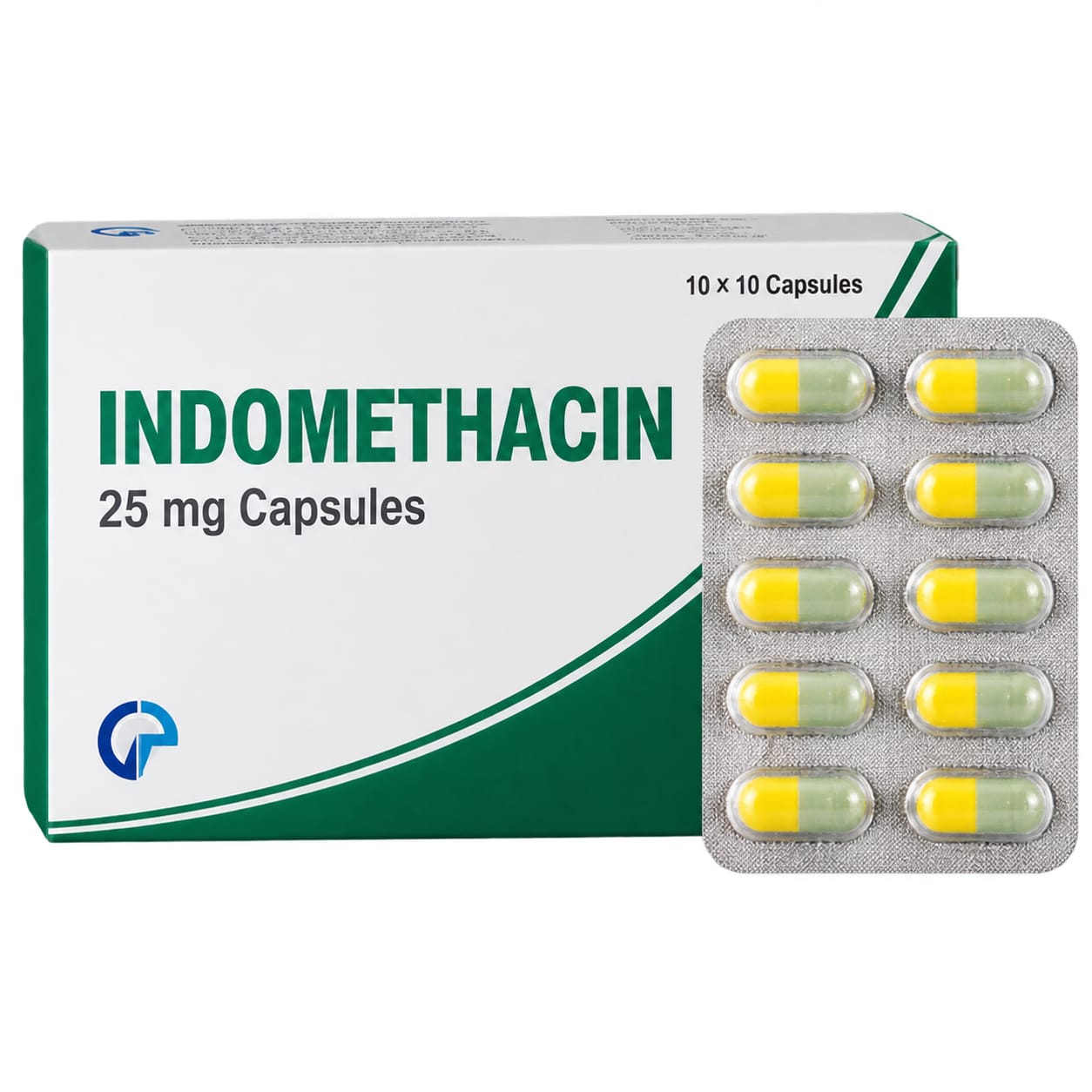
| Forms | Capsule (25 mg and 50 mg) |
Quick overview
Indomethacin Capsule is a prescription nonsteroidal anti-inflammatory drug (NSAID) that reduces inflammation and relieves pain. It is used for certain types of arthritis, bursitis, tendinitis, gout, and other conditions causing severe pain. It relieves symptoms but does not cure the underlying illness, and it only works as long as you keep taking it. Brand names include Indocin and Tivorbex.
What is Indomethacin Capsule
Indomethacin is a prescription nonsteroidal anti-inflammatory drug (NSAID) that reduces inflammation and relieves pain. It is used to treat certain types of arthritis, bursitis, tendinitis, gout and other conditions that cause severe pain. It relieves symptoms but does not cure the illness or stop it from getting worse; it only works as long as you keep taking it. Brand names include Indocin and Tivorbex.
Indomethacin Capsule uses
- Moderate to severe rheumatoid arthritis, including acute flares of chronic disease
- Moderate to severe ankylosing spondylitis
- Moderate to severe osteoarthritis
- Acute painful shoulder (bursitis and/or tendinitis)
- Acute gouty arthritis
- Degenerative joint disease (osteoarthritis) of the hip
Benefits of Indomethacin Capsule
- Relieves pain, tenderness, swelling and stiffness
- Reduces inflammation
- Reduces fever
- Can increase mobility in people with rheumatic disorders
How Indomethacin Capsule works
Indomethacin works by lowering the substances in the body (prostaglandins) that cause pain, swelling and fever. This reduces inflammation and eases pain.
Indomethacin Capsule dosage
Take this medication by mouth as directed on the prescription label, at the same time every day. You can take it with or without food. If it upsets your stomach, take it with food or milk. Taking the drug immediately after meals, with food, or with antacids may lessen stomach upset.
To keep the capsule whole, do not open or chew it during swallowing; swallow it whole. Keep taking it unless your care team tells you to stop.
If you are taking it for arthritis, take it regularly as prescribed; it may take up to 2 weeks to start feeling better and up to 1 month to feel the full effect. Do not take aspirin or other NSAIDs while taking this medicine unless your care team tells you to.
A Medication Guide will be given to you with each prescription and refill; read it carefully each time. People 65 years and older may have a stronger reaction and may need a smaller dose.
| Age group | Dose |
|---|---|
| Under 14 years | Generally not recommended unless specifically prescribed |
| 14–17 years | Use only under specialist medical supervision; dosing depends on the condition |
| 18–64 years | Commonly 25 mg 2–3 times daily; the dose may be adjusted according to the condition |
| 65+ years | Usually the lowest effective dose for the shortest possible duration, with medical supervision |
Available forms and strengths
- Capsule (25 mg and 50 mg)
Side effects of Indomethacin Capsule
Common
- Headache
- Dizziness
- Indigestion (dyspepsia), heartburn
- Nausea
- Vomiting
- Upset stomach
- Loss of appetite
- Diarrhea
- Constipation
- Gas (flatulence)
- Bloating
- Abdominal pain
- Drowsiness
- Tiredness
Serious
- Heart attack (chest pain, shortness of breath, weakness, cold or clammy skin, feeling faint)
- Stroke (sudden numbness or weakness, trouble speaking, confusion, trouble walking, severe headache, change in vision)
- Serious stomach or intestinal bleeding, ulcers, or tears (black tarry stools, vomiting blood or material that looks like coffee grounds)
- Heart failure (shortness of breath, swelling of ankles/feet/hands, sudden weight gain, unusual weakness)
- New or worsening high blood pressure
- Liver injury or failure (yellowing skin or eyes, dark urine, right upper belly pain, loss of appetite)
- Kidney injury or failure (decrease in amount of urine, swelling of ankles/hands/feet)
- Life-threatening allergic reactions (difficulty breathing, swelling of the face, lips, tongue or throat)
- Serious skin reactions such as rash with fever, blistering, peeling of skin, Stevens-Johnson syndrome, or toxic epidermal necrolysis
- Low red blood cells (anemia)
- Blood disorders such as low white cells or low platelets
- Blurred or diminished vision
- Aseptic meningitis (stiff neck, severe headache, nausea, vomiting, fever)
Warnings and precautions
- NSAIDs, including indomethacin, increase the risk of serious heart problems such as heart attack and stroke, which can be fatal. This risk may occur early in treatment and can increase with longer use. Do not take indomethacin right before or after heart bypass surgery (CABG).
- NSAIDs increase the risk of serious stomach and intestinal events including bleeding, ulcers, and tears, which can be fatal. These can happen at any time and without warning symptoms. Older adults and people with a past history of ulcers or bleeding are at greater risk.
- Do not take aspirin or other NSAIDs (such as ibuprofen or naproxen) while taking this medicine, as side effects like upset stomach and ulcers become more likely. Use only the lowest effective dose for the shortest possible time to reduce the risk of harmful effects.
- This medicine may cause a temporary decrease in fertility. It is not recommended for women trying to become pregnant.
- Avoid indomethacin from about 30 weeks of pregnancy and later because of the risk of premature closing of a blood vessel in the baby's heart. Between about 20 and 30 weeks, use only if needed; if used for more than 2 days, your provider may monitor the fluid around the baby. It is contraindicated in the third trimester. Tell your care team if you are pregnant or may become pregnant.
- Indomethacin passes into breast milk and is not recommended for use while breastfeeding because of the potential for serious effects in nursing infants. Tell your care team if you are breastfeeding or plan to breastfeed.
- Use with caution if you have kidney problems. It is contraindicated in severe or worsening kidney disease. People with kidney impairment should be closely monitored and may need a lower dose, since the drug is removed mainly by the kidneys.
- Use with caution if you have liver problems. It is contraindicated in severe liver impairment or active liver disease. If liver tests are abnormal or signs of liver disease such as jaundice appear, the drug should be stopped. If prescribed with impaired liver function, it must be done under strict observation.
- Do not drink alcoholic beverages while taking this medicine because you would be more likely to develop stomach problems.
- This medicine may make you drowsy, dizzy or lightheaded. Be careful about driving or doing activities that require alertness. If you feel drowsy, dizzy or lightheaded, do not drive or operate machinery.
Storage
- Store at room temperature, between 15 and 30 degrees C (59 and 86 degrees F).
- Protect from light and moisture.
- Keep the container tightly closed.
- Keep out of the reach of children and pets.
- Get rid of any unused medication after the expiration date.
- To dispose of medication, take it to a medication take-back program, or check the label to see if it should be thrown in the garbage or flushed. If throwing in the trash, mix it with an unwanted substance like cat litter, seal it in a bag, and put it in the trash.
- Do not keep outdated medicine or medicine no longer needed; return unused medicine to your pharmacist.
When to see a doctor
- Get emergency help right away if you have shortness of breath or trouble breathing, slurred speech, chest pain, swelling of the face or throat, or weakness in one part or side of your body.
- Stop taking the medicine and call your care team right away if you have nausea, vomit blood, feel unusually tired or weak, have diarrhea, have blood in your stool or black sticky stools, itching, yellow skin or eyes, unusual weight gain, indigestion or stomach pain, a skin rash or blisters with fever, flu-like symptoms, or swelling of the arms, legs, hands or feet.
- Get immediate emergency help if you have signs of a serious allergic reaction such as difficulty breathing or swelling of the face or throat. If you think you have taken too much of this medicine, contact a poison control center or emergency room at once.
- Check with your care team right away if you develop chills, fever, muscle aches, or other flu-like symptoms, especially before or with a skin rash, as these may be the first signs of a serious allergic reaction.
Alternatives
- Ibuprofen
- Naproxen
- Diclofenac
- Aceclofenac
- Meloxicam
- Celecoxib
- Etoricoxib
Watch the video
FAQs
What is Indomethacin Capsule used for?
It is used to treat moderate to severe rheumatoid arthritis, ankylosing spondylitis, osteoarthritis, acute painful shoulder (bursitis/tendinitis), acute gouty arthritis, and degenerative joint disease of the hip.
How does Indomethacin Capsule work?
It works by lowering prostaglandins in the body, substances that cause pain, swelling and fever, which reduces inflammation and eases pain.
What is the typical dosage for adults?
Adults aged 18 to 64 commonly take 25 mg 2–3 times daily, with the dose adjusted according to the condition being treated.
How long does it take to feel the effects?
If taken for arthritis, it may take up to 2 weeks to start feeling better and up to 1 month to feel the full effect.
What are the serious side effects of Indomethacin Capsule?
Serious side effects include heart attack, stroke, serious stomach or intestinal bleeding, heart failure, liver or kidney injury, life-threatening allergic reactions, severe skin reactions, blood disorders, and aseptic meningitis.
General information, not medical advice
Your prescriber and the leaflet in your pack know your situation. This page does not.
- Follow your prescriber and the leaflet
- Don't start, stop, or change a dose on your own
- Doses and warnings differ by country and product
Sources
- DailyMed - INDOMETHACIN capsule label, Camber Pharmaceuticals, Inc. (updated May 8, 2025)
- Cleveland Clinic - Indomethacin Capsules Health Library
- Auro-Indomethacin (Indomethacin Capsules USP 50 mg) Product Monograph, Auro Pharma Inc. (May 15, 2020)
Video
Related medicines
Relaxyl Capsule: Uses, Dosage, Side Effects, Precautions and Alternates
Nonsteroidal Anti-Inflammatory Drug (NSAID)
Relaxyl Capsule contains diclofenac, an NSAID used to relieve joint and muscle pain, swelling, and inflammation. Learn uses, dosage, and side effects.
Nabumetone Tablet: Uses, Dosage, Side Effects, Precautions and Alternates
Nonsteroidal anti-inflammatory drug (NSAID)
Nabumetone Tablet is an NSAID for osteoarthritis and rheumatoid arthritis pain relief. Learn its dosage, uses, side effects, and safety warnings.