
Safety
General information, not medical advice
Your prescriber and the leaflet in your pack know your situation. This page does not.
- Follow your prescriber and the leaflet
- Don't start, stop, or change a dose on your own
- Doses and warnings differ by country and product
Infanrix Injection: Uses, Dosage, Side Effects, Precautions and Alternates
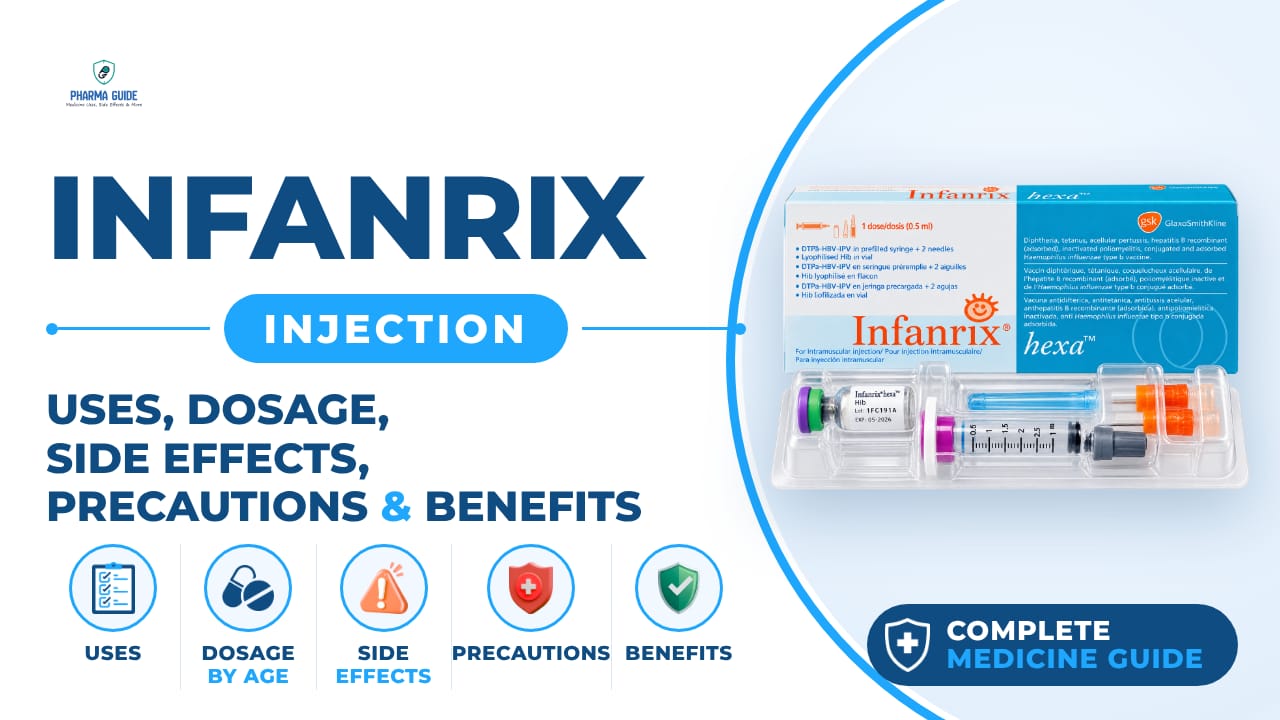
| Generic name | Diphtheria and Tetanus Toxoids and Acellular Pertussis Vaccine Adsorbed (DTaP) |
|---|---|
| Drug class | Vaccine (combination subunit protein vaccine) |
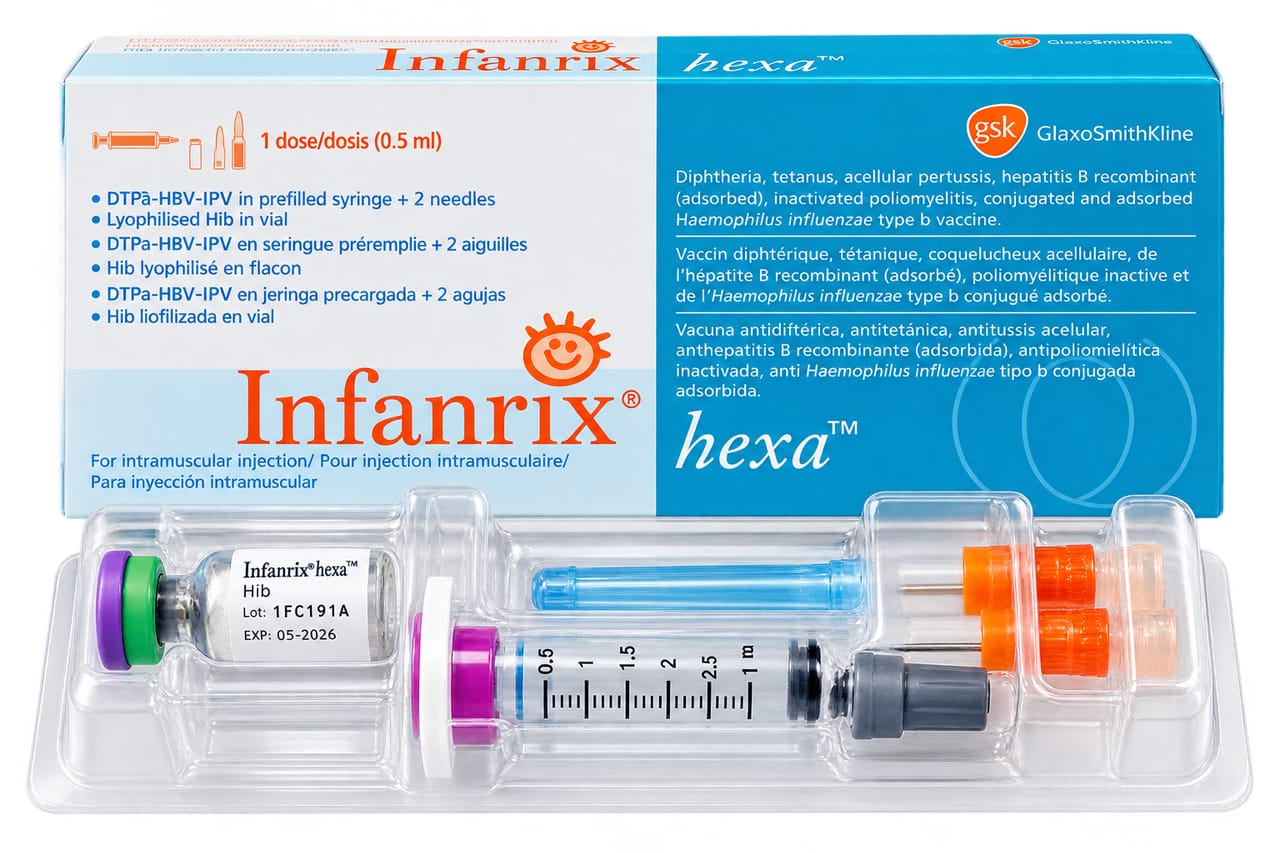
| Forms | Injectable suspension in prefilled syringes |
Quick overview
Infanrix Injection is a vaccine containing diphtheria and tetanus toxoids and acellular pertussis antigens (DTaP), used to protect infants and children against diphtheria, tetanus, and pertussis (whooping cough). It contains non-infectious parts of the bacteria that cause these diseases, so it cannot cause the diseases itself. It is given by injection, usually in the upper leg or arm, as part of a primary series followed by booster doses. Common reactions include injection site soreness and fever, while serious reactions require prompt medical attention.
What is Infanrix Injection
Infanrix is a vaccine that helps protect infants and children against three serious diseases: diphtheria, tetanus, and pertussis (whooping cough). It contains non-infectious parts of the bacteria that cause these diseases, so it cannot cause the diseases itself.
Infanrix Injection uses
- Prevents diphtheria
- Prevents tetanus (lockjaw)
- Prevents pertussis (whooping cough)
Benefits of Infanrix Injection
- Helps protect against diphtheria.
- Helps protect against tetanus.
- Helps protect against pertussis (whooping cough).
- Stimulates the immune system to produce protective antibodies against these infections.
- Helps reduce the risk of serious complications, hospitalization, and death from these diseases.
- Is used as part of routine childhood immunization and booster vaccination schedules.
How Infanrix Injection works
The vaccine contains harmless parts of the bacteria that cause diphtheria, tetanus, and pertussis. The body's immune system recognizes these as foreign and makes antibodies against them, so it can respond quickly if the person is later exposed to the real bacteria.
Infanrix Injection dosage
Infanrix is given by injection into a muscle, usually in the upper leg or upper arm. For children with bleeding problems, the dose may need to be given under the skin instead of into a muscle. It should never be injected into a vein. It is given as a primary series of three doses starting at 2 months of age, with the second and third doses two months apart, followed by booster doses later in childhood. It is important to keep follow-up appointments so all doses are given at the correct times.
| Age group | Dose |
|---|---|
| Infants from 6 weeks | 0.5 mL IM per dose as part of the primary vaccination series |
| Infants – Primary series | Usually 3 doses of 0.5 mL, with timing determined by the national immunization schedule |
| Toddlers/young children | 0.5 mL IM booster dose when scheduled |
| Children up to 7 years | 0.5 mL IM when DTaP vaccination or a booster is indicated |
| 7 years and older | Infanrix is generally not the preferred formulation; an age-appropriate Tdap/Td vaccine is usually used |
Available forms and strengths
- Injectable suspension in prefilled syringes
Side effects of Infanrix Injection
Common
- Pain, redness, and swelling at the injection site
- Fever
- Feeling tired or drowsy
- Irritability or fussiness
- Loss of appetite
- Unusual crying
- Vomiting or diarrhea
- Itchy skin
Serious
- Swelling of limbs, face, eyes, inside of nose, mouth, or throat
- Shortness of breath or trouble breathing or swallowing
- Hives, itching, or severe skin reactions
- Sudden severe tiredness or weakness
- Sudden drop in blood pressure and loss of consciousness
- Crying for 3 hours or more
- Collapse or periods of unconsciousness or lack of awareness
- Seizures (convulsions or fits)
- Fever over 39°C
- Swollen glands in the neck, armpit, or groin
- Unusual bleeding or bruising
Warnings and precautions
- Do not give this vaccine if there has been a severe allergic reaction to a previous dose of any diphtheria, tetanus, or pertussis vaccine, or to any ingredient in the vaccine.
- Do not give this vaccine if the child had a brain disease (encephalopathy) within 7 days of a previous dose of a pertussis-containing vaccine that could not be explained by another cause.
- Do not give this vaccine to children with an ongoing, worsening nervous system disorder, including uncontrolled epilepsy or spasms in infants, until the condition has been treated and stabilized.
- If a nerve condition called Guillain-Barré syndrome occurred within 6 weeks of a previous tetanus-containing vaccine, the decision to give this vaccine again should weigh the benefits and risks carefully.
- Fainting can happen after any injection, so precautions should be taken to prevent injury if this occurs.
- If certain reactions happened after a previous pertussis vaccine dose—such as high fever, a collapse or shock-like state, crying for 3 hours or more, or seizures—the decision to give another pertussis-containing dose should be carefully weighed.
- Premature babies may have breathing pauses (apnea) after the injection, so the timing of vaccination should consider the infant's health status and the benefits and risks.
- In children with weakened immune systems, including those on immune-suppressing medicines, the vaccine may not work as well.
- This vaccine is not approved for infants younger than 6 weeks or children aged 7 to 16 years, as safety and effectiveness have not been established in these groups.
Storage
- Store refrigerated at 2–8°C (36–46°F).
- Keep in the original packaging to protect from light.
- Do not freeze; discard the vaccine if it has been frozen.
- Maintain the recommended cold chain during storage and transport.
- Do not use after the expiry date or if proper storage conditions were not maintained.
- Keep securely stored and out of reach of children.
When to see a doctor
- Get medical help right away if there is swelling of the limbs, face, eyes, nose, mouth, or throat, or trouble breathing or swallowing.
- Seek emergency care for hives, itching (especially of the hands or feet), skin redness (especially around the ears), or severe skin reactions.
- Get help immediately for sudden severe tiredness or weakness, or a sudden drop in blood pressure with loss of consciousness.
- Call a doctor straight away or go to the emergency department if the child cries for 3 hours or more, or has a period of collapse or unconsciousness within 2 to 3 days of vaccination.
- Get emergency care if the child has seizures (convulsions or fits) or a fever over 39°C.
- Seek help for unusual bleeding or bruising after vaccination.
Alternatives
- Daptacel
- Pediarix
- Infanrix Hexa
- Pentacel
- Boostrix
Watch the video
FAQs
What is Infanrix Injection used for?
Infanrix Injection is used to protect infants and children against diphtheria, tetanus (lockjaw), and pertussis (whooping cough).
How is Infanrix Injection given?
Infanrix is given by injection into a muscle, usually in the upper leg or upper arm, as a primary series of three doses starting at 2 months of age, with the second and third doses two months apart, followed by booster doses later in childhood. For children with bleeding problems, it may be given under the skin instead.
What are the common side effects of Infanrix Injection?
Common side effects include pain, redness, and swelling at the injection site, fever, tiredness or drowsiness, irritability, loss of appetite, unusual crying, vomiting or diarrhea, and itchy skin.
Who should not receive Infanrix Injection?
Infanrix should not be given if there has been a severe allergic reaction to a previous dose of any diphtheria, tetanus, or pertussis vaccine, if the child had encephalopathy within 7 days of a previous pertussis-containing vaccine, or if the child has an ongoing, worsening nervous system disorder until it is stabilized.
When should I seek medical help after Infanrix vaccination?
Seek medical help right away for swelling of the limbs, face, or throat, trouble breathing or swallowing, severe skin reactions, sudden weakness, crying for 3 hours or more, seizures, fever over 39°C, or unusual bleeding or bruising.
General information, not medical advice
Your prescriber and the leaflet in your pack know your situation. This page does not.
- Follow your prescriber and the leaflet
- Don't start, stop, or change a dose on your own
- Doses and warnings differ by country and product
Sources
Video
Related medicines

Injectafer Injection: Uses, Dosage, Side Effects, Precautions and Alternates
Iron products
Injectafer (ferric carboxymaltose) treats iron deficiency anemia and heart failure-related iron deficiency via IV. Learn uses, dosage, side effects, and

Gliclazide Tablet: Uses, Dosage, Side Effects, Precautions and Alternates
Sulfonylurea (hypoglycemic/antidiabetic agent)
Gliclazide Tablet is a sulfonylurea for type 2 diabetes that boosts insulin release. Learn about dosage, side effects, warnings, and precautions.