
Safety
General information, not medical advice
Your prescriber and the leaflet in your pack know your situation. This page does not.
- Follow your prescriber and the leaflet
- Don't start, stop, or change a dose on your own
- Doses and warnings differ by country and product
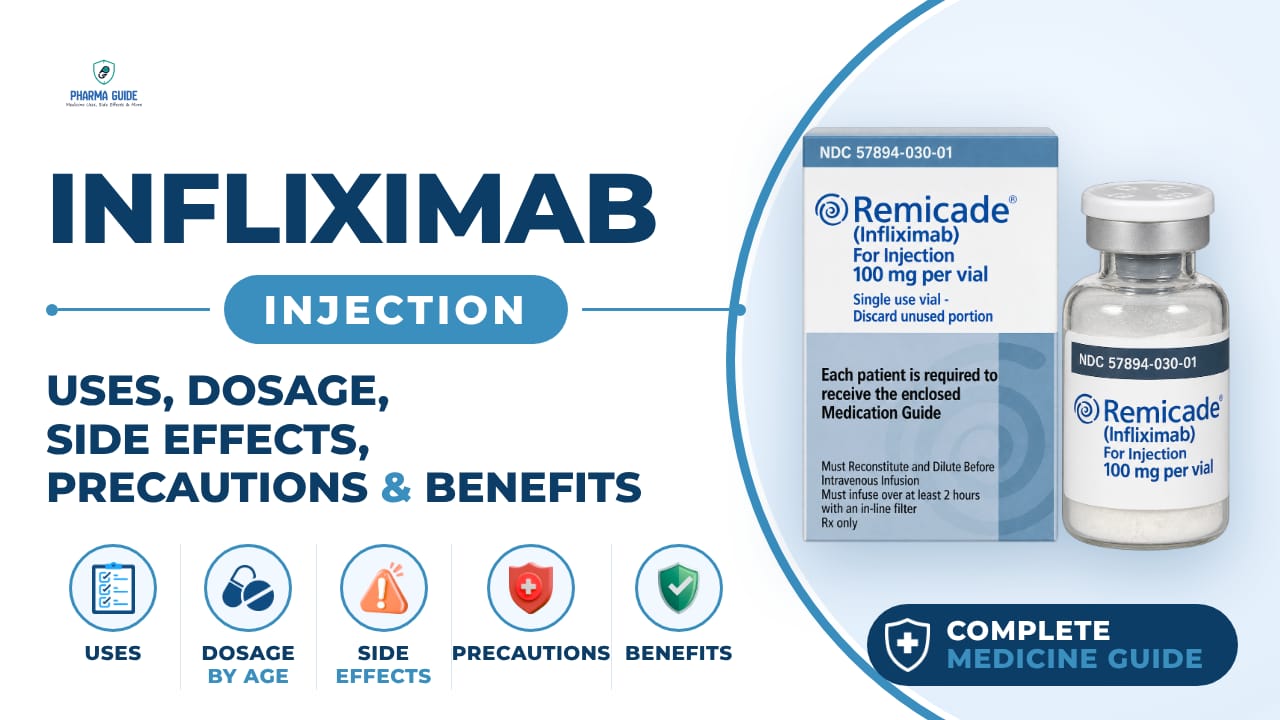
Infliximab Injection: Uses, Dosage, Side Effects, Precautions and Alternates
| Generic name | Infliximab |
|---|---|
| Drug class | Tumor necrosis factor (TNF) blocker / biologic |
| Forms | Lyophilized powder for reconstitution and intravenous infusion, Injection (biosimilar version, subcutaneous) |
Quick overview
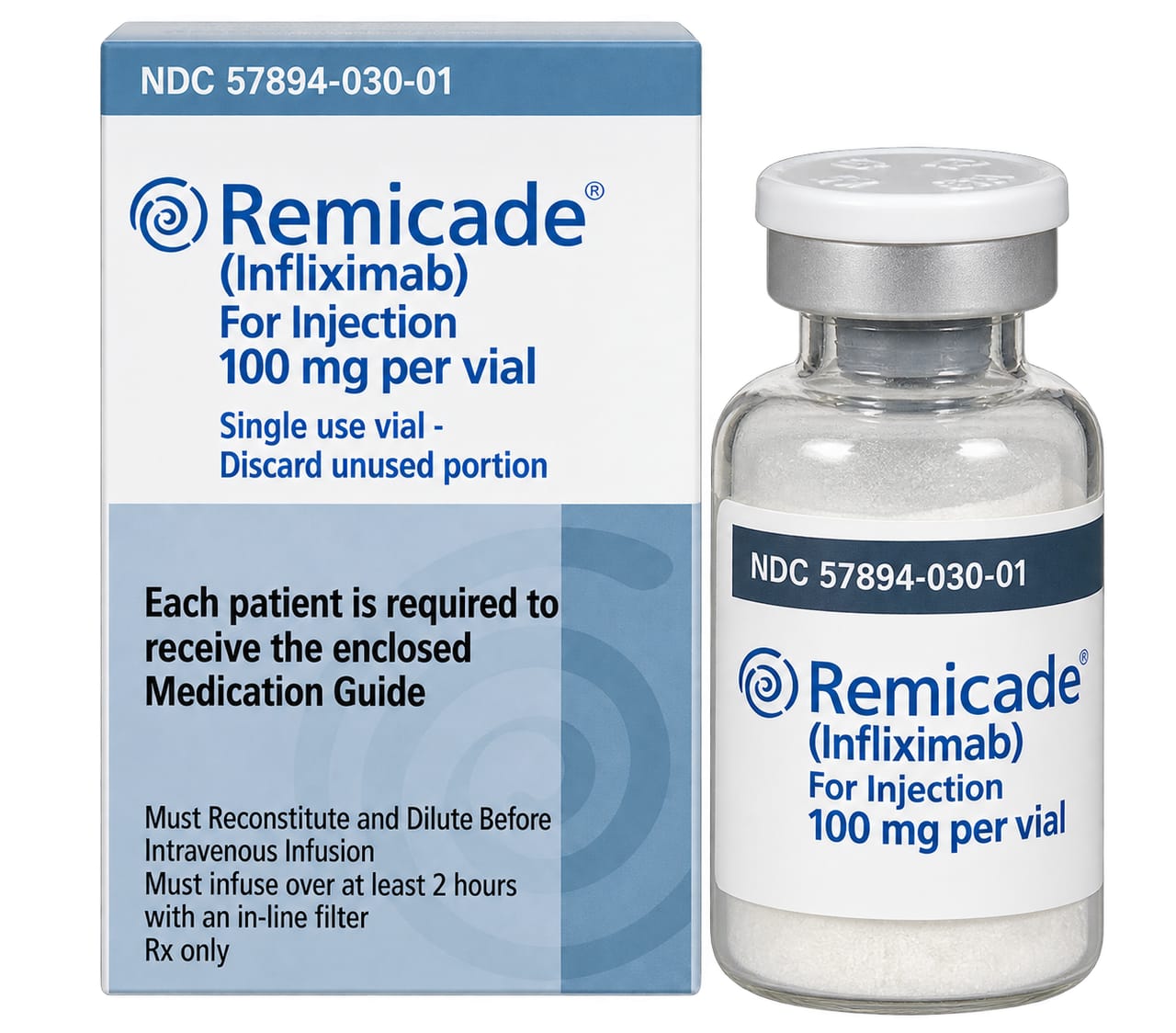
Infliximab Injection (infliximab) is a prescription biologic medicine given by IV infusion that blocks tumor necrosis factor-alpha (TNF-alpha), a protein involved in inflammation. It is used to treat conditions such as rheumatoid arthritis, Crohn's disease, ankylosing spondylitis, psoriatic arthritis, plaque psoriasis, and ulcerative colitis. Only a healthcare professional can prepare and administer this medicine, and it is given on a specific infusion schedule.
What is Infliximab Injection
Infliximab is a prescription biologic medicine given by IV infusion. It belongs to a class of drugs called tumor necrosis factor (TNF) blockers. It blocks a protein in the body called tumor necrosis factor-alpha (TNF-alpha), which is involved in causing inflammation in certain immune conditions.
Infliximab Injection uses
- Rheumatoid Arthritis - adults with moderately to severely active rheumatoid arthritis, along with methotrexate
- Crohn's Disease - children 6 years and older and adults who have not responded well to other medicines
- Ankylosing Spondylitis in adults
- Psoriatic Arthritis in adults
- Plaque Psoriasis - adult patients with chronic, severe, extensive, and/or disabling plaque psoriasis
- Ulcerative Colitis - children 6 years and older and adults with moderately to severely active disease who have not responded well to other medicines
Benefits of Infliximab Injection
- Inflammation Control: Blocks TNF-α, a protein that promotes inflammation.
- Rheumatoid Arthritis Support: Helps reduce joint inflammation, pain, and stiffness.
- Crohn's Disease Support: Helps induce and maintain remission in eligible patients.
- Ulcerative Colitis Support: Helps control inflammation and maintain remission.
- Psoriatic Arthritis Support: Helps reduce inflammatory joint symptoms.
- Ankylosing Spondylitis Support: Helps reduce spinal inflammation and stiffness.
How Infliximab Injection works
Infliximab works by blocking a protein called TNF-alpha that the immune system makes. In certain diseases, too much TNF-alpha causes the immune system to attack healthy parts of the body, and infliximab blocks the damage this causes.
Infliximab Injection dosage
You will be given infliximab through a needle placed in a vein (an IV or intravenous infusion) in your arm. Your doctor may give you medicine before starting the infusion to prevent or lessen side effects. Only a healthcare professional should prepare and give you this medicine. The infusion is given over a period of about 2 hours, and a healthcare professional will monitor you during the infusion and for a period of time afterward for side effects.
Your symptoms should start to improve within 2 to 12 weeks of starting treatment. After the first infusion, you will have another about two weeks later, then a third about four weeks after that, and then continue roughly every eight weeks. It is important to keep having your infusions on schedule, even if it doesn't seem to be working at first, and to continue once your symptoms improve to help keep your condition under control.
| Age group | Dose |
|---|---|
| 6–17 Years | 5 mg/kg IV infusion; schedule depends on the condition |
| Adults (18–64 Years) | 5 mg/kg IV infusion for several approved conditions; dosing interval depends on the condition |
| Older Adults (65+ Years) | 5 mg/kg IV infusion when indicated; individualized according to medical condition |
Available forms and strengths
- Lyophilized powder for reconstitution and intravenous infusion
- Injection (biosimilar version, subcutaneous)
Side effects of Infliximab Injection
Common
- Respiratory infections, such as sinus infections and sore throat
- Headache
- Coughing
- Stomach pain
- Nausea and indigestion
- Blocked or runny nose
- Dizziness
- Flushing
- Rash
- Faster or irregular heartbeat
- Infusion reactions such as fever, chills, chest pain, high or low blood pressure, shortness of breath, rash, or itching occurring up to 2 hours after infusion
Serious
- Serious infections including tuberculosis and infections caused by viruses, fungi, or bacteria that have spread throughout the body
- Increased risk of lymphoma and other cancers, including a rare and often fatal hepatosplenic T-cell lymphoma
- Skin cancers
- New or worsening congestive heart failure
- Serious liver problems including jaundice, dark urine, right-sided abdominal pain, and extreme tiredness
- Blood problems such as low blood cell counts, easy bruising or bleeding, or persistent fever
- Nervous system problems such as vision changes, numbness or tingling, weakness in arms or legs, or seizures
- Stroke symptoms within about 24 hours of infusion
- Severe allergic reactions including hives, difficulty breathing, chest pain, high or low blood pressure, fever, and chills
- Delayed allergic reactions occurring 3 to 12 days after treatment
- Lupus-like syndrome with chest pain, joint pain, shortness of breath, or rash that worsens in the sun
- New or worsening psoriasis
- Heart attack, low blood flow to the heart, or abnormal heart rhythm within 24 hours of infusion
- Hepatitis B virus reactivation in chronic carriers
Warnings and precautions
- Infliximab can weaken your immune system's ability to fight infections, and serious infections including tuberculosis and infections that spread through the body have occurred, sometimes leading to death.
- There is an increased risk of lymphoma and other cancers, including a rare and often fatal type called hepatosplenic T-cell lymphoma, mostly seen in teenage or young adult males treated for Crohn's disease or ulcerative colitis together with azathioprine or 6-mercaptopurine.
- You should not receive infliximab if you have heart failure, unless your doctor has examined you and decided you can safely receive it, since your heart failure may get worse. Do not take infliximab together with other biologic medicines like anakinra, abatacept, or tocilizumab used for the same conditions, as this can increase infection risk. You and children receiving infliximab should not receive live vaccines, and children should be brought up to date on vaccinations before starting treatment.
- It is not known if infliximab is safe during pregnancy. You and your doctor should decide together whether you should receive infliximab if you are pregnant or planning to become pregnant, since the drug can cross the placenta and affect your baby.
- It is not known whether infliximab passes into breast milk. Talk to your doctor about the best way to feed your baby if you are taking infliximab.
- Tell your doctor if you have liver problems, including liver failure, before starting treatment, since infliximab has been linked to serious liver injury in some patients.
- There is no need to avoid alcohol while taking infliximab, but adults should follow general guidelines of not drinking more than the recommended weekly limit, spread across the week.
Storage
- Infliximab must be refrigerated at 2°C to 8°C (36°F to 46°F)
- Do not use infliximab beyond the expiration date located on the carton and the vial
- This product contains no preservative
When to see a doctor
- Call your doctor right away if you have any signs of infection after starting treatment, including fever, cough, flu-like symptoms, or open cuts or sores on your body.
- Tell your doctor right away if you have symptoms of heart problems such as chest discomfort or pain, shortness of breath, sudden weight gain, or swelling of the ankles or feet.
- Tell your doctor if you notice signs of liver problems such as yellowing of the skin or eyes, dark brown urine, right-sided abdominal pain, fever, or extreme tiredness.
- Seek help immediately if you have symptoms of a stroke, including numbness or weakness of the face, arm or leg, sudden confusion, trouble speaking, sudden trouble seeing, dizziness, or a sudden severe headache.
- Tell your doctor right away if you have signs of an allergic reaction such as hives, difficulty breathing, chest pain, changes in blood pressure, fever, or chills.
- Tell your doctor if you develop a fever that does not go away, bruise or bleed very easily, or look very pale, as these may be signs of a blood problem.
Alternatives
- Adalimumab
- Etanercept
- Golimumab
Watch the video
FAQs
What is Infliximab Injection used for?
It is used to treat rheumatoid arthritis, Crohn's disease, ankylosing spondylitis, psoriatic arthritis, plaque psoriasis, and ulcerative colitis.
How is Infliximab Injection given?
It is given as an IV infusion by a healthcare professional over about 2 hours, with monitoring during and after the infusion.
How often are Infliximab infusions scheduled?
After the first infusion, the second is given about two weeks later, the third about four weeks after that, and then roughly every eight weeks.
How long does it take for Infliximab to work?
Symptoms should start to improve within 2 to 12 weeks of starting treatment.
What are the serious side effects of Infliximab Injection?
Serious side effects include serious infections like tuberculosis, increased risk of lymphoma and other cancers, congestive heart failure, liver problems, blood problems, nervous system problems, stroke symptoms, severe allergic reactions, and hepatitis B reactivation.
General information, not medical advice
Your prescriber and the leaflet in your pack know your situation. This page does not.
- Follow your prescriber and the leaflet
- Don't start, stop, or change a dose on your own
- Doses and warnings differ by country and product
Sources
Video
Related medicines

Injectafer Injection: Uses, Dosage, Side Effects, Precautions and Alternates
Iron products
Injectafer (ferric carboxymaltose) treats iron deficiency anemia and heart failure-related iron deficiency via IV. Learn uses, dosage, side effects, and

Gliclazide Tablet: Uses, Dosage, Side Effects, Precautions and Alternates
Sulfonylurea (hypoglycemic/antidiabetic agent)
Gliclazide Tablet is a sulfonylurea for type 2 diabetes that boosts insulin release. Learn about dosage, side effects, warnings, and precautions.