
Safety
General information, not medical advice
Your prescriber and the leaflet in your pack know your situation. This page does not.
- Follow your prescriber and the leaflet
- Don't start, stop, or change a dose on your own
- Doses and warnings differ by country and product
Ingenol Mebutate Gel: Uses, Dosage, Side Effects, Precautions and Alternates
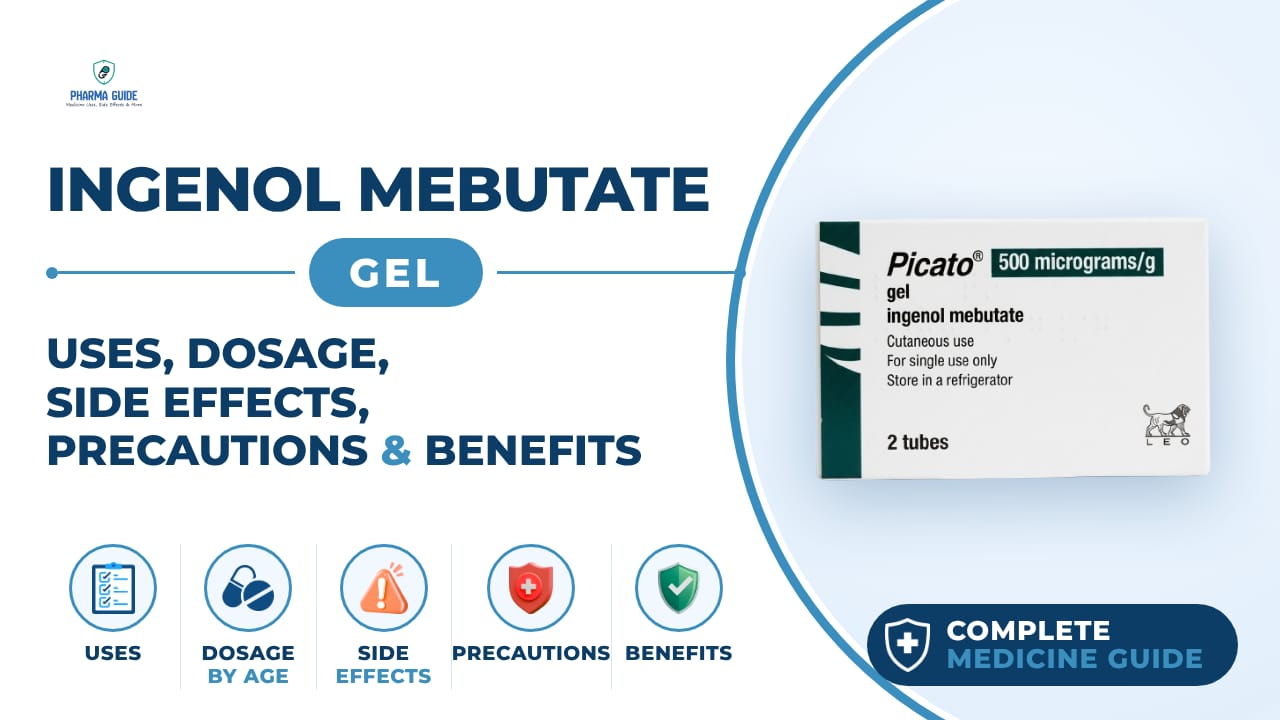
| Generic name | ingenol mebutate |
|---|---|
| Drug class | Antibiotics and chemotherapeutics for dermatological use, other chemotherapeutics |
| Forms | Gel (clear, colourless), in single-use tubes |
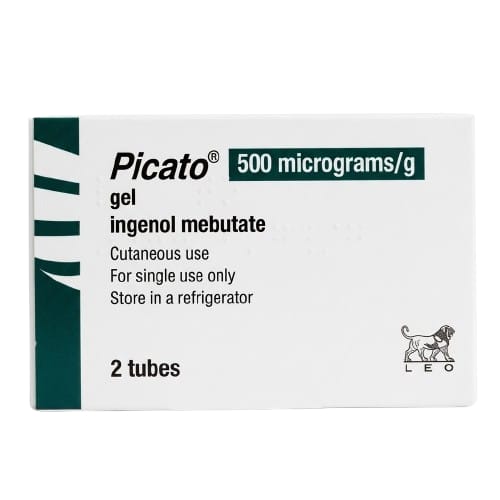
Quick overview
Ingenol Mebutate Gel (Picato) is a prescription gel containing ingenol mebutate, used on the skin to treat actinic keratosis (solar keratosis) in adults. It is available in two strengths depending on the area of the body being treated and is applied for a short course of only 2 or 3 days. It is not recommended for use in children, adolescents, or adults aged 65 and over.
What is Ingenol Mebutate Gel
Ingenol Mebutate Gel is a prescription gel containing ingenol mebutate. It is used on the skin to treat actinic keratosis, also called solar keratosis, which is rough, scaly patches of skin caused by long-term sun exposure.
Ingenol Mebutate Gel uses
- Treatment of non-hyperkeratotic, non-hypertrophic actinic keratosis on the face and scalp in adults (150 mcg/g strength)
- Treatment of non-hyperkeratotic, non-hypertrophic actinic keratosis on the trunk and extremities in adults (500 mcg/g strength)
Benefits of Ingenol Mebutate Gel
- Clears actinic keratosis lesions from the skin better than a gel without the active ingredient
- Can be applied by the patient at home
- Short treatment course of only 2 or 3 days
How Ingenol Mebutate Gel works
The exact way the medicine works is not fully understood, but it is thought to work in two ways: it directly damages and kills the abnormal skin cells, and it also triggers an inflammatory response in the skin that helps clear the lesion.
Ingenol Mebutate Gel dosage
Open a new tube each time you use this medicine and remove the cap just before use. Squeeze the gel from one tube onto a fingertip and spread it evenly over the entire treatment area. Let the area air-dry for 15 minutes after applying.
Wash your hands with soap and water immediately after applying the gel, and again if you touch the treated area. If treating the hands, only wash the fingertip used to apply the gel.
Avoid touching or washing the treated area for 6 hours after application; after that, the area may be washed with mild soap and water. Do not apply the gel right after taking a shower or less than 2 hours before going to bed. Do not cover the treated area with air-tight or water-tight bandages after applying. Do not let other people or pets touch the treated area for 6 hours after application.
This medicine is not recommended for use in children or adolescents, since actinic keratosis does not occur in this age group. No dose adjustment is needed for elderly patients. The full effect of treatment can be judged about 8 weeks after finishing treatment.
| Age group | Dose |
|---|---|
| Under 18 years | Not recommended |
| 18–64 years | 0.015% gel, once/day |
| 65+ years | Not recommended |
Available forms and strengths
- Gel (clear, colourless), in single-use tubes
- 150 mcg/g strength
- 500 mcg/g strength
Side effects of Ingenol Mebutate Gel
Common
- Redness (erythema)
- Flaking or scaling
- Crusting or scabs
- Swelling at the application site
- Blisters (vesicles, pustules)
- Wearing away of the outer skin layer (erosion)
- Pain or burning at the application site
- Itching
- Irritation
- Headache
- Eyelid swelling
- Swelling around the eye
Serious
- Skin infection at the application site
- Severe allergic reaction, including swelling of the mouth, tongue, or throat
- Chemical conjunctivitis or corneal burn from accidental eye contact
- Eye pain
- Scarring
- Tingling or numbness
- Open sores (ulcers)
- Discharge of fluid from the treated skin
- Change in skin colour
- Severe local skin reactions
- Reports of shingles (herpes zoster) associated with use
- Reports linking long-term or repeat use to a higher risk of skin cancer (squamous cell carcinoma), which led to the product being withdrawn from the market
Warnings and precautions
- Do not get this medicine in your eyes. Contact with the eyes can cause chemical conjunctivitis and burns to the surface of the eye. Wash your hands thoroughly after applying the gel and after touching the treated area.
- Do not swallow this medicine. If you accidentally swallow it, drink plenty of water and get medical care.
- Do not use this medicine until your skin has fully healed from any previous treatment or surgery, and do not apply it to open wounds or damaged skin.
- Do not apply this medicine near the eyes, inside the nostrils, inside the ears, or on the lips.
- Expect skin reactions like redness, flaking, and crusting after using this medicine — this is normal, but contact your doctor if these reactions become severe.
- Try to avoid too much sun exposure, including sunlamps and tanning beds, while being treated for actinic keratosis.
- Any skin lesions that look unusual for actinic keratosis or might be cancerous should be checked with a biopsy before treatment.
- This medicine must not be used in children or teenagers under 18 years old.
- International reports have linked this medicine to severe allergic reactions and shingles, and studies have linked long-term or repeated use to a higher risk of skin cancer, which led to the manufacturer withdrawing the product from the market.
- It is best to avoid using this medicine if you are pregnant, as a precaution, even though the medicine is not expected to be absorbed into the body.
- If you are breastfeeding, avoid letting your baby have physical contact with the treated skin area for 6 hours after you apply the gel.
- Systemic absorption was low, so renal dosing was not generally a major consideration. No routine liver-based dose adjustment was established. No important direct interaction with alcohol was established. This medicine is not expected to affect your ability to drive or use machines.
Storage
- Store in a refrigerator (2°C–8°C)
- Keep out of the sight and reach of children
- Do not use after the expiry date shown on the carton and tube
- For single use only — do not reuse tubes once opened; discard the tube after use
- Do not throw away medicines via wastewater or household waste; ask your pharmacist how to dispose of medicines you no longer use
When to see a doctor
- Get medical care right away if the gel gets into your eyes — rinse with plenty of water first.
- Seek medical help if you accidentally swallow this medicine, after drinking plenty of water.
- Contact your doctor if the skin reactions at the treatment site become severe.
- Contact your doctor or pharmacist if symptoms get worse more than a week after you stop treatment, or if you notice pus, as this could mean you have an infection.
- Seek medical help for signs of a severe allergic reaction, such as swelling of the throat, difficulty breathing, or swelling of the lips, face, or tongue.
Alternatives
- Imiquimod
- 5-Fluorouracil topical
- Diclofenac topical
- Tirbanibulin
Watch the video
FAQs
What is Ingenol Mebutate Gel used for?
It is a prescription gel used to treat non-hyperkeratotic, non-hypertrophic actinic keratosis (solar keratosis) on the face and scalp, trunk, and extremities in adults.
How long is the treatment course for Ingenol Mebutate Gel?
It is applied for a short course of only 2 or 3 days, depending on the treatment area and strength used.
Can Ingenol Mebutate Gel be used by elderly patients or children?
No, it is not recommended for use in children, adolescents, or adults aged 65 and over.
What are the common side effects of Ingenol Mebutate Gel?
Common side effects include redness, flaking or scaling, crusting, swelling, blisters, erosion, pain or burning, itching, irritation, headache, and eyelid or eye-area swelling.
Why was Ingenol Mebutate Gel withdrawn from the market?
Reports linking long-term or repeat use to a higher risk of skin cancer (squamous cell carcinoma) led to the product being withdrawn from the market.
General information, not medical advice
Your prescriber and the leaflet in your pack know your situation. This page does not.
- Follow your prescriber and the leaflet
- Don't start, stop, or change a dose on your own
- Doses and warnings differ by country and product
Sources
Video
Related medicines
Picato Gel: Uses, Dosage, Side Effects, Precautions and Alternates
Antibiotics and chemotherapeutics for dermatological use, other chemotherapeutics
Picato Gel treats actinic keratosis with a short 2-3 day course. Learn about dosage, strengths, side effects, warnings, and storage tips here.

Injectafer Injection: Uses, Dosage, Side Effects, Precautions and Alternates
Iron products
Injectafer (ferric carboxymaltose) treats iron deficiency anemia and heart failure-related iron deficiency via IV. Learn uses, dosage, side effects, and