
Safety
General information, not medical advice
Your prescriber and the leaflet in your pack know your situation. This page does not.
- Follow your prescriber and the leaflet
- Don't start, stop, or change a dose on your own
- Doses and warnings differ by country and product
Inlyta Tablet: Uses, Dosage, Side Effects, Precautions and Alternates
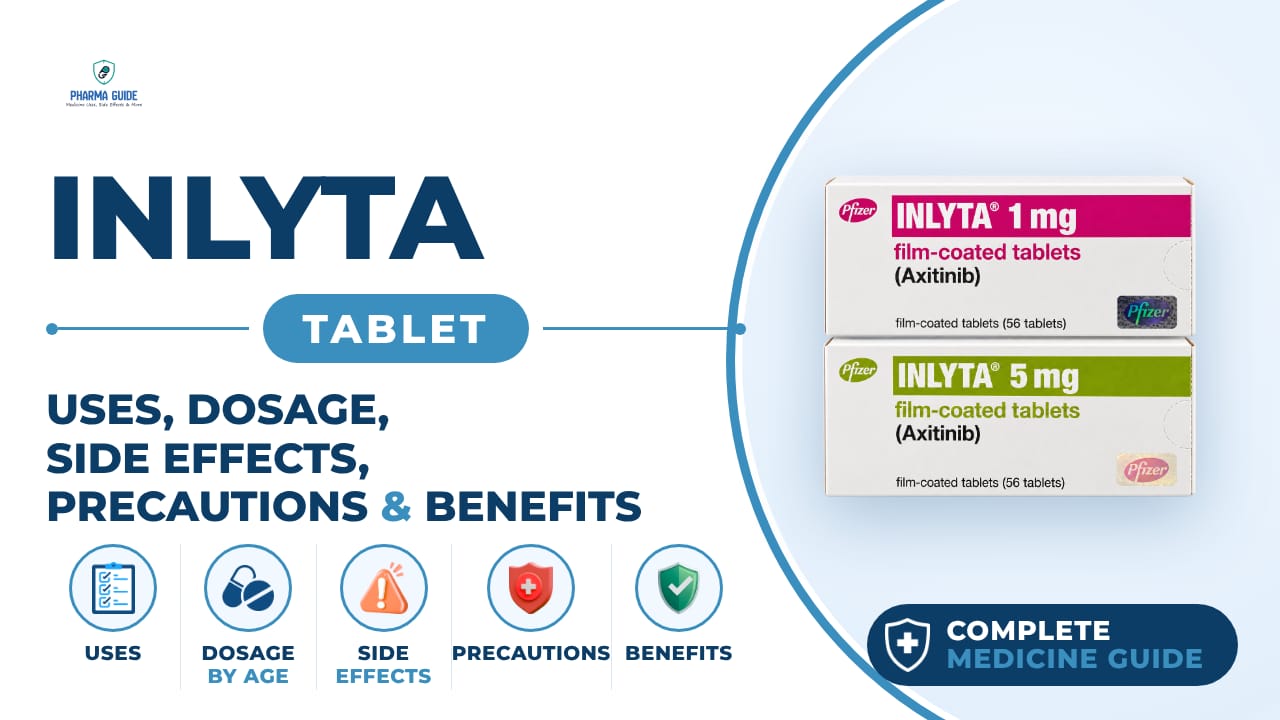
| Generic name | axitinib |
|---|---|
| Drug class | tyrosine kinase inhibitor (kinase inhibitor; VEGF/VEGFR inhibitor) |
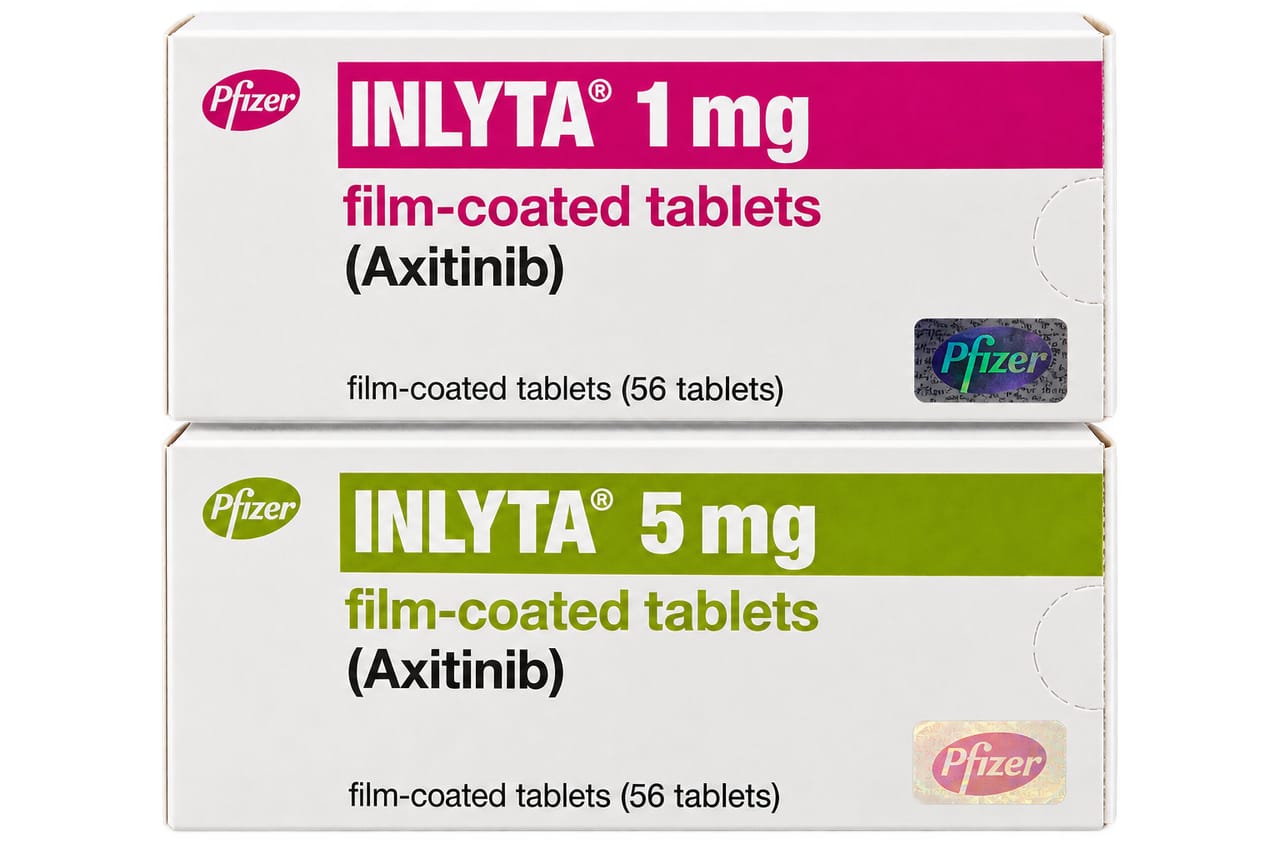
| Forms | 1 mg tablets (red, oval, film-coated), 5 mg tablets (red, triangular, film-coated) |
Quick overview
Inlyta Tablet contains the active ingredient axitinib, a tyrosine kinase inhibitor that also works as a VEGF/VEGFR inhibitor. It is a prescription medicine used to treat advanced renal cell carcinoma (a type of kidney cancer), typically after at least one other cancer treatment has not worked. It is available as 1 mg and 5 mg film-coated tablets and works by reducing the blood supply to tumors to slow cancer growth.
What is Inlyta Tablet
Inlyta is a prescription medicine that contains the active ingredient axitinib. It is used to treat a certain type of kidney cancer called advanced renal cell carcinoma (RCC).
Inlyta Tablet uses
- Treats advanced kidney cancer (advanced renal cell carcinoma, RCC)
- Used after at least one other cancer treatment has not worked or has stopped working
Benefits of Inlyta Tablet
- Helps control kidney cancer by slowing the growth of the tumor
- Can be used in combination with pembrolizumab as a first treatment, or alone after a prior treatment has not worked
- Can help slow tumor growth
- May be used alone or with certain immunotherapies
- Provides an oral targeted-treatment option
How Inlyta Tablet works
Inlyta works by reducing the blood supply to the tumor, which slows down the growth of the cancer. It blocks certain proteins (receptors) on cells that are involved in forming new blood vessels and helping tumors grow.
Inlyta Tablet dosage
Take the tablets exactly as your doctor tells you, and keep taking them until your doctor tells you to stop. Swallow the tablets whole with a glass of water; do not crush, chew, or break them. They can be taken with or without food. Take each dose about 12 hours apart, at the same time each day, to get the best effect and help you remember.
If you miss a dose or vomit after taking it, take your next dose at the regular time — do not take an extra dose to make up for it. Do not stop taking this medicine suddenly or change your dose without checking with your doctor. Tell any doctor, dentist, or pharmacist you visit that you are using this medicine. If you are having surgery, tell your surgeon — you should stop taking this medicine at least 24 hours before a planned surgery. This medicine helps control your condition but does not cure it, so keep taking it even if you feel well.
| Age group | Dose |
|---|---|
| Under 18 years | Safety and effectiveness have not been established |
| 18–64 years | 5 mg twice daily initially |
| 65 years and older | Usually 5 mg twice daily, with individualized oncology monitoring and dose adjustment based on tolerance |
Available forms and strengths
- 1 mg tablets (red, oval, film-coated)
- 5 mg tablets (red, triangular, film-coated)
Side effects of Inlyta Tablet
Common
- Diarrhea
- Tiredness, weakness
- Loss of appetite, weight loss or weight gain
- Hoarseness or change in voice
- Tingling or rash on palms of hands or soles of feet
- Constipation
- Feeling sensitive to cold, lack of energy
- Soreness or burning of the mouth, tongue or throat
- Stomach ache, indigestion
- Headache, pain in hands or feet
- Muscle pain, joint pain
- Change in sense of taste
- Rash, dry skin, skin redness, scaly skin, itchy skin
- Dehydration
- Nose bleeding
- Piles or bleeding from the back passage
- Hair loss
- Unusual urine colour
- Ringing or sound in the ears
- Nausea or vomiting
- Dizziness
- High blood pressure
- Cough, shortness of breath
Serious
- High blood pressure with headaches, dizziness, blurred vision, nausea and vomiting
- Foamy and frothy urine with swelling of abdomen, legs or eyes
- Passing little or no urine, swelling in ankles or feet, confusion, nausea, vomiting, feeling breathless, tired or weak (kidney problems)
- Swelling of feet or legs, leg pain, cough, chest pain or pressure, pain in arms, back, neck or jaw, shortness of breath (blood clots)
- Numbness or weakness on one side of the body, loss of coordination, trouble speaking or swallowing (stroke-like symptoms)
- Headache, confusion, trouble seeing, seizures or fits (RPLS)
- Severe stomach or upper abdominal pain that may spread to the back, with vomiting, fever or fast heartbeat (possible perforation)
- Signs of bleeding: unusual bleeding from gums, heavy menstrual bleeding, pink or brown urine, red or black stools, coughing up blood, vomiting blood or material that looks like coffee grounds
- Liver problems: yellowing of skin or eyes, severe nausea or vomiting, pain in right side of abdomen, dark urine
- Heart failure signs: tiredness, swelling of abdomen, legs or ankles, shortness of breath, protruding neck veins
- Thyroid problems: tiredness that worsens, feeling hot or cold, voice deepening, weight gain or loss, hair loss, muscle cramps and aches
Warnings and precautions
- This medicine can cause serious, sometimes fatal, bleeding. Stop taking it and call your doctor right away if you notice severe stomach pain, bloody or tarry stools, coughing up blood, or any unusual or heavy bleeding.
- Some people develop a hole or tear (perforation) or an abnormal passage (fistula) in the stomach or intestines. Call your doctor if you have severe stomach pain or feel like you are choking or gagging when eating or drinking.
- This medicine can cause high blood pressure, sometimes severe. Your blood pressure should be checked regularly during treatment.
- Do not eat grapefruit or drink grapefruit juice while taking this medicine, as it can increase the amount of medicine in your blood.
- Tell your doctor if you have an unhealed wound or plan to have surgery. You must stop taking this medicine at least 24 hours before a scheduled surgery because it can affect wound healing.
- This medicine can cause a rare brain condition called Reversible Posterior Leukoencephalopathy Syndrome (RPLS), with symptoms such as headache, seizures, confusion, vision problems, and high blood pressure.
- This medicine can affect your thyroid gland. Your doctor will test your thyroid function regularly during treatment.
- Protein in the urine can occur with this medicine. Your doctor will check your urine regularly, and may lower your dose or stop treatment if this happens.
- This medicine should not be used during pregnancy because it can harm the unborn baby. Women who can become pregnant should use effective birth control during treatment, and men should also use effective birth control since the medicine may cause birth defects or pregnancy loss if either partner is using it.
- Breastfeeding is not recommended while taking this medicine because it is not known if it passes into breast milk and it could harm a nursing baby.
- Tell your doctor if you have serious kidney problems other than the kidney cancer being treated, since this medicine is processed by the body and your kidney function may need to be monitored.
- Tell your doctor if you have liver problems. Your doctor will test your liver function before and during treatment, and your dose may need to be lowered if you have moderate liver impairment.
- There is no information available about whether drinking alcohol affects this medicine.
- Be careful driving, operating machinery, or doing tasks that require alertness until you know how this medicine affects you, since it can make some people feel very tired or dizzy.
Storage
- Keep your tablets in the pack until it is time to take them
- Store in a cool dry place where the temperature stays below 30°C, away from moisture, heat or sunlight
- Do not store in the bathroom, near a sink, in the car, or on window sills
- Keep it where young children cannot reach it
- If you no longer need the medicine or it is out of date, take it to any pharmacy for safe disposal
- Do not use this medicine after the expiry date
When to see a doctor
- Get emergency help right away if you have chest pain or pressure, pain spreading to your arms, back, neck or jaw, shortness of breath, sudden numbness or weakness on one side of the body, or trouble speaking — these can be signs of a blood clot or stroke.
- Seek urgent medical attention if you notice unusual bleeding, such as bleeding gums, heavy vaginal bleeding, pink or brown urine, black or tarry stools, coughing up blood, or vomit that looks like coffee grounds.
- Get medical help right away if you have severe stomach or abdominal pain that does not go away, vomit blood, or have red or black stools — these can be signs of a tear in the stomach or intestine.
- Call your doctor right away if you develop signs of a brain condition called RPLS, including headache, seizures, weakness, confusion, high blood pressure, or vision changes.
- Call your doctor straight away if you become pregnant while taking this medicine, or if your partner becomes pregnant during your treatment.
- Tell your doctor right away if you notice yellowing of the skin or eyes, severe nausea or vomiting, pain on the right side of your stomach area, or dark urine — these may be signs of liver problems.
- If you think you have taken too much of this medicine, seek urgent medical attention immediately, even if you feel fine, by contacting your doctor or going to your nearest hospital emergency department.
Alternatives
- Cabozantinib
- Sunitinib
- Pazopanib
Watch the video
FAQs
What is Inlyta Tablet used for?
Inlyta Tablet is used to treat advanced renal cell carcinoma (a type of kidney cancer), typically after at least one other cancer treatment has not worked. It can also be used in combination with pembrolizumab as a first treatment.
How does Inlyta Tablet work?
Inlyta works by reducing the blood supply to the tumor, which slows down the growth of the cancer. It blocks certain proteins (receptors) on cells that are involved in forming new blood vessels and helping tumors grow.
What is the dosage of Inlyta Tablet?
For adults 18 years and older, the usual starting dose is 5 mg twice daily, taken about 12 hours apart. Tablets should be swallowed whole with water and can be taken with or without food. Dose may be adjusted by your doctor based on tolerance.
What should I avoid while taking Inlyta Tablet?
You should avoid eating grapefruit or drinking grapefruit juice while taking this medicine, as it can increase the amount of medicine in your blood. This medicine should also not be used during pregnancy.
What are the serious side effects of Inlyta Tablet?
Serious side effects include severe bleeding, stomach or intestinal perforation, high blood pressure, blood clots, stroke-like symptoms, RPLS (a brain condition), liver problems, heart failure signs, and thyroid problems.
General information, not medical advice
Your prescriber and the leaflet in your pack know your situation. This page does not.
- Follow your prescriber and the leaflet
- Don't start, stop, or change a dose on your own
- Doses and warnings differ by country and product
Sources
Video
Related medicines

Injectafer Injection: Uses, Dosage, Side Effects, Precautions and Alternates
Iron products
Injectafer (ferric carboxymaltose) treats iron deficiency anemia and heart failure-related iron deficiency via IV. Learn uses, dosage, side effects, and

Gliclazide Tablet: Uses, Dosage, Side Effects, Precautions and Alternates
Sulfonylurea (hypoglycemic/antidiabetic agent)
Gliclazide Tablet is a sulfonylurea for type 2 diabetes that boosts insulin release. Learn about dosage, side effects, warnings, and precautions.