
Safety
General information, not medical advice
Your prescriber and the leaflet in your pack know your situation. This page does not.
- Follow your prescriber and the leaflet
- Don't start, stop, or change a dose on your own
- Doses and warnings differ by country and product
Innohep Injection: Uses, Dosage, Side Effects, Precautions and Alternates
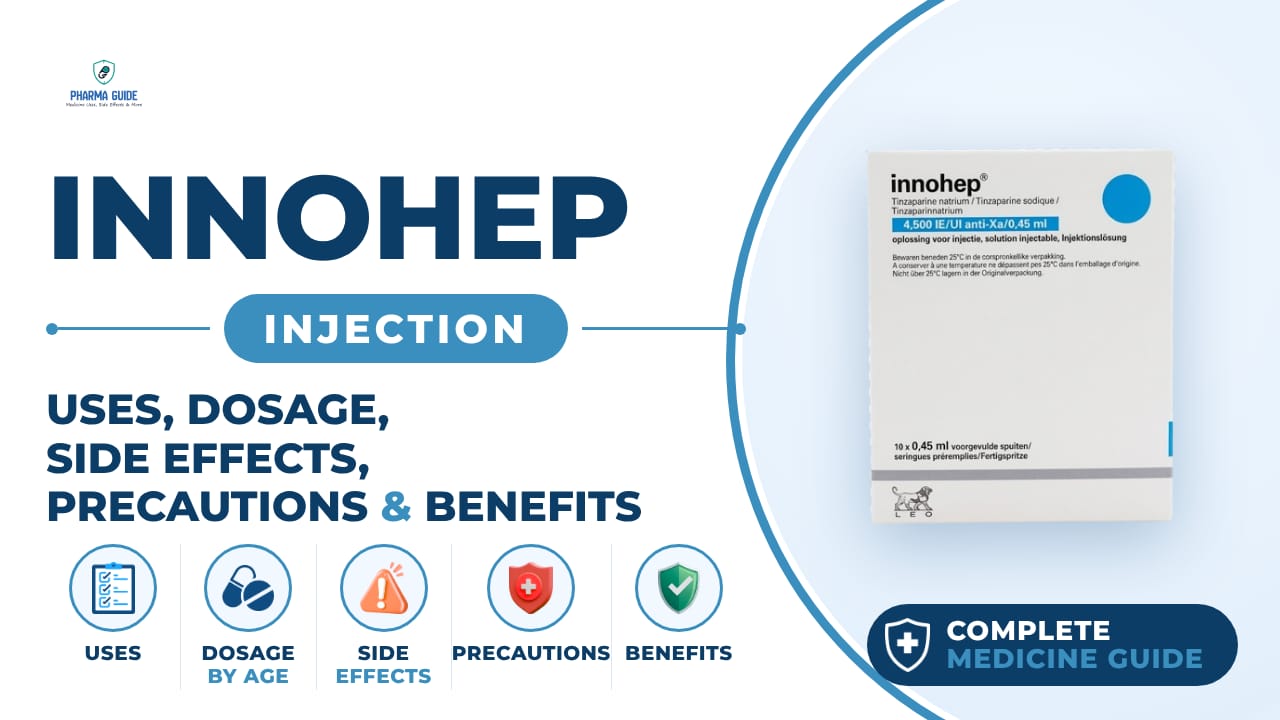
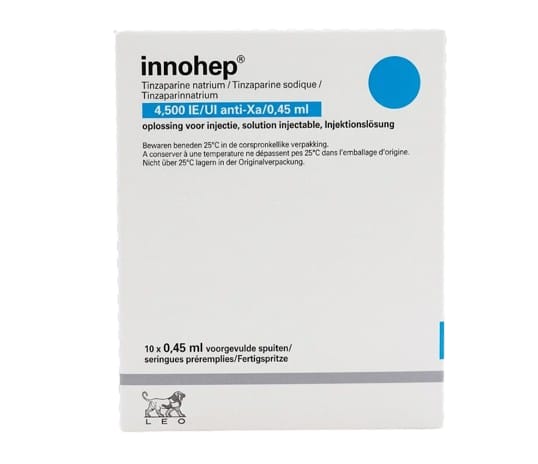
| Generic name | tinzaparin sodium |
|---|---|
| Drug class | Low Molecular Weight Heparin |
| Forms | Solution for injection (prefilled syringe), Multiple dose vial |
Quick overview
Innohep Injection contains tinzaparin sodium, a low molecular weight heparin that belongs to a group of medicines called anticoagulants, which affect how your blood clots. It is given as an injection under the skin to treat and prevent certain blood clots, including deep vein thrombosis and pulmonary embolism. It works by boosting a natural protein in the blood that blocks clotting factors, but it does not dissolve clots that have already formed.
What is Innohep Injection
Innohep is a type of heparin called a low molecular weight heparin. It belongs to a group of medicines called anticoagulants, which affect how your blood clots. It is given as an injection under the skin.
Innohep Injection uses
- Treating deep vein thrombosis (DVT), a harmful blood clot in a deep vein, usually in the leg, when given together with warfarin
- Treating pulmonary embolism (PE), a clot that has traveled to the lung and caused a blockage, which can cause breathing difficulties and chest pain
- Treating clots that may travel in the bloodstream and cause a blockage (thromboembolism)
- Treating blood clots that have developed because of cancer and preventing further clots from forming
Benefits of Innohep Injection
- Helps prevent blood clots in patients at risk
- Treats deep vein thrombosis (DVT)
- Helps treat pulmonary embolism (blood clots in the lungs) in selected cases
- Helps prevent clot formation during certain medical treatments
- Reduces the risk of clot-related complications when used as prescribed
How Innohep Injection works
Innohep stops blood from clotting by boosting a natural protein in the blood called antithrombin, which blocks clotting factors (especially Factor Xa and thrombin). It does not dissolve clots that have already formed.
Innohep Injection dosage
Innohep is given as an injection under the skin (subcutaneous), not into a muscle or vein. It should be injected at the same time every day. It is usually given into the abdomen, but can also be given into the side of the thigh, lower back, upper leg, or upper arm. The injection site should be changed each time, staying away from the previous injection site, scars, stretch marks, or areas that are bruised or tender. Do not rub or massage the injection site afterward, as this can cause bruising. It should not be mixed with other injections or infusions. Treatment is usually given once daily for at least 6 days and may continue for several months, as advised by your doctor.
| Age group | Dose |
|---|---|
| Under 18 years | Not recommended |
| 18–64 years | 3,500 IU, once/day |
| 65+ years | 3,500 IU, once/day |
Available forms and strengths
- Solution for injection (prefilled syringe)
- Multiple dose vial
Side effects of Innohep Injection
Common
- Injection site reactions (pain, bruising, redness, irritation, and swelling)
- Headache
- Dizziness
- Back pain
- Nosebleed
- Fever
- Nausea
- Vomiting
- Stomach pain
- Gas
- Diarrhea
- Constipation
- Skin rash
- Sleep problems (insomnia)
- Reduction in red blood cells, which may make skin pale and cause weakness or breathlessness
- Less serious bleeding from a wound, blood in urine or bowel movements
- Pooling of blood in tissues that may make skin look dark, like a large bruise
Serious
- Easy bleeding or bruising
- Dark urine
- Persistent nausea, vomiting, or loss of appetite
- Yellowing of eyes or skin
- Red or brown urine
- Black tarry stools
- Unusual bruising (very painful, large, or dark bruises)
- Bleeding from the nose or mouth, or any wound that will not stop
- Severe allergic reactions: difficulty breathing, swelling of face or throat, severe skin rash, blistering of skin, mouth, eyes or genitals, or skin peeling
- Signs of paralysis after an epidural or spinal anesthetic: tingling, weakness or numbness in legs or lower body, back pain, problems going to the toilet
- A big drop in platelets (clotting cells) in the blood
- Prolonged, painful erections in men (priapism)
Warnings and precautions
- Patients who have spinal or epidural anesthesia or a spinal puncture while on this medicine or similar drugs can develop bleeding around the spinal cord, which may cause long-term or permanent paralysis
- This medicine is only for injection under the skin. It must never be injected into a muscle or vein
- This medicine cannot be swapped unit-for-unit with heparin or other low molecular weight heparins, because they are made differently and dosed differently
- This medicine should not be used in people who have had a drop in platelets caused by any type of heparin in the past
- Elderly patients with kidney problems may have a higher risk of death on this medicine compared with standard heparin, so doctors should consider other options for these patients
- This medicine should be used with extreme caution in people at higher risk of bleeding, such as those with uncontrolled high blood pressure, certain stomach or intestine conditions, recent brain or spinal surgery, or who take other drugs that affect bleeding
- A drop in platelet count (thrombocytopenia) can happen with this medicine and should be monitored; the medicine should be stopped if platelets fall too low
- This medicine contains a sulfite preservative that can cause severe allergic reactions, including life-threatening asthma attacks, in some sensitive people, especially those with asthma
- Some forms of this medicine contain benzyl alcohol, which has been linked to a fatal 'Gasping Syndrome' in premature babies, so it should be used cautiously in pregnant women
- You must not have an epidural or spinal anesthetic within a certain time window around your Innohep doses, due to the risk of bleeding around the spine
- Innohep should only be used during pregnancy if clearly needed, and you should tell your doctor right away if you become pregnant. The preservative-free form is preferred during pregnancy because the benzyl alcohol in some versions could affect the baby.
- It isn't known whether this medicine passes into breast milk, so check with your doctor before breastfeeding.
- If you have kidney problems, which are more common in elderly patients, your doctor may need to adjust your dose or run extra tests, since the kidneys are the main way this medicine leaves the body.
- This medicine should not affect your ability to drive or use machines, but check with your doctor if you have any side effect that might affect this.
Storage
- Do not use this medicine after the expiry date stated on the carton and label
- Do not use this medicine if you notice any cloudiness or particles in the liquid
- The liquid may turn yellow over time but this does not affect the product quality
- This medicinal product does not require any special storage conditions
- Each syringe is intended to be used only once
- Keep this medicine out of the sight and reach of children
- Do not throw away any medicines via wastewater or household waste. Ask your pharmacist how to dispose of medicines you no longer use
- Dispose of used syringes in a sharps container; never put syringes or needles in the household rubbish
When to see a doctor
- Get urgent medical help if you have signs of a serious allergic reaction, such as trouble breathing, swelling of the face or throat, a severe skin rash, or blistering or peeling of the skin, mouth, eyes, or genitals
- Tell your doctor right away if you notice signs of serious bleeding, such as red or brown urine, black tarry stools, unusual bruising, or bleeding from the nose or mouth that won't stop
- Get urgent medical help if you develop tingling, weakness, or numbness in your legs or lower body, back pain, or trouble going to the toilet after having an epidural or spinal anesthetic, as these can be signs of paralysis developing
- If you think you may have been given too much of this medicine, tell your doctor, pharmacist, or nurse immediately, since an overdose can cause severe bleeding
Alternatives
- Fragmin
- Heparin
- Lovenox
Watch the video
FAQs
What is Innohep Injection used for?
Innohep is used to treat deep vein thrombosis (DVT), pulmonary embolism, thromboembolism, and blood clots caused by cancer, as well as to prevent further clots from forming.
How is Innohep Injection given?
Innohep is given as an injection under the skin (subcutaneous), usually into the abdomen, but it can also be given into the side of the thigh, lower back, upper leg, or upper arm. It should never be injected into a muscle or vein.
What is the usual dose of Innohep Injection?
For adults aged 18 to 64 and those 65 and older, the usual dose is 3,500 IU once daily, given for at least 6 days and possibly for several months as advised by a doctor. It is not recommended for use in those under 18.
What are the serious side effects of Innohep Injection?
Serious side effects include easy bleeding or bruising, dark or red/brown urine, black tarry stools, severe allergic reactions, signs of paralysis after spinal or epidural anesthesia, a big drop in platelets, and prolonged painful erections.
Can Innohep Injection be used during pregnancy?
Innohep should only be used during pregnancy if clearly needed, and the preservative-free form is preferred because benzyl alcohol in some versions could affect the baby. You should tell your doctor right away if you become pregnant.
General information, not medical advice
Your prescriber and the leaflet in your pack know your situation. This page does not.
- Follow your prescriber and the leaflet
- Don't start, stop, or change a dose on your own
- Doses and warnings differ by country and product
Sources
Video
Related medicines

Injectafer Injection: Uses, Dosage, Side Effects, Precautions and Alternates
Iron products
Injectafer (ferric carboxymaltose) treats iron deficiency anemia and heart failure-related iron deficiency via IV. Learn uses, dosage, side effects, and

Gliclazide Tablet: Uses, Dosage, Side Effects, Precautions and Alternates
Sulfonylurea (hypoglycemic/antidiabetic agent)
Gliclazide Tablet is a sulfonylurea for type 2 diabetes that boosts insulin release. Learn about dosage, side effects, warnings, and precautions.