
Safety
General information, not medical advice
Your prescriber and the leaflet in your pack know your situation. This page does not.
- Follow your prescriber and the leaflet
- Don't start, stop, or change a dose on your own
- Doses and warnings differ by country and product
Insulin Degludec Injection: Uses, Dosage, Side Effects, Precautions and Alternates
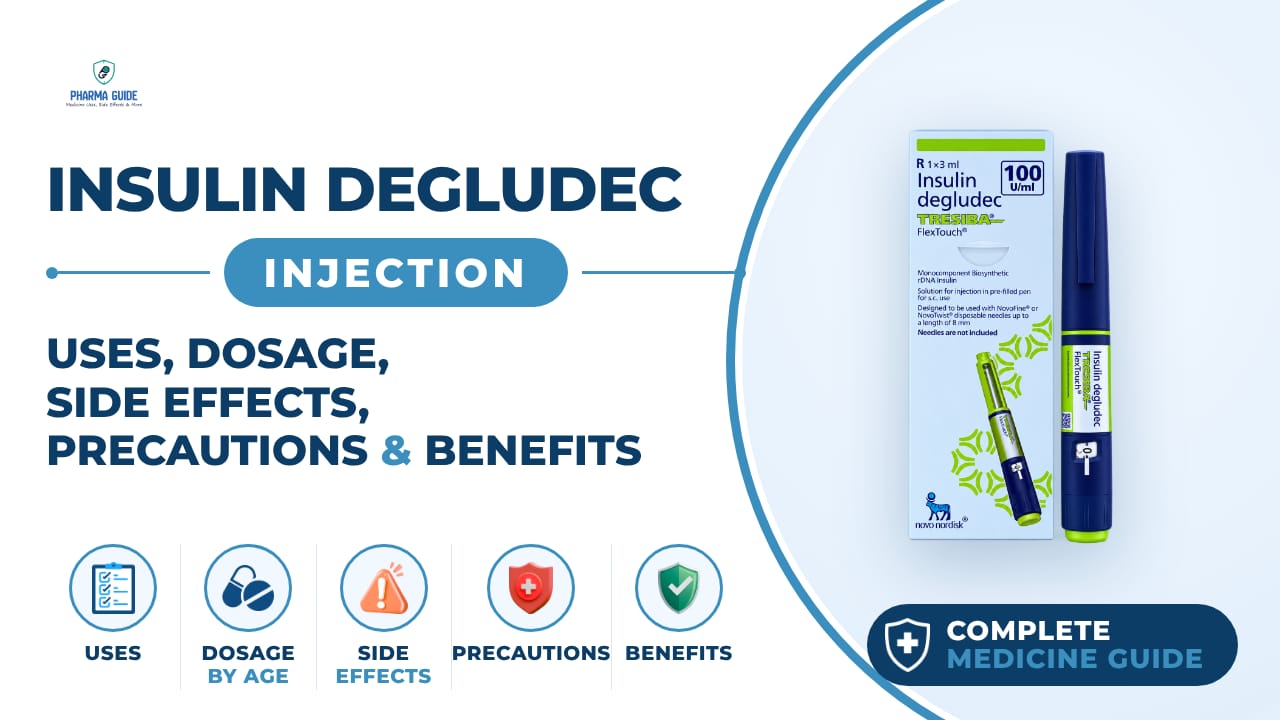
| Generic name | insulin degludec |
|---|---|
| Drug class | Insulin (long-acting human insulin analog) |
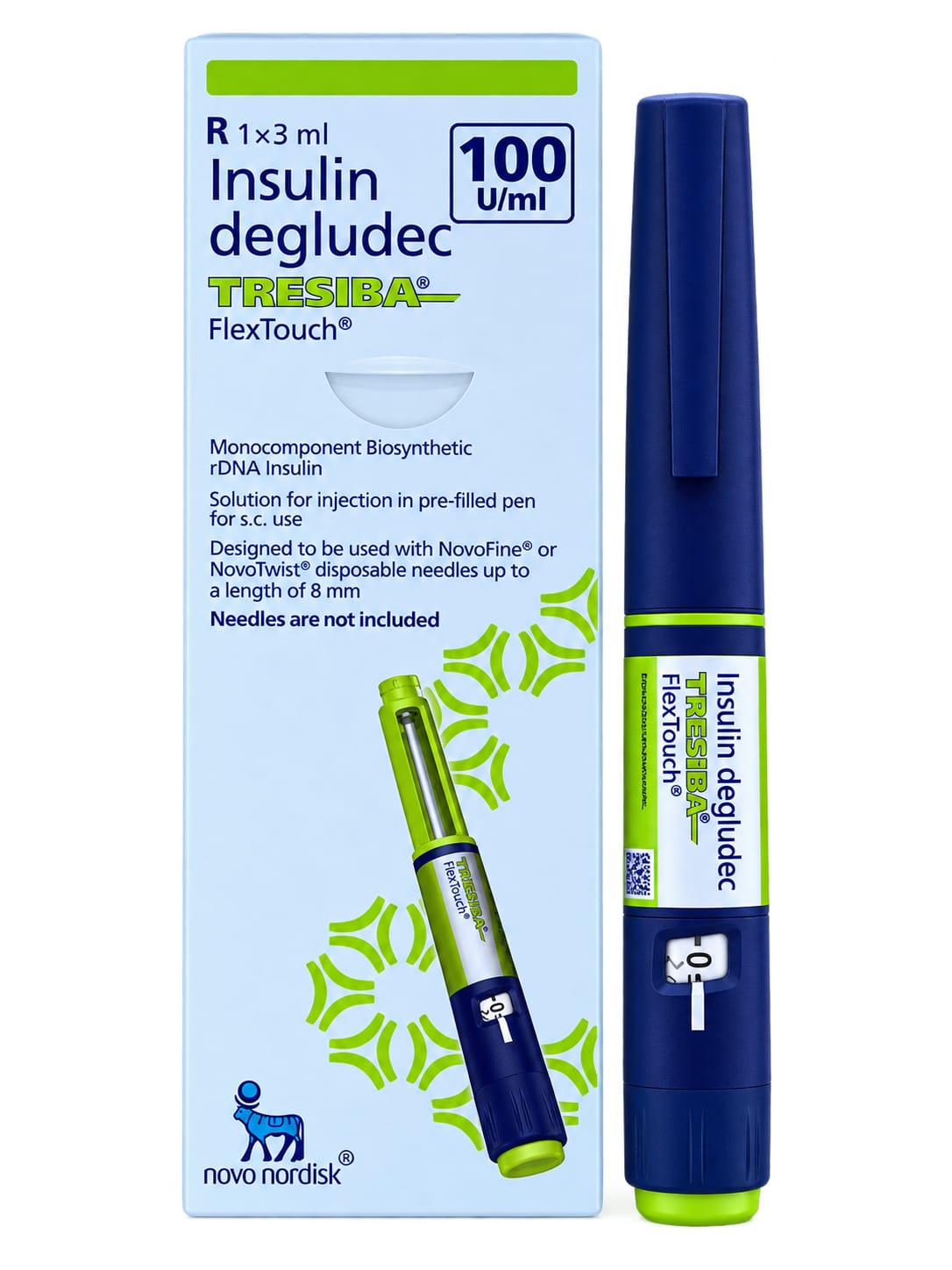
| Forms | Injection solution, 100 units/mL (U-100), 3 mL single-patient-use FlexTouch prefilled pen, Injection solution, 100 units/mL (U-100), 10 mL multiple-dose vial, Injection solution, 200 units/mL (U-200), 3 mL single-patient-use FlexTouch prefilled pen |
Quick overview
Insulin Degludec Injection (insulin degludec) is a man-made, long-acting human insulin analog used to control blood sugar in adults and children 1 year of age and older with type 1 or type 2 diabetes. It provides a slow, steady, background supply of insulin rather than acting quickly like mealtime insulin. In type 1 diabetes, it must be used together with a short-acting insulin, while in type 2 diabetes it may be used alone or with other diabetes medicines. It is usually given once daily by subcutaneous injection.
What is Insulin Degludec Injection
Insulin degludec is a man-made, long-acting form of human insulin. It is used to control blood sugar in people with diabetes. It gives a slow, steady, background supply of insulin rather than working quickly like mealtime insulin.
Insulin Degludec Injection uses
- Improves blood sugar control in adults and children 1 year of age and older with diabetes mellitus (type 1 or type 2).
- In type 1 diabetes, it must be used together with a short-acting insulin.
- In type 2 diabetes, it may be used alone or together with other diabetes medicines.
Benefits of Insulin Degludec Injection
- Provides long-acting basal insulin coverage
- Helps lower fasting blood glucose
- Supports improved HbA1c control
- Usually requires once-daily administration
- Can be used in both type 1 and type 2 diabetes in appropriate patients
How Insulin Degludec Injection works
Insulin degludec replaces the insulin your body is missing or not using properly. It helps move sugar from the blood into the body's tissues for energy and stops the liver from making extra sugar. After injection it forms a depot under the skin that releases insulin slowly over a long period, giving it a long-lasting effect.
Insulin Degludec Injection dosage
Inject this medicine under the skin (subcutaneously) into the thigh, upper arm, or stomach area; never inject into a vein or muscle. In adults, it can be injected once daily at any time of day. In children, it should be injected once daily at the same time every day. Do not mix or dilute it with any other insulin or solution. Never transfer the medicine from the FlexTouch pen into a syringe for injection.
Rotate injection sites within the chosen body area with each dose to reduce the risk of skin problems; do not use the exact same spot each time, and avoid areas with pits, thickening, lumps, tenderness, bruising, scaling, scarring, or damage. Check the insulin label before every injection to make sure you have the right insulin. Always look at the liquid before injecting it; it should be clear and colorless. Do not use it if it is cloudy, colored, or has particles in it. Never share an injection pen, needle, or syringe with another person, even if the needle is changed. Follow your healthcare provider's instructions for checking blood sugar regularly.
If you miss or delay a dose as an adult, take it as soon as you remember, making sure at least 8 hours pass between doses. If a child misses a dose, contact the healthcare provider for guidance and check blood sugar more often until the next scheduled dose.
| Age group | Dose |
|---|---|
| 1–17 years | Dose is individualized by the diabetes clinician based on glucose levels, body weight, diabetes type, and other insulin use |
| 18–64 years | Individualized once-daily basal insulin dose; for insulin-naïve type 2 diabetes, the FDA-labeled starting dose is 10 units once daily |
Available forms and strengths
- Injection solution, 100 units/mL (U-100), 3 mL single-patient-use FlexTouch prefilled pen
- Injection solution, 100 units/mL (U-100), 10 mL multiple-dose vial
- Injection solution, 200 units/mL (U-200), 3 mL single-patient-use FlexTouch prefilled pen
Side effects of Insulin Degludec Injection
Common
- Injection site reactions (pain, redness, swelling, itching, bruising)
- Skin thickening or small pits at the injection site (lipodystrophy)
- Itching
- Rash
- Swelling of hands and feet (edema)
- Weight gain
- Nasopharyngitis (cold-like symptoms)
- Upper respiratory tract infection
- Headache
Serious
- Low blood sugar (hypoglycemia), which can be life-threatening and cause seizures or death
- Low potassium in the blood (hypokalemia), which can be life-threatening
- Severe allergic reactions (whole-body reactions), including anaphylaxis
- Heart failure, especially when used with certain diabetes pills called thiazolidinediones (TZDs)
Warnings and precautions
- Never share an insulin pen, needle, or syringe with another person, even if the needle is changed, because this can spread serious infections.
- Low blood sugar (hypoglycemia) is the most common and potentially serious side effect of this medicine. It can be life-threatening and cause seizures.
- Mix-ups between different insulin products can happen. Always check the insulin label before each injection, and never use a syringe to draw insulin out of the pen, as this can cause a dangerous overdose.
- Severe, life-threatening allergic reactions, including anaphylaxis, can occur with this medicine.
- This medicine can lower potassium levels in the blood, which can be life-threatening if untreated.
- Using this medicine together with certain diabetes pills called thiazolidinediones (TZDs) can cause fluid retention and heart failure, even in people with no history of heart problems.
- Changing your insulin regimen (strength, brand, type, injection site, or method) can affect blood sugar control and should only be done under close medical supervision with more frequent blood sugar checks.
- Tell your doctor if you are pregnant or planning to become pregnant. Poorly controlled diabetes during pregnancy carries risks to both mother and baby, but there isn't enough data to say for certain whether this medicine is completely safe in pregnancy.
- Tell your doctor if you are breastfeeding or planning to breastfeed. There isn't enough data on whether the medicine passes into human breast milk or affects a nursing baby.
- People with kidney problems may need closer blood sugar monitoring and dose adjustments, as kidney impairment can increase the risk of low blood sugar.
- People with liver problems may need closer blood sugar monitoring and dose adjustments, as liver impairment can increase the risk of low blood sugar.
- Alcohol can change your blood sugar levels. Ask your doctor about whether it's safe for you to drink alcohol while using this medicine.
- Low blood sugar can affect your ability to concentrate and react quickly, which can be dangerous while driving or operating machinery. Avoid these activities until you know how this medicine affects you.
Storage
- Store unopened insulin degludec vials and pens in the refrigerator at 36°F to 46°F (2°C to 8°C) in the original carton to protect from light.
- Do not freeze. Do not use insulin degludec if it has been frozen.
- Unused vials/pens may be used until the expiration date printed on the label if kept refrigerated.
- Once in use, the vial or pen may be stored in the refrigerator or at room temperature up to 86°F (30°C), protected from light.
- Throw away the vial or pen after 56 days of use, even if insulin remains and the expiration date has not passed.
- Keep away from direct heat or light.
- Keep out of reach of children.
- Put used needles and syringes in an FDA-cleared sharps disposal container right away; do not throw loose needles/syringes in household trash.
- Do not flush medication down the toilet; use a medicine take-back program when disposing of unneeded medication.
When to see a doctor
- Get emergency medical help if you have trouble breathing, shortness of breath, a fast heartbeat, swelling of the face, tongue, or throat, heavy sweating, extreme drowsiness, dizziness, or confusion — these can be signs of a serious allergic reaction or severe low blood sugar.
- Tell your healthcare provider if you have new or worsening signs of heart failure, such as shortness of breath, tiredness, swelling of the ankles or feet, or sudden weight gain.
- If you suspect an overdose and the person has collapsed, had a seizure, has trouble breathing, or cannot be woken up, call emergency services right away.
- Call your local poison control center if you think too much insulin has been taken.
Alternatives
- Insulin glargine
- Insulin detemir
- Insulin glargine U-300
Watch the video
FAQs
What is Insulin Degludec Injection used for?
It is used to improve blood sugar control in adults and children 1 year and older with type 1 or type 2 diabetes. In type 1 diabetes it must be used with a short-acting insulin, while in type 2 diabetes it may be used alone or with other diabetes medicines.
How often is Insulin Degludec Injection given?
It is usually given once daily by subcutaneous injection into the thigh, upper arm, or stomach area. Adults can inject at any time of day, while children should inject at the same time each day.
What happens if I miss a dose?
If an adult misses or delays a dose, take it as soon as remembered, ensuring at least 8 hours pass between doses. If a child misses a dose, contact the healthcare provider for guidance and check blood sugar more often until the next scheduled dose.
What are the serious side effects of Insulin Degludec Injection?
Serious side effects include life-threatening low blood sugar, low potassium levels, severe allergic reactions including anaphylaxis, and heart failure, especially when used with thiazolidinedione diabetes pills.
How should Insulin Degludec Injection be stored?
Unopened vials and pens should be refrigerated at 36°F to 46°F in the original carton, protected from light, and not frozen. Once in use, it can be kept refrigerated or at room temperature up to 86°F and should be discarded after 56 days.
General information, not medical advice
Your prescriber and the leaflet in your pack know your situation. This page does not.
- Follow your prescriber and the leaflet
- Don't start, stop, or change a dose on your own
- Doses and warnings differ by country and product
Sources
- FDA Prescribing Information and Patient Labeling for Insulin Degludec (Tresiba), Novo Nordisk Pharma, Inc., Revised 7/2022
- Drugs.com: Insulin degludec, medically reviewed Aug 23, 2023
- MedlinePlus: Insulin Degludec (rDNA Origin) Injection, last revised 06/15/2018
Video
Related medicines
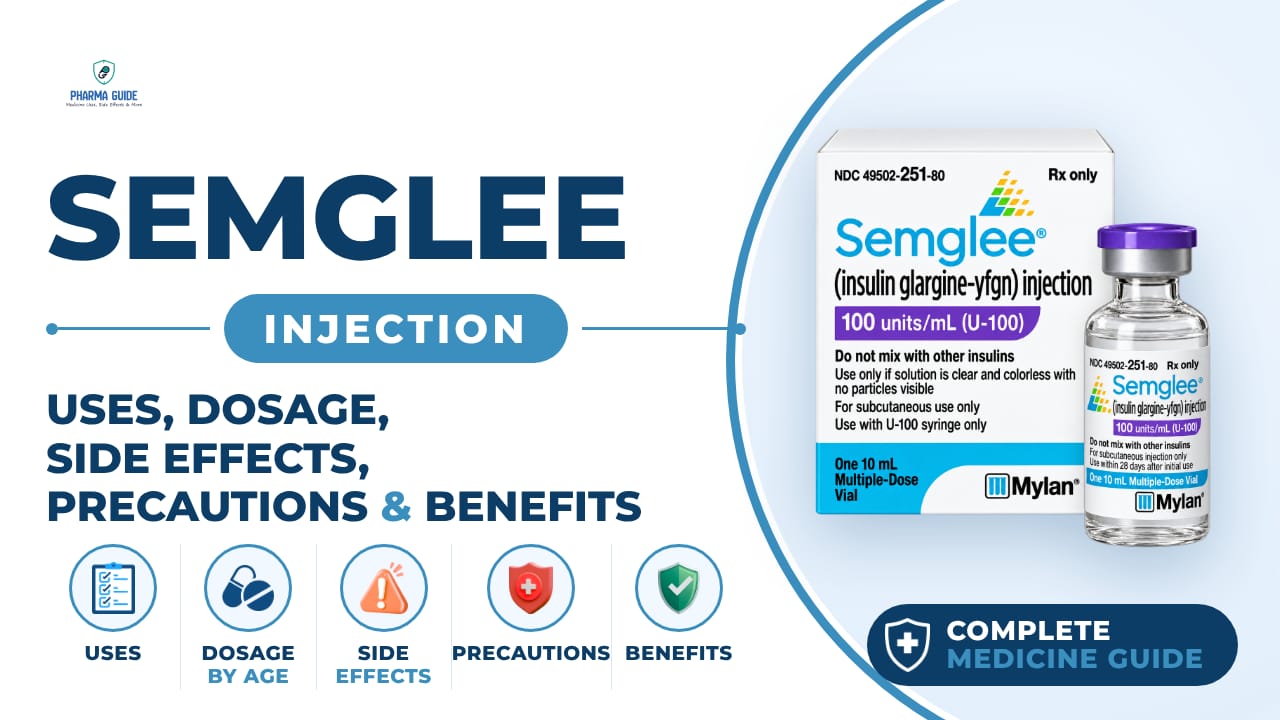
Semglee Injection: Uses, Dosage, Side Effects, Precautions and Alternates
Insulin (long-acting human insulin analog)
Semglee Injection is a long-acting insulin glargine that controls blood sugar in diabetes. Learn about its uses, dosage, side effects, and precautions.

Injectafer Injection: Uses, Dosage, Side Effects, Precautions and Alternates
Iron products
Injectafer (ferric carboxymaltose) treats iron deficiency anemia and heart failure-related iron deficiency via IV. Learn uses, dosage, side effects, and