
Safety
General information, not medical advice
Your prescriber and the leaflet in your pack know your situation. This page does not.
- Follow your prescriber and the leaflet
- Don't start, stop, or change a dose on your own
- Doses and warnings differ by country and product
Semglee Injection: Uses, Dosage, Side Effects, Precautions and Alternates
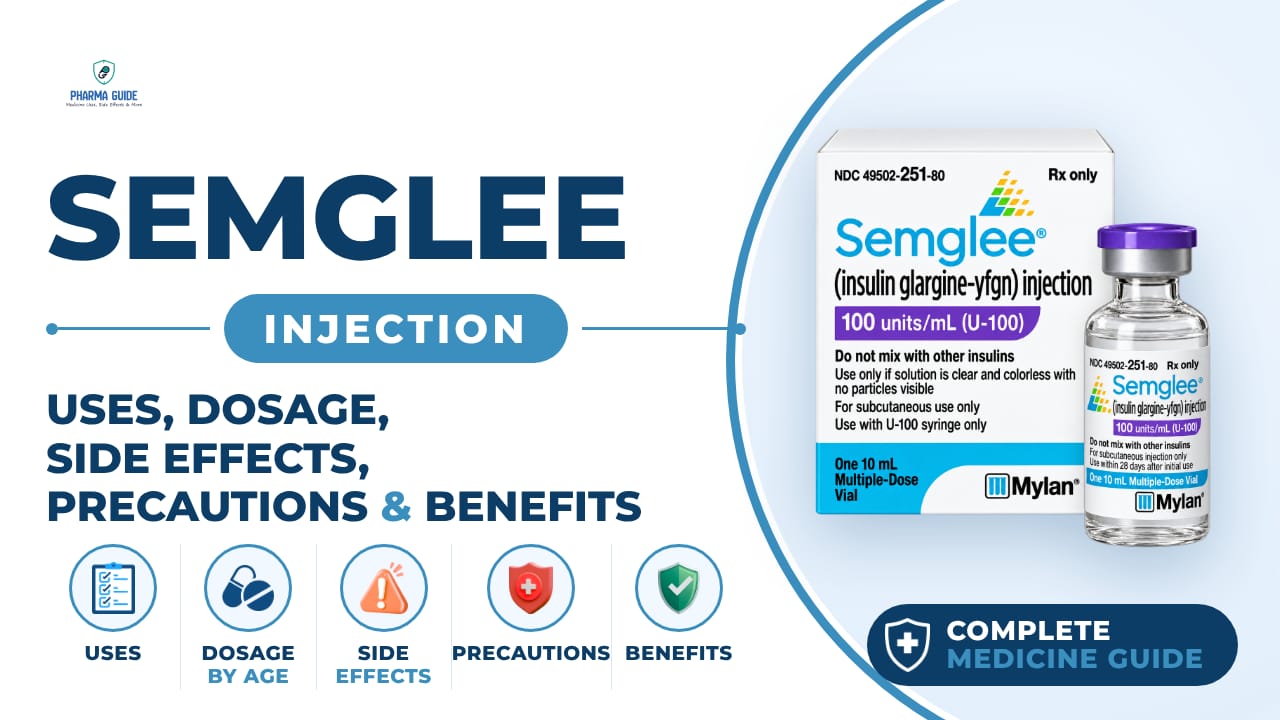
| Generic name | insulin glargine |
|---|---|
| Drug class | Insulin (long-acting human insulin analog) |
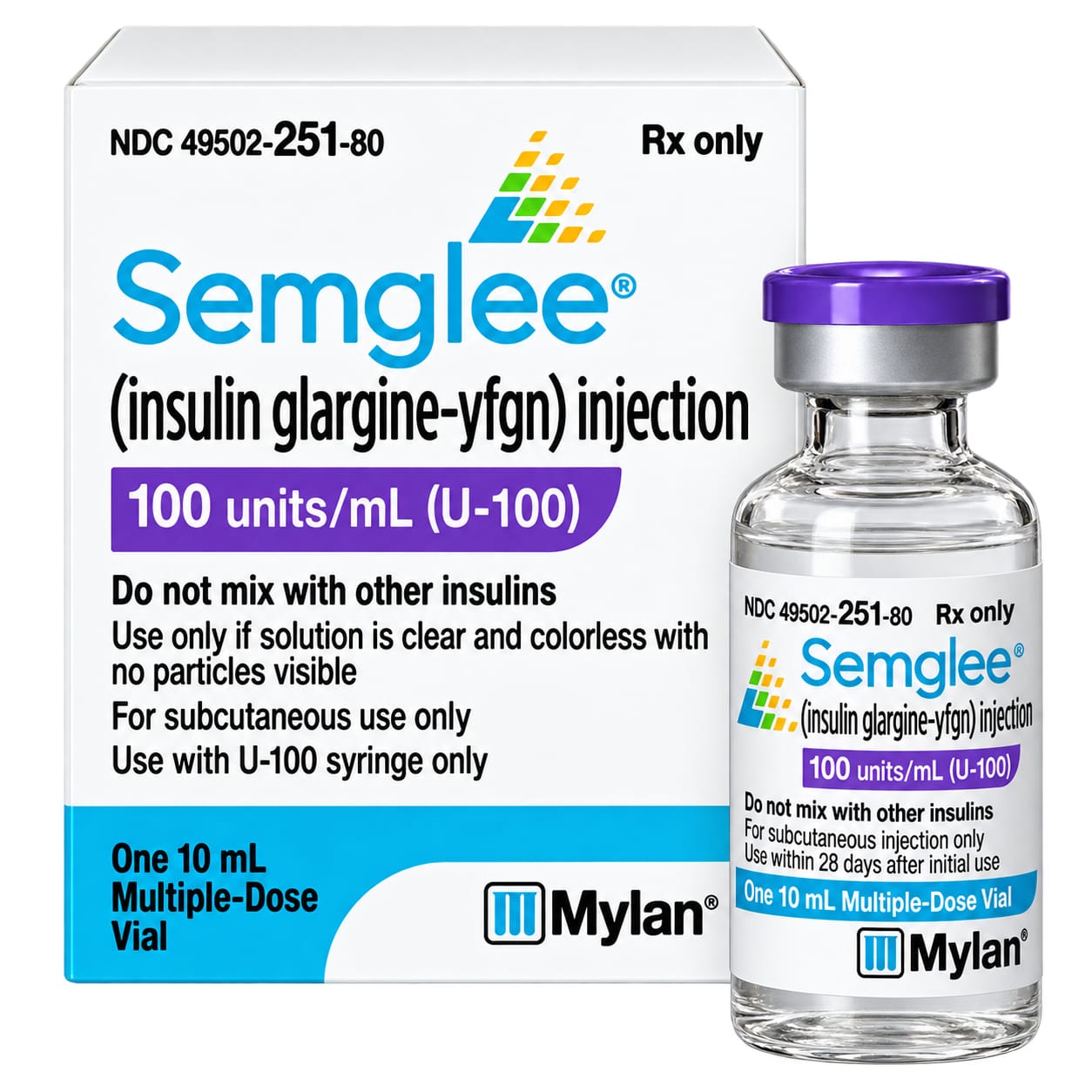
| Forms | Injection, 100 units/mL (U-100), 10 mL multiple-dose vial, Injection, 100 units/mL (U-100), 3 mL single-patient-use prefilled pen |
Quick overview
Semglee Injection contains insulin glargine, a long-acting human insulin analog used to control high blood sugar in adults with diabetes mellitus and in children at least 6 years old with type 1 diabetes. It provides steady, long-lasting basal insulin coverage with once-daily dosing. For type 1 diabetes, it must be used together with a short-acting mealtime insulin.
What is Semglee Injection
Semglee is a long-acting man-made insulin used to control high blood sugar in adults with diabetes mellitus. It is also approved for children at least 6 years old with type 1 diabetes.
Semglee Injection uses
- Improve blood sugar control in adults and children (6 years and older) with type 1 diabetes mellitus
- Improve blood sugar control in adults with type 2 diabetes mellitus
- Treats type 1 diabetes
- Treats type 2 diabetes
- Provides basal insulin coverage
- Helps control fasting blood glucose
- Helps maintain blood-glucose control between meals and overnight
Benefits of Semglee Injection
- Provides a relatively constant, long-lasting blood sugar-lowering effect over 24 hours with no pronounced peak, allowing once-daily dosing
- Provides long-acting insulin activity
- Usually administered once daily
- Helps lower fasting blood sugar
- Provides relatively steady basal insulin coverage
- Can be used with rapid-acting mealtime insulin when required
How Semglee Injection works
Semglee is a long-acting insulin that helps lower blood sugar by helping the body's muscle and fat tissue take up glucose from the blood, while also reducing the amount of glucose the liver releases. After injection it is released slowly and steadily into the body over about 24 hours.
Semglee Injection dosage
Give Semglee by injection under the skin (subcutaneous) in the abdomen, thigh, buttocks, or upper arm. Take it once daily at any time of day, but at the same time every day. For type 1 diabetes, Semglee must be used together with a short-acting (mealtime) insulin.
Change (rotate) the injection site within the chosen area with each dose to reduce the risk of skin pitting, thickening, or lumps. Do not inject into skin that has pits, thickening, lumps, scars, tenderness, bruising, or is damaged. Do not inject into a vein or muscle, and do not use in an insulin pump. Do not dilute or mix Semglee with any other insulin or solution.
Check your insulin label before every injection to make sure you have the correct insulin. If using cold insulin from the refrigerator, let it warm up before injecting, since cold insulin can be more painful to inject. Always use a new needle or syringe for each injection; never reuse or share needles or syringes. If using a prefilled pen, never share the pen with another person, even if the needle is changed. You do not need to shake the vial before use. Only use the solution if it is clear and colorless with no visible particles.
| Age group | Dose |
|---|---|
| Under 6 years | Safety and effectiveness are not established |
| 6–17 years | Dose is individualized according to body weight, glucose levels, and total daily insulin requirements |
| 18–64 years | For insulin-naïve type 2 diabetes, a common starting dose is 10 units once daily or 0.2 units/kg once daily, then adjusted based on glucose response |
| 65–74 years | Individualized dosing with closer monitoring for hypoglycemia and kidney function |
| 75 years and older | Individualized cautiously because hypoglycemia risk may be higher |
Available forms and strengths
- Injection, 100 units/mL (U-100), 10 mL multiple-dose vial
- Injection, 100 units/mL (U-100), 3 mL single-patient-use prefilled pen
Side effects of Semglee Injection
Common
- Low blood sugar (hypoglycemia)
- Weight gain
- Allergic reactions, including injection site reactions (redness, pain, itching, swelling)
- Skin thickening or pits at the injection site (lipodystrophy)
- Rash
- Edema (swelling)
- Itching
Serious
- Severe, life-threatening allergic reaction (anaphylaxis) with whole-body rash, trouble breathing, fast heartbeat, or sweating
- Severe hypoglycemia, which can cause seizures, loss of consciousness, or death
- Low potassium levels in the blood (hypokalemia), which can be life-threatening and cause irregular heartbeat or muscle weakness
- Heart failure or worsening heart failure, especially when used with TZD diabetes pills (thiazolidinediones), with symptoms like shortness of breath, swelling of ankles or feet, or sudden weight gain
- Localized cutaneous amyloidosis (skin with lumps) at injection sites
Warnings and precautions
- Never share a Semglee prefilled pen between patients, even if the needle is changed, and never reuse or share needles or syringes, because this can spread blood-borne infections.
- Semglee must not be used during episodes of low blood sugar, and should not be used by anyone with an allergy to insulin glargine or any ingredient in Semglee.
- Changing any part of your insulin regimen (strength, manufacturer, type, injection site, or method) can cause high or low blood sugar and should only be done under close medical supervision with more frequent blood sugar checks.
- Mix-ups between insulin products can happen and can be dangerous, so always check the insulin label before each injection.
- Taking certain diabetes pills called TZDs (thiazolidinediones) together with Semglee may cause or worsen heart failure, even in people with no previous heart problems.
- Controlling diabetes is very important during pregnancy. It is not known if Semglee can harm an unborn baby, so tell your healthcare provider if you are pregnant or planning to become pregnant.
- It is not known if Semglee passes into breast milk or how it might affect a breastfeeding baby. Talk with your healthcare provider about your need for Semglee while breastfeeding.
- People with kidney problems may need more frequent blood sugar monitoring and dose adjustments, since kidney impairment can increase the risk of low blood sugar.
- People with liver problems may need more frequent blood sugar monitoring and dose adjustments, since liver impairment can increase the risk of low blood sugar.
- Avoid drinking alcohol or using over-the-counter medicines that contain alcohol while using Semglee, since alcohol can increase or decrease its blood sugar-lowering effect.
- Low blood sugar can affect your ability to concentrate and react, which can be dangerous while driving or operating machinery. Use caution with these activities until you know how Semglee affects you, especially if you have frequent low blood sugar or reduced warning signs of it.
Storage
- Keep Semglee in its original container protected from heat and light
- Do not freeze; discard Semglee if it has been frozen
- Unopened vials and pens: refrigerate (36° to 46°F / 2° to 8°C) until the expiration date, or store at room temperature (up to 86°F / 30°C) and use within 28 days
- Opened (in-use) vials: store in the refrigerator or at room temperature and use within 28 days
- Opened (in-use) prefilled pens: store at room temperature only (do not refrigerate) and use within 28 days
- Do not store an injection pen with the needle attached
- Dispose of used needles and syringes in a puncture-proof sharps container following state or local laws
- Keep out of the reach and sight of children and pets
When to see a doctor
- Get medical help right away if you have signs of a severe allergic reaction, such as a whole-body rash, trouble breathing, fast heartbeat, or sweating.
- Get emergency medical help if you have trouble breathing, shortness of breath, fast heartbeat, swelling of your face, tongue, or throat, sweating, extreme drowsiness, dizziness, or confusion.
- Tell your healthcare provider right away if you have new or worsening signs of heart failure, such as shortness of breath, swelling of the ankles or feet, or sudden weight gain.
- Seek emergency help or contact poison control if you suspect an insulin overdose, which can cause severe low blood sugar with drowsiness, confusion, blurred vision, numbness or tingling in the mouth, trouble speaking, muscle weakness, seizures, or loss of consciousness.
Alternatives
- Lantus
- Basaglar
- Rezvoglar
Watch the video
FAQs
What is Semglee Injection used for?
Semglee is a long-acting insulin used to improve blood sugar control in adults with type 1 or type 2 diabetes mellitus and in children at least 6 years old with type 1 diabetes. For type 1 diabetes, it must be used with a short-acting mealtime insulin.
How is Semglee Injection given?
Semglee is injected under the skin (subcutaneous) in the abdomen, thigh, buttocks, or upper arm once daily at the same time each day. It should not be injected into a vein or muscle, used in an insulin pump, or mixed with other insulins.
Can children use Semglee Injection?
Yes, Semglee is approved for children at least 6 years old with type 1 diabetes, with dosing individualized based on body weight, glucose levels, and total daily insulin requirements. Safety and effectiveness are not established in children under 6.
What are the common side effects of Semglee Injection?
Common side effects include low blood sugar (hypoglycemia), weight gain, allergic reactions such as injection site redness, pain, itching, or swelling, skin thickening or pits at the injection site, rash, edema, and itching.
How should Semglee Injection be stored?
Unopened vials and pens should be refrigerated until the expiration date or stored at room temperature (up to 86°F) and used within 28 days. Opened vials can be refrigerated or kept at room temperature, while opened prefilled pens should be stored at room temperature only, both used within 28 days. Semglee should not be frozen.
General information, not medical advice
Your prescriber and the leaflet in your pack know your situation. This page does not.
- Follow your prescriber and the leaflet
- Don't start, stop, or change a dose on your own
- Doses and warnings differ by country and product
Sources
Video
Related medicines
Insulin Degludec Injection: Uses, Dosage, Side Effects, Precautions and Alternates
Insulin (long-acting human insulin analog)
Insulin Degludec Injection is a long-acting basal insulin for type 1 and type 2 diabetes in adults and children. Learn uses, dosage, and side effects.

Injectafer Injection: Uses, Dosage, Side Effects, Precautions and Alternates
Iron products
Injectafer (ferric carboxymaltose) treats iron deficiency anemia and heart failure-related iron deficiency via IV. Learn uses, dosage, side effects, and