
Safety
General information, not medical advice
Your prescriber and the leaflet in your pack know your situation. This page does not.
- Follow your prescriber and the leaflet
- Don't start, stop, or change a dose on your own
- Doses and warnings differ by country and product
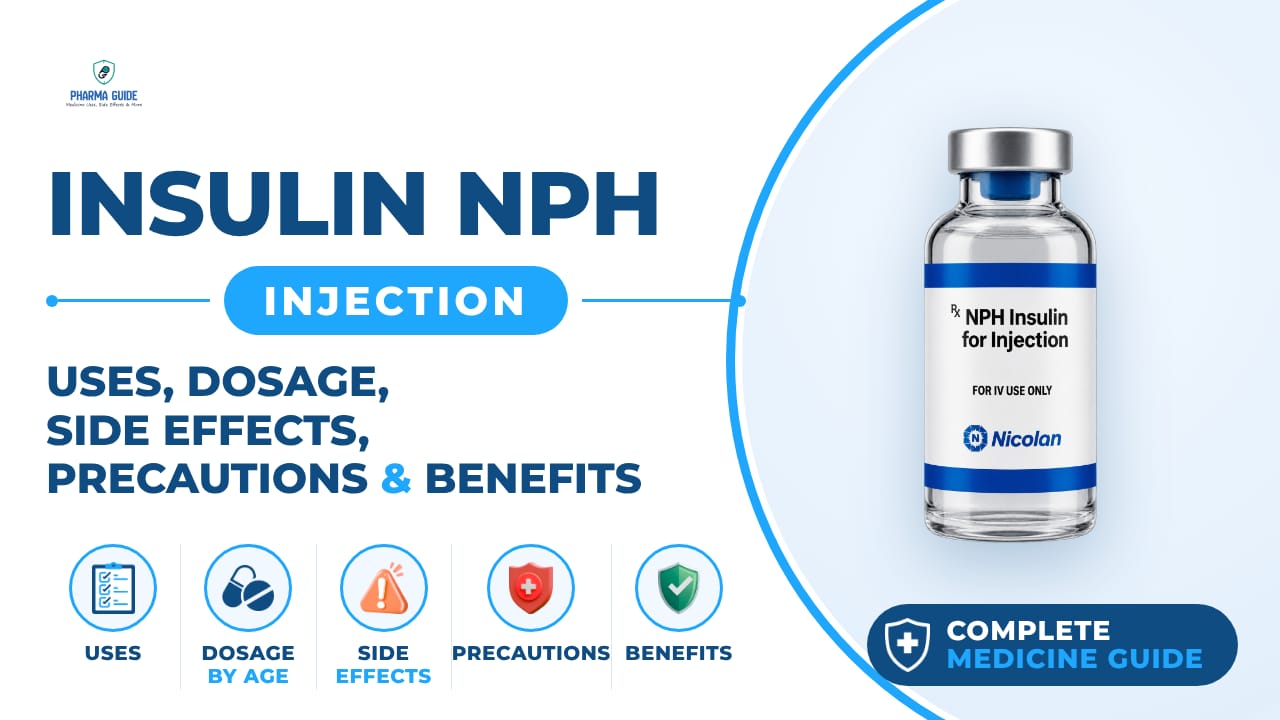
Insulin NPH Injection: Uses, Dosage, Side Effects, Precautions and Alternates
| Generic name | isophane insulin (insulin human isophane) |
|---|---|
| Drug class | Intermediate-acting insulin (antidiabetic) |
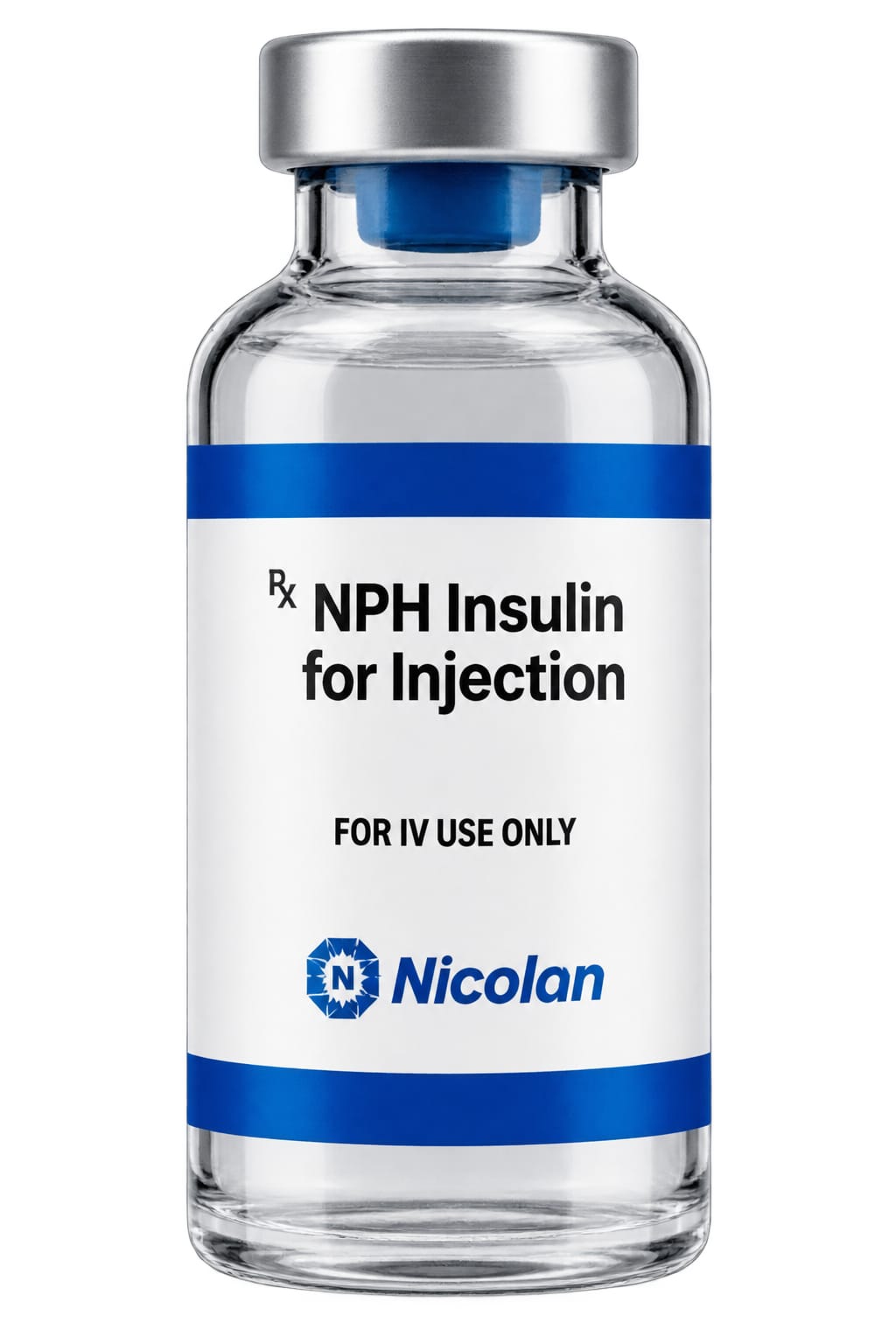
| Forms | Injectable suspension (vial), Prefilled pen-injector |
Quick overview
Insulin NPH Injection (isophane insulin, insulin human isophane) is an intermediate-acting insulin used to manage blood sugar in type 1 diabetes, type 2 diabetes, and gestational diabetes. It is injected under the skin and works over a longer period than fast-acting insulin. It helps move sugar from the blood into cells and reduces the liver's sugar production. It is available as an injectable suspension in a vial or as a prefilled pen-injector.
What is Insulin NPH Injection
Insulin NPH is a man-made, intermediate-acting insulin used to help people with diabetes control their blood sugar. It is injected under the skin and works over a longer period of time than fast-acting insulin.
Insulin NPH Injection uses
- Type 1 diabetes mellitus
- Type 2 diabetes mellitus
- Gestational diabetes
Benefits of Insulin NPH Injection
- Helps lower blood sugar levels in people with type 1 or type 2 diabetes
- Provides a steady, longer-lasting release of insulin compared to fast-acting insulin
- Can be mixed with regular insulin in the same syringe
- Available in premixed formulations for convenience
- Generally lower in cost than newer long-acting insulins
- Available at pharmacies without a prescription in many cases
How Insulin NPH Injection works
Insulin NPH helps move sugar from your blood into your cells so your body can use it for energy, and it also stops your liver from making too much sugar.
Insulin NPH Injection dosage
This medication is injected under the skin, not into a vein or muscle. Always check the appearance of your insulin before using it; it should look white and cloudy all the way through after mixing, and should not be used if it looks clear or has particles in it. You must mix this insulin before each dose by rolling the vial or pen between your hands about 10 times and then turning it up and down about 10 times.
Inject into the stomach, buttocks, upper arms, or upper legs (thighs), and rotate the injection site each time. Do not inject into skin that is thickened, has pits or lumps, is scarred, irritated, or bruised. It is usually given once or twice daily at regular times.
Follow your prescribed meal plan and exercise routine, since these affect how well the medicine works. Do not change the brand, type, or dose of your insulin unless your care team tells you to. Use a new needle for each injection and never share your pen, needle, or syringe with another person, even if the needle has been changed. Put used needles and syringes in a sharps container, not in the regular trash.
Use exactly as prescribed by your doctor or pharmacist.
Available forms and strengths
- Injectable suspension (vial)
- Prefilled pen-injector
Side effects of Insulin NPH Injection
Common
- Low blood sugar (hypoglycemia)
- Weight gain
- Pain, redness, itching, or swelling at the injection site
- Skin thickening, pits, or lumps at the injection site (lipodystrophy)
- Swelling in the hands or feet (fluid retention)
- Mild skin rash
Serious
- Severe allergic reaction: rash, itching, hives, swelling of the face, lips, tongue, or throat, trouble breathing, chest tightness
- Low blood sugar with tremors or shaking, anxiety, sweating, cold or clammy skin, confusion, dizziness, rapid heartbeat
- Low potassium level: muscle pain or cramps, unusual weakness or fatigue, fast or irregular heartbeat, constipation
- Fluid retention that may lead to or worsen heart failure: rapid weight gain, chest pain or discomfort, extreme tiredness, trouble breathing, uneven heartbeat, swelling of hands, wrists, ankles, or feet
- Severe hypoglycemia leading to seizures, loss of consciousness, or coma
Warnings and precautions
- Never share needles, syringes, or insulin pens with another person, even if the needle has been changed, because this can spread infections.
- This medicine can cause a serious, life-threatening allergic reaction. Get medical help right away if you notice rash, itching, swelling of the face, tongue, or throat, trouble breathing, or chest pain after your injection.
- Taking this insulin together with certain other diabetes medicines can cause fluid retention and serious heart problems.
- Changing your insulin brand, type, strength, or injection site can change how well your blood sugar is controlled and may cause high or low blood sugar.
- This medicine should not be used during an episode of low blood sugar, since it can make the low blood sugar worse.
- Older adults may be at greater risk of low blood sugar from this medicine.
- It is not fully known how this medicine affects pregnancy, but poorly controlled diabetes during pregnancy carries risks for both mother and baby, so tell your care team if you are or plan to become pregnant.
- This medicine passes into breast milk, so tell your care team if you are breastfeeding or plan to breastfeed so they can advise you.
- People with kidney disease should use this medicine with caution because their body may remove it more slowly, which can increase its effects.
- People with liver disease should use this medicine with caution, since the medicine may stay in the body longer and have a stronger effect.
- Drinking alcohol can cause severe low blood sugar and may increase side effects like dizziness, so talk to your care team about whether you should avoid it.
- This medicine may affect your alertness, coordination, or reaction time, so avoid driving or operating machinery until you know how it affects you.
Storage
- Keep out of the reach of children and pets.
- Do not freeze insulin. Protect it from direct light and heat.
- Do not use insulin if it has been exposed to temperatures above 37 degrees C (98.6 degrees F) or if it has been frozen.
- Humulin N: Unopened vials can be stored at room temperature up to 30 degrees C (86 degrees F) for up to 31 days, or refrigerated until the expiration date. Opened vials can be stored at room temperature up to 30 degrees C (86 degrees F) or refrigerated for up to 31 days.
- Novolin N: Unopened vials can be stored at room temperature up to 25 degrees C (77 degrees F) for up to 42 days, or refrigerated until the expiration date. Opened vials can be stored at room temperature up to 25 degrees C (77 degrees F) for up to 42 days; do not refrigerate once opened.
- Store pens (FlexPens or KwikPens) without the needle attached.
- To dispose of medication that is no longer needed or has expired, take it to a medication take-back program, or ask your pharmacist or care team how to safely get rid of it.
- Throw away used needles in a hard, closed container that needles cannot poke through, and keep this container away from children and pets.
When to see a doctor
- Get medical help right away if you have signs of a serious allergic reaction, such as breathing problems, wheezing, racing heart, swelling of the face, lips, mouth, tongue, or throat, trouble swallowing, hives, dizziness, or fainting.
- Stop using the medicine and call your care team right away if you have symptoms of low blood sugar such as headache, anxiety, hunger, dizziness, confusion, blurry vision, slurred speech, sweating, shakiness, fast heartbeat, or seizures.
- Call your care team if you have symptoms of low potassium such as weakness, unusual tiredness, muscle cramps or twitching, or constipation.
- If you think you have taken too much insulin, contact a poison control center or go to an emergency room right away.
- Seek medical care immediately if you have serious symptoms such as severe headache, confusion, slurred speech, arm or leg weakness, trouble walking, loss of coordination, very stiff muscles, high fever, profuse sweating, or tremors, or serious eye or heart symptoms.
Alternatives
- Insulin Glargine
- Insulin Degludec
- Insulin Aspart
Watch the video
FAQs
What is Insulin NPH Injection used for?
It is used to manage blood sugar in type 1 diabetes, type 2 diabetes, and gestational diabetes.
How does Insulin NPH Injection work?
It helps move sugar from the blood into cells so the body can use it for energy, and it stops the liver from making too much sugar.
How is Insulin NPH Injection given?
It is injected under the skin into the stomach, buttocks, upper arms, or upper legs, with the injection site rotated each time, usually once or twice daily at regular times.
What are the common side effects of Insulin NPH Injection?
Common side effects include low blood sugar, weight gain, pain, redness, itching, or swelling at the injection site, skin thickening or lumps, fluid retention, and mild skin rash.
How should Insulin NPH Injection be stored?
It should be kept out of reach of children and pets, not frozen, and protected from direct light and heat; specific storage times vary by brand, such as Humulin N or Novolin N, whether refrigerated or at room temperature.
General information, not medical advice
Your prescriber and the leaflet in your pack know your situation. This page does not.
- Follow your prescriber and the leaflet
- Don't start, stop, or change a dose on your own
- Doses and warnings differ by country and product
Sources
- https://my.clevelandclinic.org/health/drugs/20623-isophane-insulin-nph-injection
- https://www.rxlist.com
- https://www.ncbi.nlm.nih.gov/books/NBK549860/
- https://www.webmd.com/drugs/insulin-nph-novolin-n
- https://www.mayoclinic.org/drugs-supplements/insulin-human-isophane-nph-subcutaneous-route/description/drg-20484120
- https://www.everydayhealth.com
- https://www.prescriptionhope.com
- https://www.goodrx.com
Video
Related medicines

Injectafer Injection: Uses, Dosage, Side Effects, Precautions and Alternates
Iron products
Injectafer (ferric carboxymaltose) treats iron deficiency anemia and heart failure-related iron deficiency via IV. Learn uses, dosage, side effects, and

Gliclazide Tablet: Uses, Dosage, Side Effects, Precautions and Alternates
Sulfonylurea (hypoglycemic/antidiabetic agent)
Gliclazide Tablet is a sulfonylurea for type 2 diabetes that boosts insulin release. Learn about dosage, side effects, warnings, and precautions.