
Safety
General information, not medical advice
Your prescriber and the leaflet in your pack know your situation. This page does not.
- Follow your prescriber and the leaflet
- Don't start, stop, or change a dose on your own
- Doses and warnings differ by country and product
Interferon Injection: Uses, Dosage, Side Effects, Precautions and Alternates
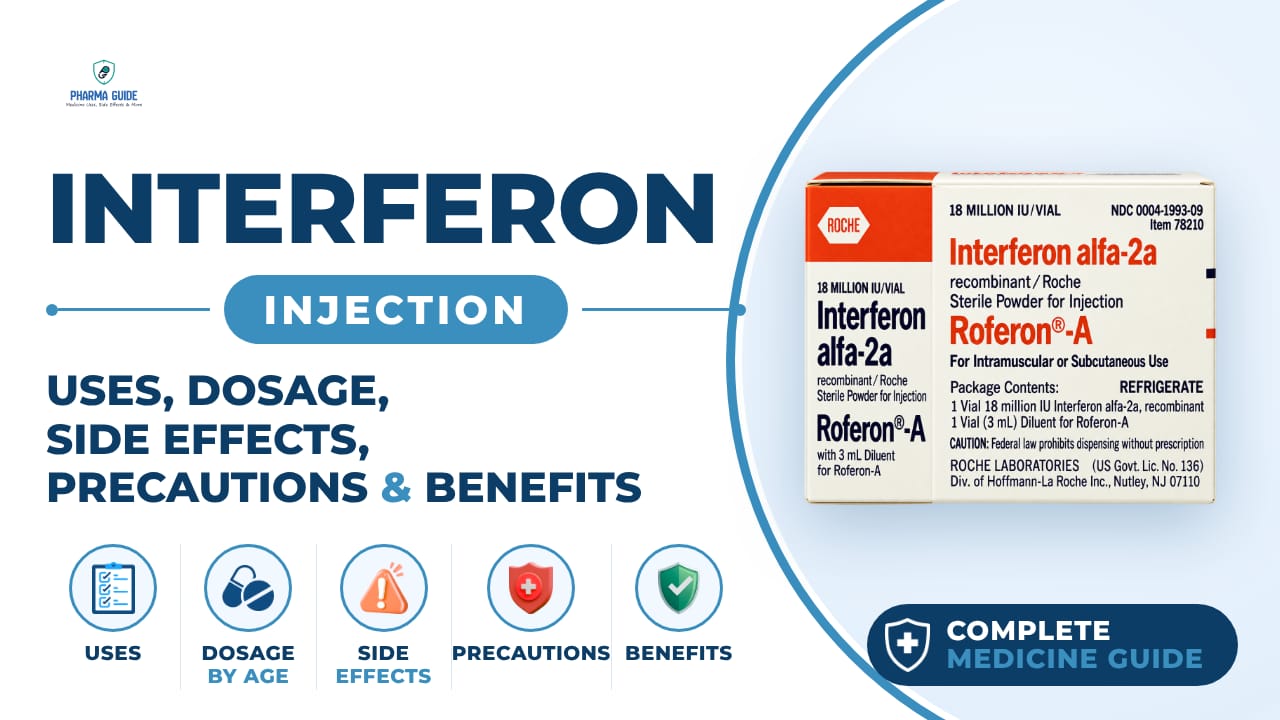
| Generic name | Interferon |
|---|---|
| Drug class | Immunomodulating agent (cytokine) |
| Forms | Injection solution |
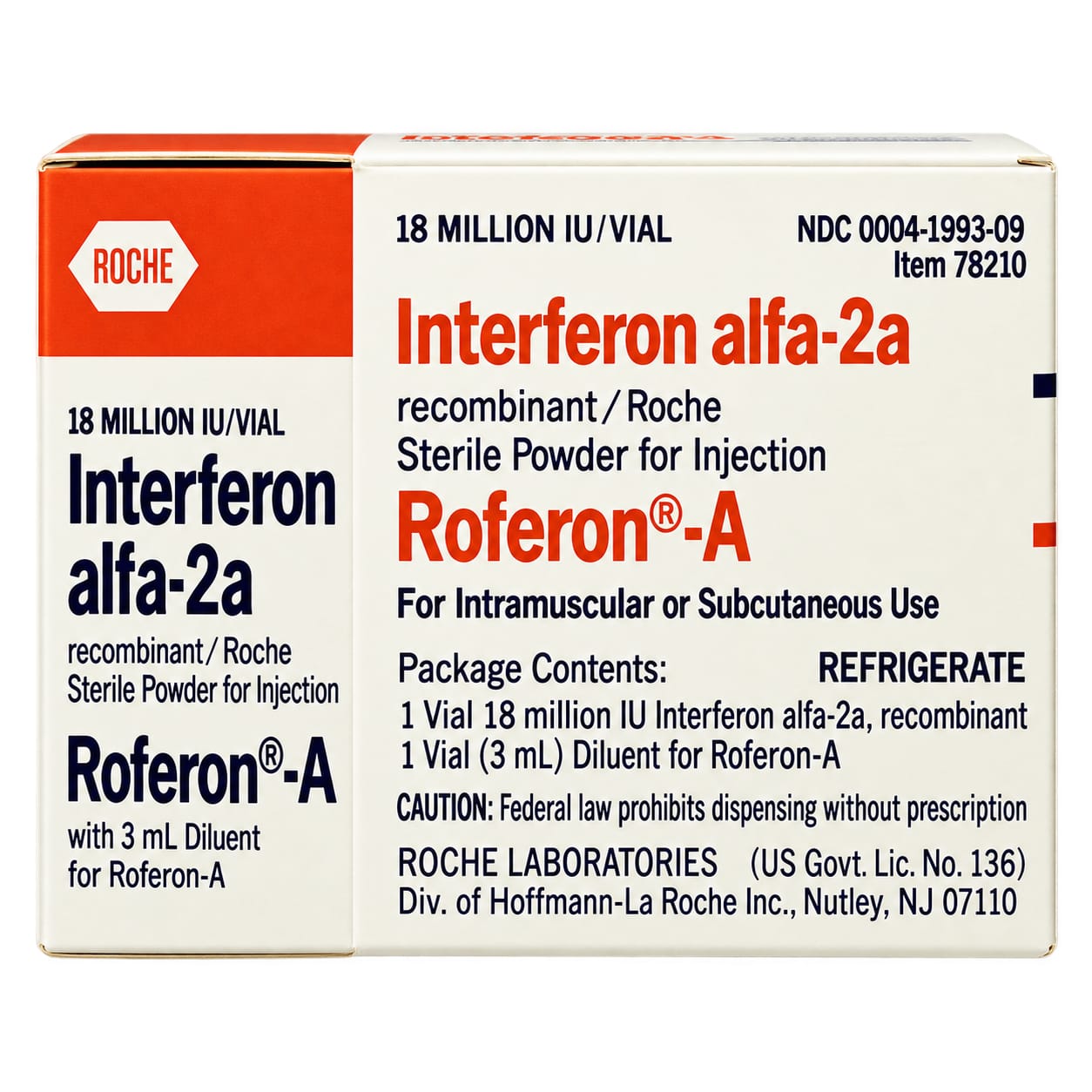
Quick overview
Interferon Injection (generic name: Interferon) is an immunomodulating agent, a type of cytokine, used to treat multiple sclerosis, certain cancers such as leukemia and melanoma, chronic hepatitis B and C, and other conditions. It works by activating the body's immune defenses to fight viruses and abnormal cells. It is given as an injection, with dosing and frequency depending on the specific product prescribed, and it carries a range of common and serious side effects that require monitoring.
What is Interferon Injection
Interferons are natural proteins made by immune system cells. They are also produced using biotechnology as medicines that strengthen or adjust the immune system to help the body fight viruses, certain cancers, and some other diseases.
Interferon Injection uses
- Multiple sclerosis (relapsing-remitting and forms that worsen progressively)
- Chronic granulomatous disease
- Chronic myeloid leukemia
- Hairy cell leukemia
- Cutaneous T-cell lymphoma (skin lymphoma)
- Kaposi sarcoma in AIDS patients
- Malignant melanoma
- Renal cell carcinoma (kidney cancer)
- Chronic hepatitis B and C
- Genital and perianal warts caused by HPV (condylomata acuminata)
- Severe malignant osteopetrosis
Benefits of Interferon Injection
- Can slow the growth of tumor cells and stop new blood vessels from feeding a tumor
- Can make it easier for the immune system to find and attack cancer cells
- Can reduce the number of MS relapses and make them less severe
- May delay the onset of disability in MS by helping reduce inflammatory activity seen on MRI scans
How Interferon Injection works
Interferon activates the body's defense cells, including those already infected with a virus and the healthy cells around them. This triggers several effects: it helps stop viruses from multiplying inside infected cells, it activates natural killer cells that fight viruses and tumors, and it activates white blood cells called T-lymphocytes that make virus-infected cells easier for the immune system to destroy.
Interferon Injection dosage
This medicine is given as an injection, usually under the skin or into a muscle; in some cases it may be given into a vein. How often you need an injection depends on the specific product you are prescribed — some are given several times a week and others only once a week. The first injections are usually given by a trained healthcare professional; after training, you or a caregiver may be able to give later injections at home.
If using a pre-filled syringe, take it out of the refrigerator about 30 minutes before your injection so it can warm to room temperature. Wash your hands thoroughly before giving the injection. Clean the injection site well with water and soap, which is gentler on the skin than alcohol wipes; if you do use an alcohol wipe, let the skin dry for at least a minute before injecting. Change the injection site regularly to help prevent skin reactions.
| Age group | Dose |
|---|---|
| Under 18 years | 3 million IU, 3 times/week |
| 18–60 years | 3 million IU, 3 times/week |
| 60+ years | 3 million IU, 3 times/week |
Available forms and strengths
- Injection solution
Side effects of Interferon Injection
Common
- Flu-like symptoms: fever, chills, fatigue, muscle and joint pain, headache
- Pain, redness, or swelling at the injection site
- Low white blood cell count, low platelet count, low red blood cell count (anemia)
- Liver problems
- Sleep problems
- Nausea, stomach pain, diarrhea, reduced appetite, weight loss
- Depression and irritability
- Hair loss or thinning
- Dizziness
- Skin rash
- Cough
- Heavier or longer menstrual periods in women
Serious
- Severe depression, suicidal thoughts, or suicidal behavior
- Liver failure or significant liver damage
- Blood clots in small blood vessels that can affect the kidneys, sometimes appearing years after starting treatment
- High blood pressure, fever, confusion, swelling in the limbs or ankles (signs of long-term small blood vessel or kidney problems)
- Heart problems, including changes in heart rate or heart muscle damage
- Severe allergic or anaphylactic reaction
- Difficulty breathing
- Infertility, including possible early menopause in women
Warnings and precautions
- Do not use this medicine if you are allergic to the active ingredient or other ingredients, or if you have severe depression with a risk of suicide.
- About 1 in 4 people on interferon develop antibodies that can make the medicine less effective; your doctor may reconsider treatment if this happens and the medicine stops working well.
- This medicine can reduce how quickly the liver breaks down certain other drugs, such as antidepressants or anti-seizure medicines, so their doses may need adjusting.
- In people who have had an organ transplant and take medicines to suppress their immune system, interferon treatment can increase the risk of organ rejection.
- This medicine can increase the effects and side effects of theophylline (an asthma medicine), which may cause headaches, nausea, vomiting, and a fast heartbeat.
- Depression and suicidal thoughts have been reported during interferon treatment, and patients should be watched closely for these symptoms throughout treatment.
- Continuing necessary interferon beta treatment during pregnancy has been approved by European regulators, and research suggests it does not increase the risk of miscarriage. Still, talk with your doctor about the benefits and risks before and during pregnancy.
- Interferon treatment can usually be continued while breastfeeding, because only small amounts pass into breast milk and the baby absorbs very little of it.
- Your doctor needs to weigh the benefits and risks of this medicine if you have kidney problems, and kidney function should be monitored during treatment because blood clots affecting the kidneys can occur.
- Your doctor needs to weigh the benefits and risks of this medicine if you have liver problems. Liver function should be checked regularly during treatment since some interferons have been linked to liver failure.
- If you feel tired or exhausted from this medicine, it is not a good idea to drive, use machinery, or do anything risky. Talk to your doctor about this.
Storage
Interferon injection products are usually stored in the refrigerator at a temperature of 2-8 degrees Celsius.
When to see a doctor
- Get medical help right away if you notice signs of a severe allergic reaction, such as difficulty breathing.
- Contact your doctor if you or your family notice mood changes, signs of depression, or thoughts of suicide during treatment.
- Seek medical attention if you develop symptoms years after starting treatment such as new high blood pressure, fever, confusion, or swelling in your limbs or ankles, as these may signal rare long-term kidney or blood vessel problems.
- Talk to your doctor whenever side effects become difficult to manage or start affecting your daily life.
Alternatives
- Interferon Alfa-2a
- Peginterferon Alfa-2a
- Peginterferon Alfa-2b
Watch the video
FAQs
What is Interferon Injection used for?
It is used to treat multiple sclerosis, certain cancers like leukemia, melanoma, and kidney cancer, chronic hepatitis B and C, genital warts caused by HPV, and other conditions such as chronic granulomatous disease and osteopetrosis.
How is Interferon Injection given?
It is given as an injection, usually under the skin or into a muscle, and sometimes into a vein. Frequency depends on the specific product, ranging from several times a week to once a week. Initial doses are given by a healthcare professional, and later injections may be given at home.
What are the common side effects of Interferon Injection?
Common side effects include flu-like symptoms, injection site reactions, low blood cell counts, liver problems, sleep issues, nausea, depression, hair loss, dizziness, rash, cough, and heavier menstrual periods.
Can Interferon Injection be used during pregnancy or breastfeeding?
European regulators have approved continuing necessary interferon beta treatment during pregnancy, and research suggests it does not increase miscarriage risk. It can usually be continued while breastfeeding since only small amounts pass into breast milk.
How should Interferon Injection be stored?
It is usually stored in the refrigerator at a temperature of 2-8 degrees Celsius.
General information, not medical advice
Your prescriber and the leaflet in your pack know your situation. This page does not.
- Follow your prescriber and the leaflet
- Don't start, stop, or change a dose on your own
- Doses and warnings differ by country and product
Sources
Video
Related medicines

Injectafer Injection: Uses, Dosage, Side Effects, Precautions and Alternates
Iron products
Injectafer (ferric carboxymaltose) treats iron deficiency anemia and heart failure-related iron deficiency via IV. Learn uses, dosage, side effects, and

Gliclazide Tablet: Uses, Dosage, Side Effects, Precautions and Alternates
Sulfonylurea (hypoglycemic/antidiabetic agent)
Gliclazide Tablet is a sulfonylurea for type 2 diabetes that boosts insulin release. Learn about dosage, side effects, warnings, and precautions.