
Safety
General information, not medical advice
Your prescriber and the leaflet in your pack know your situation. This page does not.
- Follow your prescriber and the leaflet
- Don't start, stop, or change a dose on your own
- Doses and warnings differ by country and product
Intuniv Tablet: Uses, Dosage, Side Effects, Precautions and Alternates
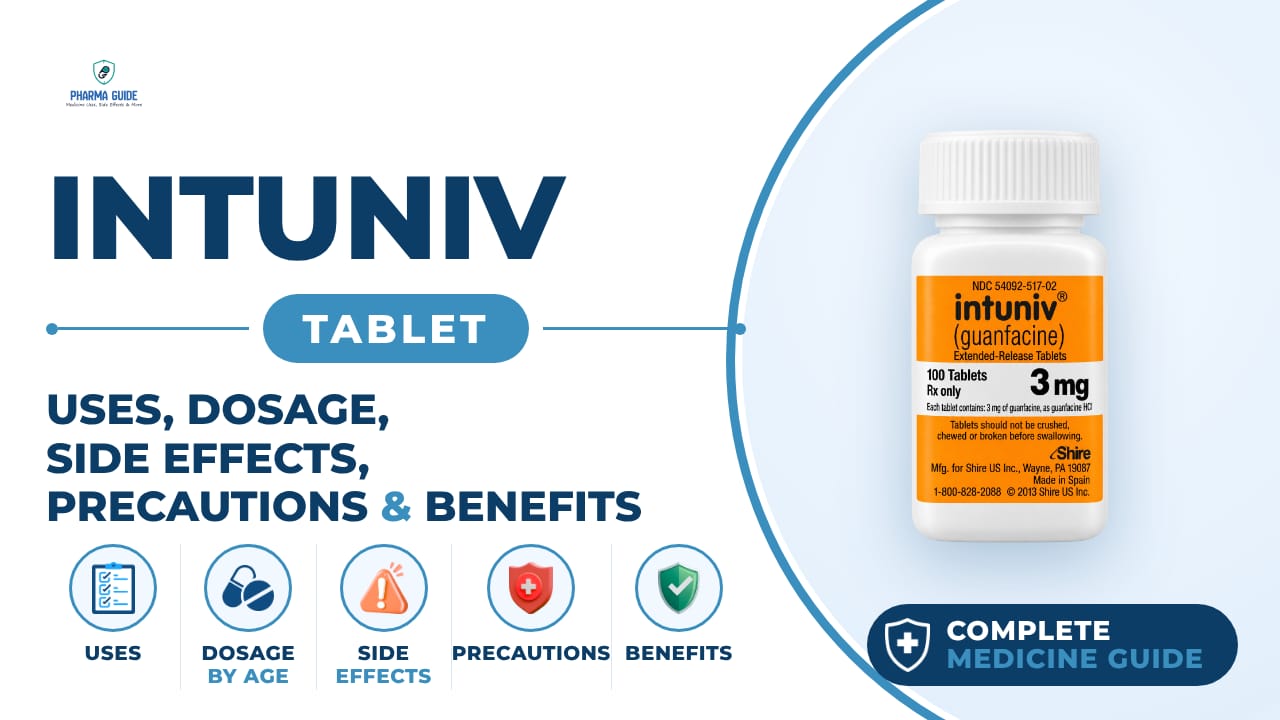
| Generic name | Guanfacine |
|---|---|
| Drug class | Central alpha2A-adrenergic receptor agonist |
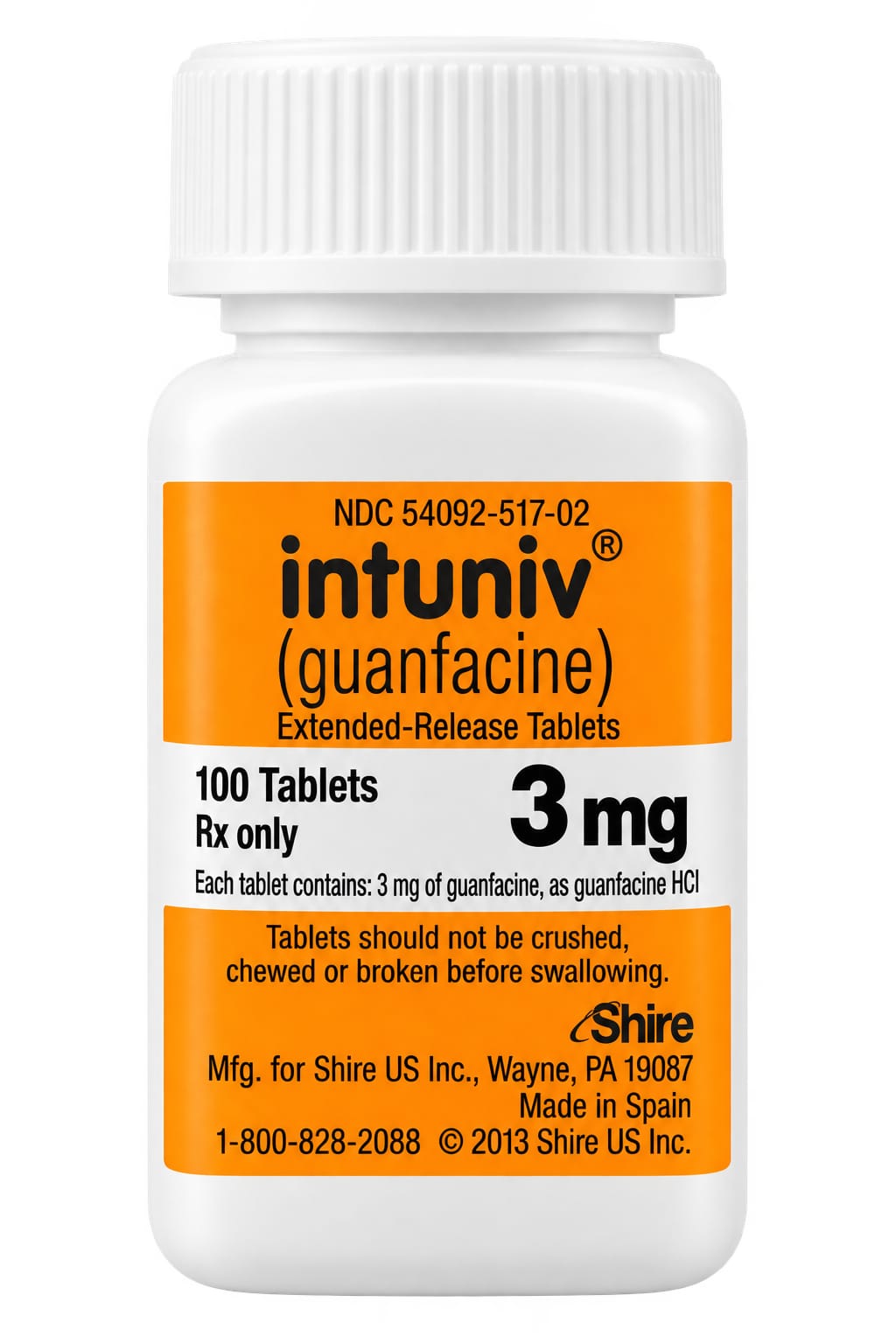
| Forms | Extended-release (prolonged-release) tablets: 1 mg, 2 mg, 3 mg, and 4 mg |
Quick overview
Intuniv Tablet contains guanfacine, a central alpha2A-adrenergic receptor agonist, and is used to treat symptoms of attention deficit hyperactivity disorder (ADHD) in children and adolescents aged 6-17. It is not a central nervous system (CNS) stimulant and can be used alone or alongside stimulant medication. It is taken once daily as an extended-release tablet, usually as part of a broader treatment programme that includes psychological, educational, and social support.
What is Intuniv Tablet
Intuniv is a prescription medicine used to treat the symptoms of attention deficit hyperactivity disorder (ADHD). It is not a central nervous system (CNS) stimulant.
Intuniv Tablet uses
- Treatment of Attention Deficit Hyperactivity Disorder (ADHD) in children and adolescents 6-17 years old as monotherapy
- Treatment of ADHD as adjunctive therapy with stimulant medications when current stimulant medication is not appropriate or does not adequately control symptoms
- Used as part of a treatment programme that usually includes psychological, educational, and social therapy
Benefits of Intuniv Tablet
- ADHD Symptom Control: Helps reduce hyperactivity, impulsivity, and attention difficulties.
- Non-Stimulant Treatment: Provides an ADHD treatment option without stimulant medication.
- Impulse Control: May help reduce impulsive behavior.
- Attention Support: Can improve attention and task focus in some patients.
- Extended-Release Action: Designed for once-daily use.
How Intuniv Tablet works
Guanfacine acts on a specific receptor in the brain that controls sympathetic nerve signals, which lowers heart rate and blood pressure, and is thought to help with ADHD symptoms through its effects on brain activity, though its exact action in ADHD is not fully understood.
Intuniv Tablet dosage
Take this medicine once a day, either in the morning or in the evening, at about the same time each day. Swallow the tablet whole with a small amount of water, milk, or other liquid. Do not crush, chew, or break the tablet because this changes how the medicine is released.
Do not take with a high-fat meal, since this can raise blood levels of the medicine. Do not take with grapefruit juice as it can affect how the medicine works. It can be taken with or without food, but avoid fatty foods.
If a dose is missed, wait until the next day and take the usual dose; do not take a double dose. If two or more doses in a row are missed, talk to your doctor before restarting, as a lower dose may be needed.
Do not stop taking this medicine without talking to your doctor; your doctor will reduce the dose gradually if treatment is stopped. Caregivers should supervise children or adolescents taking this medicine and keep it out of reach of children. Not for use in children under 6 years of age or in adults 18 years and over, since safety and effectiveness have not been established in these groups.
| Age group | Dose |
|---|---|
| 6–12 Years | 1 mg once daily, adjusted gradually by a healthcare professional |
| 13–17 Years | 1 mg once daily, adjusted gradually according to response |
| Adults (18+ Years) | Use only if specifically prescribed; dosing is individualized |
Available forms and strengths
- Extended-release (prolonged-release) tablets: 1 mg, 2 mg, 3 mg, and 4 mg
Side effects of Intuniv Tablet
Common
- Sleepiness, drowsiness
- Tiredness, fatigue
- Headache
- Stomach/abdominal pain
- Dizziness
- Low blood pressure
- Nausea
- Trouble sleeping (insomnia) or nightmares
- Dry mouth
- Loss of appetite
- Weight gain
- Diarrhea, indigestion, or constipation
- Feeling restless or irritable
Serious
- Low blood pressure
- Low heart rate (bradycardia)
- Fainting (syncope)
- Severe sleepiness/sedation
- Allergic reaction (rash, difficulty breathing, hives)
- Chest pain
- Seizures or convulsions
- High blood pressure or unusual heart rhythm
- Fast and/or irregular heartbeat
- Hallucinations
- Suicidal thoughts or behaviour
- Aggression or hostility
- Changes in liver blood test results
- A serious withdrawal reaction of high blood pressure after suddenly stopping the medicine, with symptoms like headache, confusion, nervousness, agitation, and tremors
Warnings and precautions
- This medicine can cause dose-related decreases in blood pressure and heart rate, including fainting. Use with caution if there is a history of low blood pressure, heart block, slow heart rate, heart disease, or fainting, and avoid becoming dehydrated or overheated.
- Sedation and sleepiness are common, especially with other medicines that cause drowsiness. Be careful operating machinery or driving until you know how this medicine affects you.
- Stopping this medicine suddenly can cause a dangerous rebound increase in blood pressure. The dose must be reduced gradually under a doctor's supervision.
- This medicine may affect growth; your doctor will monitor height and weight if treatment continues for a long time.
- Tell your doctor if you or your child have any thoughts of suicide, self-harm, or harming others, as these must be taken seriously.
- Do not take this medicine if you are pregnant or not using contraception, as it is not known if it will harm an unborn baby. Talk to your doctor if you are pregnant or planning to become pregnant.
- Do not breastfeed while taking this medicine unless your doctor tells you to.
- Tell your doctor if you have kidney problems, since the dose may need to be adjusted.
- Tell your doctor if you have liver problems, since the dose may need to be adjusted.
- Avoid drinking alcohol while taking this medicine, as it can increase sleepiness and dizziness.
- Be careful driving, cycling, or using machinery until you know how this medicine affects you, since it can cause dizziness, drowsiness, or slowed thinking, especially early in treatment, which may last 2 to 3 weeks or longer.
Storage
- Store at 25°C (77°F); excursions permitted to 15° to 30°C (59° to 86°F)
- Store between 59°F to 86°F (15°C to 30°C)
- Store in a cool dry place where the temperature stays below 25°C
- Do not store in the bathroom or near a sink, or in the car or on a windowsill
- Keep out of the sight and reach of children
- Do not use after the expiry date
- Do not use if the tablets or blister pack look damaged
- Do not throw away medicines via wastewater or household waste; ask your pharmacist how to dispose of medicines you no longer use
- If no longer needed or out of date, take it to a pharmacy for safe disposal
When to see a doctor
Get medical help right away if you have low blood pressure, low heart rate, fainting, or severe sleepiness. Call your doctor straight away or go to the nearest emergency department if you notice an allergic reaction, chest pain, seizures, fainting, trouble breathing, high blood pressure or unusual heart rhythm, fast or irregular heartbeat, hallucinations, or suicidal thoughts or behaviour.
If you think you or your child have taken too much of this medicine, get urgent medical attention right away, even if there are no symptoms. If you take too much, call your local poison control center or go to the nearest emergency room right away.
Alternatives
- Atomoxetine
- Methylphenidate
- Dexmethylphenidate
Watch the video
FAQs
What is Intuniv Tablet used for?
Intuniv is used to treat symptoms of attention deficit hyperactivity disorder (ADHD) in children and adolescents aged 6-17, either alone or alongside stimulant medication, as part of a broader treatment programme including psychological, educational, and social support.
Is Intuniv a stimulant medication?
No, Intuniv is not a central nervous system (CNS) stimulant. It contains guanfacine, a central alpha2A-adrenergic receptor agonist, and can be used alone or together with stimulant medication for ADHD.
How should Intuniv Tablet be taken?
Intuniv should be taken once a day, in the morning or evening, at about the same time each day. Swallow the tablet whole with water, milk, or other liquid without crushing, chewing, or breaking it, and avoid taking it with a high-fat meal or grapefruit juice.
What should I do if I miss a dose of Intuniv?
If a dose is missed, wait until the next day and take the usual dose rather than doubling up. If two or more doses in a row are missed, talk to your doctor before restarting, as a lower dose may be needed.
Can I stop taking Intuniv suddenly?
No, you should not stop taking Intuniv without talking to your doctor, as stopping suddenly can cause a dangerous rebound increase in blood pressure. Your doctor will reduce the dose gradually if treatment is stopped.
General information, not medical advice
Your prescriber and the leaflet in your pack know your situation. This page does not.
- Follow your prescriber and the leaflet
- Don't start, stop, or change a dose on your own
- Doses and warnings differ by country and product
Sources
Video
Related medicines

Injectafer Injection: Uses, Dosage, Side Effects, Precautions and Alternates
Iron products
Injectafer (ferric carboxymaltose) treats iron deficiency anemia and heart failure-related iron deficiency via IV. Learn uses, dosage, side effects, and

Gliclazide Tablet: Uses, Dosage, Side Effects, Precautions and Alternates
Sulfonylurea (hypoglycemic/antidiabetic agent)
Gliclazide Tablet is a sulfonylurea for type 2 diabetes that boosts insulin release. Learn about dosage, side effects, warnings, and precautions.