
Safety
General information, not medical advice
Your prescriber and the leaflet in your pack know your situation. This page does not.
- Follow your prescriber and the leaflet
- Don't start, stop, or change a dose on your own
- Doses and warnings differ by country and product
Invanz Injection: Uses, Dosage, Side Effects, Precautions and Alternates
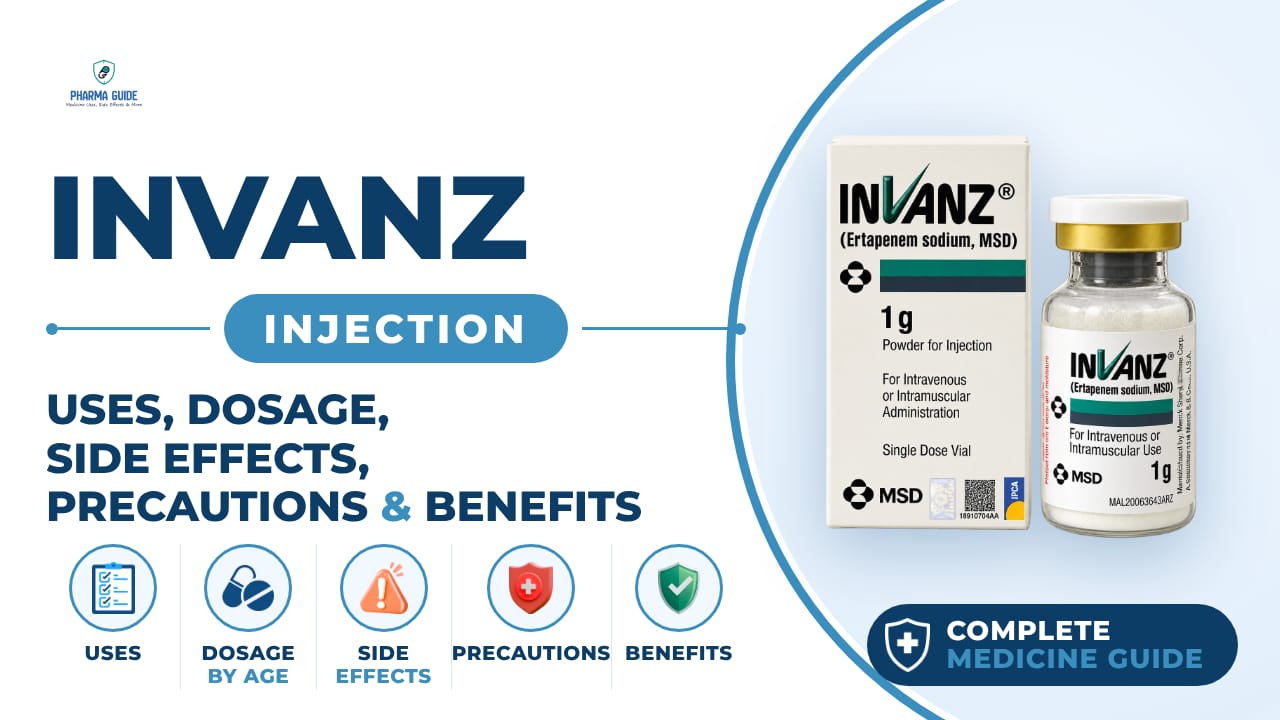
| Generic name | Ertapenem |
|---|---|
| Drug class | Carbapenem (penem) antibacterial |
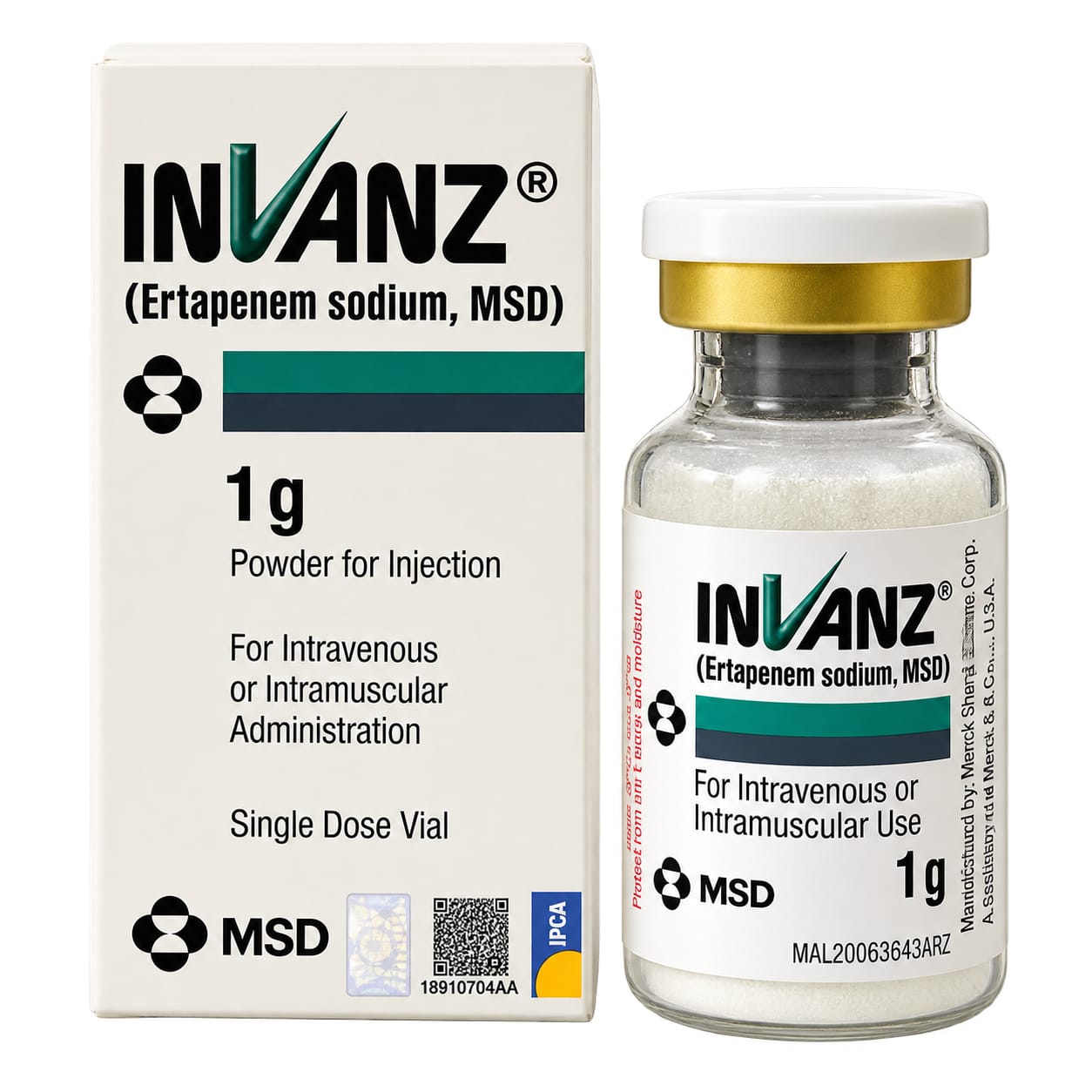
| Forms | Powder for injection (single-dose vial, 1 gram) for intravenous or intramuscular use |
Quick overview
Invanz Injection (ertapenem) is a carbapenem antibacterial medicine given by injection into a vein or muscle. It is used to treat serious bacterial infections such as complicated intra-abdominal, skin, urinary tract, and pelvic infections, as well as community-acquired pneumonia, and to prevent infection after certain colorectal surgery. It works by stopping bacteria from building their cell walls, which kills the bacteria. It can cause side effects such as diarrhea and nausea, and carries warnings about allergic reactions, seizures, and antibiotic-associated diarrhea.
What is Invanz Injection
Invanz is an antibiotic given by injection into a vein or muscle. It belongs to a group of antibiotics called carbapenems and is used to treat serious bacterial infections or to prevent infection after certain surgery.
Invanz Injection uses
- Complicated intra-abdominal infections
- Complicated skin and skin structure infections, including diabetic foot infections without bone infection
- Community-acquired pneumonia
- Complicated urinary tract infections including kidney infections (pyelonephritis)
- Acute pelvic infections including infections after childbirth, septic abortion, and post-surgical gynecologic infections
- Prevention of surgical site infection after elective colorectal surgery in adults
Benefits of Invanz Injection
- Treats serious bacterial infections
- Provides broad-spectrum antibacterial activity
- Treats certain complicated urinary tract infections
- Treats complicated intra-abdominal infections
- Treats certain skin and soft-tissue infections
- Can treat community-acquired pneumonia
How Invanz Injection works
Invanz works by stopping bacteria from building their cell walls, which kills the bacteria.
Invanz Injection dosage
Invanz is given into a vein (intravenously) or into a muscle (intramuscularly). When given into a vein, it is infused over 30 minutes. Intravenous treatment may be given for up to 14 days, or intramuscular injection for up to 7 days. It should not be mixed or given at the same time with other medications in the same IV line, and it should not be diluted with solutions containing dextrose. For surgery prevention, it is given as a single dose about 1 hour before the surgical cut is made.
Patients should take the medication exactly as directed and complete the full course, even if feeling better early in treatment. Skipping doses or not finishing the full course may make the treatment less effective and increase the chance that bacteria become resistant to this and other antibiotics in the future.
| Age group | Dose |
|---|---|
| 3 months–12 years | 15 mg/kg IV or IM twice daily, maximum 1 g/day |
| 13–17 years | 1 g IV or IM once daily |
| 18–64 years | 1 g IV or IM once daily |
Available forms and strengths
Powder for injection (single-dose vial, 1 gram) for intravenous or intramuscular use.
Side effects of Invanz Injection
Common
- Diarrhea
- Nausea
- Headache
- Infused vein complication (irritation at the IV site)
- Vomiting (in children)
- Infusion site pain (in children)
- Vaginitis (in women)
Serious
- Severe allergic (anaphylactic) reactions
- Seizures and other nervous system problems
- Clostridioides difficile-associated diarrhea, which can range from mild diarrhea to severe, life-threatening colitis
- Serious skin reactions
Warnings and precautions
- Serious and sometimes fatal severe allergic (anaphylactic) reactions have happened with this type of antibiotic. Tell your doctor about any past allergic reactions to penicillins or similar antibiotics before starting treatment.
- This medicine can cause seizures and other nervous system problems, especially in people with brain conditions, a history of seizures, or kidney problems.
- Taking this medicine together with valproic acid or divalproex sodium can lower the blood levels of those seizure medicines, which may increase the risk of breakthrough seizures. This combination is generally not recommended.
- This medicine, like other antibiotics, can cause diarrhea related to an overgrowth of a bacteria called C. difficile, which can range from mild to life-threatening colitis and can occur even months after stopping the antibiotic.
- When given as an injection into a muscle, care must be taken to avoid accidentally injecting into a blood vessel.
- This medicine should not be used in people who are allergic to it, to similar antibiotics, or, for the intramuscular form, to the local anesthetic lidocaine.
- There is not enough information from use in pregnant women to know if this medicine causes birth defects or other problems. Animal studies did not show major harm to the developing baby at certain dose levels. This medicine should only be used during pregnancy if clearly needed.
- Small amounts of this medicine pass into breast milk. Caution should be used when giving this medicine to a breastfeeding woman, weighing the benefits of breastfeeding against the mother's need for the medicine and any possible effects on the baby.
- People with reduced kidney function may need a lower dose. Those with severe kidney impairment or on dialysis need special dosing adjustments.
- No specific dose change is recommended for people with liver problems, though this has not been fully studied.
- There is no information suggesting this medicine affects the ability to drive or use machines.
Storage
- Do not store the unopened powder above 25°C (77°F)
- Once mixed with the diluent, the solution can be kept at room temperature (25°C) and used within 6 hours, or refrigerated (5°C) for 24 hours and used within 4 hours after taking it out of the refrigerator
- Do not freeze solutions of this medicine
- Solutions should look colorless to pale yellow; check visually for particles or discoloration before use
When to see a doctor
- Get medical help right away if you have signs of a serious allergic reaction, since these can be life-threatening and need immediate treatment.
- Contact your doctor as soon as possible if you develop watery or bloody diarrhea, with or without stomach cramps and fever, even if it happens weeks or months after you finish taking this medicine.
- Seek medical attention if you have seizures, tremors, or other new nervous system symptoms while taking this medicine.
Alternatives
- Meropenem
- Imipenem/cilastatin
- Piperacillin/tazobactam
Watch the video
FAQs
What is Invanz Injection used for?
Invanz treats serious bacterial infections including complicated intra-abdominal, skin, urinary tract, and pelvic infections, as well as community-acquired pneumonia, and it is also used to prevent infection after certain colorectal surgery.
How is Invanz Injection given?
Invanz is given into a vein (infused over 30 minutes) or into a muscle. IV treatment may last up to 14 days, intramuscular injection up to 7 days, and for surgery prevention it is given as a single dose about 1 hour before the surgical cut.
What are the common side effects of Invanz Injection?
Common side effects include diarrhea, nausea, headache, irritation at the IV site, vomiting and infusion site pain in children, and vaginitis in women.
What are the serious risks of Invanz Injection?
Serious risks include severe allergic (anaphylactic) reactions, seizures and other nervous system problems, Clostridioides difficile-associated diarrhea, and serious skin reactions.
Can Invanz Injection be used with valproic acid?
Taking Invanz with valproic acid or divalproex sodium can lower blood levels of those seizure medicines and increase the risk of breakthrough seizures, so this combination is generally not recommended.
General information, not medical advice
Your prescriber and the leaflet in your pack know your situation. This page does not.
- Follow your prescriber and the leaflet
- Don't start, stop, or change a dose on your own
- Doses and warnings differ by country and product
Sources
Video
Related medicines

Injectafer Injection: Uses, Dosage, Side Effects, Precautions and Alternates
Iron products
Injectafer (ferric carboxymaltose) treats iron deficiency anemia and heart failure-related iron deficiency via IV. Learn uses, dosage, side effects, and

Gliclazide Tablet: Uses, Dosage, Side Effects, Precautions and Alternates
Sulfonylurea (hypoglycemic/antidiabetic agent)
Gliclazide Tablet is a sulfonylurea for type 2 diabetes that boosts insulin release. Learn about dosage, side effects, warnings, and precautions.