
Safety
General information, not medical advice
Your prescriber and the leaflet in your pack know your situation. This page does not.
- Follow your prescriber and the leaflet
- Don't start, stop, or change a dose on your own
- Doses and warnings differ by country and product
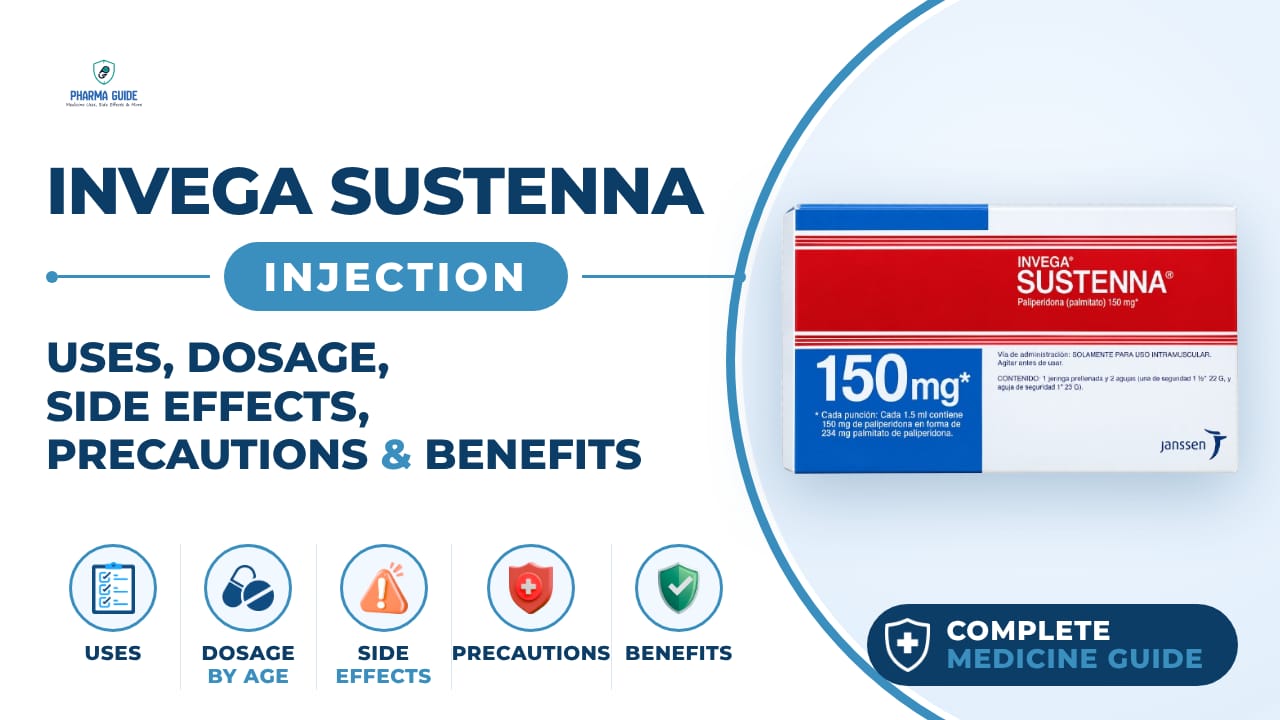
Invega Sustenna Injection: Uses, Dosage, Side Effects, Precautions and Alternates
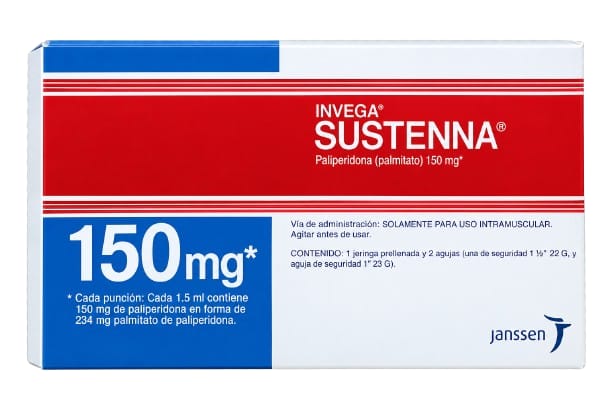
| Generic name | paliperidone palmitate |
|---|---|
| Drug class | Atypical antipsychotic (also known as a long-acting injection) |
| Forms | Extended-release liquid suspension in a prefilled syringe for intramuscular injection |
Quick overview
Invega Sustenna Injection contains paliperidone palmitate, an atypical antipsychotic given as a long-acting injection. It is used to treat schizophrenia and schizoaffective disorder in adults. It releases slowly in the body, so it is given once a month after an initial starting schedule, rather than requiring a daily dose. It carries a boxed warning about increased risk of death in older adults with dementia-related psychosis.
What is Invega Sustenna Injection
Invega Sustenna is a brand-name, extended-release injection used to treat schizophrenia and schizoaffective disorder. It contains paliperidone palmitate and belongs to a group of medicines called atypical antipsychotics.
Invega Sustenna Injection uses
- Treats schizophrenia in adults
- Treats schizoaffective disorder in adults, either alone or together with other medicines such as mood stabilizers or antidepressants
Benefits of Invega Sustenna Injection
- Helps correct a chemical imbalance in the brain linked to schizophrenia
- Can lessen the chance of schizophrenia symptoms coming back
- Releases slowly in the body so you don't need to take a dose every day
How Invega Sustenna Injection works
The medicine is thought to work by affecting brain chemical messengers called serotonin and dopamine, which are involved in thoughts and mood. It is designed to release slowly into the body so you don't need daily dosing.
Invega Sustenna Injection dosage
Invega Sustenna is given as an injection into the muscle of the upper arm (deltoid) or buttock (gluteal) by a doctor or other healthcare professional at an office or clinic. Before starting, your doctor will want to know you have already tolerated an oral form of paliperidone or oral/injectable risperidone. The first two doses are usually given about a week apart, then injections continue once a month. It is very important to keep all appointments and get the injection on time to keep a steady level of medicine in your body. This medicine is not approved for use in people younger than 18 years old. It controls the condition but does not cure it, so regular ongoing injections are needed.
| Age group | Dose |
|---|---|
| Under 18 years | Not recommended |
| 18–64 years | 117 mg, once/month |
| 65+ years | 117 mg, once/month |
Available forms and strengths
Extended-release liquid suspension in a prefilled syringe for intramuscular injection.
Side effects of Invega Sustenna Injection
Common
- Pain, swelling, redness, or discoloration at the injection site
- Sleepiness or drowsiness
- Dizziness
- Restlessness or feeling tense with an urge to move (akathisia)
- Agitation
- Headache
- Difficulty falling or staying asleep
- Nausea
- Trembling, muscle weakness, unsteadiness, or slow shuffling walk
- Weight gain
- Abnormal eye movements
- Fast heart rate
- Cold-like symptoms such as stuffy nose or sore throat
- Constipation or upset stomach
Serious
- Neuroleptic malignant syndrome: high fever, stiff muscles, confusion, fast or irregular heartbeat, loss of consciousness
- Tardive dyskinesia: uncontrollable movements of the tongue, mouth, cheeks, jaw, arms, legs, or trunk
- Signs of a mini-stroke: sudden weakness or numbness of the face, arms, or legs (especially on one side), or slurred speech
- Serious heart rhythm problems (QT prolongation): heart palpitations, dizziness, fainting
- Severe allergic reaction: rash, hives, swelling of the face/lips/tongue, difficulty breathing or wheezing
- Severe skin reactions with blisters and peeling skin (Stevens-Johnson syndrome or toxic epidermal necrolysis)
- High blood sugar or diabetes: unusual thirst, tiredness, blurred vision, upset stomach, needing to urinate more often
- Low blood pressure on standing: dizziness, fainting, falls
- Blood disorders (low white blood cells): fever, infection, sore throat
- Seizures
- Difficulty swallowing, which can increase the risk of food or liquid entering the lungs
- Painful erection lasting more than 4 hours (priapism)
- Increased prolactin levels: missed periods, nipple discharge, breast enlargement, erectile dysfunction
- Problems regulating body temperature, especially during exercise or hot weather
- Increased risk of stroke or death in older adults with dementia-related psychosis
Warnings and precautions
- This medicine carries a boxed warning (the FDA's most serious warning) because it can increase the risk of death in older adults with psychosis related to dementia. It is not approved to treat this condition.
- Older adults with dementia who take similar medicines may have an increased risk of stroke or death.
- A serious muscle movement problem called tardive dyskinesia can develop, is more likely with longer-term use and in older women, and may sometimes be permanent.
- This medicine can affect your body's ability to control its temperature, so avoid becoming overheated or dehydrated.
- Do not use this medicine if you are allergic to paliperidone or to risperidone, a similar antipsychotic medicine.
- Tell your eye doctor you are using this medicine if you are planning eye surgery, as it may raise the risk of a surgical complication.
- Do not miss any injections or scheduled doctor appointments.
- It is not known if this medicine is safe to use during pregnancy. Talk with your doctor before using it if you are pregnant or planning to become pregnant.
- Babies born to mothers who used this medicine late in pregnancy may have feeding or breathing problems, shaking, muscle stiffness or weakness, sleepiness, or agitation.
- This medicine passes into breast milk, so it is recommended that you do not breastfeed while using it. Talk with your doctor if you are breastfeeding or planning to.
- This medicine has not been studied in people with reduced kidney function. Your doctor may lower your dose if your kidneys are not working well, and it is not recommended for people with moderate or severe kidney problems.
- This medicine has not been studied in people with liver problems. Based on experience with the oral form, dose changes are usually not needed for mild to moderate liver problems, but your doctor will use judgment if you have severe liver impairment.
- Do not drink alcohol while using this medicine, as it can increase alcohol's effects and raise the risk of dangerous side effects.
- Be careful before driving or using machinery until you know how this medicine affects you, since it can cause dizziness, drowsiness, or light-headedness.
Storage
- Keep the medicine in a cool, dry place, protected from light, where the temperature stays below 25°C
- Do not use it beyond the expiry date (month and year) printed on the pack
- This medicine is usually stored and given by a healthcare professional, so you are unlikely to store it at home
When to see a doctor
- Get emergency help right away for signs of a serious allergic reaction, such as rash, hives, swelling of the face, lips, or tongue, or difficulty breathing.
- Call your doctor right away or go to the emergency department for signs of heart or blood pressure problems, such as a fast or irregular heartbeat, fainting, or severe dizziness.
- Seek care for signs of high blood sugar or diabetes, such as unusual thirst, tiredness, upset stomach, or needing to urinate more often.
- Get emergency care for a severe rash with blisters and peeling skin, which can start around the mouth, nose, eyes, or genitals.
- Seek emergency help for sudden weakness or numbness on one side of the body or slurred speech, which can be signs of a mini-stroke.
- Call your doctor right away if you notice uncontrollable movements of the tongue, mouth, cheeks, or jaw, which can spread to the arms and legs.
- Seek urgent medical help for unexplained high fever, severe muscle stiffness, confusion, excessive sweating, or lowered consciousness, which can be signs of a life-threatening reaction called neuroleptic malignant syndrome.
- Call your doctor right away if you develop a fever or signs of infection while using this medicine.
- Get emergency help for an erection that lasts more than 4 hours, as permanent damage can occur if not treated quickly.
- If you think you have used too much of this medicine, get emergency medical help or contact a poison control center right away.
Alternatives
- Risperdal Consta
- Aristada
- Abilify Maintena
Watch the video
FAQs
What is Invega Sustenna Injection used for?
It is used to treat schizophrenia in adults and schizoaffective disorder in adults, either alone or together with other medicines such as mood stabilizers or antidepressants.
How often is Invega Sustenna given?
After the first two starting doses given about a week apart, injections continue once a month to keep a steady level of medicine in your body.
How is Invega Sustenna Injection given?
It is given as an injection into the muscle of the upper arm (deltoid) or buttock (gluteal) by a doctor or other healthcare professional at an office or clinic.
What is the boxed warning for Invega Sustenna?
It carries a boxed warning because it can increase the risk of death in older adults with dementia-related psychosis, and it is not approved to treat this condition.
What are common side effects of Invega Sustenna Injection?
Common side effects include pain or redness at the injection site, sleepiness, dizziness, restlessness, headache, trouble sleeping, nausea, trembling, weight gain, and fast heart rate.
General information, not medical advice
Your prescriber and the leaflet in your pack know your situation. This page does not.
- Follow your prescriber and the leaflet
- Don't start, stop, or change a dose on your own
- Doses and warnings differ by country and product
Sources
Video
Related medicines

Injectafer Injection: Uses, Dosage, Side Effects, Precautions and Alternates
Iron products
Injectafer (ferric carboxymaltose) treats iron deficiency anemia and heart failure-related iron deficiency via IV. Learn uses, dosage, side effects, and

Gliclazide Tablet: Uses, Dosage, Side Effects, Precautions and Alternates
Sulfonylurea (hypoglycemic/antidiabetic agent)
Gliclazide Tablet is a sulfonylurea for type 2 diabetes that boosts insulin release. Learn about dosage, side effects, warnings, and precautions.