
Safety
General information, not medical advice
Your prescriber and the leaflet in your pack know your situation. This page does not.
- Follow your prescriber and the leaflet
- Don't start, stop, or change a dose on your own
- Doses and warnings differ by country and product
Invega Trinza Injection: Uses, Dosage, Side Effects, Precautions and Alternates
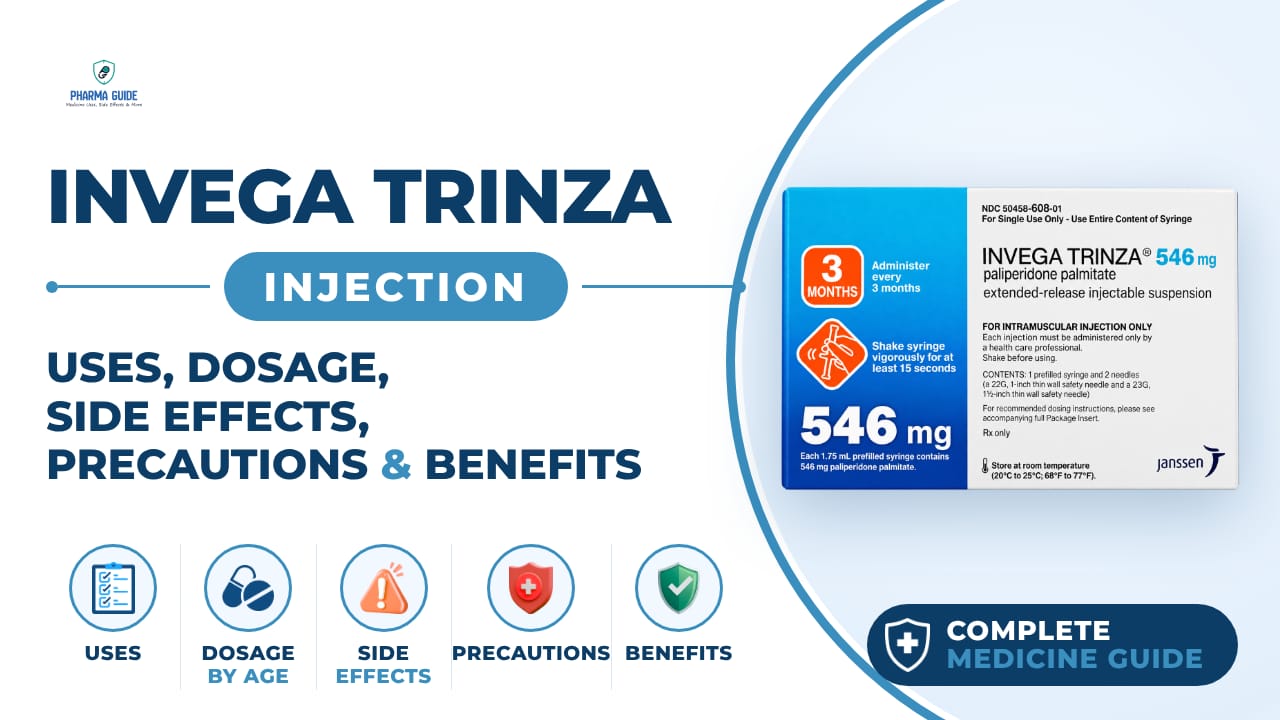
| Generic name | paliperidone palmitate |
|---|---|
| Drug class | Atypical antipsychotic |
| Forms | Suspension for injection (intramuscular) in a prefilled syringe |
Quick overview
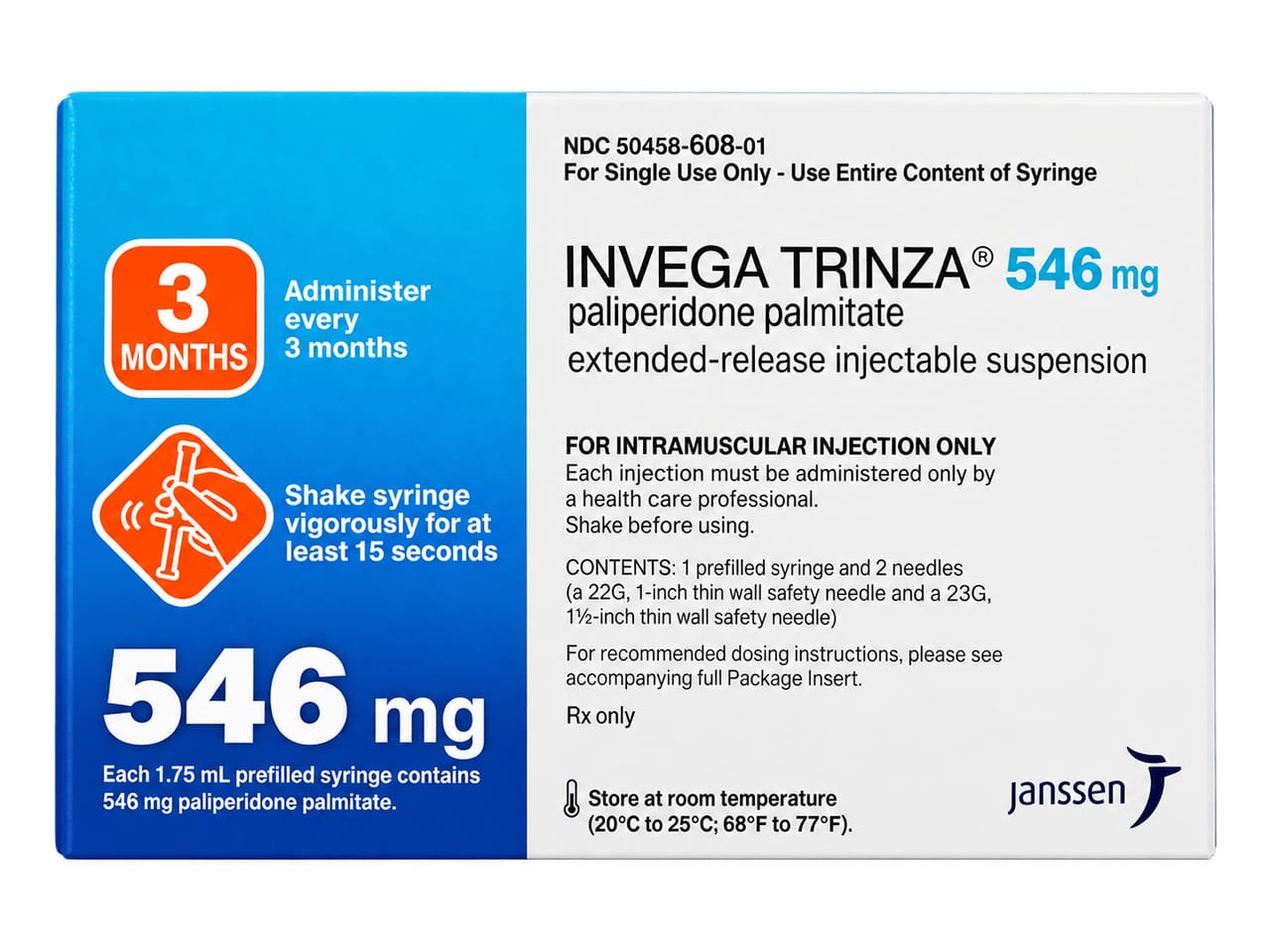
Invega Trinza Injection contains paliperidone palmitate, an atypical antipsychotic given as an injection once every 3 months for the maintenance treatment of schizophrenia in adults. It is only started after a person has already been treated for at least 4 months with the once-a-month version of paliperidone palmitate (Invega Sustenna). The injection is given into a muscle by a healthcare professional and is not for home use.
What is Invega Trinza Injection
Invega Trinza is a long-acting injectable medicine used to treat schizophrenia in adults. It contains paliperidone palmitate, which is given as an injection into a muscle once every 3 months. It is only started after a person has been treated for at least 4 months with the once-a-month version of paliperidone palmitate (Invega Sustenna).
Invega Trinza Injection uses
- Maintenance treatment of schizophrenia in adults who have already been adequately treated with the 1-month paliperidone palmitate injection for at least 4 months
- Treats schizophrenia in adults
- Provides long-term maintenance antipsychotic treatment
- Helps control hallucinations
- Helps reduce delusions
- May improve disorganized thinking
Benefits of Invega Trinza Injection
- Helps control symptoms of schizophrenia such as hallucinations, delusions, and paranoia
- Can lessen the chance of schizophrenia symptoms coming back
- Only needs to be given once every 3 months instead of daily or monthly dosing
How Invega Trinza Injection works
The exact way this medicine works is not fully understood. It is thought to help by affecting brain chemicals called dopamine and serotonin, which are believed to play a role in schizophrenia.
Invega Trinza Injection dosage
This medicine is given as an injection into the muscle of the upper arm (deltoid) or buttock (gluteal) by a doctor or other healthcare professional — it is not for home use or self-injection. It is given once every 3 months, and can be given up to 2 weeks before or after the scheduled 3-month time point if needed. It is only started after a person has been adequately treated with the 1-month paliperidone palmitate injection for at least 4 months.
The syringe must be shaken vigorously for at least 15 seconds shortly before the injection is given, to mix the suspension evenly. The dose must be given as a single injection and not split into multiple injections. It is important not to miss injections or appointments, since this medicine only works if given on the proper schedule. At the start of treatment, some people may notice a drop in blood pressure when standing up, or a faster heartbeat; these effects usually go away after a few days.
| Age group | Dose |
|---|---|
| Under 18 years | Safety and effectiveness have not been established |
| 18–64 years | 441 mg monthly, 662 mg monthly, 882 mg monthly or every 6 weeks, or 1,064 mg every 2 months, depending on the established oral aripiprazole dose |
Available forms and strengths
- Suspension for injection (intramuscular) in a prefilled syringe
Side effects of Invega Trinza Injection
Common
- Pain, swelling, discoloration, redness, or a lump at the injection site
- Weight gain
- Headache
- Upper respiratory tract infection (like a common cold)
- Feeling restless or a continuous urge to move (akathisia)
- Trembling, muscle weakness, unsteadiness, or slow shuffling walk
- Difficulty falling or staying asleep, drowsiness, tiredness
- Irritability, anxiety, or low mood
- Dry mouth, drooling, or altered taste
- Nausea, constipation, diarrhea, or stomach discomfort
- Missed or irregular periods, breast swelling, or milk leakage from breasts
- Difficulty getting or keeping an erection
Serious
- Signs of serious allergic reaction: rash, itching, hives, swelling of face/lips/tongue, difficulty breathing
- Neuroleptic malignant syndrome: high fever, severe muscle stiffness, confusion, irregular heartbeat, sweating
- Heart rhythm problems (QT prolongation): dizziness, fainting, heart palpitations
- Tardive dyskinesia: uncontrollable movements of the tongue, face, mouth, or jaw
- Signs of high blood sugar or diabetes: unusual thirst, frequent urination, weakness, hunger
- Severe skin reactions with blistering and peeling (Stevens-Johnson syndrome or toxic epidermal necrolysis)
- Signs of stroke (especially in older adults with dementia): sudden weakness or numbness of face/arms/legs, slurred speech, confusion
- Low white blood cell count, leading to increased risk of infection or fever
- High prolactin levels causing missed periods, breast milk leakage, breast growth in men, or erectile problems
- Seizures
- Difficulty swallowing, which can lead to food or liquid entering the lungs
- Prolonged or painful erection lasting more than 4 hours (priapism)
- Problems regulating body temperature, especially with exercise or heat exposure
- Blood clots in the legs or lungs
- Fainting or dizziness from low blood pressure on standing (orthostatic hypotension)
- Increased risk of death in older adults with dementia-related psychosis
Warnings and precautions
- Elderly people with dementia-related psychosis who take this type of medicine have a higher risk of death, and may have a higher chance of stroke. This medicine is not approved to treat dementia-related psychosis.
- A rare but potentially fatal condition called Neuroleptic Malignant Syndrome can occur, with symptoms like high fever, muscle stiffness, confusion, and irregular heartbeat or blood pressure.
- This medicine may cause involuntary, repeated movements of the face or tongue (tardive dyskinesia) which can sometimes become permanent.
- This medicine can cause a drop in blood pressure upon standing, which may cause dizziness or fainting, especially in people with heart problems.
- This medicine can raise blood sugar levels, which could lead to or worsen diabetes.
- Weight gain has been seen with this medicine, and body weight should be monitored.
- If you are planning eye surgery (such as cataract surgery), tell your eye surgeon you are using this medicine, as it can cause a complication during surgery called intraoperative floppy iris syndrome.
- This medicine may cause a persistent and painful erection (priapism), which can require surgery if not treated.
- This medicine may affect the body's ability to cool down, which can be risky in hot weather, during exercise, or with dehydration.
- It is not known if this medicine is safe to use during pregnancy. Babies born to mothers who used this medicine late in pregnancy may have symptoms like muscle stiffness or floppiness, tremors, sleepiness, agitation, or trouble feeding or breathing after birth. Your doctor will only use it during pregnancy if the benefits outweigh the risks.
- This medicine passes into breast milk, so women using it should not breastfeed. Because the medicine stays in the body a long time, infants could be affected even if breastfeeding starts long after the last dose.
- This medicine has not been fully studied in people with kidney problems. A lower dose may be needed for mild kidney problems, and it is not recommended for people with moderate or severe kidney problems.
- This medicine has not been studied in people with liver problems. No dose change is needed for mild or moderate liver problems, but it has not been studied in severe liver impairment.
- You should avoid drinking alcohol while using this medicine, as it can increase its sedating effects.
- This medicine can affect your ability to think clearly, judge situations, or react quickly. Be careful about driving or operating machinery until you know how it affects you.
Storage
- Keep the medicine in a cool, dry place, protected from light, where the temperature stays below 25°C
- Do not use it beyond the expiry date (month and year) printed on the pack
- This medicine will usually be stored by your doctor or pharmacist rather than at home
When to see a doctor
- Get emergency help if you notice signs of a serious allergic reaction, such as rash, swelling of the face or tongue, or trouble breathing.
- Seek urgent medical help for symptoms of Neuroleptic Malignant Syndrome, including high fever, severe muscle stiffness, confusion, or a lowered level of consciousness.
- Call your doctor or go to the emergency room if you notice sudden weakness or numbness of the face, arm, or leg, especially on one side, or slurred speech, which could be signs of a stroke.
- Contact your doctor if you notice uncontrollable movements of the tongue, mouth, cheeks, or jaw, which may be signs of tardive dyskinesia.
- Seek medical care for a severe or life-threatening rash with blistering and peeling skin, which can be a sign of a serious skin reaction.
- Get medical help right away if you have an erection lasting more than 4 hours.
- Call your doctor if you notice signs of high blood sugar, such as being very thirsty, needing to urinate often, or feeling unusually weak or hungry.
Alternatives
- Aripiprazole oral tablets
- Abilify Maintena
- Asimtufii
Watch the video
FAQs
What is Invega Trinza Injection used for?
It is used for the maintenance treatment of schizophrenia in adults who have already been adequately treated with the once-a-month paliperidone palmitate injection (Invega Sustenna) for at least 4 months.
How often is Invega Trinza given?
It is given as an injection into the muscle once every 3 months, and can be given up to 2 weeks before or after the scheduled 3-month time point if needed.
Can I inject Invega Trinza myself at home?
No, it is given into a muscle by a doctor or other healthcare professional and is not for home use or self-injection.
What are common side effects of Invega Trinza Injection?
Common side effects include pain or swelling at the injection site, weight gain, headache, upper respiratory infection, restlessness, tremors, trouble sleeping, dry mouth, nausea, and irregular periods.
Is Invega Trinza safe for elderly people with dementia?
Elderly people with dementia-related psychosis who take this type of medicine have a higher risk of death and stroke, and this medicine is not approved to treat dementia-related psychosis.
General information, not medical advice
Your prescriber and the leaflet in your pack know your situation. This page does not.
- Follow your prescriber and the leaflet
- Don't start, stop, or change a dose on your own
- Doses and warnings differ by country and product
Sources
Video
Related medicines
Latuda Tablet: Uses, Dosage, Side Effects, Precautions and Alternates
atypical antipsychotic
Latuda Tablet (lurasidone) treats bipolar depression and schizophrenia. Learn about dosage, benefits, side effects, warnings, and precautions before use.
Seroquel XR Tablet: Uses, Dosage, Side Effects, Precautions and Alternates
Atypical antipsychotic
Seroquel XR Tablet (quetiapine) treats schizophrenia, bipolar disorder, and depression. Learn about dosage, benefits, side effects, and key safety warnings.