
Safety
General information, not medical advice
Your prescriber and the leaflet in your pack know your situation. This page does not.
- Follow your prescriber and the leaflet
- Don't start, stop, or change a dose on your own
- Doses and warnings differ by country and product
Invokana Tablet: Uses, Dosage, Side Effects, Precautions and Alternates
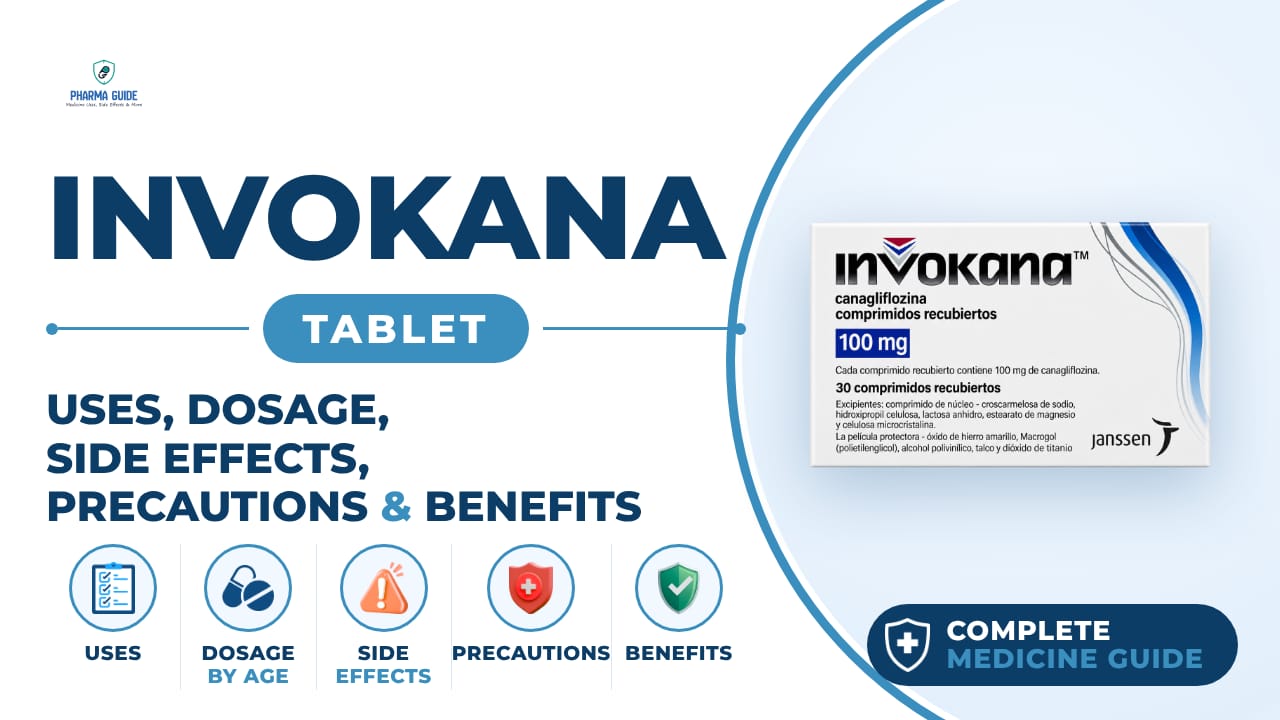
| Generic name | canagliflozin |
|---|---|
| Drug class | SGLT2 inhibitor (sodium-glucose co-transporter 2 inhibitor) |
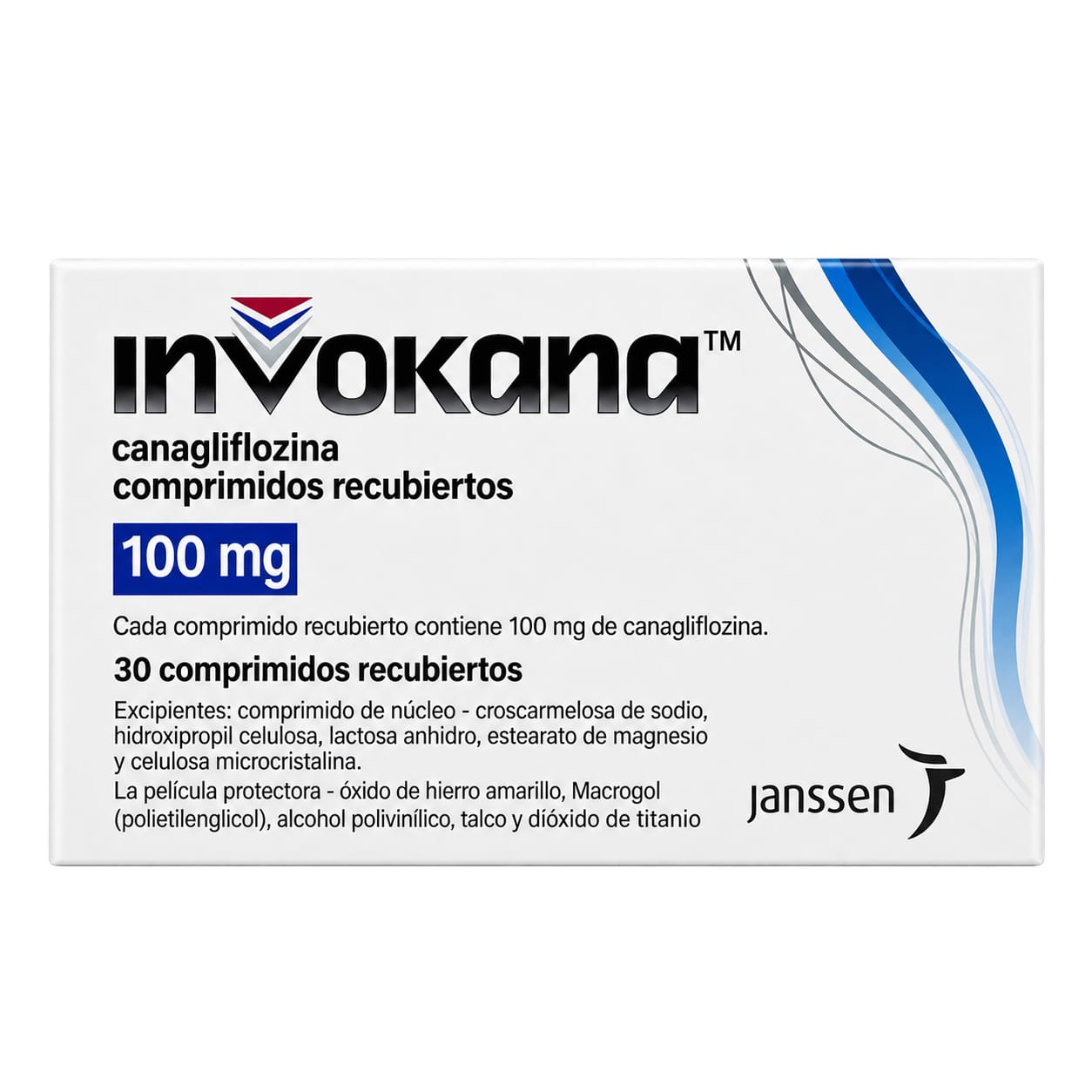
| Forms | Film-coated tablets (100 mg and 300 mg) |
Quick overview
Invokana Tablet contains canagliflozin, an SGLT2 inhibitor used to treat type 2 diabetes in adults and children aged 10 years and older. It is used along with diet and exercise to lower blood sugar, and in certain adults it can also reduce the risk of major cardiovascular events and help protect against worsening kidney disease. Invokana works by causing more sugar to be removed from the body through urine.
What is Invokana Tablet
Invokana is a prescription tablet medicine used to treat type 2 diabetes in adults and children aged 10 years and older. It contains the active substance canagliflozin and belongs to a drug class called SGLT2 inhibitors (sodium-glucose co-transporter 2 inhibitors).
Invokana Tablet uses
- Along with diet and exercise, to lower blood sugar in adults and children aged 10 and older with type 2 diabetes
- To reduce the risk of major cardiovascular events such as heart attack, stroke, or death in adults with type 2 diabetes who have known cardiovascular disease
- To reduce the risk of end stage kidney disease, worsening kidney function, cardiovascular death, and hospitalization for heart failure in adults with type 2 diabetes and diabetic kidney disease with protein in the urine
Benefits of Invokana Tablet
- Helps lower blood glucose
- Improves HbA1c
- May support modest weight reduction
- Can reduce the risk of certain cardiovascular events in appropriate adults
- May help slow progression of diabetic kidney disease
How Invokana Tablet works
Invokana works in the kidneys by blocking a protein that normally reabsorbs sugar back into the blood. This causes more sugar to pass out of the body in the urine, which lowers blood sugar levels.
Invokana Tablet dosage
Take it by mouth one time each day exactly as your healthcare provider tells you. It is best to take it before the first meal of the day, and you can take it with or without food. Swallow the tablet whole; do not chew or crush it. Try to take it at the same time each day to help you remember.
If you take it along with a cholesterol medicine called a bile acid sequestrant (such as cholestyramine), take this medicine at least 1 hour before or 4 to 6 hours after that medicine.
If you miss a dose, take it as soon as you remember, but if it's almost time for your next dose, skip the missed dose and take your next dose at the regular time. Do not take two doses on the same day to make up for a missed dose.
Your healthcare provider may tell you to stop taking it for a few days before any surgery or procedure that involves not eating or drinking for a long time.
| Age group | Dose |
|---|---|
| 18–64 years | Usually 100 mg once daily before the first meal; may be increased to 300 mg once daily in selected patients |
| 65 years and older | Usually starts at 100 mg once daily, with closer monitoring of kidney function, hydration, and blood pressure |
Available forms and strengths
- Film-coated tablets (100 mg and 300 mg)
Side effects of Invokana Tablet
Common
- Vaginal yeast infections and yeast infections of the penis
- Changes in urination, including urgent need to urinate more often, in larger amounts, or at night
- Constipation
- Feeling thirsty
- Nausea
- Changes in blood fat (cholesterol) levels and increased red blood cell count
Serious
- Diabetic ketoacidosis (increased ketones in blood or urine)
- Lower limb amputations, mainly of the toe or midfoot
- Dehydration and related low blood pressure or dizziness on standing
- Serious genital and urinary tract infections, including a rare but serious infection called necrotizing fasciitis (Fournier's gangrene)
- Low blood sugar (hypoglycemia), especially when used with insulin or a sulfonylurea
- Serious allergic reaction, including swelling of the face, lips, mouth, tongue, or throat
- Broken bones (fractures)
- Kidney failure, mainly related to dehydration
Warnings and precautions
- This medicine can cause ketoacidosis, a serious and life-threatening condition, even when blood sugar is not very high. Stop taking it and get medical help right away if you have nausea, vomiting, stomach pain, trouble breathing, tiredness, or ketones in your urine or blood.
- This medicine may increase the risk of lower limb amputation, especially in people with a history of amputation, blocked blood vessels, nerve damage, or foot ulcers.
- This medicine can cause dehydration, which may lead to dizziness, fainting, or worsening kidney function, especially in people over 65, those on blood pressure medicines or low-salt diets, or those with kidney problems.
- This medicine can cause serious genital and urinary tract infections, including a rare but life-threatening infection called necrotizing fasciitis (Fournier's gangrene) affecting the area around the genitals and anus.
- Do not use this medicine if you are allergic to canagliflozin or any of its ingredients.
- This medicine should not be used during pregnancy because it may harm the unborn baby. If you become pregnant while taking it, tell your healthcare provider right away.
- Do not breastfeed while taking this medicine, as it may pass into breast milk and could harm your baby.
- Tell your doctor if you have kidney problems. This medicine is not recommended for people with severe kidney problems, and your dose may need to be limited or adjusted based on kidney function.
- Tell your healthcare provider if you have liver problems. This medicine is not recommended for people with severe liver problems.
- Drinking a lot of alcohol, especially binge drinking, can increase your risk of serious side effects like ketoacidosis. Tell your doctor if you drink alcohol often or heavily.
- This medicine does not usually affect your ability to drive or use machines, but it can cause dizziness or low blood sugar (especially when combined with other diabetes medicines), which could affect your ability to drive safely.
Storage
- Store at room temperature between 68°F to 77°F (20°C to 25°C)
- Keep this medicine and all medicines out of the reach of children
- Do not use after the expiry date shown on the blister and carton
- Do not use if the packaging is damaged or shows signs of tampering
- Do not throw away medicines via wastewater or household waste; ask your pharmacist how to dispose of medicines you no longer use
When to see a doctor
- Get medical help right away if you have nausea, vomiting, stomach pain, trouble breathing, tiredness, or ketones in your urine or blood, even if your blood sugar is not very high.
- Call your healthcare provider right away if you have new pain, tenderness, sores, ulcers, or infections in your leg or foot.
- Seek medical attention immediately if you have fever, feel very weak or unwell, and develop pain, swelling, or redness in the area between and around the anus and genitals.
- If you think you are having a severe allergic reaction, with swelling of the face, lips, mouth, tongue, or throat, stop taking this medicine and get emergency medical help right away.
- If you take more of this medicine than you should, get medical help or go to the nearest hospital emergency room right away.
- Seek medical help immediately if you are vomiting, drowsy, unable to keep fluids down, or have persistent diarrhea while feeling unwell.
Alternatives
- Empagliflozin
- Dapagliflozin
- Metformin
Watch the video
FAQs
What is Invokana Tablet used for?
Invokana is used along with diet and exercise to lower blood sugar in adults and children aged 10 and older with type 2 diabetes. It can also reduce the risk of major cardiovascular events in adults with known cardiovascular disease and reduce the risk of worsening kidney disease in adults with diabetic kidney disease.
How should I take Invokana Tablet?
Take it by mouth once a day exactly as your healthcare provider tells you, ideally before the first meal of the day, with or without food. Swallow the tablet whole without chewing or crushing it, and try to take it at the same time each day.
What is the usual dosage of Invokana Tablet?
Adults aged 18 to 64 usually take 100 mg once daily before the first meal, which may be increased to 300 mg once daily in selected patients. Adults 65 and older usually start at 100 mg once daily with closer monitoring of kidney function, hydration, and blood pressure.
What are the common side effects of Invokana Tablet?
Common side effects include vaginal yeast infections and yeast infections of the penis, changes in urination, constipation, feeling thirsty, nausea, and changes in blood fat levels and red blood cell count.
What serious risks are associated with Invokana Tablet?
Serious risks include diabetic ketoacidosis, lower limb amputations, dehydration, serious genital and urinary tract infections including necrotizing fasciitis (Fournier's gangrene), low blood sugar, serious allergic reactions, broken bones, and kidney failure mainly related to dehydration.
General information, not medical advice
Your prescriber and the leaflet in your pack know your situation. This page does not.
- Follow your prescriber and the leaflet
- Don't start, stop, or change a dose on your own
- Doses and warnings differ by country and product
Sources
- https://www.jnjlabels.com/package-insert/product-patient-information/INVOKANA-medication-guide.pdf
- https://www.napphcp.co.uk/sites/mundipharmagb/files/2022-02/Invokana-patient-support-booklet-March-2021.pdf
- https://www.ema.europa.eu/en/documents/product-information/invokana-epar-product-information_en.pdf
Video
Related medicines

Injectafer Injection: Uses, Dosage, Side Effects, Precautions and Alternates
Iron products
Injectafer (ferric carboxymaltose) treats iron deficiency anemia and heart failure-related iron deficiency via IV. Learn uses, dosage, side effects, and

Gliclazide Tablet: Uses, Dosage, Side Effects, Precautions and Alternates
Sulfonylurea (hypoglycemic/antidiabetic agent)
Gliclazide Tablet is a sulfonylurea for type 2 diabetes that boosts insulin release. Learn about dosage, side effects, warnings, and precautions.