
Safety
General information, not medical advice
Your prescriber and the leaflet in your pack know your situation. This page does not.
- Follow your prescriber and the leaflet
- Don't start, stop, or change a dose on your own
- Doses and warnings differ by country and product
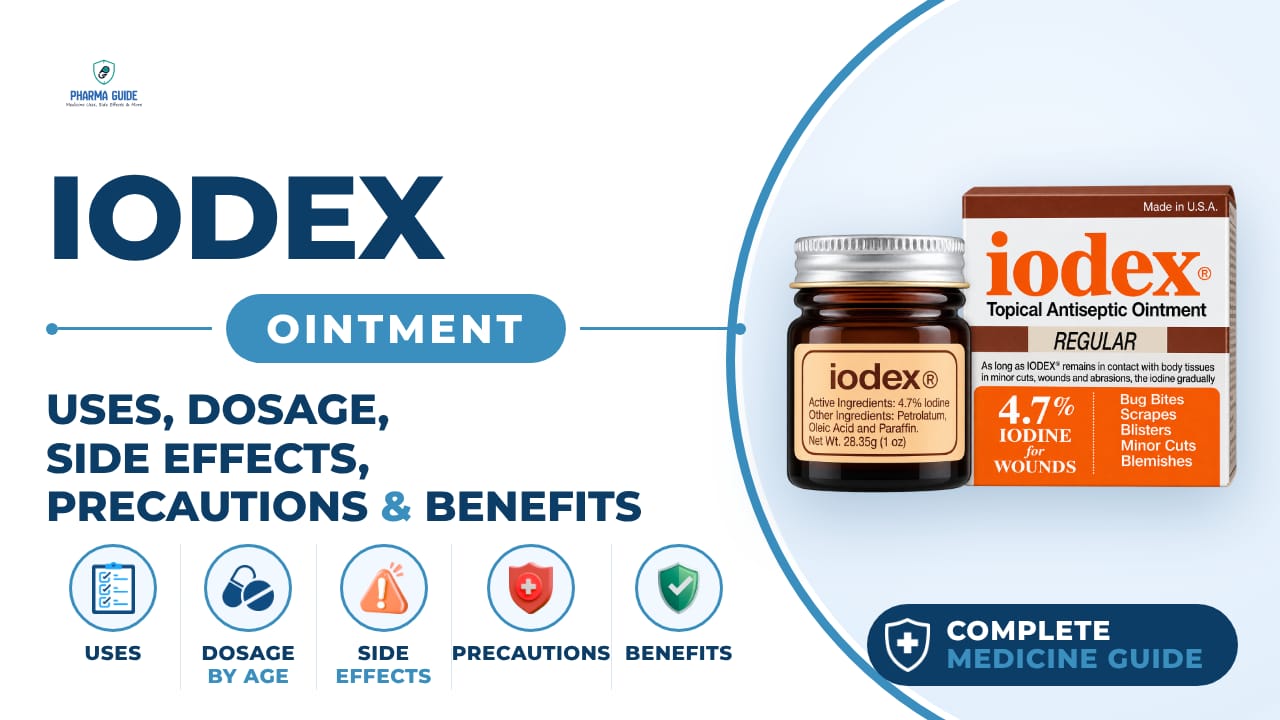
Iodex Ointment: Uses, Dosage, Side Effects, Precautions and Alternates
| Forms | Ointment |
|---|
Quick overview
Iodex Ointment is a topical pain-relief ointment made with a blend of essential oils, including Gandhapura Oil (Indian Wintergreen), Lavang Oil (Clove Oil), Nilgiri Oil (Eucalyptus Oil), Peppermint Satva, and Turpentine Oil. It is applied to the skin to help ease muscle and joint pain, including backache, joint pain, neck pain, sprains and strains, and pain due to arthritis. The ointment works by creating a warming or cooling sensation on the skin that may help ease pain and improve blood flow to the area.
What is Iodex Ointment
Iodex Ointment is a topical pain-relief ointment made with a blend of essential oils such as Gandhapura Oil (Indian Wintergreen), Lavang Oil (Clove Oil), Nilgiri Oil (Eucalyptus Oil), Peppermint Satva, and Turpentine Oil. It is applied to the skin to help ease muscle and joint pain.
Iodex Ointment uses
- Backache
- Joint pain, including knee and ankle pain
- Neck pain
- Sprains and strains of muscles, tendons or ligaments
- Pain due to arthritis
Benefits of Iodex Ointment
- Helps relieve backaches, neck pain and joint discomfort
- May assist in reducing muscular strains and sprains
- Supports the natural pain-relieving process
- Manages body pain arising from arthritis
- Maintains comfort and mobility in daily activities
How Iodex Ointment works
The ointment contains oils that create a warming or cooling sensation on the skin, which may help ease pain signals and improve blood flow to the painful area.
Iodex Ointment dosage
Apply a small quantity of the ointment directly to the affected area and gently massage until absorbed. Use two to three times a day or as directed by a physician for consistent relief from pain. Applying after a warm bath may help the ointment absorb better. Gently massage in a circular motion for a few minutes. Avoid using under tight clothing to allow the skin to breathe.
| Age group | Dose |
|---|---|
| Under 12 Years | Use only if recommended by a healthcare professional |
| 12–17 Years | Apply a thin layer to the affected area 2–3 times daily |
| Adults (18–64 Years) | Apply a thin layer 2–3 times daily as needed |
| Older Adults (65+ Years) | Apply a thin layer 2–3 times daily; use cautiously on sensitive skin |
Available forms and strengths
- Ointment
Side effects of Iodex Ointment
Common
- Skin irritation such as redness, itching, or a burning sensation at the site of application
- Blistering, crusting, or reddening of skin
Serious
- Allergic reaction with severe itching, swelling, rash, and difficulty breathing
- Contact dermatitis (a red, inflamed, itchy rash) after repeated exposure
- Dizziness, headache, nausea, or salicylate toxicity from absorption of ingredients into the bloodstream
- Stomach pain or other gastrointestinal discomfort
Warnings and precautions
- Do not apply to large areas of the body or use in excessive amounts, since the active ingredients can be absorbed into the bloodstream and cause serious effects.
- Do not apply this ointment to broken or damaged skin, wounds, cuts, or skin infections, as it may cause irritation or delay healing.
- People with asthma or other breathing conditions may find their symptoms get worse because of the strong scent and active ingredients in the product.
- People with sensitive skin conditions such as eczema or psoriasis may experience more irritation.
- Using more ointment than recommended, or using it more often than directed, increases the risk of side effects.
- There is not much safety information on using this product during pregnancy, so check with a healthcare provider before using it.
- There is not much safety information on using this product while breastfeeding, so check with a healthcare provider before using it.
- Avoid applying over large areas of skin.
- Wash hands after application.
- Avoid contact with eyes, mouth, and sensitive areas.
- Apply only to intact skin; do not use on cuts, wounds, or infected skin.
Storage
- Store in a cool, dark and dry place
- Keep away from light, heat and moisture
- Keep out of reach of children
- Store below 30°C
When to see a doctor
- Get medical help right away if you notice signs of a severe allergic reaction, such as intense itching, swelling, rash, or trouble breathing.
- Stop using the product and seek medical advice if you think you are developing a red, inflamed, itchy rash from repeated use.
- Stop use and talk to your doctor if your skin irritation gets worse, or if you develop stomach symptoms after use.
- If you notice redness, itching, or an allergic reaction, stop using the product and consult a healthcare provider.
Alternatives
- Menthol Pain-Relief Gel
- Methyl Salicylate Ointment
- Ibuprofen Gel
- Volini Gel
Watch the video
FAQs
What is Iodex Ointment used for?
It is used to relieve backache, joint pain including knee and ankle pain, neck pain, sprains and strains, and pain due to arthritis.
How should Iodex Ointment be applied?
Apply a small quantity directly to the affected area and gently massage until absorbed, using it two to three times a day or as directed by a physician. Applying after a warm bath may help absorption, and it should not be used under tight clothing.
What are the side effects of Iodex Ointment?
Common side effects include skin irritation such as redness, itching, or burning, and blistering or crusting. Serious effects can include allergic reactions, contact dermatitis, dizziness, headache, nausea, salicylate toxicity, or stomach discomfort.
Can Iodex Ointment be used on broken skin?
No, it should not be applied to broken or damaged skin, wounds, cuts, or skin infections, as it may cause irritation or delay healing.
Is Iodex Ointment safe during pregnancy or breastfeeding?
There is not much safety information available for use during pregnancy or breastfeeding, so a healthcare provider should be consulted before use.
General information, not medical advice
Your prescriber and the leaflet in your pack know your situation. This page does not.
- Follow your prescriber and the leaflet
- Don't start, stop, or change a dose on your own
- Doses and warnings differ by country and product
Sources
Video
Related medicines

Injectafer Injection: Uses, Dosage, Side Effects, Precautions and Alternates
Iron products
Injectafer (ferric carboxymaltose) treats iron deficiency anemia and heart failure-related iron deficiency via IV. Learn uses, dosage, side effects, and

Gliclazide Tablet: Uses, Dosage, Side Effects, Precautions and Alternates
Sulfonylurea (hypoglycemic/antidiabetic agent)
Gliclazide Tablet is a sulfonylurea for type 2 diabetes that boosts insulin release. Learn about dosage, side effects, warnings, and precautions.