
Safety
General information, not medical advice
Your prescriber and the leaflet in your pack know your situation. This page does not.
- Follow your prescriber and the leaflet
- Don't start, stop, or change a dose on your own
- Doses and warnings differ by country and product
Iopidine Eye Drops: Uses, Dosage, Side Effects, Precautions and Alternates
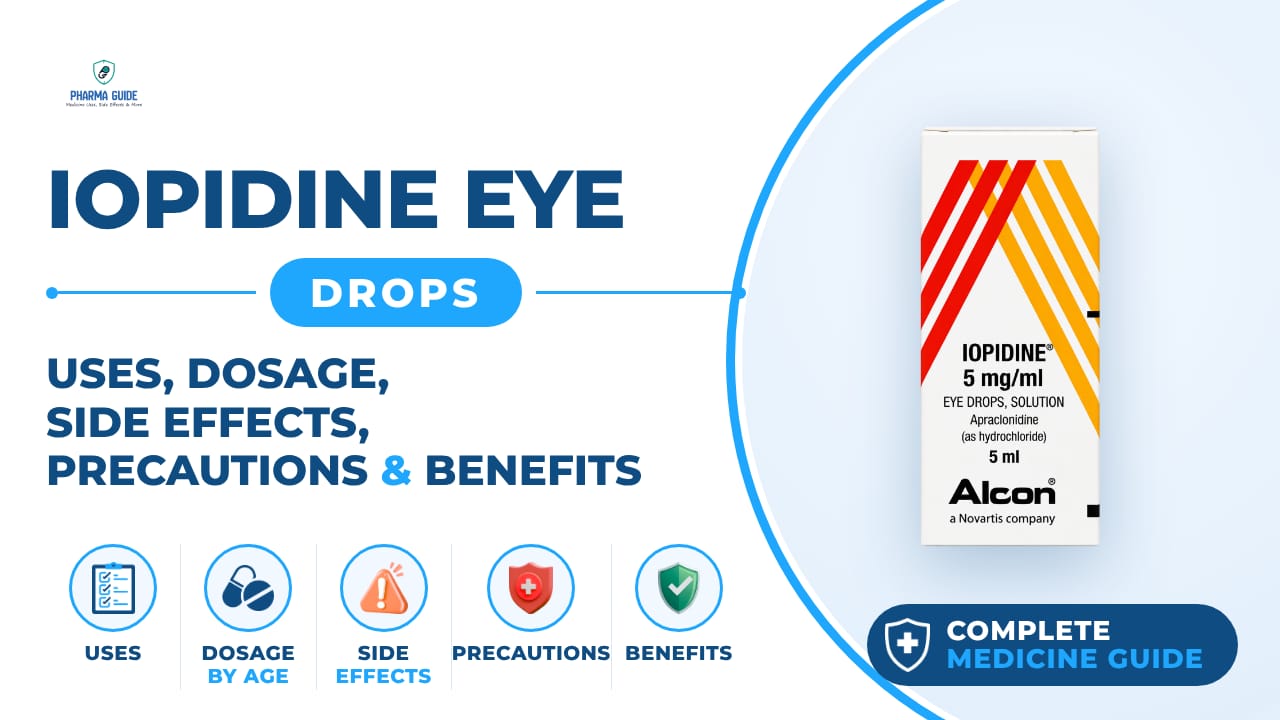
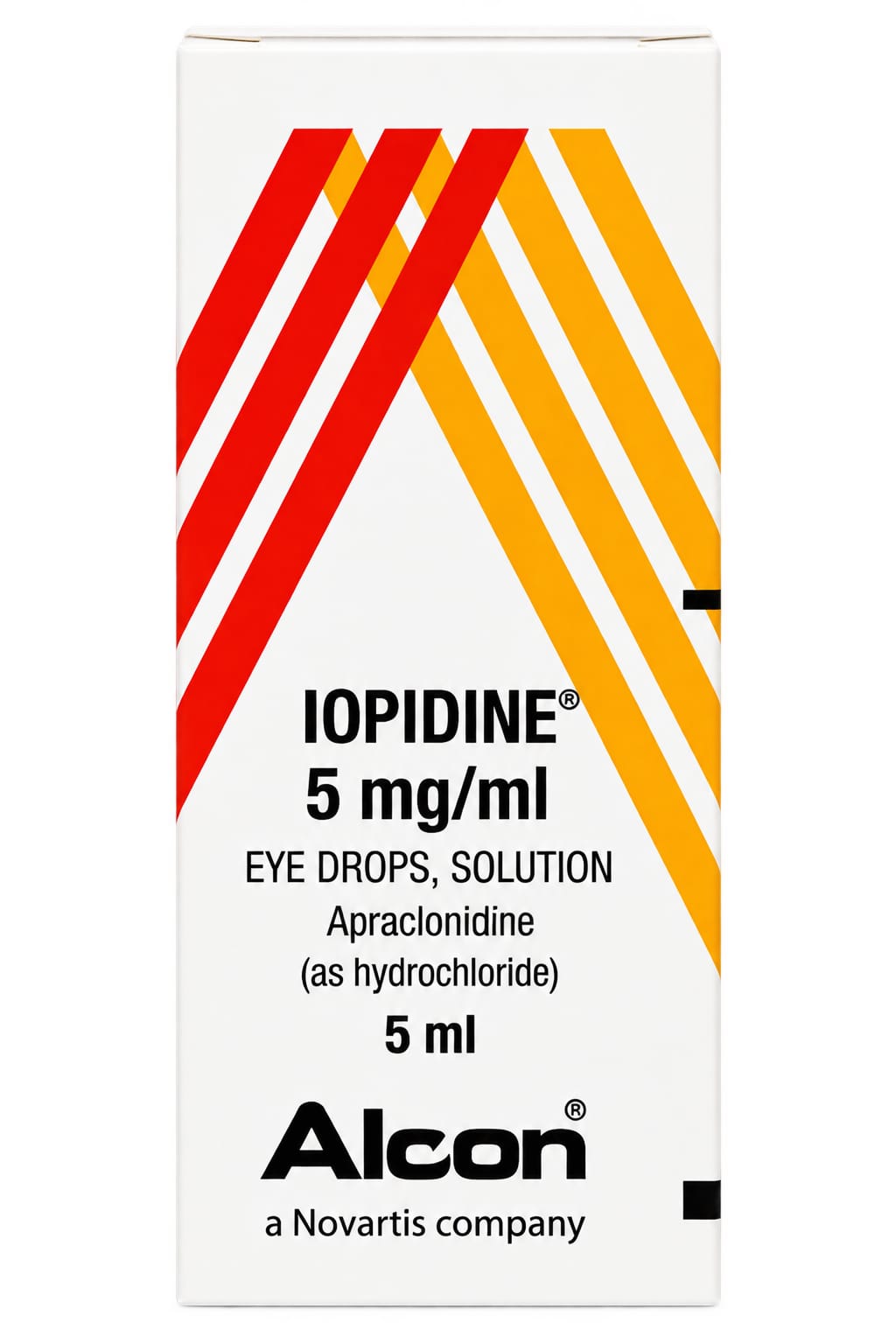
| Generic name | apraclonidine (apraclonidine hydrochloride) |
|---|---|
| Drug class | Ophthalmic glaucoma agent (alpha-adrenergic agonist) |
| Forms | Eye drops (solution), 0.5% strength, Eye drops (solution), 1% strength (single-dose dispensers, used for laser surgery) |
Quick overview
Iopidine Eye Drops contain apraclonidine hydrochloride, an ophthalmic glaucoma agent from the alpha-adrenergic agonist class. They are used short-term to lower high pressure inside the eye and to control or prevent eye pressure spikes after certain laser eye surgeries. Iopidine works by reducing the amount of fluid the eye produces, which lowers eye pressure both during the day and at night.
What is Iopidine Eye Drops
Iopidine is an eye drop medicine that contains apraclonidine hydrochloride. It belongs to a group of medicines called alpha-adrenergic agonists and is used to lower high pressure inside the eye.
Iopidine Eye Drops uses
- Short-term treatment to lower high pressure inside the eye (glaucoma)
- Used with other glaucoma medicines when eye pressure is not fully controlled
- Used to control or prevent eye pressure spikes after certain laser eye surgeries (argon laser trabeculoplasty, argon laser iridotomy, or Nd:YAG posterior capsulotomy) for the 1% strength product
Benefits of Iopidine Eye Drops
- Lowers raised pressure inside the eye, which can help protect the back of the eye from damage caused by high pressure
- Can provide extra pressure-lowering benefit when added to other maximally tolerated glaucoma treatments
How Iopidine Eye Drops works
Iopidine reduces the amount of fluid the eye makes, which lowers the pressure inside the eye. It acts on the eye's adrenergic system to cut down fluid production, and unlike some other glaucoma medicines it keeps working both during the day and at night while sleeping.
Iopidine Eye Drops dosage
Follow all directions on your prescription label; do not use more or less than recommended, or for longer than recommended. Wash your hands before using the eye drops. Tilt your head back, look up, and pull down the lower eyelid to make a small pocket for the drop. After putting in the drop, close your eyes for a couple of minutes with your head tipped down, without blinking or squinting. Press a finger gently against the inside corner of the eye for about a minute or two to stop the medicine draining into the tear duct.
Wait at least 5 minutes before using any other eye drops your doctor has prescribed. Do not touch the dropper tip to your eye or to any other surface, to avoid contaminating it. If you wear soft contact lenses, remove them before using the drops and wait at least 15 minutes before putting them back in. Do not use the drops if the liquid has changed color or has particles in it - contact your pharmacist for new medicine.
This medicine is for short-term use only, as it may become less effective over time. Your doctor may test your vision regularly to see how well the medicine is working. Not recommended for use in children. No special dosing precautions are needed for elderly patients.
| Age group | Dose |
|---|---|
| Under 18 years | Safety and effectiveness not established; not routinely recommended |
| 18–64 years | 1 drop in the scheduled eye 1 hour before laser surgery, then 1 drop immediately after surgery |
| 65+ years | 1 drop in the scheduled eye 1 hour before laser surgery, then 1 drop immediately after surgery |
Available forms and strengths
- Eye drops (solution), 0.5% strength
- Eye drops (solution), 1% strength (single-dose dispensers, used for laser surgery)
Side effects of Iopidine Eye Drops
Common
- Blurred vision
- Dry eyes
- Eye redness or watering, puffy eyelids
- Dizziness, drowsiness
- Dry mouth
- Itchy eyes
- Headache
- Changes in taste or smell
- Dry nose
- Tiredness or lack of coordination
Serious
- Severe itching, redness, or discomfort in or around the eye
- Crusting or drainage around the eye
- Eye pain or increased watering
- Feeling like something is in the eye
- Signs of an allergic reaction: hives, difficulty breathing, swelling of the face, lips, tongue, or throat
- Chest pain
- Irregular heartbeat
- Slow heart rate
- Fainting
Warnings and precautions
- Do not use this medicine if you have taken a certain type of antidepressant called an MAO inhibitor within the last 14 days, as a dangerous drug interaction could occur.
- This medicine is only for use in the eye. It must never be injected or swallowed.
- This medicine is not recommended for children, especially those aged 6 years and younger, including newborns, because of the risk of severe reactions affecting the whole body, even after just one dose.
- Use with caution if you have heart or circulation problems, including clogged arteries, recent heart attack, stroke, or conditions like Raynaud's disease.
- This medicine can cause allergic-like eye reactions such as redness, itching, discomfort, and swelling. If this happens, treatment should be stopped.
- This medicine may become less effective over time in some people, so it is meant only for short-term use.
- Use with caution if you have depression, since this medicine has occasionally been linked to depression.
- Iopidine is not recommended during pregnancy. It should only be used if your doctor decides the possible benefit is greater than the possible risk to the unborn baby.
- You should not breastfeed on the day you use this medicine, since it is not known if it passes into breast milk.
- People with kidney problems should be closely monitored while using this medicine, as caution is advised in patients with reduced kidney function.
- People with liver problems should be closely monitored while using this medicine, since part of a related drug is broken down in the liver.
- Alcohol may add to or increase the sedative effects of this medicine, so caution is advised.
- This medicine can cause dizziness or drowsiness, so be careful driving or using machinery until you know how it affects you.
Storage
- Store below 25°C (or at room temperature away from moisture and heat, depending on product)
- Do not freeze
- Protect from light; keep the bottle in its carton
- Keep the bottle tightly closed when not in use
- Do not leave the top off the bottle for any length of time, to avoid contaminating the eye drops
- Write the date you opened the bottle on it, and throw away any remaining solution after four weeks
- Take unused or expired medicine to a pharmacy for safe disposal
- Keep out of reach of children
When to see a doctor
- Get emergency medical help right away if you have signs of an allergic reaction, such as hives, difficulty breathing, or swelling of your face, lips, tongue, or throat.
- Call your doctor right away if you have severe itching, redness, or discomfort in or around your eye, crusting or drainage around your eye, eye pain or increased watering, or a feeling like something is in your eye.
- If this medicine is accidentally given to a child, get emergency medical help immediately, as severe reactions can occur.
- If you think you or someone else swallowed this medicine, seek emergency medical attention right away, even if there are no symptoms.
Alternatives
- Dorzolamide Eye Drops
- Latanoprost Eye Drops
- Brimonidine Eye Drops
Watch the video
FAQs
What is Iopidine Eye Drops used for?
Iopidine is used short-term to lower high pressure inside the eye, often alongside other glaucoma medicines, and to control or prevent eye pressure spikes after certain laser eye surgeries like argon laser trabeculoplasty, argon laser iridotomy, or Nd:YAG posterior capsulotomy.
How does Iopidine Eye Drops work?
Iopidine reduces the amount of fluid the eye produces, which lowers eye pressure. It acts on the eye's adrenergic system and continues working both during the day and at night while sleeping.
Can children use Iopidine Eye Drops?
No, Iopidine is not recommended for children, especially those aged 6 years and younger, including newborns, due to the risk of severe reactions affecting the whole body, even after just one dose.
What are the common side effects of Iopidine Eye Drops?
Common side effects include blurred vision, dry eyes, eye redness or watering, puffy eyelids, dizziness, drowsiness, dry mouth, itchy eyes, headache, changes in taste or smell, dry nose, and tiredness or lack of coordination.
How long can I use Iopidine Eye Drops for?
Iopidine is meant for short-term use only, as it may become less effective over time. Your doctor may test your vision regularly to check how well it is working.
General information, not medical advice
Your prescriber and the leaflet in your pack know your situation. This page does not.
- Follow your prescriber and the leaflet
- Don't start, stop, or change a dose on your own
- Doses and warnings differ by country and product
Sources
Video
Related medicines

Injectafer Injection: Uses, Dosage, Side Effects, Precautions and Alternates
Iron products
Injectafer (ferric carboxymaltose) treats iron deficiency anemia and heart failure-related iron deficiency via IV. Learn uses, dosage, side effects, and

Gliclazide Tablet: Uses, Dosage, Side Effects, Precautions and Alternates
Sulfonylurea (hypoglycemic/antidiabetic agent)
Gliclazide Tablet is a sulfonylurea for type 2 diabetes that boosts insulin release. Learn about dosage, side effects, warnings, and precautions.