
Safety
General information, not medical advice
Your prescriber and the leaflet in your pack know your situation. This page does not.
- Follow your prescriber and the leaflet
- Don't start, stop, or change a dose on your own
- Doses and warnings differ by country and product
Ipratropium Bromide Inhaler: Uses, Dosage, Side Effects, Precautions and Alternates

| Generic name | Ipratropium |
|---|---|
| Drug class | Bronchodilator (anticholinergic/antimuscarinic) |
| Forms | Inhalation aerosol (inhaler), Inhalation solution (for nebulizer), Nasal spray |
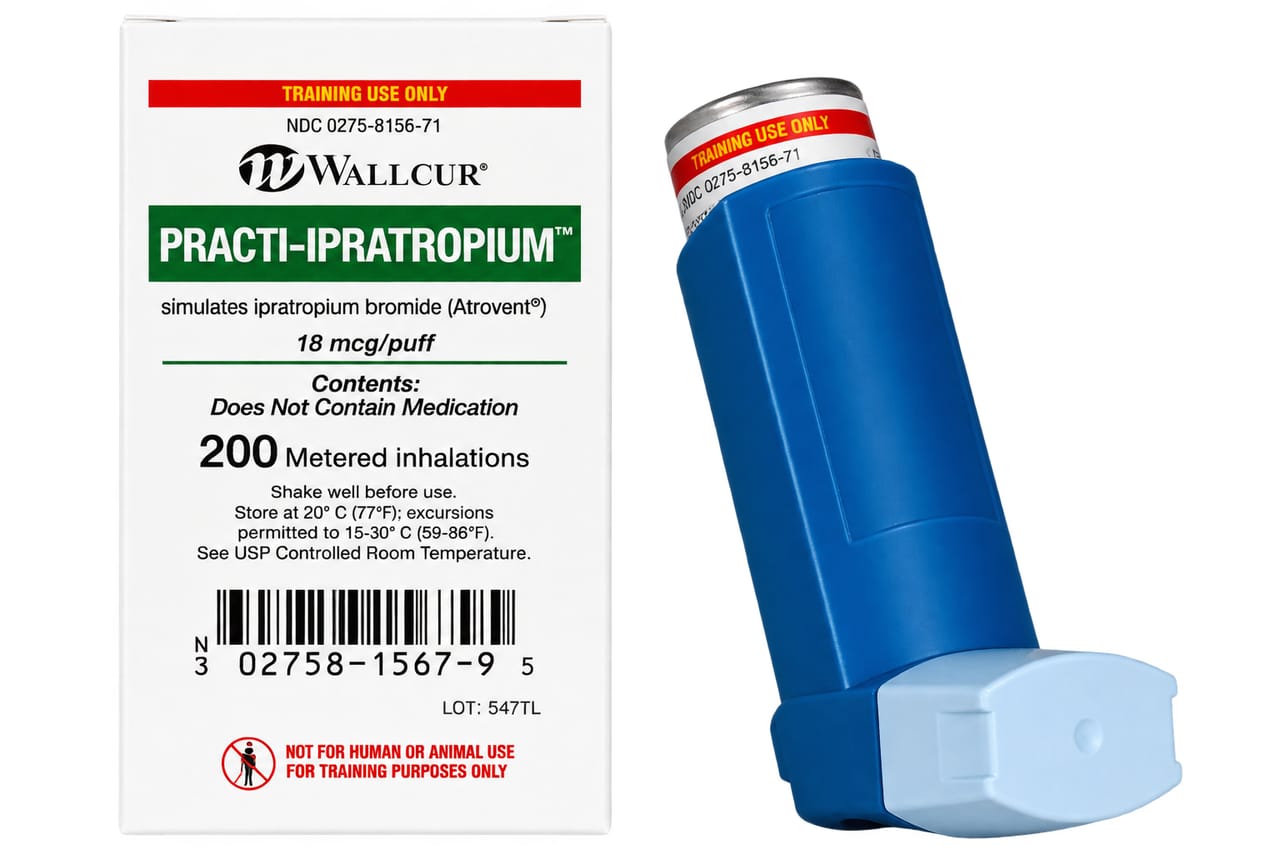
Quick overview
Ipratropium Bromide Inhaler, generically called Ipratropium, is a bronchodilator (anticholinergic/antimuscarinic) that is breathed in to help open the airways in the lungs. It is used to control symptoms of asthma, chronic bronchitis, emphysema, and COPD. It works by blocking a chemical that tightens airway muscles, allowing the airways to relax and open up.
What is Ipratropium Bromide Inhaler
Ipratropium is a medicine you breathe in that helps open up the airways in your lungs. It is used to control symptoms of lung diseases like asthma, chronic bronchitis, and emphysema, and to help with chronic obstructive pulmonary disease (COPD).
Ipratropium Bromide Inhaler uses
- Helps control symptoms of asthma, chronic bronchitis, and emphysema
- Treats airflow blockage and helps prevent COPD from getting worse
- Used for severe asthma flare-ups (not as a first choice treatment)
- Nasal spray form can relieve a runny nose from allergies or non-allergic rhinitis
- Used in intensive care units to help clear mucus from the airways of patients on breathing machines
Benefits of Ipratropium Bromide Inhaler
- Opens up narrowed airways so breathing is easier
- Helps reduce mucus and tightness in the airways caused by muscle contraction
How Ipratropium Bromide Inhaler works
When you breathe it in, ipratropium blocks a chemical in your body called acetylcholine, which normally causes the muscles around your airways to tighten. By blocking this chemical, the medicine relaxes those muscles, so your airways open up and breathing gets easier.
Ipratropium Bromide Inhaler dosage
Use this medicine only the way your doctor tells you to — do not use more or use it more often than ordered. Do not stop using it without talking to your doctor first, as this can make your lung condition worse. Keep the spray away from your eyes; closing your eyes while inhaling can help avoid this, since contact with the eyes can cause pain, blurred vision, or discomfort. If you take this medicine every day, use it at evenly spaced times as your doctor directs.
Before first use, or if you haven't used the inhaler for a few days, you need to prime or test it first. Shake the inhaler gently a few times before each use. Breathe out slowly before using the inhaler, then breathe in slowly and deeply while pressing the canister. Hold your breath for a few seconds after inhaling to let the medicine settle into your lungs. If using more than one puff, shake the inhaler again and repeat the same steps for each puff.
Clean the inhaler mouthpiece and any spacer device regularly, as instructed. If using a nebulizer, follow your doctor's instructions on preparing and using the solution, and use only the type of nebulizer recommended for you. Do not use this medicine for a sudden breathing attack — use a fast-acting rescue inhaler instead for sudden symptoms. Rinse your mouth after inhaling to help prevent mouth infections. This medicine is usually used at the same time each day regardless of meals.
| Age group | Dose |
|---|---|
| Under 6 Years | Use only if prescribed by a doctor |
| 6–12 Years | 1–2 inhalations (20 mcg per puff) 3–4 times daily (as prescribed) |
| 12 Years and Above | 2 inhalations (20 mcg per puff) 3–4 times daily (as prescribed) |
| Adults (18–64 Years) | 2 inhalations (20 mcg per puff) 3–4 times daily |
| Older Adults (65+ years) | 2 inhalations (20 mcg per puff) 3–4 times daily; adjusted based on condition |
Available forms and strengths
- Inhalation aerosol (inhaler) — 20 mcg per puff
- Inhalation solution (for nebulizer)
- Nasal spray
Side effects of Ipratropium Bromide Inhaler
Common
- Dry mouth
- Unpleasant taste
- Back pain
- Headache
- Cough, sometimes with mucus
- Nausea
- Nervousness
- Trouble sleeping
- Upset stomach or heartburn
Serious
- Difficulty breathing, shortness of breath, chest tightness, or wheezing that gets worse after use
- Bladder pain, difficulty or painful urination, frequent urge to urinate, or blood/cloudiness in urine
- Allergic reaction: rash, itching, hives, swelling of face, lips, tongue, or throat, or trouble breathing/swallowing
- Sudden eye pain, blurred vision, seeing halos around lights, or vision loss
- Fast, pounding, or irregular heartbeat
- Fainting or dizziness when standing up suddenly
Warnings and precautions
- This medicine can cause serious allergic reactions, including a life-threatening reaction called anaphylaxis. Stop using it and call your doctor right away if you get a rash, itching, hives, hoarseness, trouble breathing or swallowing, or swelling of your hands, face, mouth, or throat.
- This medicine can sometimes cause your breathing or wheezing to suddenly get worse instead of better, which can be life-threatening. Stop using it and check with your doctor right away if you cough, have difficulty breathing, or wheeze after using it.
- This medicine is not for treating a sudden asthma or COPD attack. Use a fast-acting rescue inhaler for sudden symptoms instead.
- Do not take other medicines, including over-the-counter products for allergies, colds, or appetite control, or herbal/vitamin supplements, without discussing them with your doctor first.
- Use this medicine carefully if you have glaucoma, an enlarged prostate, or trouble urinating, as it may make these conditions worse.
- This medicine is not recommended during pregnancy unless your doctor decides it is necessary. Talk to your doctor if you are pregnant before using it.
- There isn't enough research on how this medicine affects breastfeeding infants. Your doctor will weigh the benefits against possible risks before you use it while breastfeeding.
- Use this medicine carefully if you have kidney problems, since there isn't much research on its effects in this group.
- Use this medicine carefully if you have liver problems, since there isn't much research on its effects in this group.
- It isn't known exactly how this medicine interacts with alcohol. Check with your doctor before drinking alcohol while using it.
- This medicine can cause dizziness or blurred vision. Do not drive or operate machinery until you know how it affects you.
Storage
- Store the canister at room temperature, away from heat and direct light
- Do not freeze
- Do not keep this medicine inside a car where it could be exposed to extreme heat or cold
- Do not poke holes in the canister or throw it into a fire, even if the canister is empty
- Keep out of the reach of children
- Do not keep outdated medicine or medicine no longer needed
- Ask your healthcare professional how you should dispose of any medicine you do not use
- Store nebulizer solution bottles in the refrigerator between treatments
- Throw away the inhaler when the dose counter reads zero or after the expiration date, whichever comes first
When to see a doctor
- Get medical help right away if you have signs of a serious allergic reaction, such as rash, itching, hives, swelling of the face, lips, tongue, or throat, or trouble breathing.
- Get medical help right away if your breathing or wheezing suddenly gets worse after using this medicine.
- Check with your doctor right away if your symptoms don't improve within 30 minutes of a dose, or if your condition gets worse.
- Get medical help right away for sudden eye pain or changes in vision, such as blurry vision, seeing halos around lights, or loss of vision.
- Get medical help right away if you have trouble passing urine.
- If you think you've taken too much of this medicine, get emergency help right away.
Alternatives
- Atrovent
- Combivent
- Glycopyrrolate
Watch the video
FAQs
What is Ipratropium Bromide Inhaler used for?
It helps control symptoms of asthma, chronic bronchitis, and emphysema, treats airflow blockage, and helps prevent COPD from getting worse. It is also used for severe asthma flare-ups, as a nasal spray for runny nose, and in intensive care units to help clear mucus from airways.
How does Ipratropium Bromide Inhaler work?
It blocks a chemical called acetylcholine that normally tightens the muscles around your airways. By blocking this chemical, the medicine relaxes those muscles so your airways open up and breathing gets easier.
Can Ipratropium Bromide Inhaler be used for a sudden asthma attack?
No, this medicine is not for treating a sudden asthma or COPD attack. A fast-acting rescue inhaler should be used instead for sudden symptoms.
What are the common side effects of Ipratropium Bromide Inhaler?
Common side effects include dry mouth, unpleasant taste, back pain, headache, cough with mucus, nausea, nervousness, trouble sleeping, and upset stomach or heartburn.
How should Ipratropium Bromide Inhaler be stored?
Store the canister at room temperature away from heat and direct light, do not freeze it, and do not keep it in a car exposed to extreme heat or cold. Nebulizer solution bottles should be stored in the refrigerator between treatments, and the inhaler should be discarded when the dose counter reads zero or after the expiration date.
General information, not medical advice
Your prescriber and the leaflet in your pack know your situation. This page does not.
- Follow your prescriber and the leaflet
- Don't start, stop, or change a dose on your own
- Doses and warnings differ by country and product
Sources
Video
Related medicines

Injectafer Injection: Uses, Dosage, Side Effects, Precautions and Alternates
Iron products
Injectafer (ferric carboxymaltose) treats iron deficiency anemia and heart failure-related iron deficiency via IV. Learn uses, dosage, side effects, and

Gliclazide Tablet: Uses, Dosage, Side Effects, Precautions and Alternates
Sulfonylurea (hypoglycemic/antidiabetic agent)
Gliclazide Tablet is a sulfonylurea for type 2 diabetes that boosts insulin release. Learn about dosage, side effects, warnings, and precautions.