
Safety
General information, not medical advice
Your prescriber and the leaflet in your pack know your situation. This page does not.
- Follow your prescriber and the leaflet
- Don't start, stop, or change a dose on your own
- Doses and warnings differ by country and product
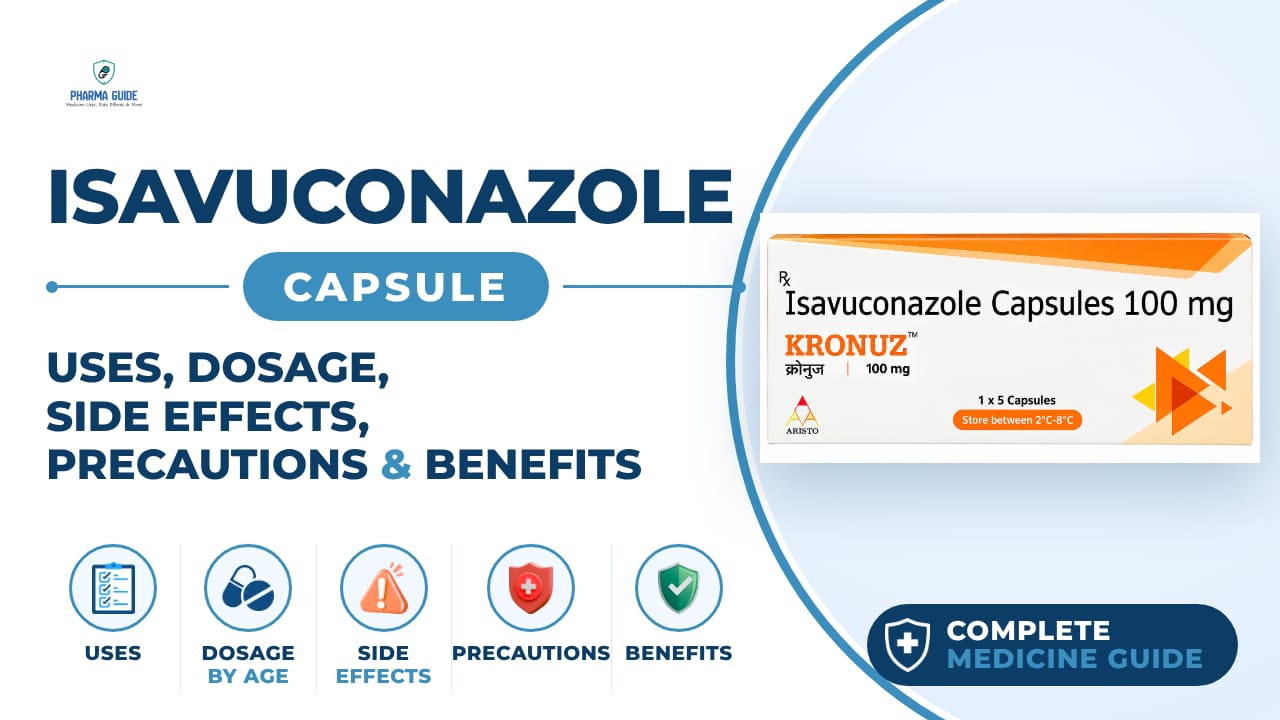
Isavuconazole Capsule: Uses, Dosage, Side Effects, Precautions and Alternates
| Generic name | Isavuconazole (as isavuconazonium sulfate) |
|---|---|
| Drug class | Antifungal (triazole/azole antifungal agent) |
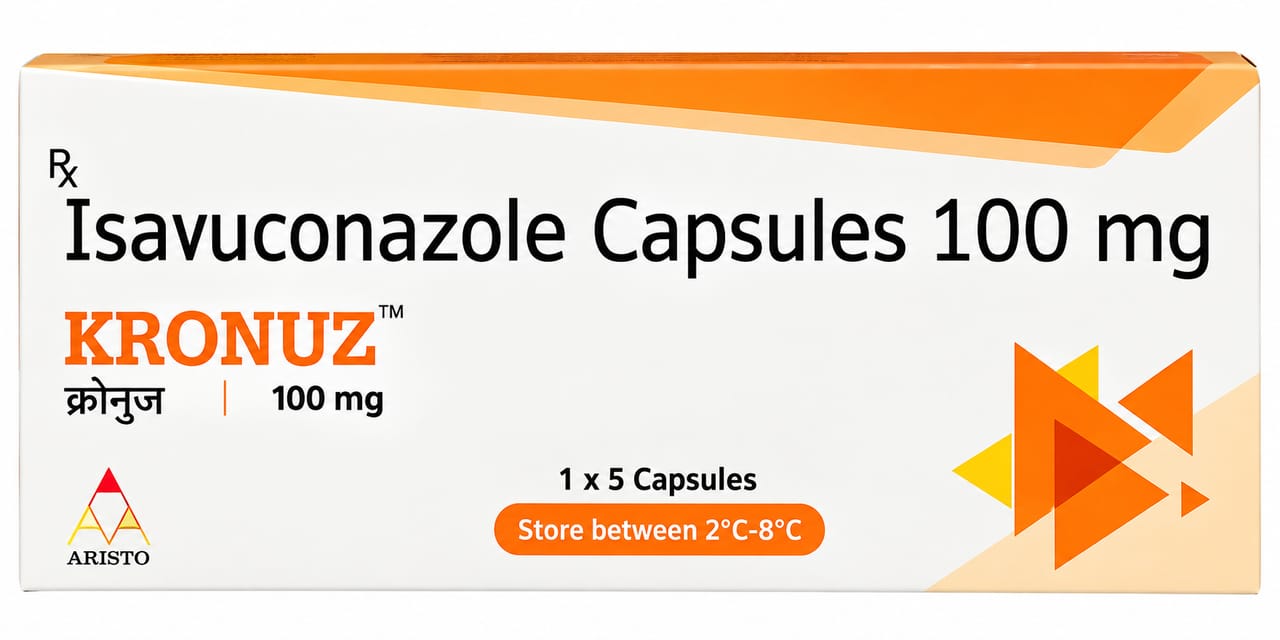
| Forms | 100 mg hard capsules, 40 mg hard capsules |
Quick overview
Isavuconazole Capsule contains isavuconazole (as isavuconazonium sulfate), an antifungal medicine from the triazole class. It is used to treat invasive aspergillosis and invasive mucormycosis. It works by killing or stopping the growth of fungus and is available as capsules or as an infusion into a vein.
What is Isavuconazole Capsule
Cresemba is an anti-fungal medicine that contains the active substance isavuconazole. It is given either as a capsule by mouth or as a powder that is made into a solution for infusion into a vein.
Isavuconazole Capsule uses
- Treatment of invasive aspergillosis, a fungal infection caused by the Aspergillus fungus
- Treatment of invasive mucormycosis, a fungal infection caused by fungi in the Mucorales group, in patients for whom amphotericin B is not an appropriate treatment
Benefits of Isavuconazole Capsule
- Kills or stops the growth of the fungus causing the infection
- Can be taken with or without food
- Available as both a capsule and an intravenous infusion, allowing switching between forms when needed
- Generally well tolerated with fewer drug interactions and less toxicity than some older antifungal medicines
How Isavuconazole Capsule works
Isavuconazole works by killing or stopping the growth of the fungus that is causing the infection. It blocks an enzyme the fungus needs to build its outer cell membrane, which weakens and damages the fungal cell until it dies.
Isavuconazole Capsule dosage
Capsules can be taken with or without food. Swallow the capsules whole; do not chew, crush, dissolve or open them. All capsules making up one dose must be taken at the same time.
Treatment starts with a higher starting dose taken every 8 hours for the first two days, followed by a lower daily dose. The usual daily dose begins 12 to 24 hours after the last starting dose.
The infusion form is given into a vein by a doctor or nurse over at least 1 hour using a special in-line filter. Treatment is continued for as long as the doctor advises, which may be longer than 6 months in some cases.
Capsules should not be given to children younger than 6 years of age; the infusion may be used from 1 year of age.
| Age group | Dose |
|---|---|
| Under 18 years | Not recommended |
| 18–64 years | 200 mg, once/day |
| 65+ years | 200 mg, once/day |
Available forms and strengths
- 100 mg hard capsules
- 40 mg hard capsules
Side effects of Isavuconazole Capsule
Common
- Low potassium in your blood
- Decreased appetite
- Hallucinations (delirium)
- Headache
- Sleepiness (somnolence)
- Inflamed veins that could lead to blood clots (thrombophlebitis)
- Shortness of breath or sudden and severe difficulty breathing (dyspnoea)
- Feeling sick (nausea), being sick (vomiting), diarrhoea, stomach pain
- Changes (increase) in blood tests of liver function
- Rash, itching
- Kidney failure (symptoms could include swelling of legs)
- Chest pain, feeling tired or sleepy
- Problems where the injection was given
- Constipation
- Cough
- Swelling of arms or legs
- Back pain
Serious
- Severe allergic reaction (anaphylaxis) - sudden wheezing, difficulty breathing, swelling of the face, lips, mouth or tongue, severe itching, sweating, dizziness or fainting, fast heartbeat or pounding in the chest
- Severe blistering of the skin, mouth, eyes or genitals (possible Stevens-Johnson syndrome)
- Changes in liver function that can lead to hepatitis or liver failure
- Reduced white blood cells, platelets, or red blood cells, or severe reduction in blood cells
- Heart beat problems - too fast, uneven, or extra heart beats
- Seizures, fainting, altered mental state, or encephalopathy
- Low blood pressure, circulatory collapse
Warnings and precautions
- Do not take this medicine if you have a heart rhythm condition called familial short QT syndrome.
- This medicine must not be taken with certain other medicines, including ketoconazole, high-dose ritonavir, rifampicin, rifabutin, carbamazepine, certain barbiturate medicines, phenytoin, St John's wort, efavirenz, etravirine, and nafcillin, because of serious interaction risks.
- This medicine can sometimes affect liver function, and the doctor may need to do blood tests during treatment.
- Severe skin reactions with blistering of the skin, mouth, eyes or genitals can occur and need urgent medical attention.
- Should not be used in children or adolescents younger than 18 years for the injection form below 1 year of age, or capsules below 6 years of age, because there isn't enough information on use in younger age groups.
- This medicine may cause fetal harm and is not recommended for women who could become pregnant unless they are using effective contraception.
- This medicine must not be used during pregnancy unless the doctor decides the benefits outweigh the risks to the unborn baby, because it is not known if it may harm the baby. Breastfeeding should not be done while taking this medicine.
- No dose adjustment is generally needed for kidney problems, including severe kidney disease, but your doctor will manage your care accordingly. This medicine is not well removed by dialysis.
- People with severe liver disease should be carefully monitored by their doctor, as this medicine is not recommended for them unless the benefits are thought to outweigh the risks. Mild to moderate liver problems do not require a dose change, but liver function may be monitored.
- This medicine may cause confusion, tiredness, sleepiness or fainting, so care should be taken when driving or operating machinery.
Storage
- Keep this medicine out of the sight and reach of children
- Do not use this medicine after the expiry date which is stated on the label after EXP; the expiry date refers to the last day of that month
- Store the vials (powder for infusion) in a refrigerator (2°C to 8°C)
- Store the capsules in a dry, well-ventilated place at a temperature not exceeding 30°C
- Protect capsules from moisture; store in the original packaging
- Do not puncture the blister pocket containing the desiccant
- Do not swallow or use the desiccant
- Ask your doctor or pharmacist how to throw away medicines you no longer use; do not throw away medicines via wastewater
When to see a doctor
- Stop using the medicine and get medical help right away if you notice signs of a severe allergic reaction, such as sudden wheezing, trouble breathing, swelling of the face, lips, mouth or tongue, severe itching, sweating, dizziness, fainting, or a fast or pounding heartbeat.
- If receiving the medicine as an infusion into a vein, tell your doctor right away if you notice low blood pressure, shortness of breath, nausea, dizziness, headache, or tingling, as the infusion may need to be stopped.
- Tell your doctor right away if you develop severe blistering of the skin, mouth, eyes, or genitals.
- If you think you have been given or taken too much of this medicine, contact your doctor, nurse, or a hospital emergency department right away.
Alternatives
- Fluconazole
- Posaconazole
- Voriconazole
Watch the video
FAQs
What is Isavuconazole Capsule used for?
It is used to treat invasive aspergillosis and invasive mucormycosis, fungal infections caused by Aspergillus fungus and Mucorales fungi, in patients for whom amphotericin B is not appropriate for mucormycosis.
How should Isavuconazole Capsule be taken?
Capsules can be taken with or without food and should be swallowed whole without chewing, crushing, dissolving or opening them. Treatment starts with a higher dose every 8 hours for two days, followed by a lower daily dose starting 12 to 24 hours after the last starting dose.
What are the common side effects of Isavuconazole Capsule?
Common side effects include low potassium, decreased appetite, headache, sleepiness, nausea, vomiting, diarrhoea, stomach pain, rash, itching, cough, back pain, and changes in liver function tests.
Can children take Isavuconazole Capsule?
Capsules should not be given to children younger than 6 years of age, while the infusion form may be used from 1 year of age.
Is Isavuconazole Capsule safe during pregnancy?
It is not recommended for women who could become pregnant unless they use effective contraception, and it must not be used during pregnancy unless the doctor decides the benefits outweigh the risks, as it is not known if it may harm the baby.
General information, not medical advice
Your prescriber and the leaflet in your pack know your situation. This page does not.
- Follow your prescriber and the leaflet
- Don't start, stop, or change a dose on your own
- Doses and warnings differ by country and product
Sources
Video
Related medicines

Injectafer Injection: Uses, Dosage, Side Effects, Precautions and Alternates
Iron products
Injectafer (ferric carboxymaltose) treats iron deficiency anemia and heart failure-related iron deficiency via IV. Learn uses, dosage, side effects, and

Gliclazide Tablet: Uses, Dosage, Side Effects, Precautions and Alternates
Sulfonylurea (hypoglycemic/antidiabetic agent)
Gliclazide Tablet is a sulfonylurea for type 2 diabetes that boosts insulin release. Learn about dosage, side effects, warnings, and precautions.