
Safety
General information, not medical advice
Your prescriber and the leaflet in your pack know your situation. This page does not.
- Follow your prescriber and the leaflet
- Don't start, stop, or change a dose on your own
- Doses and warnings differ by country and product
Isentress Tablet: Uses, Dosage, Side Effects, Precautions and Alternates
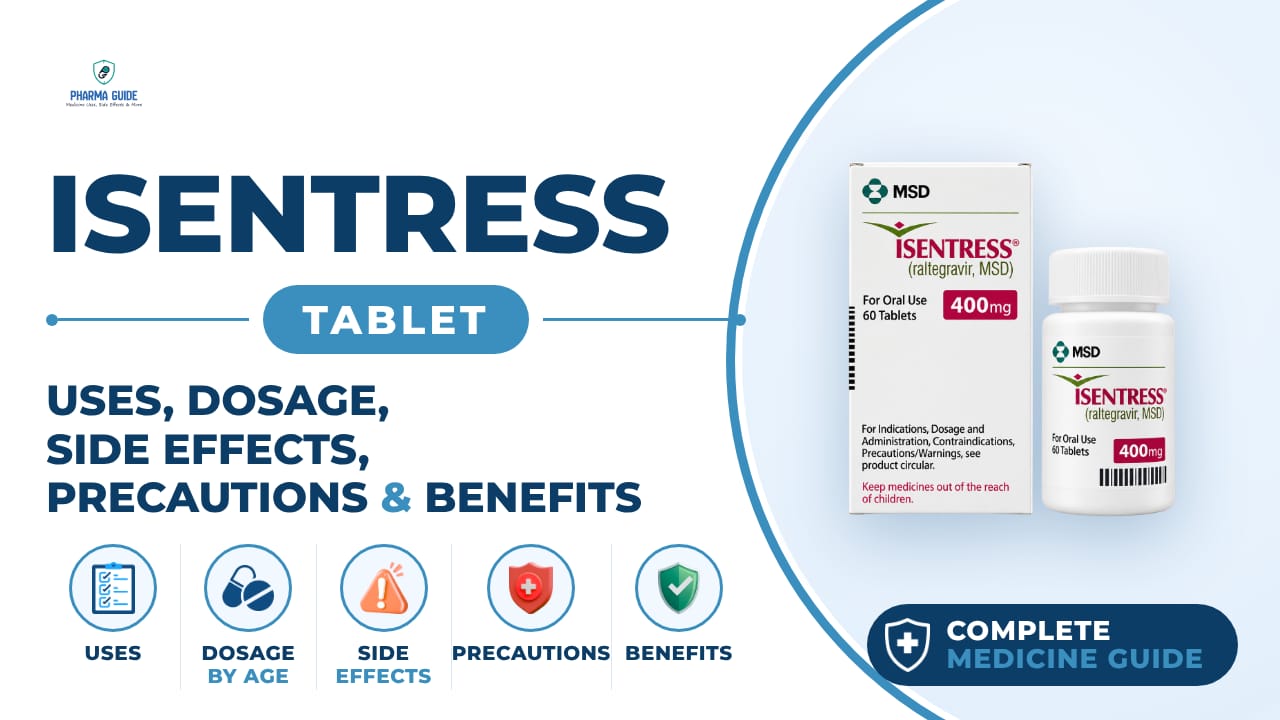
| Generic name | raltegravir |
|---|---|
| Drug class | HIV-1 integrase strand transfer inhibitor (INSTI) |
| Forms | Film-coated tablets (400 mg), Film-coated tablets (600 mg), Chewable tablets (25 mg), Chewable tablets (100 mg), Granules/powder for oral suspension (100 mg per packet) |
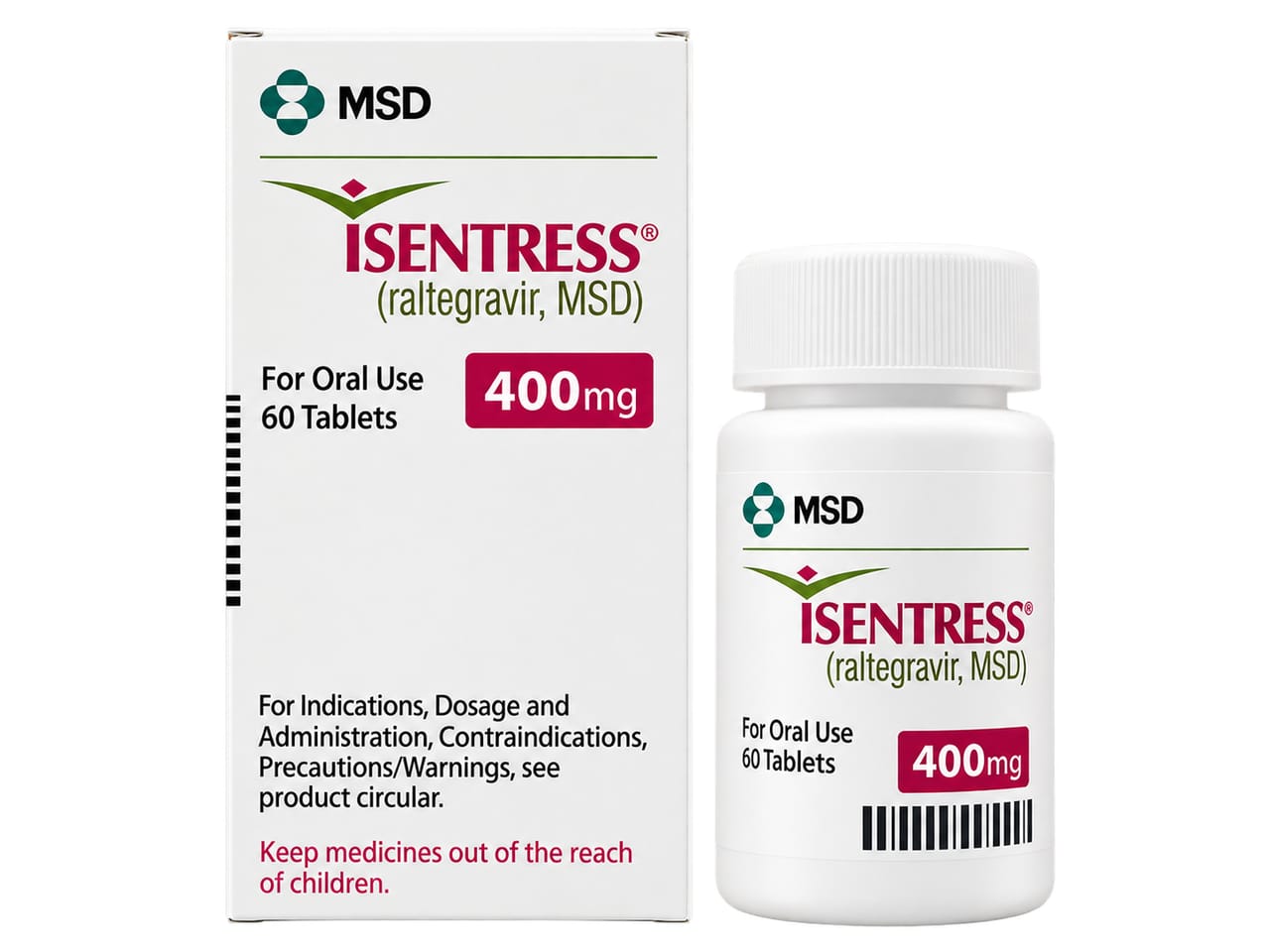
Quick overview
Isentress Tablet (raltegravir) is a prescription HIV-1 integrase strand transfer inhibitor used along with other HIV medicines to treat HIV-1 infection in people 4 weeks of age and older. It is not a cure for HIV or AIDS, and people taking it can still spread HIV to others, though effective treatment lowers this risk. It works by blocking an enzyme HIV needs to multiply, helping to reduce viral load and support immune function.
What is Isentress Tablet
Isentress is a prescription HIV medicine. It is used along with other HIV medicines to treat HIV-1 infection in people 4 weeks of age and older. It is not a cure for HIV or AIDS, and people taking it can still spread HIV to others, though effective treatment lowers this risk.
Isentress Tablet uses
- Treatment of HIV-1 infection in combination with other antiretroviral medicines, in patients 4 weeks of age and older
Benefits of Isentress Tablet
- Reduces the amount of HIV in the blood (viral load)
- Increases the number of CD4+ (T) cells, which help fight other infections
- May help improve immune system function and reduce the risk of death or opportunistic infections
How Isentress Tablet works
Isentress blocks an HIV enzyme called integrase, which the virus needs to insert its genetic material into human cells. By stopping this enzyme, the medicine prevents the virus from multiplying.
Isentress Tablet dosage
Isentress can be taken with or without food. Film-coated tablets must be swallowed whole and should not be chewed, crushed, or split. Chewable tablets may be chewed or swallowed whole. Oral suspension must be given within 30 minutes of mixing with water. Do not switch between the film-coated tablet, chewable tablet, or oral suspension without talking to your doctor first, since they are not interchangeable.
If a dose is missed, take it as soon as remembered; if it is almost time for the next dose, skip the missed dose and go back to the regular schedule—do not double the next dose. Stay under the care of a doctor while taking this medicine and keep scheduled appointments, since children's doses need to be adjusted as they grow.
| Age group | Dose |
|---|---|
| 2–11 years | Weight-based pediatric dosing; specialist-directed |
| 12–17 years | Commonly 400 mg twice daily |
| 18–64 years | Commonly 400 mg twice daily |
Available forms and strengths
- Film-coated tablets (400 mg)
- Film-coated tablets (600 mg)
- Chewable tablets (25 mg)
- Chewable tablets (100 mg)
- Granules/powder for oral suspension (100 mg per packet)
Side effects of Isentress Tablet
Common
- Trouble sleeping (insomnia)
- Headache
- Dizziness
- Nausea
- Tiredness/fatigue
Serious
- Severe, potentially life-threatening skin reactions, including Stevens-Johnson syndrome and toxic epidermal necrolysis
- Severe allergic (hypersensitivity) reactions, sometimes affecting organs such as the liver
- Immune reconstitution syndrome (inflammatory reaction to hidden infections as the immune system recovers)
- Myopathy and rhabdomyolysis (muscle breakdown that can lead to kidney problems)
- Depression, including suicidal thoughts and behaviors
- Hepatitis and liver problems, including hepatic failure
- Kidney failure, nephrolithiasis (kidney stones)
Warnings and precautions
- This medicine can cause severe, potentially life-threatening, and fatal skin reactions, including Stevens-Johnson syndrome and toxic epidermal necrolysis. Stop the medicine right away and get medical help if a rash develops, especially with fever, fatigue, muscle or joint aches, blisters, mouth sores, or swelling of the face.
- As the immune system recovers after starting treatment, it may begin reacting to hidden infections or cause autoimmune disorders, sometimes many months after starting the medicine. Tell your doctor about any new symptoms.
- This medicine can cause muscle problems including rare but serious muscle breakdown (rhabdomyolysis). Use with caution if you have a history of muscle problems or take other medicines that can affect muscles.
- The chewable tablets contain phenylalanine (from aspartame), which can be harmful to people with phenylketonuria (PKU).
- This medicine should not be taken with aluminum or magnesium-containing antacids, as they can reduce how well the medicine works.
- Isentress should only be used during pregnancy if the potential benefit justifies the potential risk to the unborn baby. There is a pregnancy registry to monitor outcomes for women who take this medicine during pregnancy. Breastfeeding is not recommended while taking Isentress; mothers with HIV-1 are generally advised not to breastfeed to avoid passing HIV to the baby.
- No dose adjustment is needed for kidney problems, including severe kidney impairment, but dosing before a dialysis session should be avoided since it isn't known how much of the drug is removed by dialysis.
- No dose adjustment is needed for mild to moderate liver problems. The medicine should be used with caution in people with severe liver impairment, since it hasn't been well studied in this group.
- Dizziness has been reported with this medicine and may affect your ability to drive or use machines. Avoid these activities if you feel dizzy.
Storage
- Film-coated tablets: store at room temperature between 68°F to 77°F (20°C to 25°C)
- Chewable tablets: store at room temperature between 68°F to 77°F (20°C to 25°C), in the original package with the bottle tightly closed, and keep the drying agent (desiccant) in the bottle to protect from moisture
- Oral suspension: store at room temperature between 68°F to 77°F (20°C to 25°C), in the original container; do not open the foil packet until ready for use
- Keep out of the sight and reach of children
When to see a doctor
- Get medical help right away if you develop a rash along with fever, feeling generally unwell, extreme tiredness, muscle or joint aches, blisters or sores in the mouth, blistering or peeling skin, redness or swelling of the eyes, or swelling of the mouth or face
- Contact your doctor right away if you notice yellowing of the skin or eyes, dark or tea-colored urine, pale stools, nausea, vomiting, loss of appetite, or pain on the right side of your stomach area, as these may be signs of liver problems
- Tell your doctor right away if you get unexplained muscle pain, tenderness, or weakness, as this could be a sign of a rare but serious muscle problem
- Tell your doctor right away if you start having new symptoms after starting treatment, as this could be a sign of immune reconstitution syndrome
- If you take too much of this medicine, call your doctor or go to the nearest hospital emergency room right away
Alternatives
- Dolutegravir
- Bictegravir-containing regimens
- Elvitegravir-containing regimens
Watch the video
FAQs
What is Isentress Tablet used for?
Isentress is used along with other HIV medicines to treat HIV-1 infection in people 4 weeks of age and older. It is not a cure for HIV or AIDS.
How does Isentress Tablet work?
Isentress blocks an HIV enzyme called integrase, which the virus needs to insert its genetic material into human cells, preventing the virus from multiplying.
What is the common dosage of Isentress for adults?
For ages 12 to 64 years, the commonly used dose is 400 mg twice daily.
What are the common side effects of Isentress Tablet?
Common side effects include trouble sleeping, headache, dizziness, nausea, and tiredness/fatigue.
Can Isentress Tablet be taken with antacids?
No, Isentress should not be taken with aluminum or magnesium-containing antacids, as they can reduce how well the medicine works.
General information, not medical advice
Your prescriber and the leaflet in your pack know your situation. This page does not.
- Follow your prescriber and the leaflet
- Don't start, stop, or change a dose on your own
- Doses and warnings differ by country and product
Sources
Video
Related medicines

Injectafer Injection: Uses, Dosage, Side Effects, Precautions and Alternates
Iron products
Injectafer (ferric carboxymaltose) treats iron deficiency anemia and heart failure-related iron deficiency via IV. Learn uses, dosage, side effects, and

Gliclazide Tablet: Uses, Dosage, Side Effects, Precautions and Alternates
Sulfonylurea (hypoglycemic/antidiabetic agent)
Gliclazide Tablet is a sulfonylurea for type 2 diabetes that boosts insulin release. Learn about dosage, side effects, warnings, and precautions.