
Safety
General information, not medical advice
Your prescriber and the leaflet in your pack know your situation. This page does not.
- Follow your prescriber and the leaflet
- Don't start, stop, or change a dose on your own
- Doses and warnings differ by country and product
Isordil Tablet: Uses, Dosage, Side Effects, Precautions and Alternates
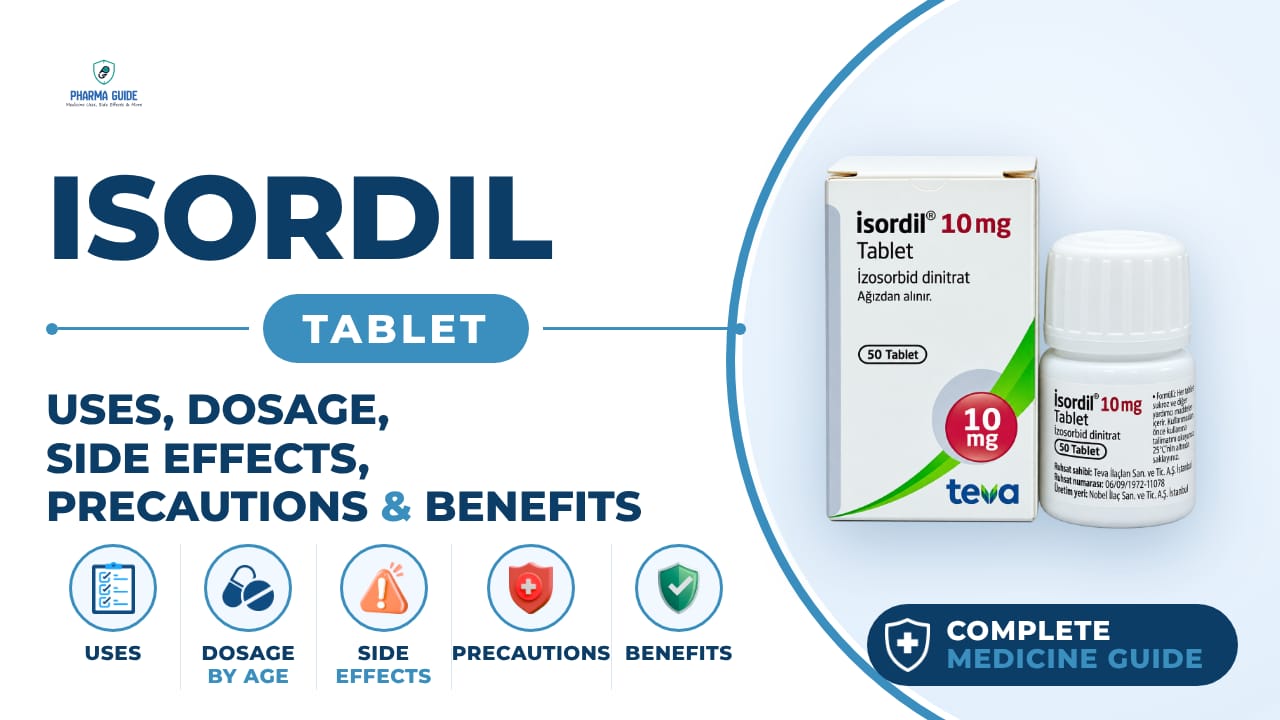
| Generic name | Isosorbide dinitrate |
|---|---|
| Drug class | Nitrates, Angina |
| Forms | Sublingual tablet |
Quick overview
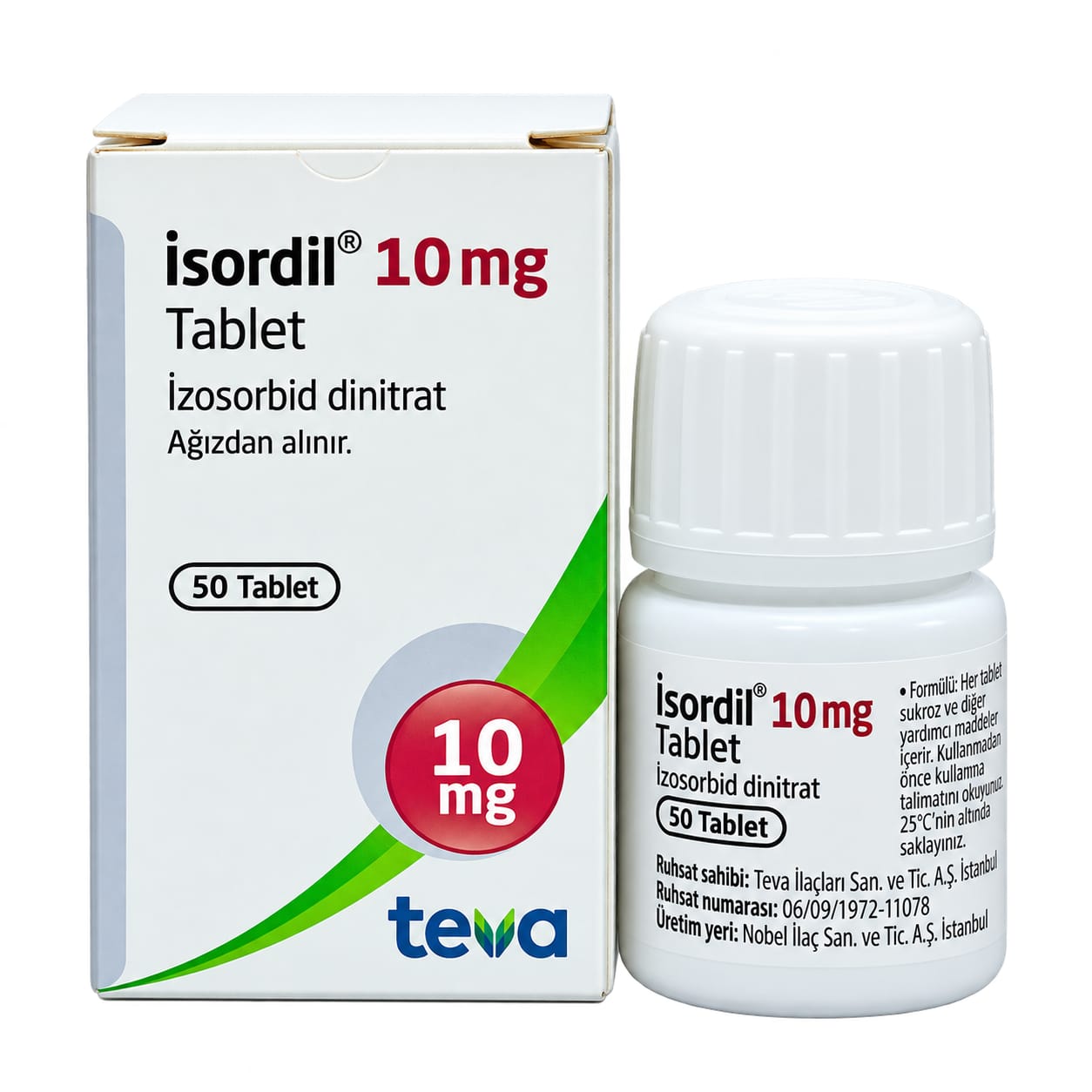
Isordil Tablet contains isosorbide dinitrate, a nitrate medicine used to prevent and treat angina (chest pain) and to help manage some types of heart failure. It works by relaxing blood vessels so more blood and oxygen can reach the heart, while also reducing the heart's workload. The tablet is placed under the tongue and should be used exactly as directed by your doctor, with care taken not to stop it suddenly.
What is Isordil Tablet
Isordil is a nitrate medicine used to prevent and treat angina (chest pain). It contains isosorbide dinitrate, which relaxes blood vessels so more blood and oxygen can reach the heart.
Isordil Tablet uses
- Prevention and treatment of angina attacks (chest pain from heart disease)
- May help treat some types of heart failure
- Angina pectoris
- Chronic heart failure
Benefits of Isordil Tablet
- Opens up blood vessels, allowing more blood and oxygen to reach the heart
- Relaxes blood vessels and reduces pressure on the heart, helping blood flow more easily to the heart
- Helps prevent angina
- Relaxes and widens blood vessels
- Reduces the heart's workload
- Can improve exercise tolerance
- May be used with other medicines in selected heart failure regimens
How Isordil Tablet works
Isordil belongs to a group of medicines called nitrates. It works by relaxing the smooth muscle in blood vessels, which widens arteries and veins, especially veins. This reduces the amount of blood returning to the heart and lowers the heart's workload, while also widening the coronary arteries that supply the heart itself.
Isordil Tablet dosage
Place the tablet under your tongue at the first sign of an angina attack; do not swallow it whole with a drink. Do not chew or crush the tablet. If your angina is not relieved after taking the tablets, call your doctor or go to the nearest hospital immediately.
If a dose is missed and it is almost time for the next one, skip the missed dose and continue as normal — do not double up. If you have been taking it regularly, do not stop suddenly, as this can trigger an angina attack; ask your doctor how to reduce the dose gradually.
Isordil may be taken on an empty stomach. Elderly patients may need a lower dose and should generally start at the lower end of the dosing range. Keep enough tablets on hand for weekends and holidays. Tell any doctor, dentist, or pharmacist you visit that you are using this medicine, including before any surgery.
| Age group | Dose |
|---|---|
| 18–64 years | Common starting regimen: 5–20 mg 2–3 times daily, depending on indication |
| 65–74 years | Usually started cautiously at the lower end of the adult range |
Available forms and strengths
- Sublingual tablet
Side effects of Isordil Tablet
Common
- Headache
- Dizziness, light-headedness, or feeling faint, especially when standing up
- Flushing (redness of the face or neck)
- Weakness
- Skin changes such as redness, tingling, or warmth
- Swollen hands and feet
- Skin rash and flaking of the skin
- Low blood pressure
- Change in heartbeat
- Nausea or vomiting
Serious
- Severe drops in blood pressure with an increase in heart rate
- Decreased blood flow to the heart, which could cause damage or heart failure in sensitive patients
- Fast, irregular, or pounding heartbeats, or fluttering in the chest
- Fainting or near-fainting
- Severe allergic reaction: hives, difficulty breathing, swelling of the face, lips, tongue, or throat
- Difficulty breathing
- Severe headache, confusion, slurred speech, arm or leg weakness, trouble walking, loss of coordination, very stiff muscles, high fever, profuse sweating, or tremors
Warnings and precautions
- Do not use Isordil if you are allergic to isosorbide dinitrate or any ingredient in it, or to any medicine or food containing nitrates or nitrites.
- Do not use if you have certain heart or blood vessel diseases, very low blood pressure, or anaemia, unless your doctor advises otherwise.
- Isordil is not recommended for children.
- Do not take Isordil together with erectile dysfunction medicines such as sildenafil, tadalafil, or vardenafil, as this can cause severely low blood pressure, fainting, or reduced blood flow to the heart.
- Do not take Isordil with the medicine riociguat, as the combination can cause low blood pressure.
- If you have been taking Isordil regularly, do not stop suddenly, as this may trigger an angina attack.
- Do not chew or crush the tablets.
- You may feel light-headed, dizzy, or faint when you start taking this medicine because your blood pressure falls suddenly; stand up slowly to help your body adjust.
- Do not use Isordil during pregnancy unless your doctor has specifically told you it is safe. Talk to your doctor if you are pregnant or planning to become pregnant.
- Do not use Isordil while breastfeeding unless your doctor says it is safe. It isn't known for certain whether the medicine passes into breast milk.
- Check with your doctor before using Isordil if you have kidney disease, as this medicine should be used with caution in people with kidney problems.
- Check with your doctor before using Isordil if you have liver disease.
- Drinking alcohol while taking Isordil can make dizziness or faintness worse. Tell your doctor if you drink alcohol.
- Be careful driving or using machines until you know how this medicine affects you, since it can cause dizziness or light-headedness.
Storage
- Store below 30°C in a cool dry place
- Keep tablets in the bottle until it is time to take them, as they do not keep well once removed
- Store away from moisture, heat, or sunlight — do not store in the bathroom, near a sink, in the car, or on window sills
- Protect from light
- Keep bottles tightly closed
- Keep out of reach of children
- Do not use after the expiry date
- If no longer needed or out of date, take it to a pharmacy for safe disposal
When to see a doctor
- Call your doctor straight away, or go to the nearest hospital's Emergency Department, if you have serious side effects like a severe drop in blood pressure with an increased heart rate, or signs of reduced blood flow to the heart.
- If your angina is not relieved after taking the tablets, call your doctor or go to the nearest hospital immediately.
- If you think you have taken too much Isordil, seek urgent medical attention even if you feel fine, as overdose can cause headache, flushing, cold sweats, nausea, vomiting, very low blood pressure, and a fast heartbeat.
- Seek medical care right away if you have serious eye symptoms like sudden vision loss, blurred vision, tunnel vision, eye pain or swelling, or seeing halos around lights.
- Seek medical care right away for serious heart symptoms such as fast, irregular, or pounding heartbeats, fluttering in the chest, shortness of breath, or sudden dizziness or passing out.
- Seek medical care right away if you have a severe headache, confusion, slurred speech, arm or leg weakness, trouble walking, loss of coordination, feeling unsteady, very stiff muscles, high fever, profuse sweating, or tremors.
Alternatives
- Isosorbide mononitrate
- Nitroglycerin
- Ranolazine
Watch the video
FAQs
What is Isordil Tablet used for?
Isordil Tablet is used to prevent and treat angina (chest pain) and may help treat some types of heart failure, including chronic heart failure.
How should Isordil Tablet be taken?
Place the tablet under your tongue at the first sign of an angina attack; do not swallow, chew, or crush it. It may be taken on an empty stomach.
Can I stop taking Isordil Tablet suddenly?
No, if you have been taking it regularly, do not stop suddenly as this may trigger an angina attack. Ask your doctor how to reduce the dose gradually.
Can Isordil Tablet be taken with erectile dysfunction medicines?
No, Isordil should not be taken with medicines like sildenafil, tadalafil, or vardenafil, as this can cause severely low blood pressure, fainting, or reduced blood flow to the heart.
What are the common side effects of Isordil Tablet?
Common side effects include headache, dizziness or light-headedness, flushing, weakness, swollen hands and feet, skin rash, low blood pressure, change in heartbeat, and nausea or vomiting.
General information, not medical advice
Your prescriber and the leaflet in your pack know your situation. This page does not.
- Follow your prescriber and the leaflet
- Don't start, stop, or change a dose on your own
- Doses and warnings differ by country and product
Sources
Video
Related medicines

Injectafer Injection: Uses, Dosage, Side Effects, Precautions and Alternates
Iron products
Injectafer (ferric carboxymaltose) treats iron deficiency anemia and heart failure-related iron deficiency via IV. Learn uses, dosage, side effects, and

Gliclazide Tablet: Uses, Dosage, Side Effects, Precautions and Alternates
Sulfonylurea (hypoglycemic/antidiabetic agent)
Gliclazide Tablet is a sulfonylurea for type 2 diabetes that boosts insulin release. Learn about dosage, side effects, warnings, and precautions.