
Safety
General information, not medical advice
Your prescriber and the leaflet in your pack know your situation. This page does not.
- Follow your prescriber and the leaflet
- Don't start, stop, or change a dose on your own
- Doses and warnings differ by country and product
Istamet Tablet: Uses, Dosage, Side Effects, Precautions and Alternates
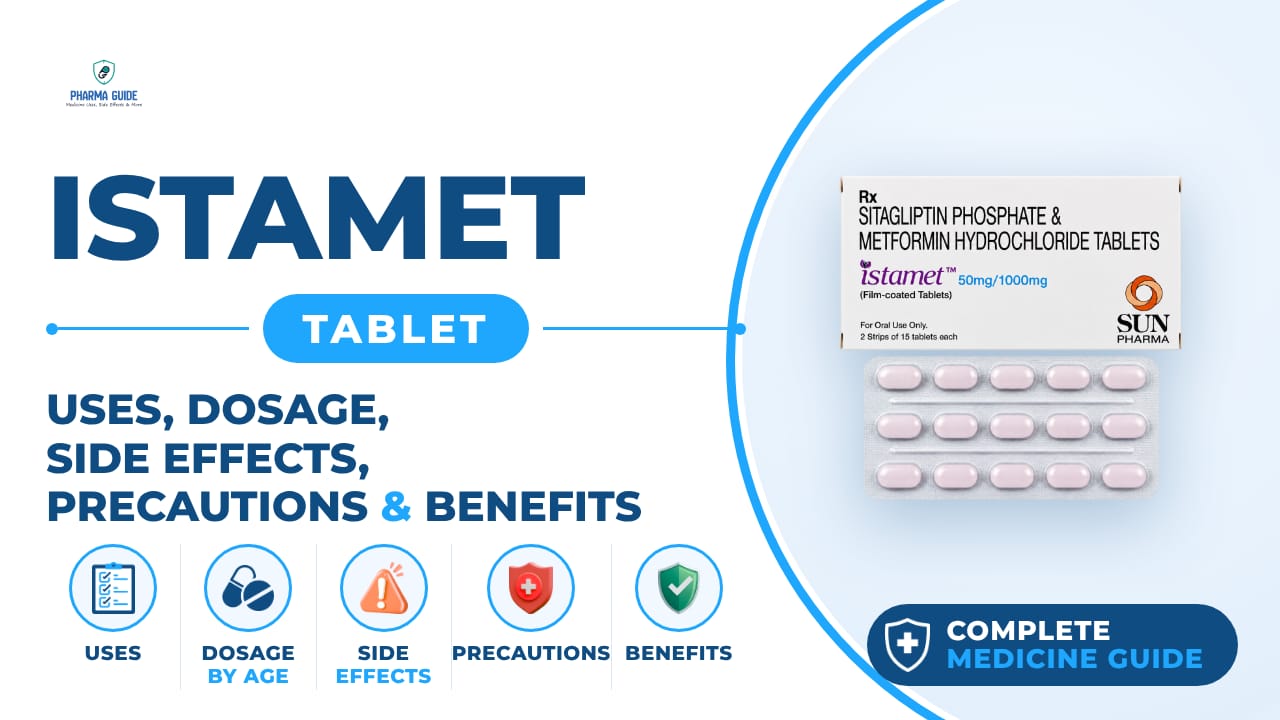
| Generic name | Sitagliptin + Metformin |
|---|---|
| Drug class | DPP-4 inhibitor, Biguanide |
| Forms | Tablet |
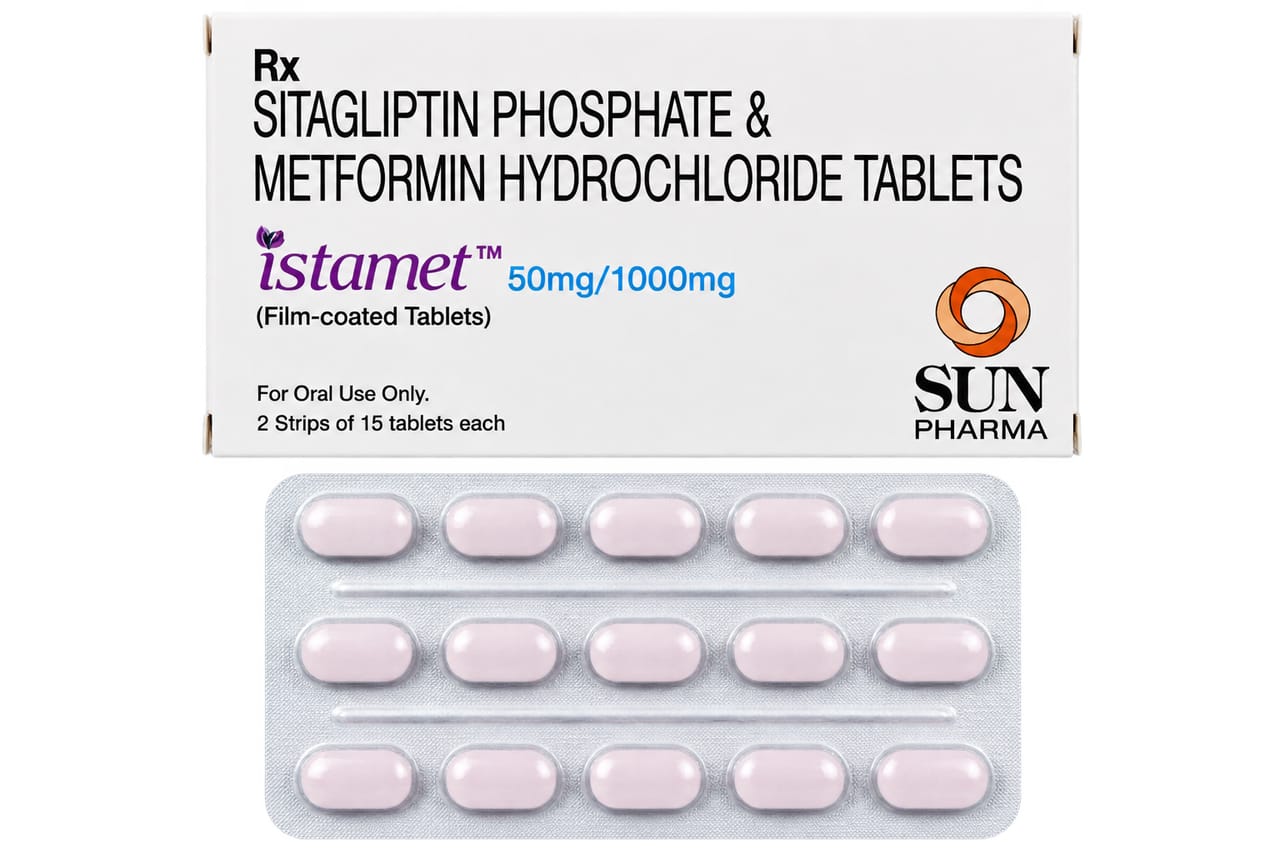
Quick overview
Istamet Tablet is a combination medicine containing sitagliptin and metformin, used to control high blood sugar in adults with type 2 diabetes when diet, exercise, or a single medicine are not enough on their own. It works by increasing insulin release, reducing sugar made by the liver, and improving the body's response to insulin. It is taken by mouth, usually with meals, and is available as a tablet.
What is Istamet Tablet
Istamet is a combination tablet containing sitagliptin and metformin. It is used to control high blood sugar in adults with type 2 diabetes when diet, exercise, or a single medicine are not enough on their own.
Istamet Tablet uses
- Manage type 2 diabetes mellitus
- Help lower and maintain healthy blood sugar levels
- Combine two medicines that lower blood sugar in different ways
- Support steadier blood sugar control to help reduce long-term complications
Benefits of Istamet Tablet
- Improved blood sugar control
- Reduced risk of diabetes-related complications
- Enhanced insulin sensitivity
- Support for weight management in type 2 diabetes
How Istamet Tablet works
Istamet contains sitagliptin and metformin. Sitagliptin raises levels of hormones that tell the pancreas to release more insulin when blood sugar is high and lowers a hormone that raises blood sugar. Metformin lowers the amount of sugar the liver makes, reduces how much sugar the intestines absorb, and helps the body's tissues respond better to insulin. Together these actions help keep blood sugar levels steady.
Istamet Tablet dosage
Take by mouth as prescribed by your doctor, usually with food, generally twice daily with meals to help reduce stomach upset. Swallow the tablet whole with water; do not crush or chew it. Follow the complete course prescribed by your doctor and keep up with your recommended diet.
If you miss a dose, take it as soon as you remember, but if it is almost time for your next dose, skip the missed one and continue your regular schedule; do not double up. Diet, physical activity, and regular blood sugar monitoring remain an essential part of managing diabetes.
| Age group | Dose |
|---|---|
| Under 18 Years | Not routinely recommended unless prescribed by a specialist |
| Adults (18–64 Years) | Usually 1 tablet once or twice daily with meals; strength depends on sitagliptin/metformin combination |
| Older Adults (65+ Years) | Dose adjusted based on kidney function and medical condition |
Available forms and strengths
- Tablet
Side effects of Istamet Tablet
Common
- Nausea or vomiting
- Diarrhoea
- Stomach pain
- Headache
- Low blood sugar (hypoglycemia) when taken with other antidiabetic medications
- Running nose
- Sore throat
Serious
- Lactic acidosis symptoms such as muscle pain, breathing difficulty, and drowsiness
- Allergic reactions
- Blurred vision
- Anxiety
- Hypoglycemia (low blood sugar level)
Warnings and precautions
- Caution is advised while taking Istamet if you are pregnant. Do not use it during pregnancy unless your doctor prescribes it, as there is not enough information to confirm its safety for pregnant women.
- Talk to your doctor before taking Istamet if you are breastfeeding, since there is limited information on how sitagliptin passes into breast milk.
- Istamet is not recommended for people with severe kidney disease, and kidney function should be checked regularly while taking it.
- Tell your doctor if you have liver problems before starting Istamet, as liver disease may raise the risk of a serious condition linked to metformin.
- Limit or avoid alcohol while taking Istamet, as it can increase the risk of a serious condition called lactic acidosis and of low blood sugar.
- Istamet may affect your ability to drive or operate machinery if you feel dizzy, unwell, or have low blood sugar. Avoid these activities if you feel less alert and talk to your doctor.
- Report extreme tiredness, muscle pain, or rapid breathing right away, as these can be signs of a rare but serious condition called lactic acidosis. Also learn the warning signs of low blood sugar.
- Do not take Istamet if you have severe kidney disease, type 1 diabetes, or diabetic ketoacidosis, as it can worsen these conditions.
- Do not take Istamet if you have pancreatitis or vitamin B12 deficiency, unless your doctor advises otherwise.
- Long-term use of the metformin in Istamet may lower vitamin B12 levels, so regular checkups are recommended.
Storage
- Store Istamet 50mg/500mg Tablet at room temperature, ideally between 15 to 30°C.
- Keep it away from direct sunlight and damp areas. So, avoid places like your bathroom or kitchen windowsill.
- Ensure it's out of sight and reach of children.
- Always check the expiry date before use and don't use the medicine if it's expired.
When to see a doctor
- Get medical attention if you notice signs of lactic acidosis such as muscle pain, difficulty breathing, or drowsiness, or if you have an allergic reaction.
- If you take more than the prescribed dose and experience nausea, vomiting, or bloating, contact your doctor rather than panicking.
Alternatives
- Metformin
- Dapagliflozin + Metformin
- Linagliptin + Metformin
- Glimepiride + Metformin
Watch the video
FAQs
What is Istamet Tablet used for?
Istamet is a combination medicine containing sitagliptin and metformin, used to control high blood sugar in adults with type 2 diabetes when diet, exercise, or a single medicine are not enough on their own.
How does Istamet Tablet work?
Sitagliptin raises hormones that prompt the pancreas to release more insulin when blood sugar is high and lowers a hormone that raises blood sugar, while metformin lowers sugar production by the liver, reduces intestinal sugar absorption, and improves the body's response to insulin.
What is the dosage of Istamet Tablet?
It is usually taken by mouth with food, generally twice daily with meals to reduce stomach upset. The tablet should be swallowed whole with water and not crushed or chewed, following the doctor's prescribed schedule.
What are the common side effects of Istamet Tablet?
Common side effects include nausea or vomiting, diarrhoea, stomach pain, headache, low blood sugar when combined with other antidiabetic medicines, runny nose, and sore throat.
Who should avoid taking Istamet Tablet?
Istamet should be avoided by people with severe kidney disease, type 1 diabetes, diabetic ketoacidosis, pancreatitis, or vitamin B12 deficiency unless specifically advised by a doctor.
General information, not medical advice
Your prescriber and the leaflet in your pack know your situation. This page does not.
- Follow your prescriber and the leaflet
- Don't start, stop, or change a dose on your own
- Doses and warnings differ by country and product
Sources
- MedlinePlus. Metformin. U.S. National Library of Medicine.
- MedlinePlus. Sitagliptin. U.S. National Library of Medicine.
- Merck Sharp & Dohme Corp. (2007). HIGHLIGHTS OF PRESCRIBING INFORMATION.
- Sitagliptin: Uses, interactions, mechanism of action | DrugBank Online.
- Metformin: Uses, interactions, mechanism of action | DrugBank Online.
- US Food and Drug Administration (FDA). Package leaflet information for the user; Glucophage (metformin hydrochloride).
- KD Tripathi. Seventh Edition. Jaypee Brothers Medical Publishers; 2013.
- April Hazard Vallerand, Cynthia A. Sanoski. Sixteenth Edition. F. A. Davis Company; 2019.
- US Food and Drug Administration (FDA). Package leaflet information for the user; Januvia (sitagliptin).
- EPAR summary for the public: Janumet sitagliptin / metformin hydrochloride. EMA/370017/2013 EMEA/H/C/000861
Video
Related medicines

Injectafer Injection: Uses, Dosage, Side Effects, Precautions and Alternates
Iron products
Injectafer (ferric carboxymaltose) treats iron deficiency anemia and heart failure-related iron deficiency via IV. Learn uses, dosage, side effects, and

Gliclazide Tablet: Uses, Dosage, Side Effects, Precautions and Alternates
Sulfonylurea (hypoglycemic/antidiabetic agent)
Gliclazide Tablet is a sulfonylurea for type 2 diabetes that boosts insulin release. Learn about dosage, side effects, warnings, and precautions.