
Safety
General information, not medical advice
Your prescriber and the leaflet in your pack know your situation. This page does not.
- Follow your prescriber and the leaflet
- Don't start, stop, or change a dose on your own
- Doses and warnings differ by country and product
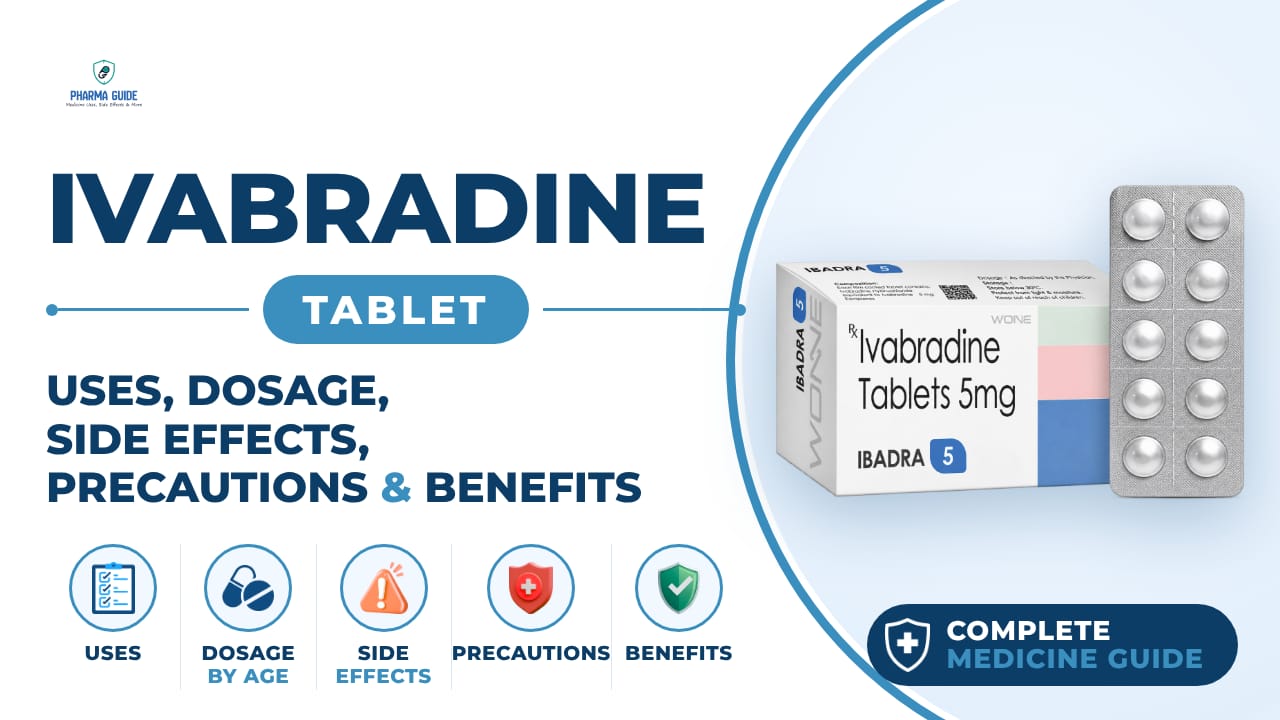
Ivabradine Tablet: Uses, Dosage, Side Effects, Precautions and Alternates
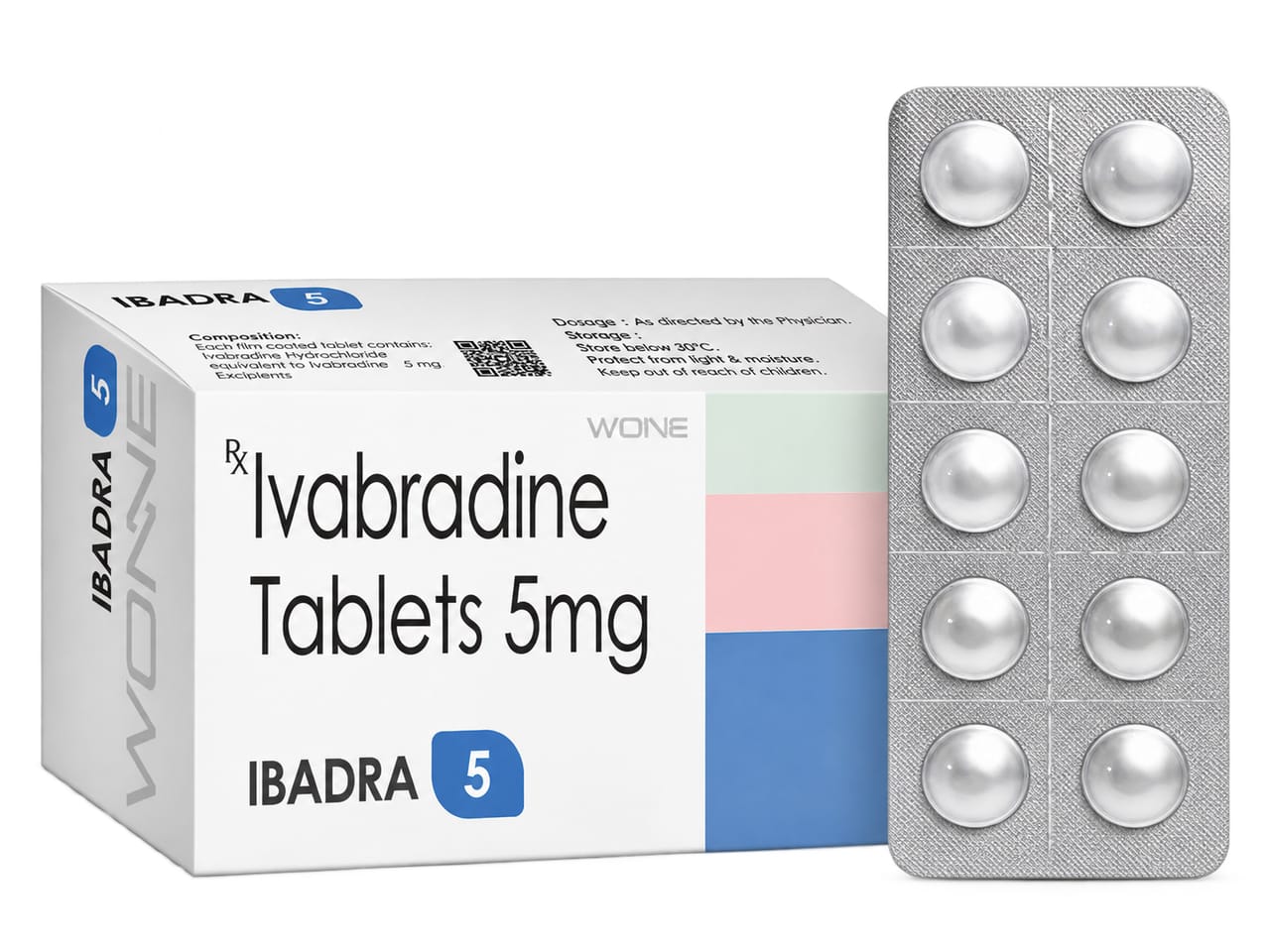
| Generic name | ivabradine, ivabradine HCl, ivabradine hydrochloride |
|---|---|
| Drug class | hyperpolarization-activated cyclic nucleotide-gated (HCN) channel blocker |
| Forms | Tablet, Oral solution (liquid) |
Quick overview
Ivabradine Tablet (ivabradine, ivabradine HCl, ivabradine hydrochloride) is a prescription medicine from the HCN channel blocker class, also available as a generic. It is used in adults with certain types of chronic heart failure and in children 6 months and older with heart failure from an enlarged heart, and is sometimes used for chronic stable angina when beta-blockers cannot be used. It works by lowering heart rate, which reduces the heart's workload and oxygen demand.
What is Ivabradine Tablet
Ivabradine is a prescription medicine used to treat certain people with heart failure. It is available only with a doctor's prescription, and a generic version is also available.
Ivabradine Tablet uses
- Used in adults with stable, symptomatic chronic heart failure with reduced left ventricular ejection fraction (LVEF ≤ 35%) to lower the risk of hospitalization, usually when heart rate stays high despite treatment with beta-blockers or if beta-blockers cannot be tolerated
- Used in children 6 months of age and older with stable, symptomatic heart failure caused by an enlarged heart (dilated cardiomyopathy)
- Used off-label or in some regions for symptomatic treatment of chronic stable angina in patients who cannot take beta-blockers
Benefits of Ivabradine Tablet
- Lowers the heart's workload and oxygen demand
- Improves exercise capacity
- Decreases breathlessness and fatigue
- Helps prevent emergency hospital visits for worsening heart failure
How Ivabradine Tablet works
Ivabradine slows the heart's natural pacemaker signals, which lowers the heart rate without significantly affecting blood pressure or how strongly the heart squeezes. By lowering the pacemaker firing rate, it reduces the heart's oxygen demand, which can improve blood flow and exercise capacity.
Ivabradine Tablet dosage
Take this medicine with food, by mouth with a glass of water, at the same time every day, as directed on your prescription label. Avoid grapefruit and grapefruit juice while taking this medicine, since they may change how much of the medicine your body absorbs. If you cannot swallow the tablet, a liquid form may be used instead; measure liquid doses with a marked oral syringe and do not save or reuse any leftover liquid. Keep taking this medicine unless your care team tells you to stop. If you miss a dose, skip it and take your next dose at the regular time; do not double up doses. Read the Medication Guide given with each prescription and refill.
Use exactly as prescribed by your doctor or pharmacist.
Available forms and strengths
- Tablet
- Oral solution (liquid)
Side effects of Ivabradine Tablet
Common
- Blurred vision
- Chest pain or discomfort
- Fast or irregular heartbeat
- Headache
- Lightheadedness, dizziness, or fainting
- Nervousness
- Pounding in the ears
- Slow or irregular heartbeat
- Unusual tiredness
- Temporary bright spots, halos, or flickering lights in vision (luminous phenomena / phosphenes)
- Increased blood pressure
Serious
- Severely slow heartbeat (bradycardia) with symptoms like confusion, weakness, chest pain, or shortness of breath
- Heart rhythm changes leading to irregular heartbeat and fainting
- Atrial fibrillation with palpitations, tiredness, dizziness, chest pain, or worsened shortness of breath
- Severe allergic reactions, including swelling of the face, lips, tongue, or throat, trouble breathing, or hives
Warnings and precautions
- Do not take this medicine if you have a very low resting heart rate, low blood pressure with symptoms, a recent worsening of heart failure, certain heart rhythm problems such as sick sinus syndrome or heart block without a pacemaker, severe liver disease, or if you depend entirely on a pacemaker
- Avoid grapefruit and grapefruit juice while taking this medicine, as they can raise blood levels of the drug and increase the risk of side effects
- Do not take this medicine together with certain antifungal medicines, certain antibiotics, some HIV medicines, or nefazodone, since these combinations can cause dangerous interactions
- This medicine may increase the risk of heart rhythm problems, including atrial fibrillation and a dangerously slow heartbeat
- This medicine can cause serious harm to an unborn baby, so effective birth control should be used while taking it. Tell your doctor right away if you become pregnant
- It isn't known if this medicine passes into breast milk, so discuss the potential risks and benefits with your doctor before breastfeeding while taking it
- This medicine can cause temporary visual brightness phenomena or blurred vision, especially with sudden changes in light; avoid driving if vision is affected
- This medicine should not be used if you have severe liver disease, and your liver function may need to be tested before starting treatment
- It isn't known whether drinking alcohol affects this medicine
- Be careful when driving or operating machinery, especially at night, due to possible temporary vision changes
Storage
- Store the medicine in a closed container at room temperature, away from heat, moisture, and direct light
- Keep from freezing
- Keep out of the reach of children and pets
- Do not keep outdated medicine or medicine no longer needed
- Ask your healthcare professional how you should dispose of any medicine you do not use
- Throw away any unused oral liquid
- Oral liquid should be protected from light and kept in its foil pouch until ready to use
When to see a doctor
- Check with your doctor right away if you notice a fast, slow, or irregular heartbeat, dizziness, fainting, or trouble breathing
- Get emergency help if you have chest pain, shortness of breath, dizziness, lightheadedness, fainting, or changes in your heart rate or rhythm
- Stop taking the medicine and get help right away if you have signs of a serious allergic reaction, such as breathing problems, wheezing, a racing heart, fever, swollen lymph nodes, swelling of the face, lips, mouth, tongue, or throat, trouble swallowing, hives, or stomach cramps
- If you think you have taken too much of this medicine, contact a poison control center or go to an emergency room right away
Alternatives
- Nebivolol
- Carvedilol
- Bisoprolol
- Metoprolol
Watch the video
FAQs
What is Ivabradine Tablet used for?
It is used in adults with stable, symptomatic chronic heart failure with reduced ejection fraction (LVEF ≤ 35%) to lower hospitalization risk, in children 6 months and older with heart failure from an enlarged heart, and sometimes for chronic stable angina when beta-blockers cannot be used.
How should I take Ivabradine Tablet?
Take it with food, by mouth with a glass of water, at the same time every day as directed. Avoid grapefruit and grapefruit juice. If you miss a dose, skip it and take the next dose at the regular time without doubling up.
What are the common side effects of Ivabradine Tablet?
Common side effects include blurred vision, chest pain, fast or irregular heartbeat, headache, dizziness or fainting, nervousness, pounding in the ears, slow or irregular heartbeat, tiredness, temporary bright spots or flickering lights in vision, and increased blood pressure.
Can I drink grapefruit juice while taking Ivabradine Tablet?
No, you should avoid grapefruit and grapefruit juice while taking this medicine, as they can raise blood levels of the drug and increase the risk of side effects.
Is Ivabradine Tablet safe during pregnancy?
This medicine can cause serious harm to an unborn baby, so effective birth control should be used while taking it, and you should tell your doctor right away if you become pregnant.
General information, not medical advice
Your prescriber and the leaflet in your pack know your situation. This page does not.
- Follow your prescriber and the leaflet
- Don't start, stop, or change a dose on your own
- Doses and warnings differ by country and product
Sources
Video
Related medicines

Injectafer Injection: Uses, Dosage, Side Effects, Precautions and Alternates
Iron products
Injectafer (ferric carboxymaltose) treats iron deficiency anemia and heart failure-related iron deficiency via IV. Learn uses, dosage, side effects, and

Gliclazide Tablet: Uses, Dosage, Side Effects, Precautions and Alternates
Sulfonylurea (hypoglycemic/antidiabetic agent)
Gliclazide Tablet is a sulfonylurea for type 2 diabetes that boosts insulin release. Learn about dosage, side effects, warnings, and precautions.