
Safety
General information, not medical advice
Your prescriber and the leaflet in your pack know your situation. This page does not.
- Follow your prescriber and the leaflet
- Don't start, stop, or change a dose on your own
- Doses and warnings differ by country and product
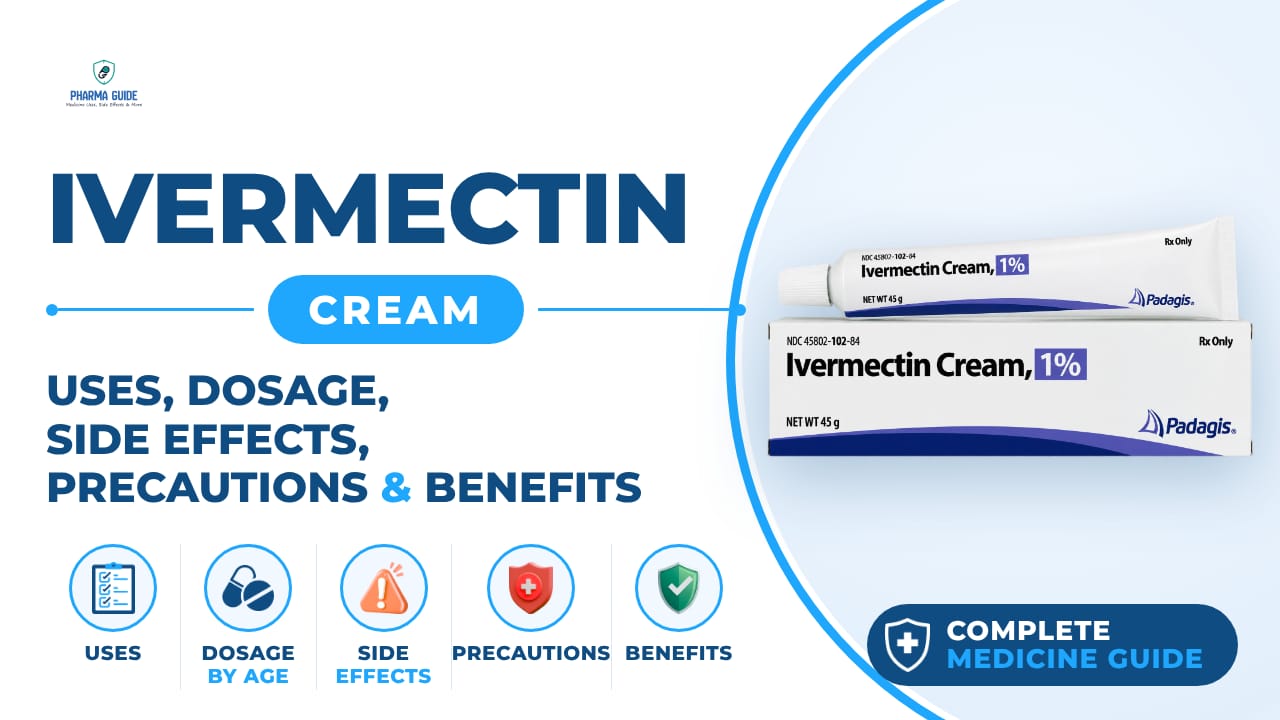
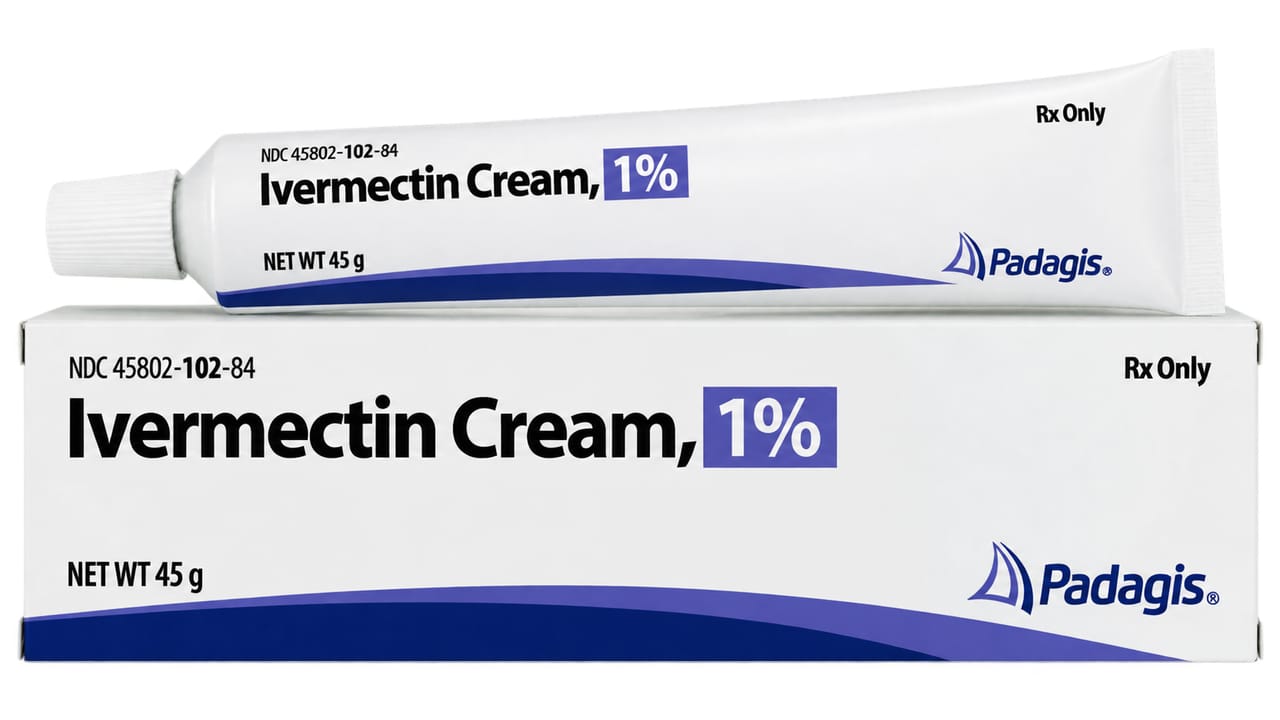
Ivermectin Cream: Uses, Dosage, Side Effects, Precautions and Alternates
| Generic name | Ivermectin |
|---|---|
| Drug class | Avermectin |
| Forms | Cream, Lotion |
Quick overview
Ivermectin Cream is a prescription topical medicine applied to the skin of the face to reduce the redness, bumps, and pimples caused by rosacea. It belongs to the Avermectin drug class and is used in adults only. The cream works by decreasing inflammation in the skin, and many people see improvement within about 4 weeks of regular use.
What is Ivermectin Cream
Ivermectin Cream is a prescription topical medicine used on the skin of the face to reduce the redness, bumps, and pimples caused by rosacea. Rosacea is a long-term inflammatory skin condition in adults that causes small, red, pus-filled bumps on the nose, cheeks, forehead, and chin. The generic name is Ivermectin, and it belongs to the Avermectin drug class.
Ivermectin Cream uses
- Treats inflammatory lesions (papules and pustules) of rosacea in adults
- Reduces facial redness caused by rosacea
Benefits of Ivermectin Cream
- Reduces the number of inflammatory bumps and pimples caused by rosacea
- Improves the overall appearance of skin affected by rosacea, with many people seeing improvement within about 4 weeks
How Ivermectin Cream works
It works by decreasing inflammation of the skin. The exact way it helps rosacea is not fully known, though it has anti-inflammatory effects.
Ivermectin Cream dosage
For use on the skin only; do not take by mouth. Wash your hands before and after applying the cream. Wash the affected area with a mild cleanser and dry it before applying. Apply only to affected areas of the face: forehead, chin, nose, and each cheek. Spread the cream smoothly and evenly in a thin layer; do not spot treat.
Keep the cream away from your eyes, mouth, nose, and vaginal opening, and do not apply it on cuts or scrapes. If it gets in your eyes, rinse with plenty of cool water right away. Do not cover the treated area with dressings, and do not apply cosmetics until the cream has dried on your skin.
Apply once daily, generally at bedtime. Do not use more often than directed, and keep using it unless your care team tells you to stop. If you miss a dose, apply it as soon as you remember; if it is almost time for your next dose, skip the missed one and do not double up.
Talk to your care team about use in children; this product is not recommended for those under 18. Elderly patients may be more sensitive to the effects of this medicine than younger adults.
| Age group | Dose |
|---|---|
| Under 18 years | Safety/effectiveness not established for rosacea |
| 18–64 years | Apply a thin layer once daily to affected facial areas |
| 65+ years | Same adult application; use as directed |
Available forms and strengths
- Cream
- Lotion
Side effects of Ivermectin Cream
Common
- Burning or pain at the application site
- Mild skin irritation, redness, or dryness
- Itching of the skin
- Dry skin
Serious
- Allergic reactions such as skin rash, itching, hives, or swelling of the face, lips, tongue, or throat
- Trouble breathing
- Blistering, crusting, or flaking of the skin
- Severe redness, soreness, stinging, or swelling of the skin
- Rosacea getting worse (aggravated)
- Increased liver enzyme levels (transaminase increased)
Warnings and precautions
- This cream may cause rosacea to get worse in some patients. If this happens severely, treatment should be stopped.
- Some ingredients in the cream, like cetyl alcohol, stearyl alcohol, and parabens, can cause local skin reactions or allergic reactions.
- Avoid excessive sun exposure, as it could make rosacea worse.
- Do not use other skin products on the treated area without talking to your care team first, since interactions with irritating products have not been studied.
- This cream is not recommended during pregnancy because its effect on an unborn baby is unknown. It should only be used if the potential benefit to the mother justifies the potential risk to the baby.
- If you are breastfeeding, you should not use this medicine, or you should stop breastfeeding before using it, because of potential risks to the nursing infant.
- Ivermectin is processed by the liver, and increased liver enzyme levels have been reported after use.
- Avoid alcoholic cleansers and other irritants on the skin, as they can further irritate rosacea-affected skin.
Storage
- Store at room temperature between 20 and 25 degrees C (68 and 77 degrees F)
- Keep out of the reach of children and pets
- Get rid of any unused medication after the expiration date
- Take the medication to a medication take-back program; check with your pharmacy or law enforcement to find a location
- If you cannot return the medication, check the label or package insert to see if it should be thrown out in the garbage; mix it with cat litter, dirt, or coffee grounds, seal in a bag, and put it in the trash
When to see a doctor
- Get medical help right away if you have signs of an allergic reaction such as skin rash, itching, hives, or swelling of the face, lips, tongue, or throat.
- Contact your doctor right away if you have trouble breathing, eye irritation, or skin irritation or rash.
- If your skin condition does not improve within a few days, or gets worse, check with your doctor.
- If you think you or someone else has swallowed this medicine or used too much, contact a poison control center or emergency room right away.
- If there is no improvement after 3 months of use, stop the cream and consult your doctor.
Alternatives
- Brimonidine Gel
- Minocycline Topical Foam
- Azelaic Acid Gel/Foam
- Metronidazole Cream/Gel
- Oxymetazoline Cream
Watch the video
FAQs
What is Ivermectin Cream used for?
It is a prescription topical medicine used to treat inflammatory lesions (papules and pustules) and reduce facial redness caused by rosacea in adults.
How long does it take for Ivermectin Cream to work?
Many people see improvement in rosacea symptoms within about 4 weeks of regular use.
How do you apply Ivermectin Cream?
Wash your hands and the affected area, then apply a thin, even layer once daily, generally at bedtime, to the forehead, chin, nose, and cheeks, avoiding the eyes, mouth, nose, and vaginal opening.
What are the common side effects of Ivermectin Cream?
Common side effects include burning or pain at the application site, mild skin irritation, redness, dryness, and itching.
Can Ivermectin Cream be used during pregnancy or breastfeeding?
It is not recommended during pregnancy since its effect on an unborn baby is unknown, and it should not be used while breastfeeding due to potential risks to the nursing infant.
General information, not medical advice
Your prescriber and the leaflet in your pack know your situation. This page does not.
- Follow your prescriber and the leaflet
- Don't start, stop, or change a dose on your own
- Doses and warnings differ by country and product
Sources
Video
Related medicines

Injectafer Injection: Uses, Dosage, Side Effects, Precautions and Alternates
Iron products
Injectafer (ferric carboxymaltose) treats iron deficiency anemia and heart failure-related iron deficiency via IV. Learn uses, dosage, side effects, and

Gliclazide Tablet: Uses, Dosage, Side Effects, Precautions and Alternates
Sulfonylurea (hypoglycemic/antidiabetic agent)
Gliclazide Tablet is a sulfonylurea for type 2 diabetes that boosts insulin release. Learn about dosage, side effects, warnings, and precautions.