
Safety
General information, not medical advice
Your prescriber and the leaflet in your pack know your situation. This page does not.
- Follow your prescriber and the leaflet
- Don't start, stop, or change a dose on your own
- Doses and warnings differ by country and product
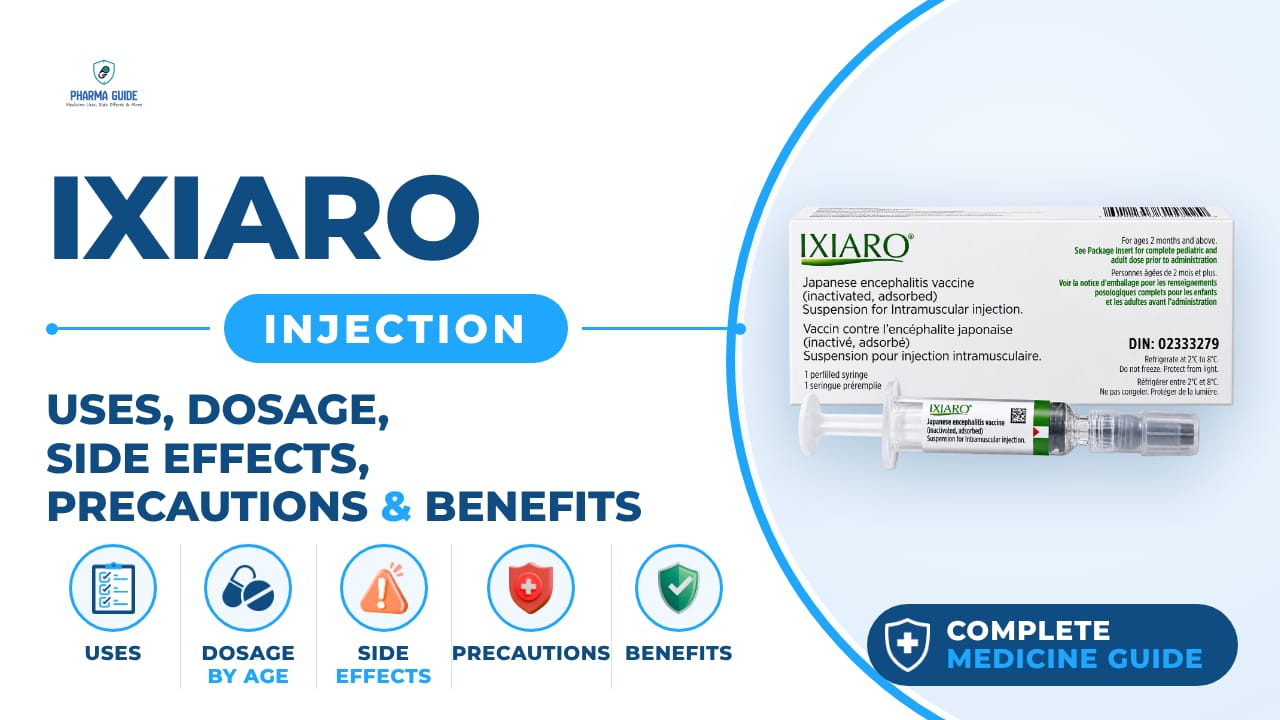
Ixiaro Injection: Uses, Dosage, Side Effects, Precautions and Alternates
| Generic name | Japanese encephalitis vaccine SA14-14-2, inactivated |
|---|---|
| Drug class | Viral vaccine |
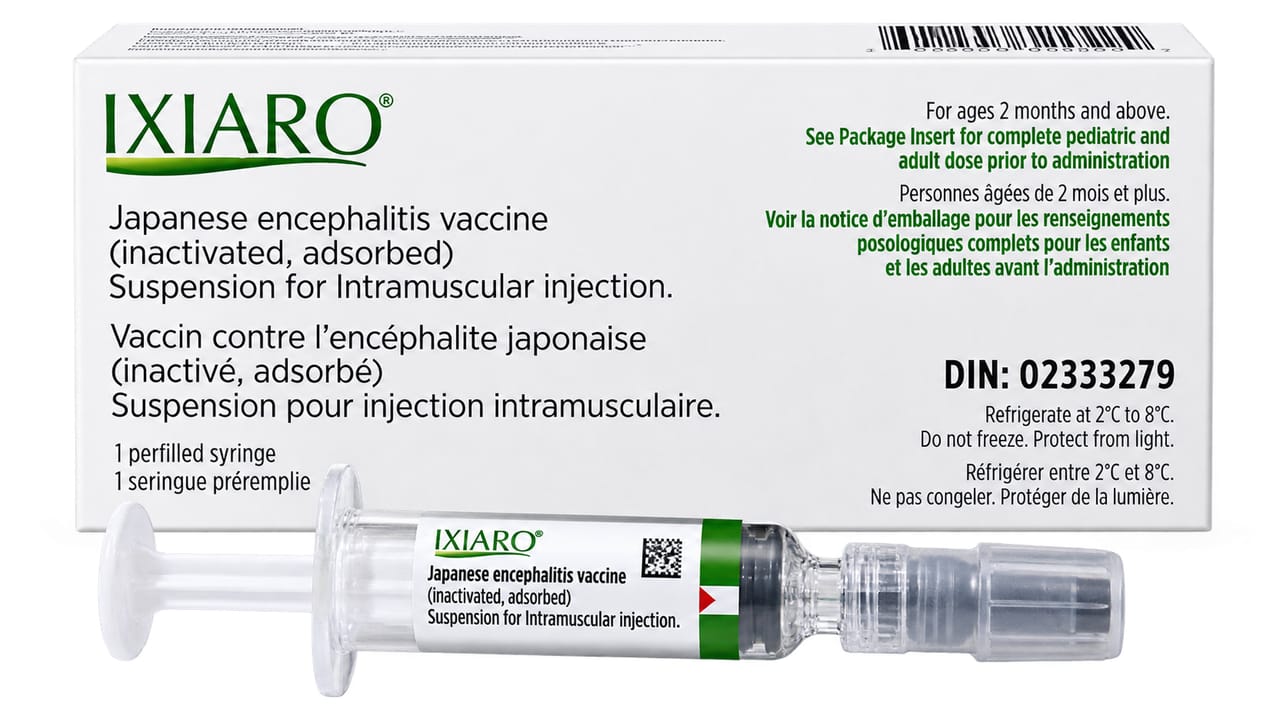
| Forms | Suspension for injection (pre-filled glass syringe) |
Quick overview
Ixiaro is a vaccine containing an inactivated form of the Japanese encephalitis virus (SA14-14-2). It is given as a shot into the muscle to help protect people 2 months of age and older against Japanese encephalitis, a disease spread by mosquito bites. The vaccine works by prompting the body to produce protective antibodies. It requires two doses, and protective mosquito-bite precautions should continue even after vaccination.
What is Ixiaro Injection
Ixiaro is a vaccine given as a shot into the muscle. It helps protect people 2 months of age and older against Japanese encephalitis (JE), a disease caused by a virus spread through mosquito bites.
Ixiaro Injection uses
- Prevention of Japanese encephalitis (JE) in adults and children 2 months of age and older who are travelling to or living in areas where JE occurs, or who are at risk through their work
Benefits of Ixiaro Injection
- Helps protect against Japanese encephalitis (JE) caused by the Japanese encephalitis virus.
- Reduces the risk of developing severe brain inflammation (encephalitis) after infection.
- Helps prevent serious complications such as seizures, neurological damage, disability, or death.
- Stimulates the immune system to produce protective antibodies against the JE virus.
- Is especially useful for travelers or people living in areas where Japanese encephalitis is common.
- Can provide longer-term protection when the recommended vaccine series and boosters are completed.
How Ixiaro Injection works
The vaccine contains an inactivated (killed) form of the Japanese encephalitis virus. It causes your body to make its own protective antibodies against the virus, so your immune system can fight it off if you're ever exposed.
Ixiaro Injection dosage
Ixiaro is given as a shot into the muscle, usually in the upper arm, by a doctor or nurse. It should not be injected into a blood vessel, under the skin, into a vein, or into the skin — it is meant to go into the muscle. If you have a bleeding disorder, your doctor may decide to give the shot under the skin instead.
You need two doses to complete the vaccination course. The second dose is usually given some weeks after the first, though your doctor may use a shorter schedule for certain adults. The second dose should be completed at least one week before you might be exposed to the virus so you have full protection.
If you miss your second dose appointment, talk to your doctor and schedule another visit as soon as possible; the second dose can still be given many months after the first. You should ask your doctor whether you need a booster dose later on.
Do not get the vaccine if you currently have an illness with a high fever; your doctor will postpone the shot until you recover. You should still take steps to avoid mosquito bites (like wearing protective clothing, using repellents, and using mosquito nets) even after getting vaccinated. The suspension should be shaken well before use to make sure it looks white and evenly mixed.
| Age group | Dose |
|---|---|
| 2 months–<3 years | 0.25 mL IM per dose |
| 3–17 years | 0.5 mL IM per dose |
| 18–64 years | 0.5 mL IM per dose |
| 65+ years | 0.5 mL IM per dose; immune response may be lower in older adults |
Available forms and strengths
- Suspension for injection (pre-filled glass syringe)
Side effects of Ixiaro Injection
Common
- Headache
- Muscle pain
- Injection site pain, tenderness, redness, or swelling
- Tiredness/fatigue
- Nausea
- Flu-like illness
- Fever
- Loss of appetite
- Skin rash (less common)
- In children: fever, irritability, diarrhea, vomiting, loss of appetite, injection site pain and redness
Serious
- Signs of a severe allergic reaction: difficulty breathing, hoarseness or wheezing, hives, dizziness, weakness, or fast heartbeat
- Fainting
- Swelling of the face and tongue, itchy rash, and shortness of breath
- Rare reports of rapid heartbeat, palpitations, platelet deficiency, nerve inflammation, and limb or ankle swelling
Warnings and precautions
- This vaccine can cause severe allergic reactions. Tell your health care provider right away if you have trouble breathing, hoarseness, wheezing, hives, dizziness, weakness, or a fast heartbeat.
- Fainting can happen after getting this vaccine.
- This vaccine may not fully protect everyone who receives it, and you should keep protecting yourself from mosquito bites even after vaccination.
- The vaccine may not work as well in people with weakened immune systems, whether from a medical condition or from certain medicines, putting them at higher risk of the disease even after vaccination.
- The vaccine must never be injected into a blood vessel.
- There isn't much data on using this vaccine during pregnancy, so as a precaution it should be avoided unless your doctor advises otherwise.
- There isn't much data on using this vaccine while breastfeeding, so as a precaution it should be avoided unless your doctor advises otherwise.
- No specific kidney-related dose adjustment or precaution is listed in the product information.
- No specific liver-related dose adjustment is listed. Rare increases in liver enzymes have been reported after vaccination.
- No specific interaction with alcohol is listed.
- This vaccine is not expected to affect your ability to drive or use machines.
Storage
- Store refrigerated at 2–8°C (36–46°F).
- Keep the vaccine in the original carton to protect it from light.
- Do not freeze; discard the vaccine if it has been frozen.
- Maintain the recommended cold chain during storage and transport.
- Do not use after the expiry date or if proper storage conditions were not maintained.
- Keep securely stored and out of reach of children.
When to see a doctor
- Get medical help right away if you notice signs of a severe allergic reaction, such as feeling faint, swelling of the face, tightness in the throat, difficulty breathing, hives or rash, dizziness, shaking, nausea, or chest pain.
- Contact your health care provider right away if you get any symptoms after receiving the vaccine that concern you.
Alternatives
- IMOJEV
- JENVAC
- JEEV
- JESPECT
Watch the video
FAQs
What is Ixiaro Injection used for?
Ixiaro is used to prevent Japanese encephalitis (JE) in adults and children 2 months of age and older who are traveling to or living in areas where JE occurs, or who are at risk through their work.
How many doses of Ixiaro are needed?
Ixiaro requires two doses to complete the vaccination course, with the second dose usually given some weeks after the first. The second dose should be completed at least one week before possible exposure to the virus for full protection.
What are the common side effects of Ixiaro Injection?
Common side effects include headache, muscle pain, injection site pain or swelling, tiredness, nausea, flu-like illness, fever, and loss of appetite. In children, side effects may include fever, irritability, diarrhea, and vomiting.
How is Ixiaro Injection given?
Ixiaro is given as a shot into the muscle, usually in the upper arm, by a doctor or nurse. It should not be injected into a blood vessel, under the skin, or into a vein, though it may be given under the skin if you have a bleeding disorder.
Can I still get mosquito bites after being vaccinated with Ixiaro?
Yes, the vaccine may not fully protect everyone, so you should continue taking steps to avoid mosquito bites, such as wearing protective clothing, using repellents, and using mosquito nets, even after vaccination.
General information, not medical advice
Your prescriber and the leaflet in your pack know your situation. This page does not.
- Follow your prescriber and the leaflet
- Don't start, stop, or change a dose on your own
- Doses and warnings differ by country and product
Sources
Video
Related medicines

Injectafer Injection: Uses, Dosage, Side Effects, Precautions and Alternates
Iron products
Injectafer (ferric carboxymaltose) treats iron deficiency anemia and heart failure-related iron deficiency via IV. Learn uses, dosage, side effects, and

Gliclazide Tablet: Uses, Dosage, Side Effects, Precautions and Alternates
Sulfonylurea (hypoglycemic/antidiabetic agent)
Gliclazide Tablet is a sulfonylurea for type 2 diabetes that boosts insulin release. Learn about dosage, side effects, warnings, and precautions.