
Safety
General information, not medical advice
Your prescriber and the leaflet in your pack know your situation. This page does not.
- Follow your prescriber and the leaflet
- Don't start, stop, or change a dose on your own
- Doses and warnings differ by country and product
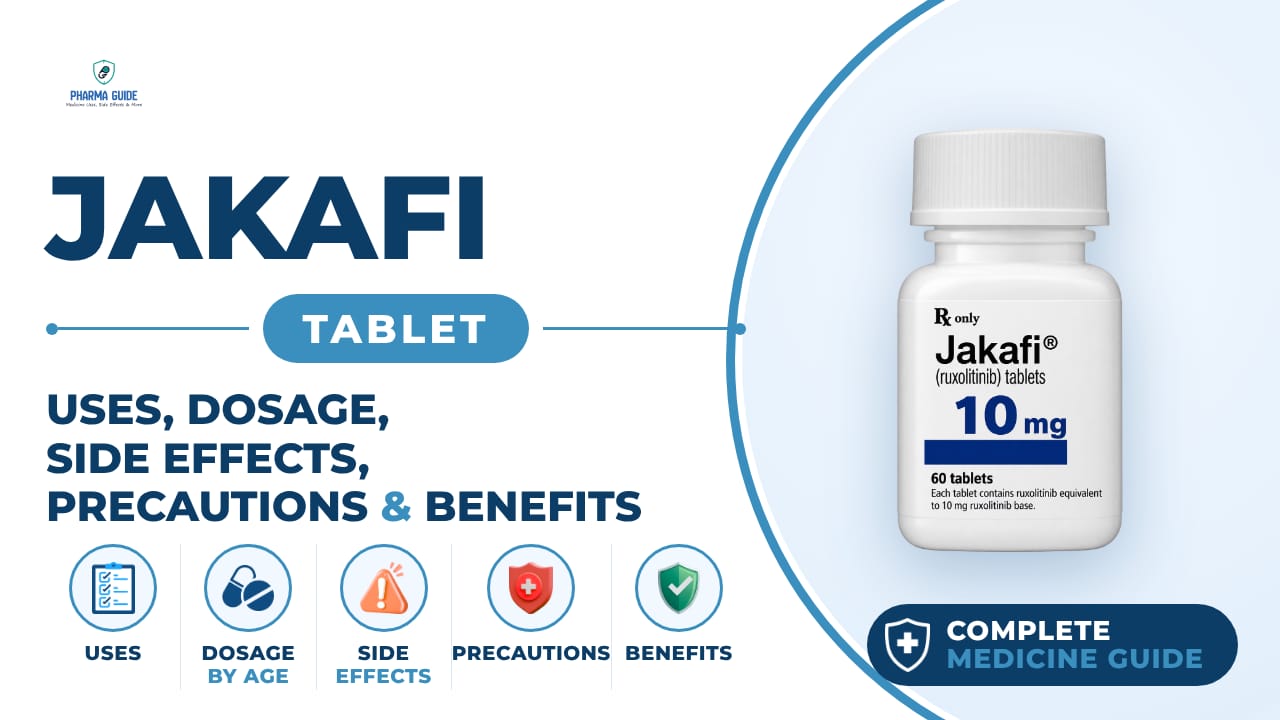
Jakafi Tablet: Uses, Dosage, Side Effects, Precautions and Alternates
| Generic name | ruxolitinib |
|---|---|
| Drug class | Antineoplastic Janus kinase (JAK) inhibitors |
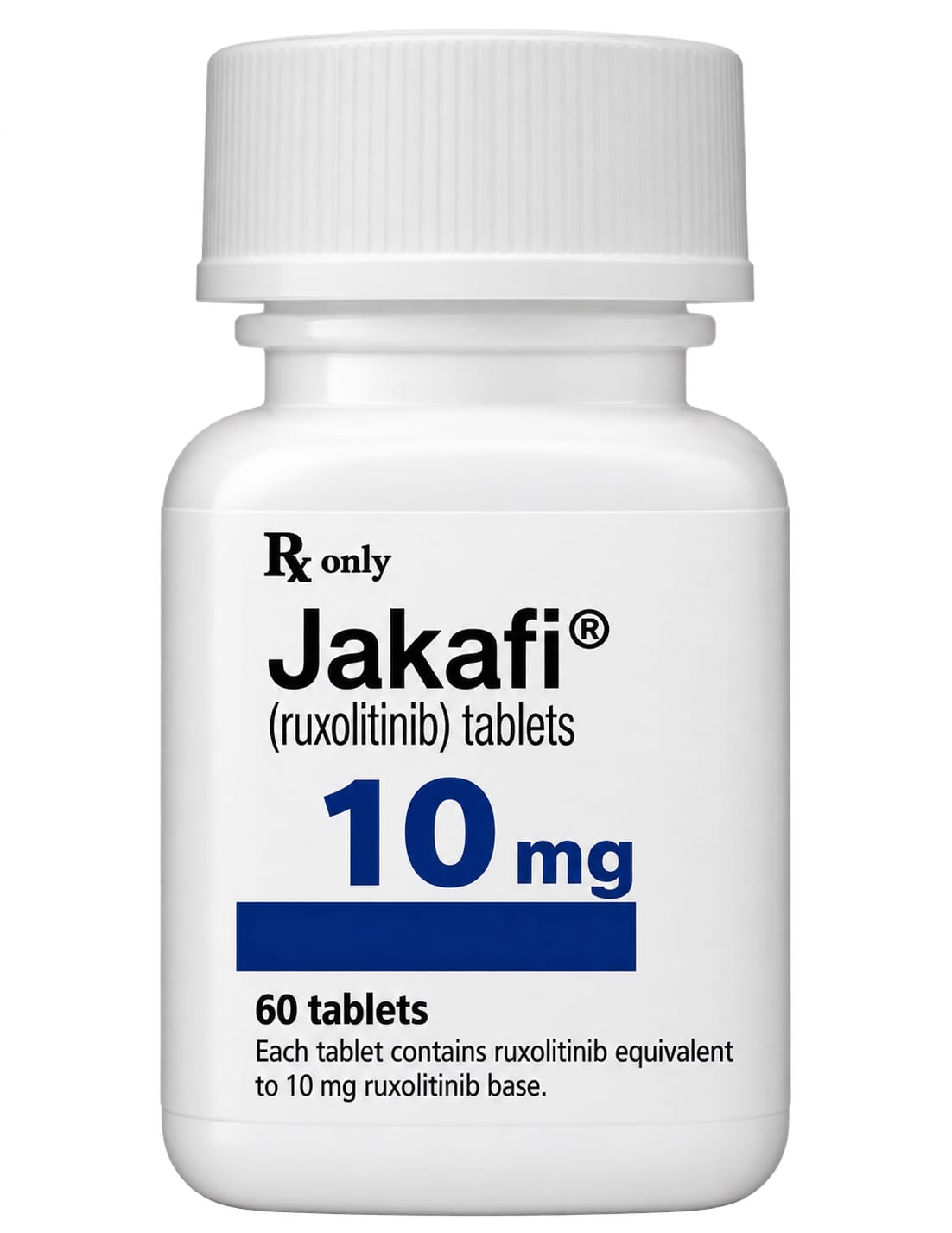
| Forms | Oral tablets (5 mg, 10 mg, 15 mg, 20 mg, 25 mg), Extended-release tablets, Jakafi XR (11 mg, 22 mg, 33 mg, 44 mg, 55 mg) |
Quick overview
Jakafi Tablet (ruxolitinib) is a prescription JAK inhibitor taken by mouth to treat certain blood cancers, including myelofibrosis and polycythemia vera, as well as graft-versus-host disease after stem cell transplant. It works by blocking JAK1 and JAK2 proteins that drive overactive blood cell production or immune activity. Jakafi is taken as a regular tablet twice daily or as the extended-release Jakafi XR once daily. Regular monitoring and careful use as prescribed are important due to possible serious side effects.
What is Jakafi Tablet
Jakafi is a prescription medicine taken by mouth. It is used to treat certain blood cancers and immune problems that can happen after a stem cell transplant. It belongs to a group of medicines called kinase inhibitors, also known as JAK inhibitors.
Jakafi Tablet uses
- Intermediate or high-risk myelofibrosis (MF), including primary MF, post-polycythemia vera MF, and post-essential thrombocythemia MF in adults
- Polycythemia vera (PV) in adults who have had an inadequate response to, or are intolerant of, hydroxyurea
- Steroid-refractory acute graft-versus-host disease (aGVHD) in adults and children 12 years and older
- Chronic graft-versus-host disease (cGVHD) after failure of one or two lines of systemic therapy in adults and children 12 years and older
Benefits of Jakafi Tablet
- Can reduce spleen size in myelofibrosis
- Can improve symptoms such as abdominal discomfort, night sweats, itching, and bone or muscle pain in myelofibrosis
- Can help control red blood cell levels (hematocrit) and reduce the need for phlebotomy in polycythemia vera
- Can reduce spleen size in polycythemia vera
- Can improve response rates in acute and chronic graft-versus-host disease compared to other available therapies
How Jakafi Tablet works
Jakafi blocks proteins in the body called JAK1 and JAK2, which send signals that control how blood cells are made and how the immune system works. In blood cancers like myelofibrosis and polycythemia vera, these signals are overactive and cause too many blood cells to be made; blocking them helps control this. In graft-versus-host disease, these same signals can turn on immune cells that attack healthy tissue, so blocking them helps calm the immune system and reduce tissue damage.
Jakafi Tablet dosage
Take Jakafi exactly as your healthcare provider tells you; do not change your dose or stop taking it without first talking to your healthcare provider. Jakafi (regular tablet) is usually taken twice a day, with or without food. Jakafi XR (extended-release tablet) is taken once a day, with or without food. Swallow Jakafi XR tablets whole; do not split, chew, or crush them.
If you cannot swallow tablets, Jakafi (not Jakafi XR) may be given through certain nasogastric tubes — ask your healthcare provider for specific instructions. If you miss a dose, take your next dose at your regular scheduled time; do not take two doses at the same time. Do not suddenly stop taking this medicine without talking to your prescriber, as your symptoms might come back or get worse; your prescriber will usually lower your dose slowly before stopping. If you are on dialysis, take your dose after your dialysis session.
| Age group | Dose |
|---|---|
| Under 18 years | Not recommended |
| 18–64 years | 5–20 mg, twice/day |
| 65+ years | 5–20 mg, twice/day |
Available forms and strengths
- Oral tablets (5 mg, 10 mg, 15 mg, 20 mg, 25 mg)
- Extended-release tablets, Jakafi XR (11 mg, 22 mg, 33 mg, 44 mg, 55 mg)
Side effects of Jakafi Tablet
Common
- Low platelet counts (thrombocytopenia)
- Low red blood cell counts (anemia)
- Low white blood cell counts (neutropenia)
- Bruising
- Dizziness
- Headache
- Diarrhea
- Infections, including viral infections
- Swelling (edema)
- Weight gain
- Passing gas
- Urinary tract infections
- Shingles
- Muscle spasms
Serious
- Severe low blood cell counts causing bleeding, severe tiredness, or serious infection
- Serious infections including tuberculosis, shingles, hepatitis B reactivation, and a rare brain infection called PML
- Worsening of myelofibrosis symptoms after stopping treatment, including fever, trouble breathing, low blood pressure, blood-clotting problems, or organ failure
- New skin cancers (non-melanoma)
- Increases in blood cholesterol and triglyceride levels
- Major cardiovascular events such as heart attack, stroke, or death (seen with another JAK inhibitor in people with cardiovascular risk factors who smoke or used to smoke)
- Blood clots such as deep vein thrombosis (DVT) or pulmonary embolism (PE)
- New (secondary) cancers, including lymphoma
- Low blood sugar (hypoglycemia)
- Severe allergic reaction
Warnings and precautions
- This medicine can lower your blood cell counts, which can cause bleeding, tiredness, shortness of breath, or fever. Your healthcare provider will check your blood counts regularly before and during treatment.
- This medicine can weaken your immune system, making you more likely to get serious infections including tuberculosis, shingles, cold sores, hepatitis B reactivation, and a rare but serious brain infection called PML.
- Symptoms of myelofibrosis may get worse after stopping this medicine. Do not stop or change your dose without talking to your doctor first.
- Some people have developed new skin cancers while taking this medicine. Your doctor will check your skin regularly.
- This medicine may raise your cholesterol levels. Your doctor will check your cholesterol with blood tests a few months after you start treatment.
- A similar medicine used for rheumatoid arthritis raised the risk of serious heart problems like heart attack and stroke in people with heart risk factors who smoke or used to smoke.
- Blood clots in the legs or lungs have happened in people taking a similar medicine for rheumatoid arthritis and may be life-threatening.
- People taking a similar medicine for rheumatoid arthritis have had a higher risk of new cancers, including lymphoma, especially if they smoke or used to smoke.
- It is not known if Jakafi or Jakafi XR will harm an unborn baby. Women should not take this medicine while pregnant or planning to become pregnant unless their doctor says it's okay.
- It is not known if this medicine passes into breast milk. Do not breastfeed during treatment and for 2 weeks after the last dose.
- Tell your doctor if you have or have had kidney problems or are on dialysis. If you are on dialysis, take your dose after your dialysis session, and your dose may need to be adjusted.
- Tell your doctor if you have or have had liver problems, as your dose may need to be adjusted.
- There is no known interaction between this medicine and alcohol, but drinking alcohol may increase the risk of dizziness.
Storage
- Store Jakafi or Jakafi XR at room temperature 68°F to 77°F (20°C to 25°C)
- Tightly close the bottle after you take your dose and keep it tightly closed to protect from light
- Dispense in a tight container and protect from light
- Keep out of the reach of children
When to see a doctor
- Get emergency help right away if you have signs of a heart attack or stroke, such as chest discomfort, pain spreading to your arm or jaw, shortness of breath, cold sweat, nausea, feeling lightheaded, weakness on one side of your body, or slurred speech.
- Tell your healthcare provider right away if you have signs of a blood clot, such as swelling, pain, or tenderness in one or both legs, sudden unexplained chest or upper back pain, or shortness of breath.
- Contact your doctor immediately if you develop a fever, chills, nausea, vomiting, or any other signs of infection.
- Seek urgent medical attention if you experience unusual neurological symptoms such as confusion, weakness, or vision changes, which could be signs of a rare brain infection.
- Tell your healthcare provider right away if you get fever, trouble breathing, feeling dizzy or lightheaded, weakness, night sweats, or pain in your left upper stomach area or left shoulder after stopping treatment.
- If you develop bleeding, stop the medicine and call your healthcare provider.
- If you take too much of this medicine, call your healthcare provider or go to the nearest hospital emergency room right away.
Alternatives
- Inrebic
- Vonjo
- Ojjaara
Watch the video
FAQs
What is Jakafi Tablet used for?
Jakafi is used to treat intermediate or high-risk myelofibrosis, polycythemia vera in adults who haven't responded well to or can't tolerate hydroxyurea, and steroid-refractory acute or chronic graft-versus-host disease in adults and children 12 and older.
How is Jakafi Tablet taken?
Regular Jakafi tablets are usually taken twice a day with or without food, while Jakafi XR extended-release tablets are taken once a day and must be swallowed whole without splitting, chewing, or crushing.
What are the common side effects of Jakafi Tablet?
Common side effects include low platelet, red blood cell, and white blood cell counts, bruising, dizziness, headache, diarrhea, infections, swelling, weight gain, and muscle spasms.
Can I stop taking Jakafi suddenly?
No, you should not stop Jakafi suddenly without talking to your doctor, since myelofibrosis symptoms may worsen after stopping; your prescriber will usually lower the dose slowly before stopping.
What serious risks are linked to Jakafi Tablet?
Serious risks include severe low blood cell counts, serious infections like tuberculosis and shingles, new skin cancers, increased cholesterol, blood clots, major cardiovascular events, and secondary cancers such as lymphoma.
General information, not medical advice
Your prescriber and the leaflet in your pack know your situation. This page does not.
- Follow your prescriber and the leaflet
- Don't start, stop, or change a dose on your own
- Doses and warnings differ by country and product
Sources
Video
Related medicines

Injectafer Injection: Uses, Dosage, Side Effects, Precautions and Alternates
Iron products
Injectafer (ferric carboxymaltose) treats iron deficiency anemia and heart failure-related iron deficiency via IV. Learn uses, dosage, side effects, and

Gliclazide Tablet: Uses, Dosage, Side Effects, Precautions and Alternates
Sulfonylurea (hypoglycemic/antidiabetic agent)
Gliclazide Tablet is a sulfonylurea for type 2 diabetes that boosts insulin release. Learn about dosage, side effects, warnings, and precautions.