
Safety
General information, not medical advice
Your prescriber and the leaflet in your pack know your situation. This page does not.
- Follow your prescriber and the leaflet
- Don't start, stop, or change a dose on your own
- Doses and warnings differ by country and product
Janumet Tablet: Uses, Dosage, Side Effects, Precautions and Alternates
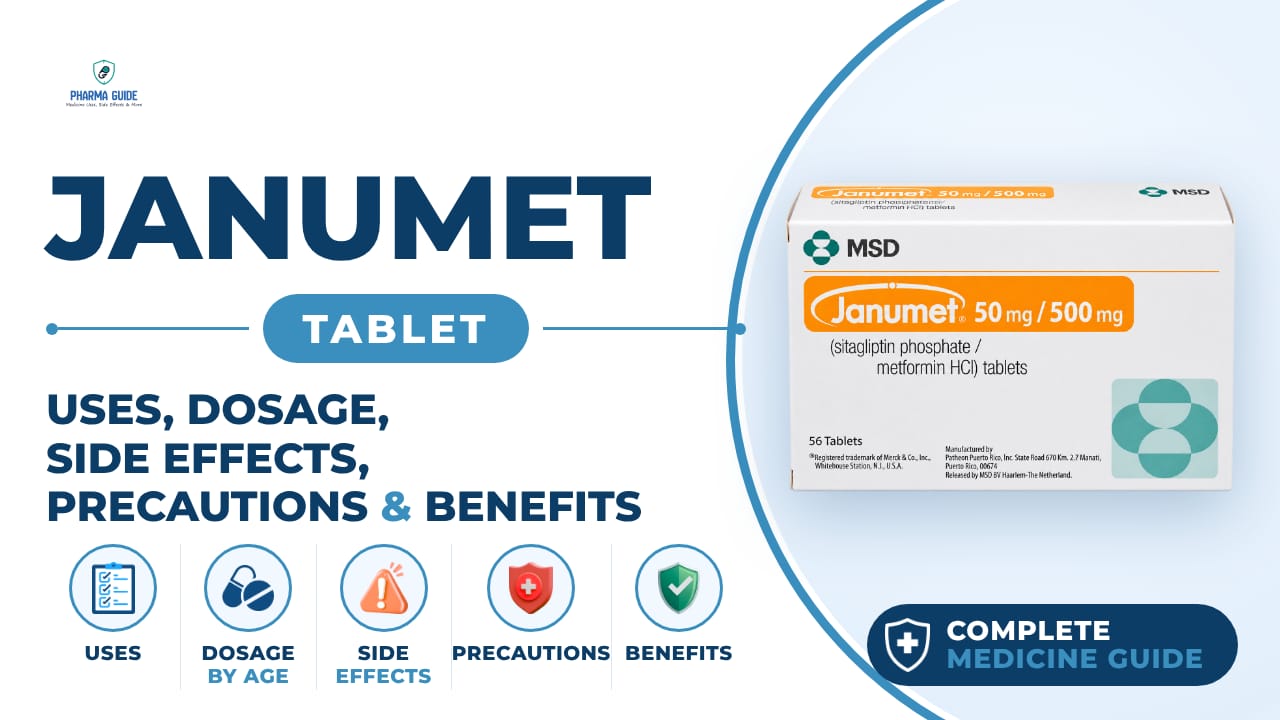
| Generic name | metformin and sitagliptin |
|---|---|
| Drug class | Antidiabetic combinations |
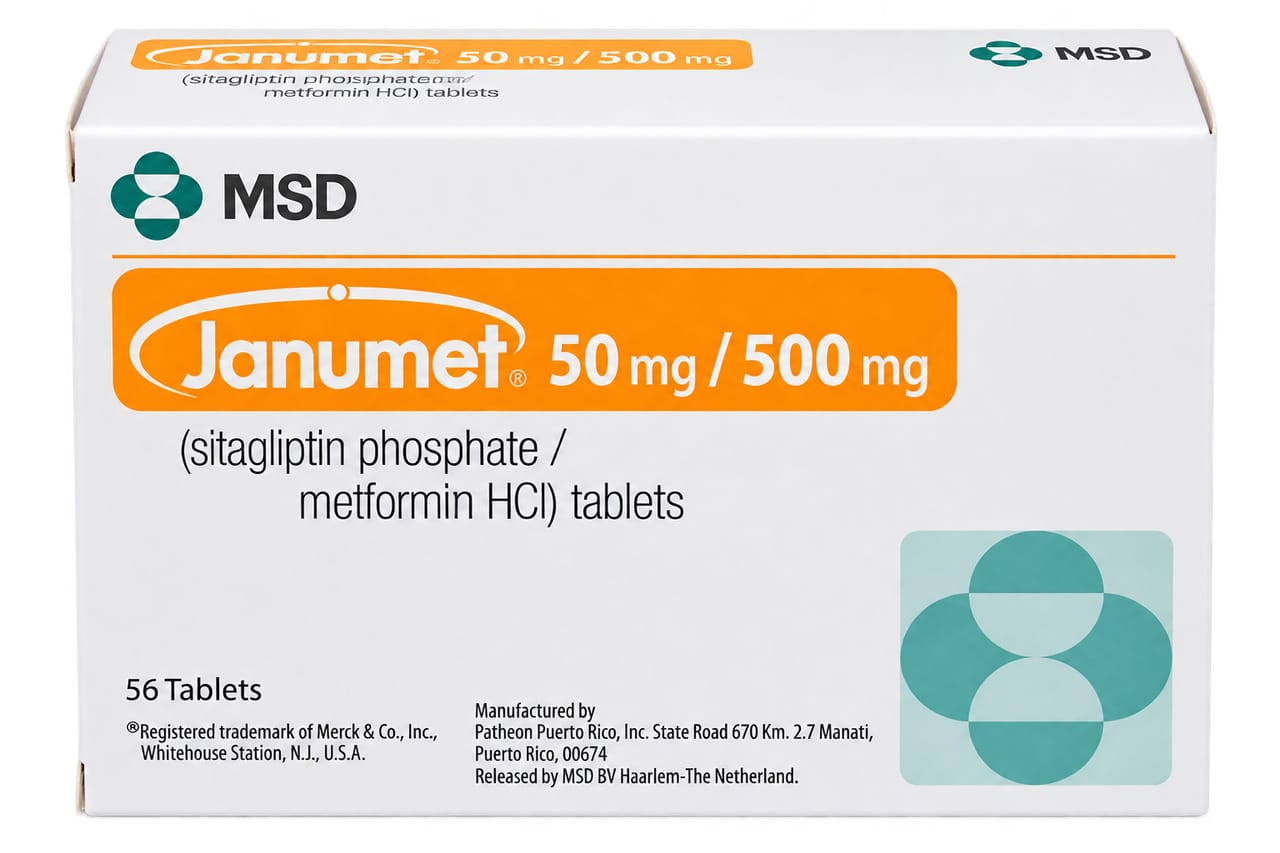
| Forms | Tablets: sitagliptin 50 mg and metformin HCl 500 mg, Tablets: sitagliptin 50 mg and metformin HCl 1000 mg |
Quick overview
Janumet Tablet combines sitagliptin and metformin, two medicines from the antidiabetic combinations class. It is a prescription medicine used together with diet and exercise to help control blood sugar in adults with type 2 diabetes. It is not used to treat type 1 diabetes or diabetic ketoacidosis.
What is Janumet Tablet
Janumet is a prescription medicine that combines two diabetes medicines, sitagliptin and metformin. It is used together with diet and exercise to help control blood sugar in adults with type 2 diabetes. It is not used to treat type 1 diabetes.
Janumet Tablet uses
- Used together with diet and exercise to improve blood sugar control in adults with type 2 diabetes mellitus
- Not used to treat type 1 diabetes
- Not used to treat diabetic ketoacidosis
Benefits of Janumet Tablet
- Blood Sugar Control: Helps lower blood glucose levels in type 2 diabetes.
- Post-Meal Glucose Control: Helps reduce blood sugar rise after meals.
- Insulin Support: Sitagliptin helps improve insulin response.
- Insulin Sensitivity: Metformin helps the body use insulin more effectively.
- Weight Support: Usually has less risk of weight gain compared with some diabetes medicines.
How Janumet Tablet works
Janumet combines two medicines that work in different ways to control blood sugar. Metformin lowers the amount of sugar made by the liver and reduces how much sugar the intestines absorb. Sitagliptin helps the body produce more of its own insulin after eating by prolonging the action of certain gut hormones.
Janumet Tablet dosage
Take exactly as prescribed; your doctor may occasionally change your dose. Take with meals to help lower your chance of having an upset stomach. Do not break, split, crush, or chew the tablets; swallow them whole. Part of the tablet may appear in your stool; this is normal and does not mean the medicine is less effective, but tell your doctor if you notice this happening repeatedly.
If you miss a dose, take it as soon as you remember with food, unless it is almost time for your next dose, in which case skip the missed dose; do not take two doses at the same time. Blood sugar levels can be affected by stress, illness, surgery, exercise, alcohol use, or skipping meals, so ask your doctor before changing your dose or schedule.
This medicine is only part of a complete treatment plan that may include diet, exercise, weight control, and regular blood sugar testing. Your blood will need to be tested often to monitor your diabetes and kidney function.
| Age group | Dose |
|---|---|
| Under 18 Years | Use only if prescribed by a healthcare professional |
| Adults (18–64 Years) | Sitagliptin 50–100 mg + Metformin 500–1000 mg once or twice daily depending on blood glucose control |
| Older Adults (65+ Years) | Lower starting dose may be required; adjust according to kidney function |
Available forms and strengths
- Tablets: sitagliptin 50 mg and metformin HCl 500 mg
- Tablets: sitagliptin 50 mg and metformin HCl 1000 mg
Side effects of Janumet Tablet
Common
- Low blood sugar (if also using insulin or another diabetes medicine)
- Upset stomach, indigestion, gas, diarrhea, nausea, vomiting
- Headache, weakness
- Cold symptoms such as runny or stuffy nose, sneezing, sore throat
- Upper respiratory tract infection
Serious
- Signs of pancreatitis: severe stomach pain that may spread to the back, with or without vomiting, loss of appetite, fast heartbeat
- Signs of an allergic reaction: hives, difficulty breathing, swelling of the face or throat
- Severe skin reaction: fever, sore throat, burning eyes, skin pain, red or purple rash that spreads and causes blistering and peeling
- Kidney problems, sometimes requiring dialysis
- Low vitamin B12 levels
- Severe or ongoing joint pain
- Little or no urinating
Warnings and precautions
- This medicine can cause a rare but serious condition called lactic acidosis, a buildup of acid in the blood that can be life-threatening and must be treated in a hospital.
- This medicine may cause pancreatitis (inflammation of the pancreas), which may be severe and can lead to death.
- This medicine may cause or worsen heart failure, a condition where the heart does not pump blood well enough.
- Do not use this medicine if you have severe kidney disease or diabetic ketoacidosis.
- Serious allergic reactions can occur, including anaphylaxis, swelling of the face or throat, and severe skin reactions such as Stevens-Johnson syndrome.
- You may need to temporarily stop taking this medicine before surgery or before an X-ray or CT scan that uses an injected dye, so tell your care team you are taking it.
- Severe and disabling joint pain has been reported with this type of medicine.
- A serious skin condition called bullous pemphigoid, which may require hospital treatment, has been reported with this type of medicine.
- Pregnancy: Follow your doctor's instructions about using Janumet if you are pregnant or become pregnant, since blood sugar control is very important during pregnancy and your dose needs may change. It is not known if Janumet will harm an unborn baby.
- Breastfeeding: It may not be safe to breastfeed while using this medicine; ask your doctor about any risk, and your dose may need to be different while breastfeeding.
- Kidney: This medicine should not be used if you have severe kidney problems, and your kidney function will be checked before and during treatment because kidney problems raise the risk of a serious condition called lactic acidosis.
- Liver: Tell your doctor if you have liver disease, as this can increase the risk of a serious condition called lactic acidosis.
- Alcohol: Avoid drinking alcohol while taking this medicine, since alcohol lowers blood sugar and can increase the risk of a serious condition called lactic acidosis.
Storage
- Store at room temperature away from moisture and heat
- Store at 68°F to 77°F (20°C to 25°C)
- Keep JANUMET and all medicines out of the reach of children
When to see a doctor
- Get emergency medical help right away if you have even mild symptoms of lactic acidosis, such as muscle pain or weakness, feeling cold, trouble breathing, stomach pain with nausea and vomiting, slow or uneven heartbeat, dizziness, or feeling very weak or tired.
- Stop taking this medicine and call your doctor right away if you have severe stomach pain that does not go away, with or without vomiting, which may be a sign of pancreatitis.
- Contact your doctor right away if you have increasing shortness of breath, swelling in your feet, ankles, or legs, or a fast increase in weight, which may be signs of heart failure.
- Get emergency medical help if you have signs of a serious allergic reaction, such as hives, difficulty breathing, or swelling of your face or throat.
- Call your doctor if you develop blisters or breakdown of the outer layer of your skin, as this may be a sign of a serious skin reaction called bullous pemphigoid.
- Call your doctor if you have severe or ongoing joint pain.
- Seek emergency medical attention if you think you have taken too much of this medicine, since you may have severely low blood sugar with extreme weakness, nausea, tremors, sweating, confusion, trouble speaking, fast heartbeats, or seizure.
Alternatives
- Metformin
- Sitagliptin
- Dapagliflozin + Metformin
Watch the video
FAQs
What is Janumet Tablet used for?
Janumet is used together with diet and exercise to help control blood sugar in adults with type 2 diabetes. It is not used for type 1 diabetes or diabetic ketoacidosis.
How does Janumet Tablet work?
Janumet combines metformin, which lowers the sugar made by the liver and reduces sugar absorption by the intestines, with sitagliptin, which helps the body produce more of its own insulin after eating.
How should Janumet Tablet be taken?
Take it exactly as prescribed, with meals to lower the chance of upset stomach, and swallow the tablet whole without breaking, splitting, crushing, or chewing it.
What are the common side effects of Janumet Tablet?
Common side effects include upset stomach, indigestion, gas, diarrhea, nausea, vomiting, headache, weakness, and cold-like symptoms such as runny or stuffy nose and sore throat.
What are the serious warnings for Janumet Tablet?
Janumet can cause rare but serious lactic acidosis, pancreatitis, and may cause or worsen heart failure. It should not be used with severe kidney disease or diabetic ketoacidosis, and alcohol should be avoided.
General information, not medical advice
Your prescriber and the leaflet in your pack know your situation. This page does not.
- Follow your prescriber and the leaflet
- Don't start, stop, or change a dose on your own
- Doses and warnings differ by country and product
Sources
Video
Related medicines

Injectafer Injection: Uses, Dosage, Side Effects, Precautions and Alternates
Iron products
Injectafer (ferric carboxymaltose) treats iron deficiency anemia and heart failure-related iron deficiency via IV. Learn uses, dosage, side effects, and

Gliclazide Tablet: Uses, Dosage, Side Effects, Precautions and Alternates
Sulfonylurea (hypoglycemic/antidiabetic agent)
Gliclazide Tablet is a sulfonylurea for type 2 diabetes that boosts insulin release. Learn about dosage, side effects, warnings, and precautions.