
Safety
General information, not medical advice
Your prescriber and the leaflet in your pack know your situation. This page does not.
- Follow your prescriber and the leaflet
- Don't start, stop, or change a dose on your own
- Doses and warnings differ by country and product
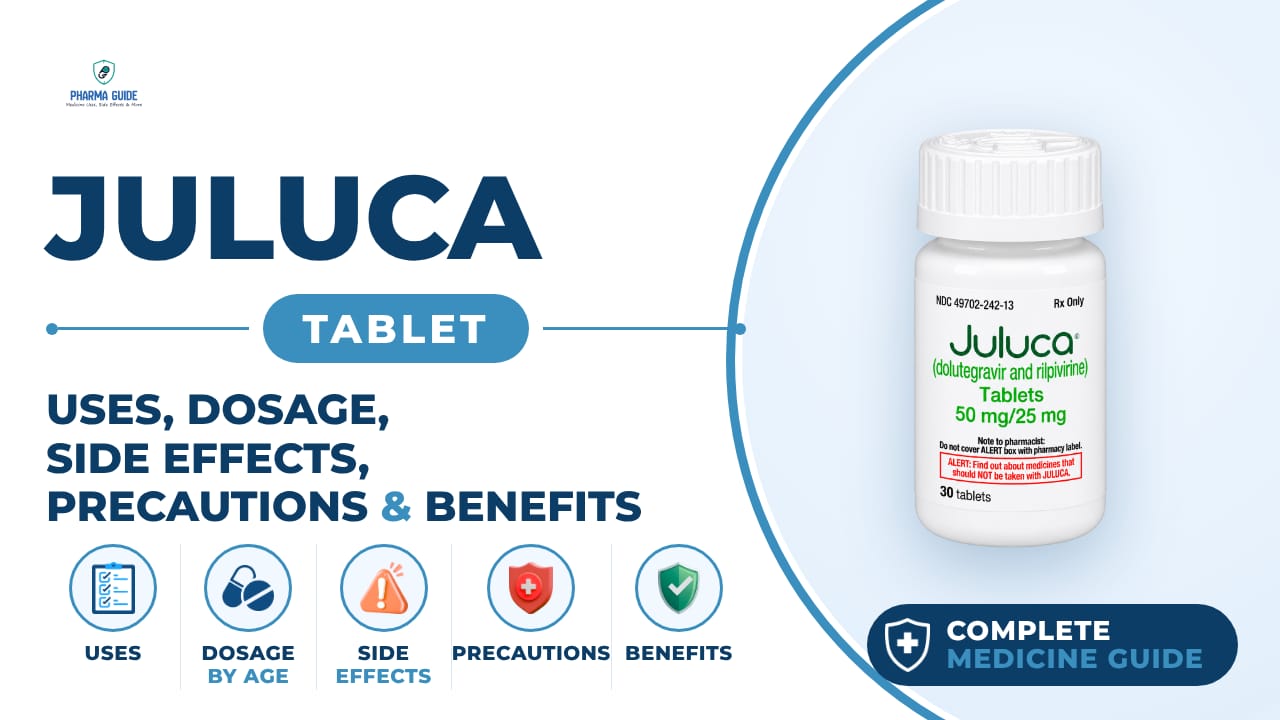
Juluca Tablet: Uses, Dosage, Side Effects, Precautions and Alternates
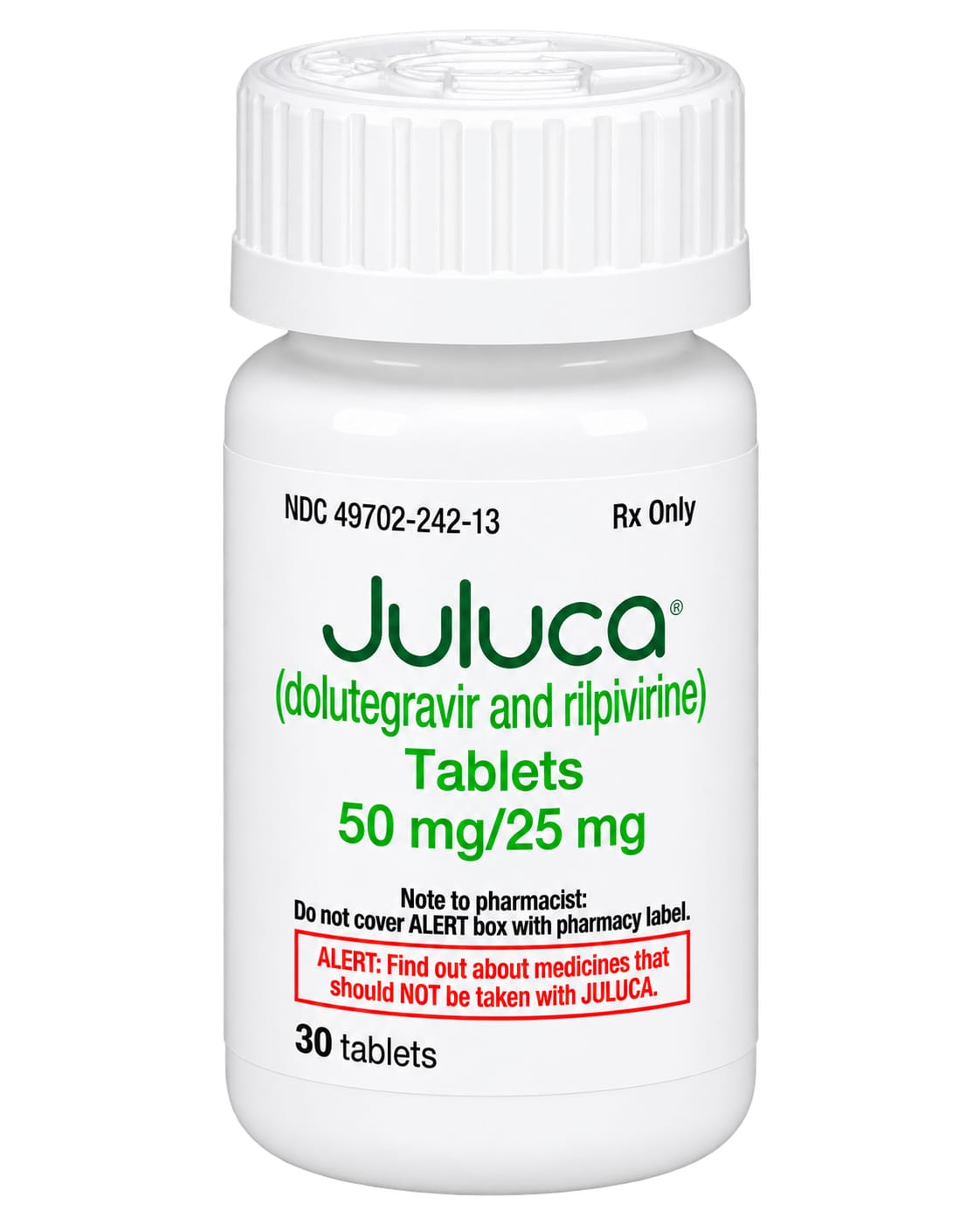
| Generic name | dolutegravir and rilpivirine |
|---|---|
| Drug class | Antiviral combination (integrase strand transfer inhibitor plus non-nucleoside reverse transcriptase inhibitor) |
| Forms | Film-coated tablet |
Quick overview
Juluca Tablet contains two HIV medicines, dolutegravir and rilpivirine, combined into one tablet. It is used as a complete treatment regimen to replace other HIV medicines in adults whose HIV-1 infection is already under control. It is taken once daily with a meal and works by blocking two different steps the HIV virus needs to multiply.
What is Juluca Tablet
Juluca is a prescription medicine that contains two HIV medicines, dolutegravir and rilpivirine, combined into one tablet. It is used as a complete treatment regimen to replace other HIV medicines in adults whose HIV is already under control.
Juluca Tablet uses
- Treatment of HIV-1 infection in adults who are virologically suppressed on a stable HIV regimen for at least 6 months, with no history of treatment failure and no known resistance to its components, to replace their current regimen
Benefits of Juluca Tablet
- Keeps the amount of HIV virus in the body at a low level
- Helps maintain the number of CD4 cells (white blood cells that fight infection)
- Allows some patients to switch from a multi-drug regimen to a single combination tablet
How Juluca Tablet works
Juluca works by blocking two different steps the HIV virus needs to multiply: one part (dolutegravir) stops the virus from inserting its genetic material into human cells, and the other part (rilpivirine) blocks an enzyme the virus needs to copy itself.
Juluca Tablet dosage
Take one tablet once a day. Always take with a meal; a protein-rich nutritional drink alone does not replace a meal. Swallow the tablet whole with water; do not chew, crush, or split it.
If you miss a dose and remember within 12 hours of your usual time, take it with a meal as soon as possible, then continue your normal schedule; if more than 12 hours have passed, skip the missed dose and take the next one as scheduled. Do not take a double dose to make up for a missed one.
If you vomit within 4 hours of taking a dose, take another tablet with a meal; if you vomit more than 4 hours after taking it, wait for your next scheduled dose.
Do not stop taking this medicine without talking to your doctor. Keep taking it for as long as your doctor recommends.
| Age group | Dose |
|---|---|
| Under 18 years | Safety and effectiveness of the fixed-dose Juluca tablet have not been established |
| 18–64 years | 1 tablet once daily with a meal = 50 mg dolutegravir + 25 mg rilpivirine |
Available forms and strengths
- Film-coated tablet
- 50 mg dolutegravir + 25 mg rilpivirine
Side effects of Juluca Tablet
Common
- Headache
- Dizziness
- Diarrhea
- Nausea
- Difficulty sleeping (insomnia)
- Loss of appetite
- Rash
- Itching
- Vomiting
- Stomach pain or discomfort
- Weight gain
- Wind (flatulence)
- Feeling drowsy
- Sleep disorders
- Abnormal dreams
- Tiredness (fatigue)
- Depression or depressed mood
- Anxiety
- Dry mouth
Serious
- Severe allergic (hypersensitivity) reaction with rash, fever, and sometimes liver damage
- Severe skin reactions (such as DRESS) with blistering or peeling skin
- Liver problems, including hepatitis and, rarely, liver failure
- Depression, suicidal thoughts, suicide attempts, or suicide (particularly in people with a history of depression or mental illness)
- Symptoms of infection or inflammation from immune reconstitution syndrome, including autoimmune conditions
- Osteonecrosis (bone tissue death) causing joint pain, stiffness, or difficulty moving
- Kidney problems
Warnings and precautions
- Juluca must be discontinued right away if signs of a serious allergic reaction appear, because delaying can lead to a life-threatening reaction.
- Juluca must not be taken with certain medicines, including some anti-seizure drugs, rifampicin, certain acid-reducing medicines (proton pump inhibitors), systemic dexamethasone (except as a single dose), and St John's wort, because these can make Juluca much less effective.
- Juluca does not cure HIV, and people taking it can still develop other infections related to HIV.
- Juluca should not be taken together with other HIV medicines, since it is meant to be used alone as a complete regimen.
- Certain acid-reducing medicines, antacids, and supplements (calcium, iron, multivitamins) need to be timed carefully around Juluca doses or they can reduce its effectiveness.
- Use caution if combining Juluca with medicines known to cause a serious heart rhythm problem called Torsade de Pointes.
- Juluca is not recommended during pregnancy because drug levels may be lower and this could make the medicine less effective at controlling HIV. Tell your doctor right away if you become pregnant or are planning pregnancy.
- Women with HIV are advised not to breastfeed, to avoid passing HIV to the baby through breast milk.
- No dose change is needed for mild or moderate kidney problems. For severe kidney problems or kidney failure, Juluca should be used carefully because levels of one of its ingredients may rise.
- No dose change is needed for mild or moderate liver problems, but caution is advised in moderate liver impairment. Juluca is not recommended for people with severe liver impairment because it hasn't been studied in that group.
- Drinking alcohol may be one of several factors linked to a bone condition (osteonecrosis) seen in some people on long-term HIV treatment.
- Juluca is not expected to affect your ability to drive, but it can cause tiredness, dizziness, or drowsiness in some people, so be careful until you know how it affects you.
Storage
- Store in the original package in order to protect from moisture
- Keep the bottle tightly closed
- Do not remove the desiccant
- This medicine does not require any special temperature storage conditions
- Do not throw away any medicines via wastewater or household waste; ask your pharmacist how to dispose of medicines you no longer use
When to see a doctor
- Get medical help right away if you develop a rash along with fever, tiredness, muscle or joint aches, blisters, mouth sores, eye redness, facial swelling, or difficulty breathing — these can be signs of a severe allergic reaction
- Contact your doctor immediately if you notice yellowing of the skin or eyes, dark urine, pale stools, nausea, vomiting, loss of appetite, or pain on the right side of your stomach — these may be signs of liver problems
- Tell your doctor right away if you have thoughts of hurting yourself, feel very sad or hopeless, or notice other mood changes
- Tell your doctor if you notice joint pain, stiffness, or difficulty moving, as this may be a sign of a bone problem
- Seek medical advice if you develop signs of a new infection, such as fever, night sweats, swollen glands, cough, or diarrhea, especially soon after starting treatment
- If you think you have taken too much Juluca, contact your doctor or poison control right away, or go to the nearest emergency room
Alternatives
- Dolutegravir-based regimens
- Bictegravir-based regimens
- Rilpivirine-based regimens
Watch the video
FAQs
What is Juluca Tablet used for?
Juluca is used to treat HIV-1 infection in adults who are virologically suppressed on a stable HIV regimen for at least 6 months, with no history of treatment failure or known resistance, to replace their current regimen.
How should I take Juluca Tablet?
Take one tablet once a day with a meal, swallowing it whole with water. Do not chew, crush, or split it, and do not take it with other HIV medicines since it is meant to be used alone as a complete regimen.
What should I do if I miss a dose of Juluca?
If you remember within 12 hours of your usual time, take it with a meal as soon as possible and continue your normal schedule. If more than 12 hours have passed, skip the missed dose and take the next one as scheduled, without doubling up.
What are the common side effects of Juluca Tablet?
Common side effects include headache, dizziness, diarrhea, nausea, insomnia, loss of appetite, rash, itching, vomiting, stomach discomfort, weight gain, flatulence, drowsiness, fatigue, depression, anxiety, and dry mouth.
Can Juluca be taken during pregnancy?
Juluca is not recommended during pregnancy because drug levels may be lower, which could make it less effective at controlling HIV. Tell your doctor right away if you become pregnant or are planning pregnancy.
General information, not medical advice
Your prescriber and the leaflet in your pack know your situation. This page does not.
- Follow your prescriber and the leaflet
- Don't start, stop, or change a dose on your own
- Doses and warnings differ by country and product
Sources
Video
Related medicines

Injectafer Injection: Uses, Dosage, Side Effects, Precautions and Alternates
Iron products
Injectafer (ferric carboxymaltose) treats iron deficiency anemia and heart failure-related iron deficiency via IV. Learn uses, dosage, side effects, and

Gliclazide Tablet: Uses, Dosage, Side Effects, Precautions and Alternates
Sulfonylurea (hypoglycemic/antidiabetic agent)
Gliclazide Tablet is a sulfonylurea for type 2 diabetes that boosts insulin release. Learn about dosage, side effects, warnings, and precautions.