
Safety
General information, not medical advice
Your prescriber and the leaflet in your pack know your situation. This page does not.
- Follow your prescriber and the leaflet
- Don't start, stop, or change a dose on your own
- Doses and warnings differ by country and product
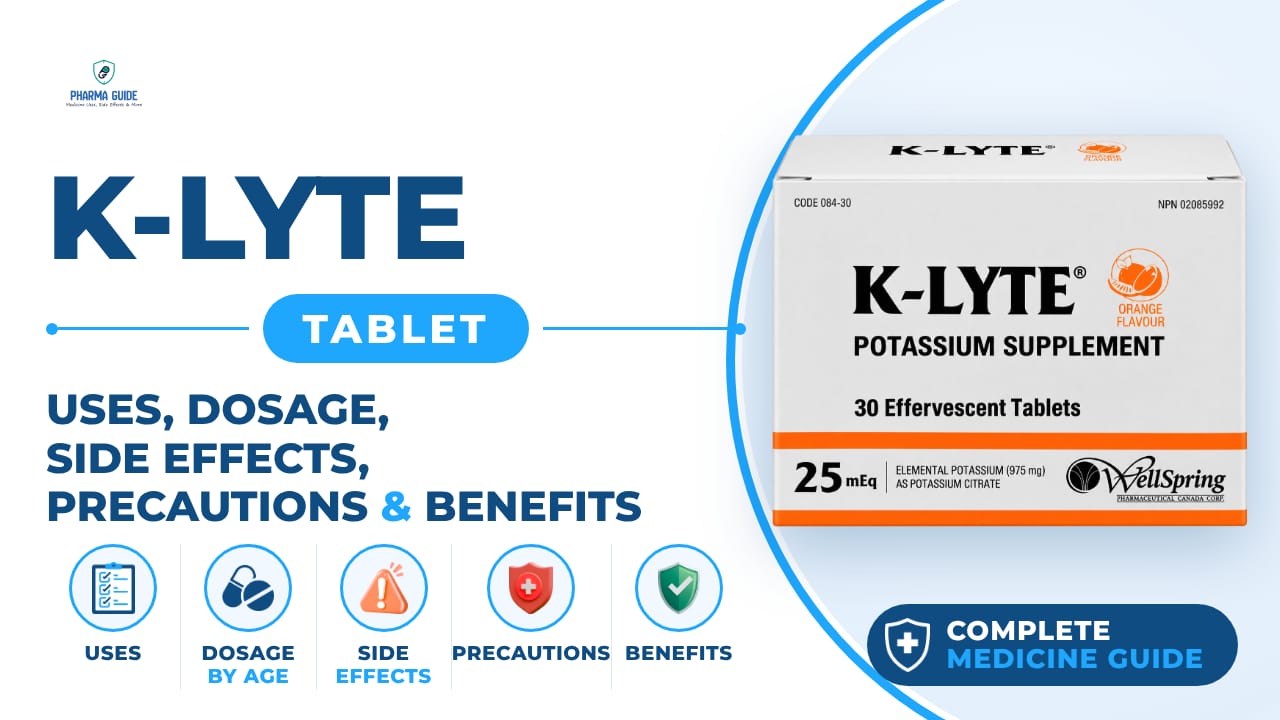
K-Lyte Tablet: Uses, Dosage, Side Effects, Precautions and Alternates
| Generic name | potassium bicarbonate / potassium citrate |
|---|---|
| Drug class | minerals and electrolytes |
| Forms | effervescent tablet |
Quick overview
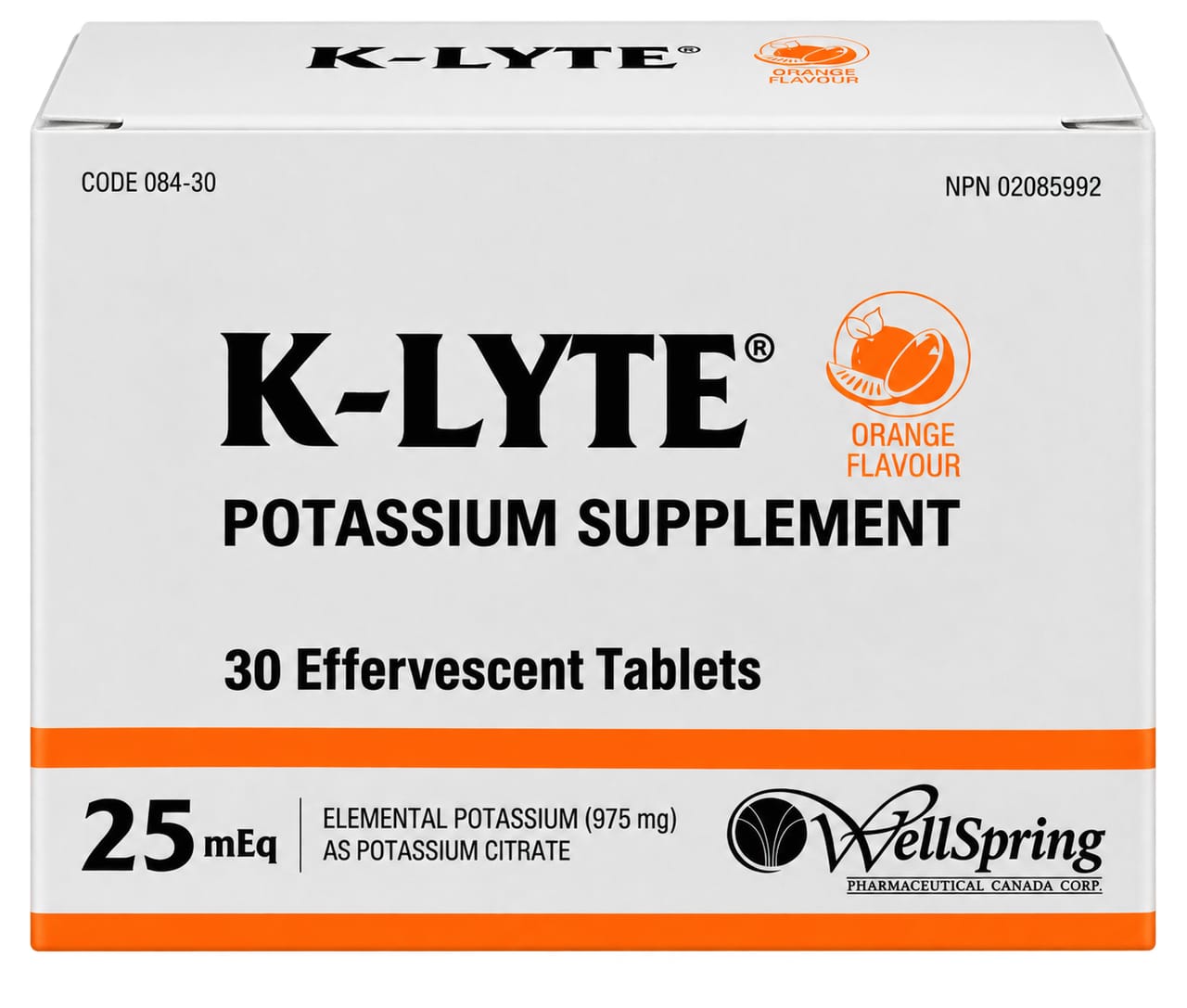
K-Lyte Tablet contains potassium bicarbonate and potassium citrate, which belong to the minerals and electrolytes drug class. It is a mineral supplement used to treat or prevent low potassium levels in the blood. It helps support normal heart rhythm, muscle and nerve function, and fluid and electrolyte balance in the body.
What is K-Lyte Tablet
K-Lyte Tablet is a mineral supplement used to treat or prevent low amounts of potassium in the blood.
K-Lyte Tablet uses
- Treatment or prevention of low potassium levels in the blood
- Potassium depletion due to use of thiazide diuretics or corticosteroid hormones
- Other conditions as directed by a physician
Benefits of K-Lyte Tablet
- Helps prevent and treat low potassium levels (hypokalemia).
- Replaces potassium lost through diuretics ("water pills"), vomiting, diarrhea, or certain illnesses.
- Supports normal heart rhythm and heart function.
- Helps maintain healthy muscle and nerve function.
- Supports normal fluid and electrolyte balance in the body.
- Effervescent formulations dissolve in water, providing a convenient way to replace potassium when prescribed.
How K-Lyte Tablet works
Potassium helps your cells, kidneys, heart, muscles, and nerves work properly. This medicine replaces potassium in the body when levels are too low.
K-Lyte Tablet dosage
Take this medication by mouth as directed by your doctor. Take each dose with a meal or just after a meal to prevent stomach upset. Do not chew the effervescent tablet or swallow it whole; it must be dissolved in water or fruit juice before you take it. After the tablets are fully dissolved, sip the liquid slowly over 5 to 10 minutes. If you have an upset stomach, mixing your dose in a larger amount of liquid may help. Avoid lying down for at least 30 minutes after you take this medication.
Take this medication regularly and at the same time each day to get the most benefit. Do not increase your dose or take it more often than prescribed. If you miss a dose, take it as soon as you remember, but if it is near the time of your next dose, skip the missed dose and do not double up. Do not stop taking this medication without first talking to your doctor.
| Age group | Dose |
|---|---|
| Under 18 years | Individualized by body weight and serum potassium; medical supervision required |
| 18–64 years – Prevention | Commonly 20 mEq potassium/day, adjusted according to clinical need |
| 18–64 years – Treatment | Commonly 40–100 mEq/day in divided doses, adjusted according to serum potassium |
| 65+ years | Use cautiously and individualize according to kidney function and serum potassium |
Available forms and strengths
- Effervescent tablet
Side effects of K-Lyte Tablet
Common
- Mild nausea or upset stomach
- Mild or occasional diarrhea
- Slight tingling in your hands or feet
- Vomiting
- Gas
Serious
- Uneven heartbeat
- Muscle weakness or limp feeling
- Severe stomach pain
- Numbness or tingling in your hands, feet, or mouth
- Confusion, anxiety, or feeling like you might pass out
- Extreme thirst, increased urination
- Leg discomfort
- Ongoing diarrhea or vomiting
- Black, bloody, or tarry stools
- Coughing up blood or vomit that looks like coffee grounds
- Signs of an allergic reaction such as hives, difficulty breathing, or swelling of the face, lips, tongue, or throat
Warnings and precautions
- You should not use this medication if you have kidney failure, Addison's disease, severe burns or other tissue injury, if you are dehydrated, if you take certain diuretics, or if you have high levels of potassium in your blood.
- Do not chew the effervescent tablet or swallow it whole. It must be dissolved in water or fruit juice before you take it.
- Avoid lying down for at least 30 minutes after you take this medication.
- If you stop taking potassium suddenly, your condition may become worse.
- Consult your doctor before taking potassium supplements together with potassium-sparing diuretics, as this may cause higher than normal potassium levels in the blood.
- Before using other potassium supplements or salt substitutes that contain potassium, consult your doctor or pharmacist, as too much potassium may cause serious side effects.
- During pregnancy, this medication should be used only when clearly needed.
- Discuss the risks and benefits with your doctor.
- Potassium passes into breast milk. Consult your doctor before breastfeeding.
- Consult your physician before use if you have impaired kidney function, as potassium supplements must be monitored closely in these patients.
- No major liver-specific restriction is usually required, but patients with significant liver disease should use potassium supplements under medical supervision.
- No known direct interaction with alcohol.
- Not expected to affect the ability to drive or operate machinery.
Storage
- Store at room temperature, according to the specific product label.
- Keep in a cool, dry place away from excessive heat.
- Protect tablets from moisture and direct sunlight.
- Keep tablets in the original, tightly closed container until use.
- Avoid storing in bathrooms or other hot and humid areas.
- Keep out of reach and sight of children.
When to see a doctor
- Get emergency medical help if you have signs of an allergic reaction such as hives, difficulty breathing, or swelling of your face, lips, tongue, or throat.
- Stop using this medication and call your doctor right away if you have confusion, anxiety, or feel like you might pass out; uneven heartbeat; extreme thirst or increased urination; leg discomfort; muscle weakness or a limp feeling; numbness or tingling in your hands, feet, or around your mouth; severe stomach pain, ongoing diarrhea or vomiting; black, bloody, or tarry stools; or coughing up blood or vomit that looks like coffee grounds.
- Get medical help right away if you have very serious side effects including vomit that looks like coffee grounds, stomach or abdominal pain, or black or tarry stools.
- Get medical help right away if you notice symptoms of a serious allergic reaction, including rash, itching or swelling especially of the face, tongue, or throat, severe dizziness, or trouble breathing.
- If someone has overdosed and has serious symptoms such as passing out or trouble breathing, get emergency help right away. Otherwise, contact your local poison control center. Symptoms of overdose may include irregular heartbeat, muscle weakness, and confusion.
Alternatives
- Slow-K
- K-Dur
- Klor-Con
- Micro-K
- Potassium Chloride Oral Solution
Watch the video
FAQs
What is K-Lyte Tablet used for?
K-Lyte Tablet is used to treat or prevent low potassium levels in the blood, including potassium depletion caused by thiazide diuretics or corticosteroid hormones.
How should I take K-Lyte Tablet?
Do not chew or swallow the effervescent tablet whole. Dissolve it in water or fruit juice, then sip the liquid slowly over 5 to 10 minutes with or just after a meal. Avoid lying down for at least 30 minutes after taking it.
What are the common side effects of K-Lyte Tablet?
Common side effects include mild nausea or upset stomach, mild or occasional diarrhea, slight tingling in the hands or feet, vomiting, and gas.
Who should not take K-Lyte Tablet?
You should not use this medication if you have kidney failure, Addison's disease, severe burns or other tissue injury, dehydration, high blood potassium levels, or if you take certain diuretics.
What should I do if I miss a dose of K-Lyte Tablet?
If you miss a dose, take it as soon as you remember, but if it is near the time of your next dose, skip the missed dose and do not double up.
General information, not medical advice
Your prescriber and the leaflet in your pack know your situation. This page does not.
- Follow your prescriber and the leaflet
- Don't start, stop, or change a dose on your own
- Doses and warnings differ by country and product
Sources
Video
Related medicines
Magnesium Sulfate Injection: Uses, Dosage, Side Effects, Precautions and Alternates
Minerals and electrolytes
Magnesium Sulfate Injection treats low magnesium, prevents eclampsia seizures, and lowers high potassium. Learn uses, dosage, side effects, and precautions.
Pedialyte Liquid: Uses, Dosage, Side Effects, Precautions and Alternates
minerals and electrolytes
Pedialyte Liquid replaces fluids and electrolytes lost from diarrhea, vomiting, or sweating. Learn uses, dosage by age, side effects, and warnings.