
Safety
General information, not medical advice
Your prescriber and the leaflet in your pack know your situation. This page does not.
- Follow your prescriber and the leaflet
- Don't start, stop, or change a dose on your own
- Doses and warnings differ by country and product
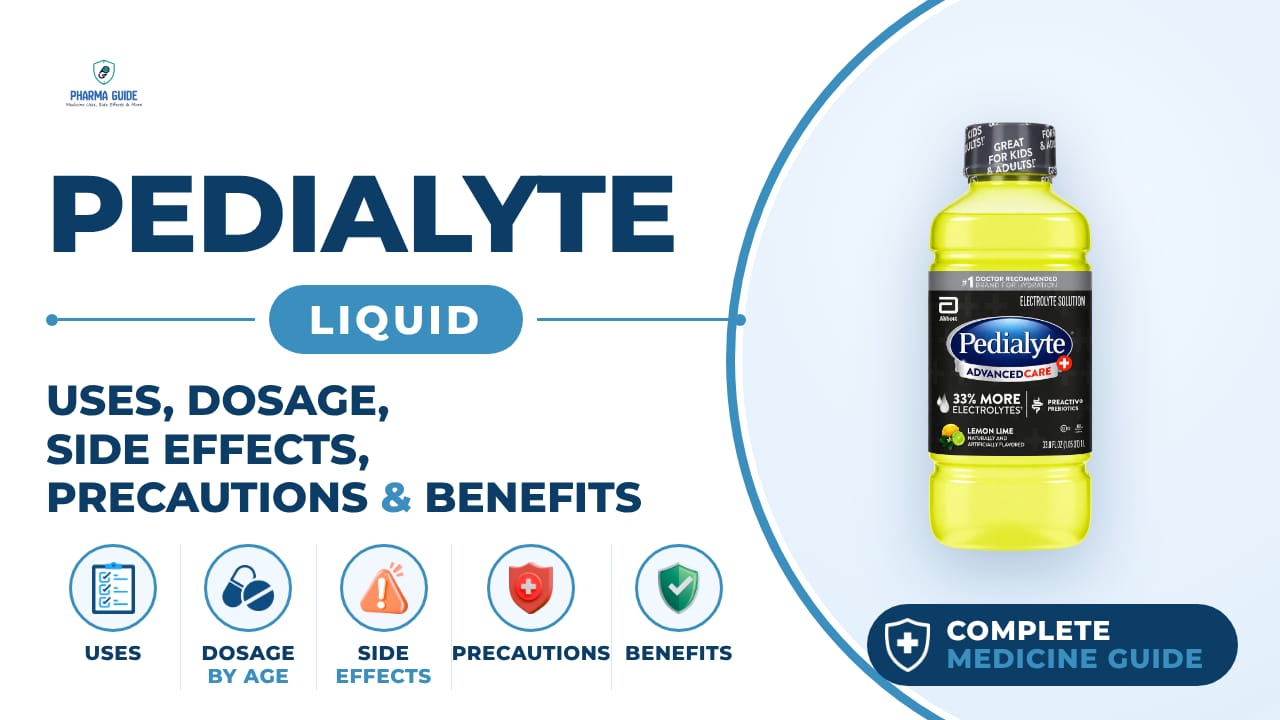
Pedialyte Liquid: Uses, Dosage, Side Effects, Precautions and Alternates
| Generic name | Electrolyte replacement solution |
|---|---|
| Drug class | minerals and electrolytes |
| Forms | oral packet, oral powder for solution, oral powder for suspension, oral solution, oral tablet |
Quick overview
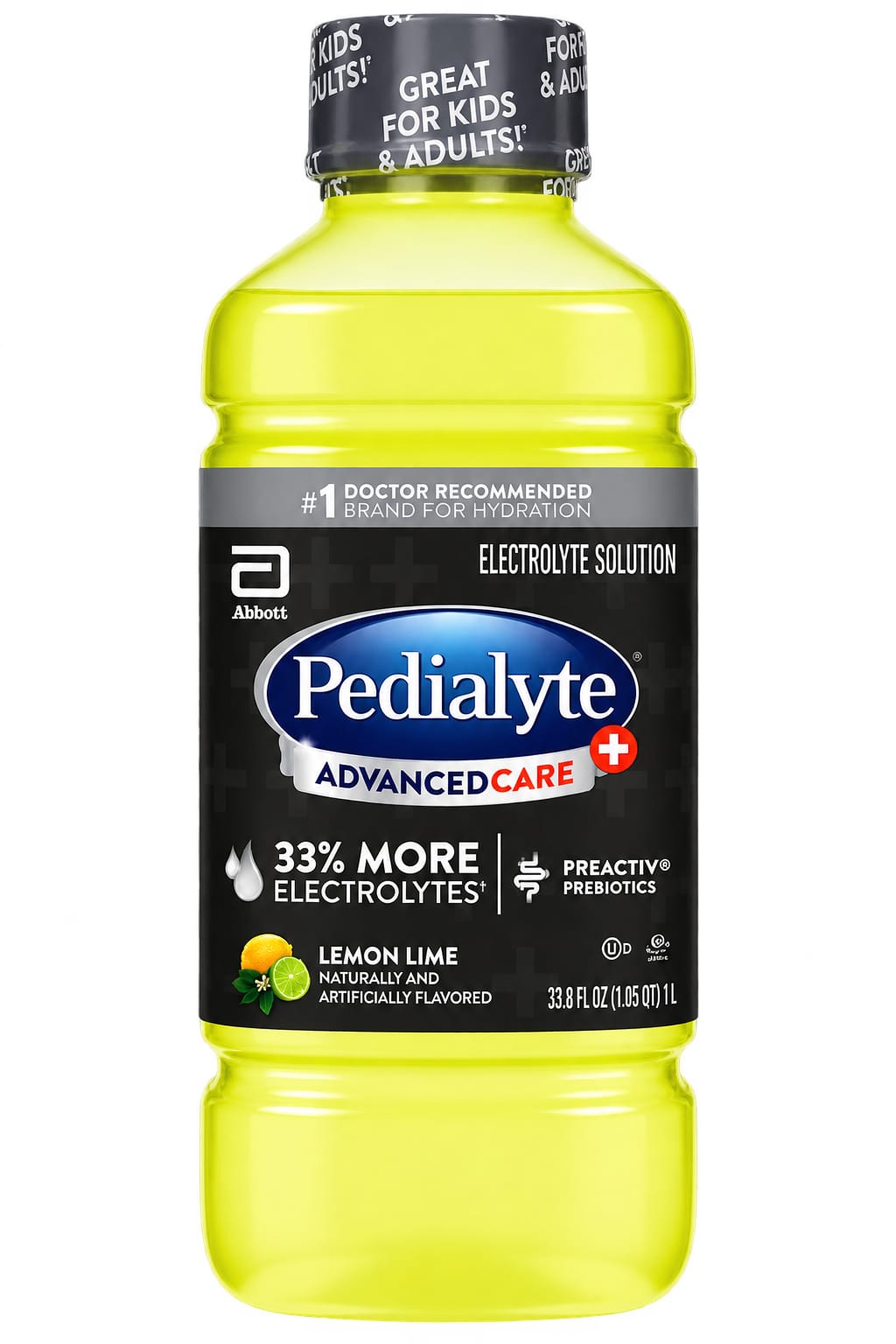
Pedialyte Liquid is an oral electrolyte replacement solution that restores fluids and minerals such as sodium and potassium lost through diarrhea and vomiting. It is used to prevent or treat dehydration in both children and adults. It works by supplying a balanced mix of electrolytes and sugar that helps the body absorb and retain fluid. It is available in several liquid and powder forms and is generally used as directed on the product package or by a doctor.
What is Pedialyte Liquid
Pedialyte is an oral electrolyte replacement solution. It is used to replace fluids and minerals like sodium and potassium that are lost due to diarrhea and vomiting, and it helps prevent or treat dehydration.
Pedialyte Liquid uses
- Replacing fluids and minerals (such as sodium and potassium) lost due to diarrhea and vomiting
- Preventing or treating dehydration
Benefits of Pedialyte Liquid
- Replaces lost fluids
- Replenishes sodium and potassium
- Helps prevent or correct dehydration
- Useful during vomiting or diarrhea
- Helps restore fluid balance after heat or exercise
- Provides glucose and electrolytes in proportions designed to support absorption
How Pedialyte Liquid works
Pedialyte provides a balanced mix of electrolytes (sodium, chloride, potassium) and sugar that helps the body absorb and hold onto fluid, replacing what is lost through diarrhea, vomiting, or sweating.
Pedialyte Liquid dosage
Take this product by mouth as directed by your doctor, or follow all directions on the product package. Some liquid forms should be mixed before using, while others should not be mixed, so check with your doctor or pharmacist about your specific brand. If your liquid form is a suspension, shake the bottle well before each dose. If using the powdered form, mix the packet contents in water as directed on the package and stir until completely dissolved. Do not heat this product unless the package says it is okay to do so.
Do not drink fruit juices or eat foods with added salt while taking this product unless your doctor says it's okay. If nausea or vomiting occurs, try taking the product slowly in small amounts with a spoon. Breast-fed infants should be given breast milk between doses of the solution. Eat soft foods, such as rice cereal, bananas, cooked peas or beans, and potatoes, to keep up nutrition until diarrhea stops and regular food and milk can be resumed. People using the powder form (except nursing babies) should drink plain water whenever thirsty between doses. As your condition improves, you can start eating soft, bland foods such as rice, bananas, toast, or boiled potatoes, or other foods your doctor recommends.
| Age group | Dose |
|---|---|
| 1–4 years | Give small, frequent sips; amount depends on fluid loss and body weight |
| 5–11 years | Small frequent sips as tolerated; intake should match hydration needs |
| 12–17 years | Small frequent sips; 1–2 liters per day may be needed during fluid loss |
Available forms and strengths
- Oral packet
- Oral powder for solution
- Oral powder for suspension
- Oral solution
- Oral tablet
Side effects of Pedialyte Liquid
Common
- Mild vomiting
- Mild nausea and vomiting (may be reduced by taking the product slowly in small amounts with a spoon)
Serious
- Seizures (convulsions)
- Dizziness
- Fast heartbeat
- High blood pressure
- Irritability
- Muscle twitching
- Restlessness
- Swelling of feet or lower legs (ankles/feet)
- Weakness or unusual weakness
- Puffy eyelids
- Mental/mood changes
- Signs of a serious allergic reaction: rash, itching/swelling (especially of the face, tongue, or throat), severe dizziness, trouble breathing
Warnings and precautions
- Check with your doctor if you have trouble keeping fluids in your stomach (such as from severe or constant vomiting), difficulty urinating, or an intestinal blockage, before using this product. Before surgery, tell your doctor or dentist about all the products you use, including prescription drugs, nonprescription drugs, and herbal products.
- This product may interact with mineral supplements such as potassium, so tell your doctor about all products you use.
- Tell your doctor if you are pregnant before using this medication. It is not known if this product passes into breast milk, so check with your doctor before breastfeeding.
- People with significant kidney disease should ask a clinician before using large amounts because electrolyte handling may be impaired.
- There is usually no special restriction for liver disease, but severe liver disease with fluid/electrolyte problems requires medical guidance. Alcohol can worsen dehydration and should be avoided while treating significant fluid loss. Do not dilute ready-to-use Pedialyte. This product does not normally impair driving.
Storage
- After opening, refrigerate and use within 48 hours. Refer to storage information printed on the package.
- If you have any questions about storage, ask your pharmacist. Keep all medications away from children and pets. Do not flush medications down the toilet or pour them into a drain unless instructed to do so.
- Properly discard this product when it is expired or no longer needed. Consult your pharmacist or local waste disposal company.
When to see a doctor
- Seek medical advice if vomiting, fever, or diarrhea continues beyond 24 hours.
- Tell your doctor if your condition gets worse, lasts more than a day, or if you also have severe stomach pain, blood in the stool or vomit, a fever, or signs of dehydration such as dizziness, decreased urination, severe thirst, very dry mouth, or seizures. Get medical help right away if you think you may have a serious problem.
- Check with your doctor right away if you have serious side effects including dizziness, unusual weakness, swelling of ankles or feet, mood changes such as irritability or restlessness, or seizures. Get medical help right away if you notice signs of a serious allergic reaction, such as rash, itching or swelling (especially of the face, tongue, or throat), severe dizziness, or trouble breathing.
- Check with your doctor immediately if your baby or child shows severe thirst, doughy skin, sunken eyes, dizziness or lightheadedness, tiredness or weakness, irritability, difficult urination, weight loss, or seizures, as these may mean too much fluid has been lost from the body. If someone has overdosed and has serious symptoms such as passing out or trouble breathing, get emergency help right away. Otherwise, contact your local poison control center.
Alternatives
- Other oral rehydration solutions (ORS)
- WHO-formula oral rehydration solution
- Electrolyte replacement drinks formulated for illness
Watch the video
FAQs
What is Pedialyte Liquid used for?
It is used to replace fluids and minerals like sodium and potassium lost due to diarrhea and vomiting, and to prevent or treat dehydration.
How does Pedialyte Liquid work?
It provides a balanced mix of electrolytes (sodium, chloride, potassium) and sugar that helps the body absorb and hold onto fluid lost through diarrhea, vomiting, or sweating.
How should Pedialyte Liquid be taken?
Take it by mouth as directed by your doctor or the product package. Shake suspensions before use, dissolve powder packets completely in water, and do not heat the product unless the package allows it.
What are the side effects of Pedialyte Liquid?
Common side effects include mild nausea and vomiting. Serious side effects include seizures, dizziness, fast heartbeat, high blood pressure, irritability, muscle twitching, restlessness, swelling of the feet or legs, weakness, puffy eyelids, mood changes, and signs of a serious allergic reaction.
When should I see a doctor while using Pedialyte Liquid?
Seek medical advice if vomiting, fever, or diarrhea lasts beyond 24 hours, or if you have severe stomach pain, blood in stool or vomit, fever, or signs of dehydration such as dizziness, decreased urination, severe thirst, dry mouth, or seizures.
General information, not medical advice
Your prescriber and the leaflet in your pack know your situation. This page does not.
- Follow your prescriber and the leaflet
- Don't start, stop, or change a dose on your own
- Doses and warnings differ by country and product
Sources
Video
Related medicines
Magnesium Sulfate Injection: Uses, Dosage, Side Effects, Precautions and Alternates
Minerals and electrolytes
Magnesium Sulfate Injection treats low magnesium, prevents eclampsia seizures, and lowers high potassium. Learn uses, dosage, side effects, and precautions.
Zinc Sulfate Tablet: Uses, Dosage, Side Effects, Precautions and Alternates
Minerals and electrolytes
Zinc Sulfate Tablet treats and prevents zinc deficiency and helps manage diarrhoea in young children. Learn uses, dosage, side effects, and precautions.