
Safety
General information, not medical advice
Your prescriber and the leaflet in your pack know your situation. This page does not.
- Follow your prescriber and the leaflet
- Don't start, stop, or change a dose on your own
- Doses and warnings differ by country and product
Magnesium Sulfate Injection: Uses, Dosage, Side Effects, Precautions and Alternates

| Generic name | Magnesium sulfate heptahydrate |
|---|---|
| Drug class | Minerals and electrolytes |
| Forms | Ampoules (2 mL or 10 mL), Injection |
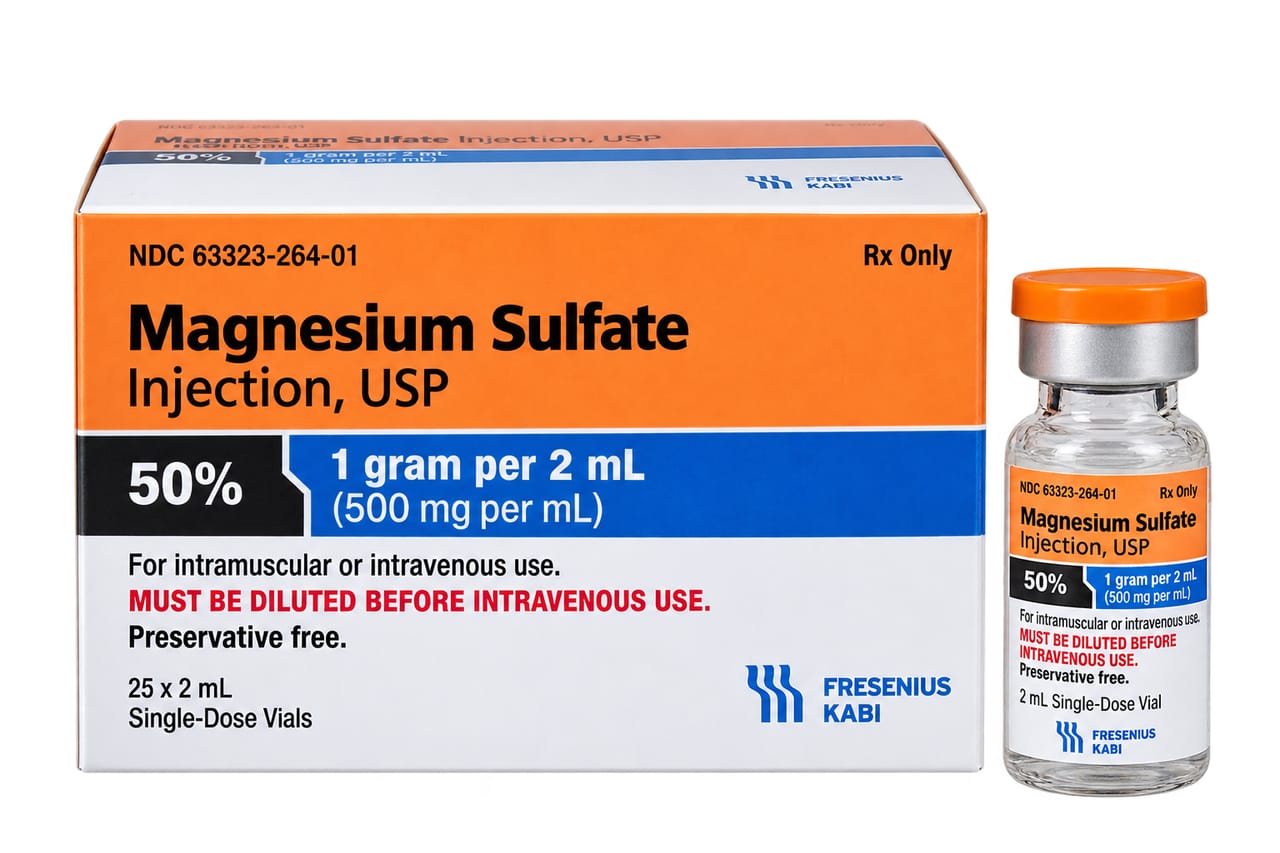
Quick overview
Magnesium Sulfate Injection is a sterile solution of magnesium, a mineral important for the muscles and nerves, given by injection or infusion when blood magnesium levels are too low or need to be raised quickly. It is used to treat low magnesium levels, prevent and treat seizures caused by eclampsia or pre-eclampsia in pregnancy, lower high potassium levels, and provide nutrition for patients fed only intravenously. It is given by a doctor or nurse, who monitors vital signs closely during treatment.
What is Magnesium Sulfate Injection
Magnesium Sulfate Injection is a sterile solution containing magnesium, a mineral that is important for many systems in the body, especially the muscles and nerves. It is given by injection or infusion when magnesium levels in the blood are too low or when a doctor needs to quickly raise magnesium levels. Its generic name is magnesium sulfate heptahydrate, and it belongs to the minerals and electrolytes drug class.
Magnesium Sulfate Injection uses
- Treat low levels of magnesium in the blood (hypomagnesaemia), especially when the medicine cannot be taken by mouth
- Prevent and treat seizures (fits) caused by eclampsia or pre-eclampsia, a serious complication of pregnancy
- Lower high potassium levels in the blood
- Act as a source of nutrition for a patient fed only by intravenous means
Benefits of Magnesium Sulfate Injection
- Quickly raises low magnesium levels in the body
- Helps prevent life-threatening seizures linked to high blood pressure in pregnancy
How Magnesium Sulfate Injection works
Magnesium sulfate calms the nervous system and reduces muscle contractions by lowering the release of a chemical nerves use to signal muscles. It also affects the heart's electrical activity and relaxes blood vessels.
Magnesium Sulfate Injection dosage
This medicine is given by a doctor or nurse as an injection into a muscle or as an infusion into a vein. It is usually mixed with other fluids before being given into a vein. Sometimes only a single dose is needed, but your doctor will decide how much you need and for how long. Your breathing, blood pressure, oxygen levels, and other vital signs will be checked closely while you are receiving this medicine. Follow your doctor's instructions about any restrictions on food, beverages, or activity during treatment.
| Age group | Dose |
|---|---|
| Under 18 years | 1000–2000 mg/day |
| 18–60 years | 1000–2000 mg/day |
| 60+ years | 1000–2000 mg/day |
Available forms and strengths
- Ampoules (2 mL or 10 mL)
- Injection
Side effects of Magnesium Sulfate Injection
Common
- Pain or irritation at the injection site
- Nausea or vomiting
- Flushing of the face and neck
- Dizziness or fainting due to low blood pressure
- Drowsiness
- Muscle weakness
- Feeling thirsty
- Confusion
Serious
- Breathing difficulties or slowed breathing
- Blurred or double vision
- Chest pain
- Irregular or slow heartbeat
- Loss of muscle movement or severe weakness
- Signs of allergic reaction: shortness of breath, wheezing, swelling of face/lips/tongue, rash, itching or hives
- Shock with sweating, fainting and a fluttering heartbeat
- Low body temperature
- Heart attack
- Coma
Warnings and precautions
- Tell your doctor if you are pregnant or think you might be pregnant before being given this medicine. It may be used to treat seizures caused by eclampsia, but it is not advisable to use it during pregnancy unless considered essential, and it must be given under medical supervision. Using it for a long time (more than 5-7 days) can cause fetal bone problems.
- Continuing this medicine during pregnancy for more than 5 to 7 days can cause abnormalities in the developing baby.
- Magnesium passes into breast milk and may affect a nursing baby, so tell your doctor if you are breastfeeding or planning to breastfeed before this medicine is given.
- This medicine should not be given if you have kidney disease, and people with kidney problems need a reduced dose and careful monitoring.
- This medicine should not be given if you have liver disease.
- Tell your doctor if you drink alcohol or caffeine drinks regularly, as this can affect how the medicine works in your body.
- Be careful driving or operating machinery until you know how this medicine affects you, as it can cause dizziness or light-headedness in some people.
- Do not use this medicine if you have a slow or irregular heartbeat, kidney disease, liver disease, or are allergic to magnesium sulfate or any of its ingredients.
- Do not use the injection if the solution looks discoloured, cloudy, turbid, or has particles in it.
- Use extra caution if you have myasthenia gravis, a condition that causes muscle weakness and tiredness.
- Some medicines can interact with this injection, including heart medicines like digoxin and nifedipine, central nervous system depressants, and muscle relaxants used during surgery.
Storage
- The injection is kept in a cool dry place where the temperature stays below 25°C
- Your doctor, nurse or pharmacist is responsible for storing and discarding any unused solution after your treatment and disposing of any packs that are out of date
- It will be used only once and then it will be discarded
- Keep out of the sight and reach of children
- Do not use after the expiry date printed on the carton and ampoule label
- Do not store above 25°C
When to see a doctor
- Call your doctor or nurse right away or go straight to the Emergency Department if you notice serious side effects such as breathing difficulties, chest pain, irregular or slow heartbeat, blurred or double vision, muscle weakness, or signs of an allergic reaction like swelling of the face, lips or tongue, rash, or difficulty breathing.
- Get emergency medical help right away if you have signs of an allergic reaction such as hives, difficulty breathing, or swelling of the face, lips, tongue, or throat.
- If you experience serious side effects after this injection, contact your doctor, go to the nearest hospital emergency department, or call your local poison control center right away, even if you feel fine.
Alternatives
- Magnesium Aspartate
- Magnesium Oxide
- Magnesium Chloride Injection
Watch the video
FAQs
What is Magnesium Sulfate Injection used for?
It is used to treat low blood magnesium levels, prevent and treat seizures caused by eclampsia or pre-eclampsia in pregnancy, lower high potassium levels, and provide nutrition for patients fed only intravenously.
How is Magnesium Sulfate Injection given?
It is given by a doctor or nurse as an injection into a muscle or as an infusion into a vein, usually mixed with other fluids, while your vital signs are monitored closely.
What are the common side effects of Magnesium Sulfate Injection?
Common side effects include pain or irritation at the injection site, nausea or vomiting, flushing, dizziness or fainting, drowsiness, muscle weakness, thirst, and confusion.
Is Magnesium Sulfate Injection safe during pregnancy?
It may be used to treat eclampsia-related seizures but is not advisable during pregnancy unless essential and must be given under medical supervision, since use for more than 5-7 days can cause fetal bone problems.
Who should not receive Magnesium Sulfate Injection?
It should not be given to people with kidney disease, liver disease, a slow or irregular heartbeat, or an allergy to magnesium sulfate or its ingredients.
General information, not medical advice
Your prescriber and the leaflet in your pack know your situation. This page does not.
- Follow your prescriber and the leaflet
- Don't start, stop, or change a dose on your own
- Doses and warnings differ by country and product
Sources
Video
Related medicines
Pedialyte Liquid: Uses, Dosage, Side Effects, Precautions and Alternates
minerals and electrolytes
Pedialyte Liquid replaces fluids and electrolytes lost from diarrhea, vomiting, or sweating. Learn uses, dosage by age, side effects, and warnings.

Zinc Sulfate Tablet: Uses, Dosage, Side Effects, Precautions and Alternates
Minerals and electrolytes
Zinc Sulfate Tablet treats and prevents zinc deficiency and helps manage diarrhoea in young children. Learn uses, dosage, side effects, and precautions.