
Safety
General information, not medical advice
Your prescriber and the leaflet in your pack know your situation. This page does not.
- Follow your prescriber and the leaflet
- Don't start, stop, or change a dose on your own
- Doses and warnings differ by country and product
Zinc Sulfate Tablet: Uses, Dosage, Side Effects, Precautions and Alternates
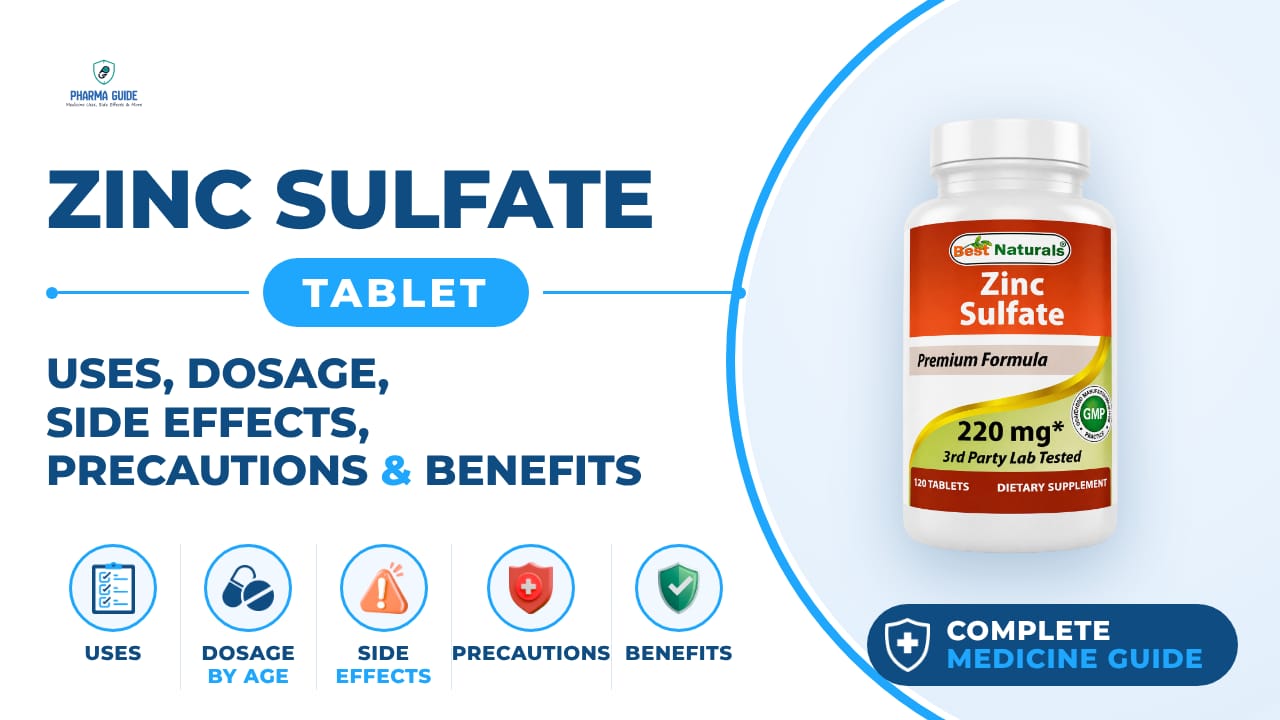
| Generic name | Zinc sulfate |
|---|---|
| Drug class | Minerals and electrolytes |
| Forms | Dispersible tablets, Effervescent tablets, Oral capsule, Oral tablet, Injection (intravenous) |
Quick overview
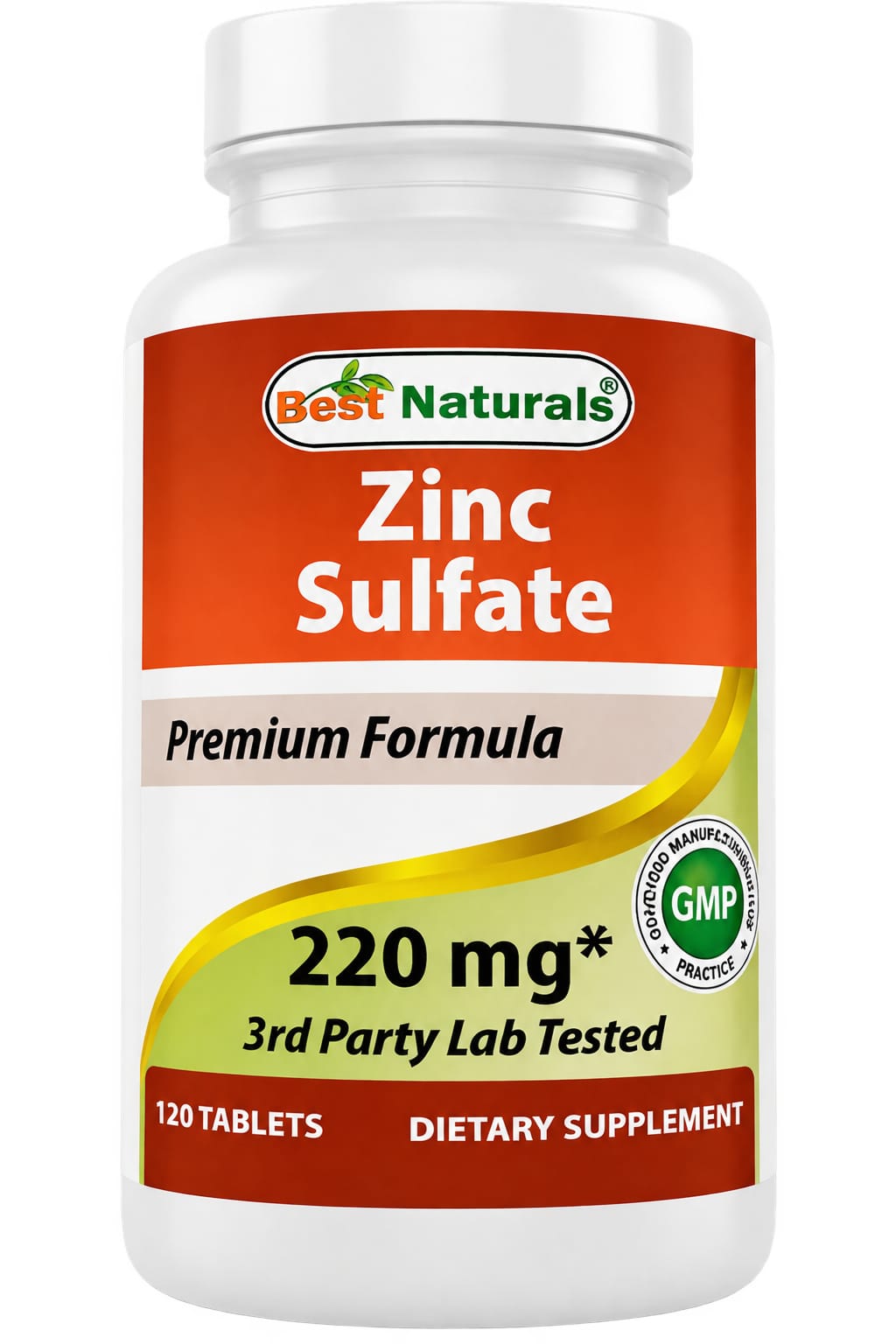
Zinc Sulfate Tablet contains zinc sulfate, a form of zinc, a naturally occurring mineral needed for growth and for the health of body tissues. It is used to treat or prevent zinc deficiency and to manage acute and persistent diarrhoea in infants and children up to 5 years old. It is available as dispersible tablets, effervescent tablets, oral capsules, oral tablets, and injection, and belongs to the minerals and electrolytes drug class.
What is Zinc Sulfate Tablet
Zinc sulfate is a form of zinc, a naturally occurring mineral needed for growth and for the health of body tissues. It is used as a dispersible tablet, effervescent tablet, capsule, or injection to treat or prevent zinc deficiency.
Zinc Sulfate Tablet uses
- Treatment of acute and persistent diarrhoea in infants and children up to 5 years old
- Treatment and prevention of zinc deficiency
- Helping the immune system function
- Helping growth and general good health
- Mineral/dietary supplementation
Benefits of Zinc Sulfate Tablet
- Zinc supplementation has been shown to reduce the duration and severity of diarrhoea in children with a high incidence of zinc deficiency
- Reduces the frequency of diarrhoea recurrence in the following 2–3 months
- Supports normal growth and tissue repair
How Zinc Sulfate Tablet works
Zinc is an essential trace element that is part of several enzymes needed for protein and carbohydrate metabolism. It supports normal growth, tissue repair, and immune function. In diarrhoea, zinc's benefits may come from restoring immune response, and it may also directly inhibit certain gut germs.
Zinc Sulfate Tablet dosage
Give doses between meals, and repeat the dose if the child vomits within 30 minutes. Effervescent tablets should be dissolved in a glass of water and the solution swallowed. Dispersible tablets should be fully dissolved in a small amount of clean water or breast milk and the whole amount given by mouth. Adults should take effervescent tablets after meals with a full glass of water. Take with food if it upsets your stomach. Extended-release tablets should be swallowed whole and not chewed, broken, or crushed.
If a dose is missed, take it as soon as you remember unless the next dose is due soon; do not double up to make up for a missed dose. Avoid taking at the same time as foods high in calcium or phosphorus, such as milk, cheese, yogurt, ice cream, beans, peas, lentils, nuts, peanut butter, beer, cola drinks, and hot cocoa, as these can reduce zinc absorption. Finish the full course of treatment as recommended by your doctor or pharmacist.
| Age group | Dose |
|---|---|
| Children | 5–20 mg elemental zinc daily (as advised) |
| Adolescents | 8–11 mg elemental zinc daily |
| Adults | 15–50 mg elemental zinc daily depending on need |
| Older Adults (65+ Years) | 15–50 mg elemental zinc daily as advised |
Available forms and strengths
- Dispersible tablets
- Effervescent tablets
- Oral capsule
- Oral tablet
- Injection (intravenous)
Side effects of Zinc Sulfate Tablet
Common
- Nausea
- Vomiting
- Upset stomach
- Regurgitation (in children)
- Abdominal pain
- Indigestion (dyspepsia)
- Diarrhoea
- Stomach discomfort/irritation
- Headache
- Irritability
- Lethargy (feeling of weariness)
Serious
- Signs of an allergic reaction: hives, rash, itching, red/swollen/blistered/peeling skin, wheezing, tightness in chest or throat, trouble breathing/swallowing/talking, unusual hoarseness, or swelling of the mouth, face, lips, tongue, or throat
- Reduced copper levels/copper deficiency, which can cause changes in walking or coordination, tingling or numbness, and reduced red and white blood cell counts
- Stomach or gut ulceration or perforation with very high doses
- Kidney damage (acute renal tubular necrosis and interstitial nephritis) with overdose
Warnings and precautions
- Do not take this medicine if you are allergic to zinc sulfate or any of its other ingredients, or if you have copper deficiency.
- Zinc can build up in the body if the kidneys are not working properly.
- This medicine may reduce the absorption of other medicines, including certain antibiotics (tetracyclines and quinolones), penicillamine, copper, calcium salts, iron, and trientine — these should be taken several hours apart from zinc.
- Taking too much zinc can be very harmful, causing vomiting, irritation and damage to the stomach and gut, and even kidney damage.
- This medicine contains aspartame, which may be harmful for people with phenylketonuria (PKU), a rare condition where the body cannot properly break down phenylalanine.
- This medicine is not recommended during pregnancy unless your doctor decides the benefits outweigh the risks. There is limited data on zinc sulfate use in pregnant women.
- This medicine is not recommended while breastfeeding unless your doctor decides it's necessary. Zinc passes into breast milk.
- People with kidney disease should talk to their doctor, pharmacist, or nurse before taking this medicine, since zinc can build up in the body if the kidneys are not working well.
- It isn't known how this medicine interacts with alcohol. Check with your doctor before drinking alcohol while taking it.
- This medicine is not expected to affect your ability to drive or use machines.
Storage
- Do not store above 30°C. Protect from moisture and light. Store tablets in blisters in the provided carton.
- Store below 25°C. Store in the original packaging to protect the tablets from moisture.
- Store at room temperature in a dry place. Do not store in a bathroom.
- Keep this medicine out of the sight and reach of children.
- Do not use this medicine after the expiry date which is stated on the carton and tablet container.
- Do not throw away any medicines via wastewater or household waste. Ask your pharmacist how to throw away medicines you no longer use.
When to see a doctor
- Get emergency help right away if you notice signs of an allergic reaction, such as hives, difficulty breathing, or swelling of the face, lips, tongue, or throat.
- If you think you or your child has taken too much of this medicine, contact your nearest hospital emergency department or doctor right away and bring the medicine packaging with you.
- Seek emergency medical care if you think an overdose has occurred; symptoms may include nausea, severe vomiting, dehydration, and restlessness.
- Call your doctor if symptoms do not improve or get worse.
Alternatives
- Zinc Gluconate
- Zinc Acetate
- Multivitamin with Zinc
Watch the video
FAQs
What is Zinc Sulfate Tablet used for?
It is used to treat acute and persistent diarrhoea in infants and children up to 5 years old, to treat and prevent zinc deficiency, and to support immune function, growth, and general health.
How should I take Zinc Sulfate Tablet?
Give doses between meals and repeat if the child vomits within 30 minutes. Effervescent tablets should be dissolved in water, while dispersible tablets should be dissolved in a small amount of clean water or breast milk. Adults should take effervescent tablets after meals with a full glass of water, and extended-release tablets should be swallowed whole.
What are the common side effects of Zinc Sulfate Tablet?
Common side effects include nausea, vomiting, upset stomach, abdominal pain, indigestion, diarrhoea, headache, irritability, and lethargy.
Can Zinc Sulfate Tablet be taken with other medicines?
It may reduce the absorption of certain antibiotics (tetracyclines and quinolones), penicillamine, copper, calcium salts, iron, and trientine, so these should be taken several hours apart from zinc.
Is Zinc Sulfate Tablet safe during pregnancy or breastfeeding?
It is not recommended during pregnancy or breastfeeding unless a doctor decides the benefits outweigh the risks, as there is limited data on its use and zinc passes into breast milk.
General information, not medical advice
Your prescriber and the leaflet in your pack know your situation. This page does not.
- Follow your prescriber and the leaflet
- Don't start, stop, or change a dose on your own
- Doses and warnings differ by country and product
Sources
Video
Related medicines
Magnesium Sulfate Injection: Uses, Dosage, Side Effects, Precautions and Alternates
Minerals and electrolytes
Magnesium Sulfate Injection treats low magnesium, prevents eclampsia seizures, and lowers high potassium. Learn uses, dosage, side effects, and precautions.
Pedialyte Liquid: Uses, Dosage, Side Effects, Precautions and Alternates
minerals and electrolytes
Pedialyte Liquid replaces fluids and electrolytes lost from diarrhea, vomiting, or sweating. Learn uses, dosage by age, side effects, and warnings.