
Safety
General information, not medical advice
Your prescriber and the leaflet in your pack know your situation. This page does not.
- Follow your prescriber and the leaflet
- Don't start, stop, or change a dose on your own
- Doses and warnings differ by country and product
Kaftrio Tablet: Uses, Dosage, Side Effects, Precautions and Alternates
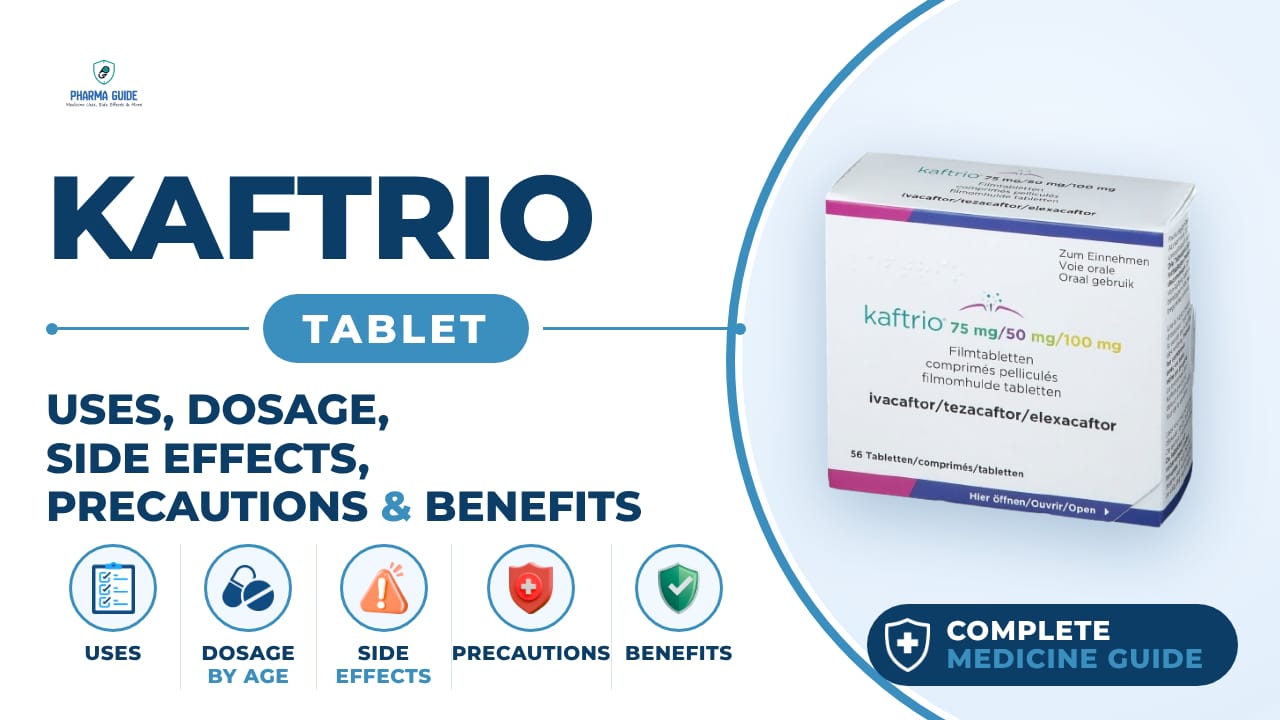
| Generic name | ivacaftor / tezacaftor / elexacaftor |
|---|---|
| Drug class | CFTR modulator (other respiratory system products) |
| Forms | Tablet |
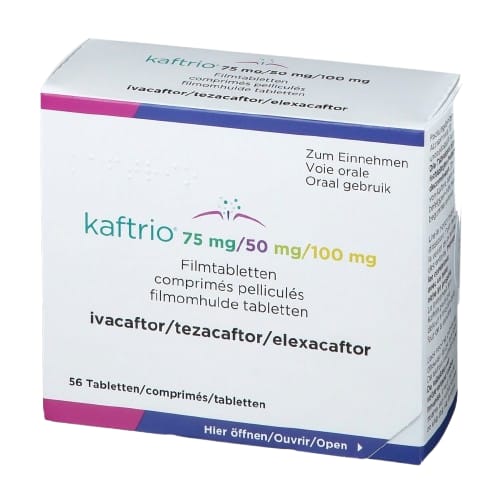
Quick overview
Kaftrio Tablet contains ivacaftor, tezacaftor, and elexacaftor, a CFTR modulator used in the long-term management of cystic fibrosis (CF) in eligible patients. It is usually taken together with another medicine that contains ivacaftor alone. Kaftrio helps improve CFTR protein function and may help improve lung function and reduce respiratory symptoms. It is taken twice daily with fatty food, and regular liver monitoring is required during treatment.
What is Kaftrio Tablet
Kaftrio contains three active substances: ivacaftor, tezacaftor and elexacaftor. It helps lung cells to work better in some patients with cystic fibrosis (CF), an inherited disease that has severe effects on the lungs, the digestive system and other organs. Kaftrio is usually taken together with another medicine that contains ivacaftor alone.
Kaftrio Tablet uses
- Cystic fibrosis (CF) in eligible patients.
- CF associated with responsive CFTR gene mutations.
- CF caused by at least one eligible F508del mutation, depending on local approval.
- Long-term management of cystic fibrosis.
- Helping improve lung function in eligible people with cystic fibrosis.
Benefits of Kaftrio Tablet
- Helps improve CFTR protein function.
- May improve lung function.
- Helps reduce respiratory symptoms.
- May reduce pulmonary exacerbations.
- Supports better mucus clearance.
How Kaftrio Tablet works
Cystic fibrosis is caused by faults in the CFTR gene, which normally makes a protein that controls mucus and digestive fluid on the surface of cells. These faults mean there is too little working CFTR protein, so mucus and digestive juices become too thick. Two of the medicine's ingredients, elexacaftor and tezacaftor, help more CFTR protein reach the cell surface, while the third, ivacaftor, helps the protein work better once it's there. Together, this makes mucus and digestive fluids less thick, easing symptoms.
Kaftrio Tablet dosage
Take the morning and evening doses about 12 hours apart. Take both the morning Kaftrio dose and the evening ivacaftor-only dose with food that contains fat, such as butter, oils, eggs, cheese, nuts, whole milk, or meat. Swallow tablets whole; do not chew, crush, or break them before swallowing.
For granules, mix the entire contents of the sachet with a teaspoon of age-appropriate soft food or liquid that is at or below room temperature, and eat the full mixture within one hour of mixing. A fat-containing meal or snack should be eaten just before or after taking the granules.
Avoid food or drinks containing grapefruit during treatment, as this can increase side effects.
If you miss a dose by 6 hours or less, take it as soon as possible and continue on the usual schedule; if more time has passed, follow the specific missed-dose instructions from your doctor or pharmacist rather than doubling up.
Keep taking your other usual cystic fibrosis treatments unless your doctor tells you to stop. If you have liver problems, your doctor may reduce your dose or advise stopping treatment.
| Age group | Dose |
|---|---|
| Under 18 years | Not recommended |
| 18–64 years | 2 tablets morning + 1 tablet evening/day |
| 65+ years | Not recommended |
Available forms and strengths
- Tablet
Side effects of Kaftrio Tablet
Common
- Headache
- Diarrhoea
- Upper respiratory tract infection (nose and throat infection)
- Stomach or abdominal pain
- Rash
- Dizziness
- Sore throat
- Nasal congestion
- Increased liver enzymes seen in blood tests
- Changes in the type of bacteria in mucus
- Increased creatine phosphokinase (a sign of muscle breakdown) seen in blood tests
Serious
- Liver injury or worsening liver function, which can be serious and may require a liver transplant
- Serious rash, sometimes with fever or facial swelling
- Depression, including suicidal thoughts and suicide attempts
- Behavioural changes, mostly reported in younger children aged 2-5 years
- Allergic reactions (hypersensitivity)
- Cloudiness of the eye lens (cataract) reported in some children and adolescents
Warnings and precautions
- Cases of liver failure requiring a transplant have happened within the first 6 months of treatment, in people with and without existing advanced liver disease. Your doctor should check your liver function with blood tests before starting treatment, every 3 months during the first year, and yearly after that.
- Depression, including suicidal thoughts and suicide attempts, has been reported, usually within the first three months of starting treatment, and especially in people with a past history of mental health conditions. Patients and caregivers should watch for low mood, suicidal thoughts, unusual behaviour changes, anxiety, or trouble sleeping.
- Young children aged 2 to 5 years have had reports of behavioural changes, usually within the first two months of starting treatment.
- Rash can happen, usually in the first month of treatment. It's more common in children than adults, and more common in women, especially those taking hormonal birth control.
- People with two mutations that mean no CFTR protein at all is made are not expected to benefit from this medicine and should not take it.
- This medicine has not been studied in people who have had an organ transplant, so it is not recommended for use in that group.
- Avoid grapefruit or grapefruit juice while taking this medicine, as it can raise the levels of the medicine in your body and increase side effects.
- Eye changes (cloudiness of the lens, called cataracts) without affecting vision have been seen in some children, so your doctor may want to do eye exams before and during treatment.
- Pregnancy: It's generally recommended to avoid this medicine during pregnancy as a precaution, although available data so far hasn't shown it causes birth defects or harm to the baby.
- Breastfeeding: The medicine passes into breast milk and has been found in the blood of breastfed babies, so you and your doctor will need to weigh the benefits of breastfeeding against the benefits of treatment.
- Kidney: No dose change is needed for mild or moderate kidney problems, but there isn't experience using this medicine in people with severe kidney problems or kidney failure, so caution is advised.
- Liver: This medicine is not recommended for moderate liver problems unless your doctor feels it's clearly needed, and if used, a lower dose is required. It should not be used at all in people with severe liver problems.
- Driving: This medicine can cause dizziness, so if you feel dizzy you should not drive or use machines until the feeling passes.
Storage
- This medicinal product does not require any special storage conditions.
- Keep out of the sight and reach of children.
- Do not use after the expiry date on the carton or blister/sachet.
- Once Kaftrio granules are mixed with food or liquid, the mixture should be used within one hour.
- Do not throw away medicines via wastewater or household waste; ask your pharmacist how to dispose of medicines you no longer use.
When to see a doctor
- Get medical help right away if you notice signs of liver problems, such as pain in the upper right belly area, yellowing of the skin or eyes, loss of appetite, nausea or vomiting, or dark urine.
- Talk to your doctor straight away if you or someone taking this medicine develops sad or altered mood, anxiety, emotional distress, thoughts of harming or killing yourself, or trouble sleeping.
- Tell your doctor right away if you notice a rash.
- If you notice persistent changes in a child's behavior, such as being more disruptive or harder to manage, within the first couple of months of starting treatment, speak to the doctor or cystic fibrosis care team as soon as possible.
Alternatives
- Kalydeco
- Trikafta
- Alyftrek
Watch the video
FAQs
What is Kaftrio Tablet used for?
Kaftrio is used for the long-term management of cystic fibrosis (CF) in eligible patients, including those with CF associated with responsive CFTR gene mutations or caused by at least one eligible F508del mutation. It helps improve lung function and CFTR protein function.
How should Kaftrio Tablet be taken?
Kaftrio is taken twice daily, about 12 hours apart. The morning dose of Kaftrio and the evening dose of ivacaftor-only medicine should both be taken with fatty food. Tablets should be swallowed whole, not chewed, crushed, or broken.
Can I eat grapefruit while taking Kaftrio Tablet?
No, grapefruit or grapefruit juice should be avoided during treatment, as it can increase the levels of the medicine in your body and raise the risk of side effects.
What are the serious side effects of Kaftrio Tablet?
Serious side effects include liver injury that may require a transplant, serious rash sometimes with fever or facial swelling, depression including suicidal thoughts, behavioural changes mostly in young children, allergic reactions, and cataract-like cloudiness of the eye lens in some children.
Is Kaftrio Tablet safe during pregnancy and breastfeeding?
It's generally recommended to avoid Kaftrio during pregnancy as a precaution, although data so far hasn't shown harm to the baby. The medicine passes into breast milk, so benefits of breastfeeding versus treatment should be discussed with a doctor.
General information, not medical advice
Your prescriber and the leaflet in your pack know your situation. This page does not.
- Follow your prescriber and the leaflet
- Don't start, stop, or change a dose on your own
- Doses and warnings differ by country and product
Sources
Video
Related medicines

Injectafer Injection: Uses, Dosage, Side Effects, Precautions and Alternates
Iron products
Injectafer (ferric carboxymaltose) treats iron deficiency anemia and heart failure-related iron deficiency via IV. Learn uses, dosage, side effects, and

Gliclazide Tablet: Uses, Dosage, Side Effects, Precautions and Alternates
Sulfonylurea (hypoglycemic/antidiabetic agent)
Gliclazide Tablet is a sulfonylurea for type 2 diabetes that boosts insulin release. Learn about dosage, side effects, warnings, and precautions.