
Safety
General information, not medical advice
Your prescriber and the leaflet in your pack know your situation. This page does not.
- Follow your prescriber and the leaflet
- Don't start, stop, or change a dose on your own
- Doses and warnings differ by country and product
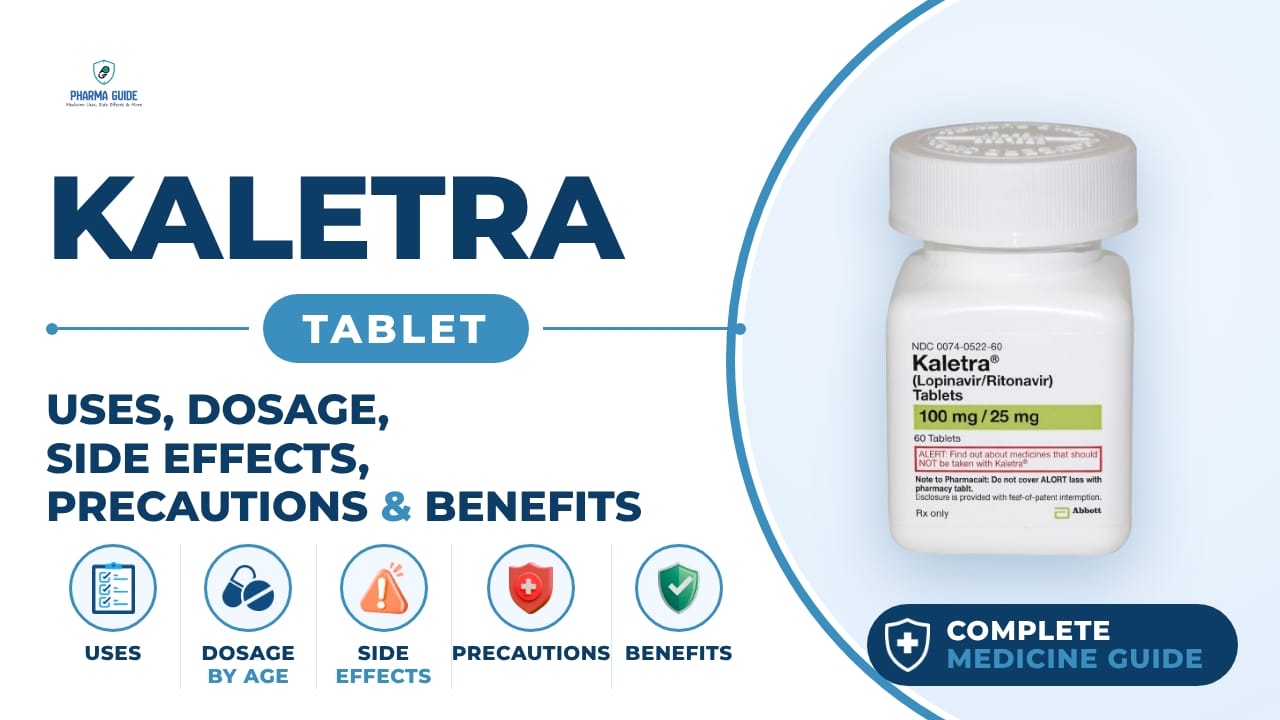
Kaletra Tablet: Uses, Dosage, Side Effects, Precautions and Alternates
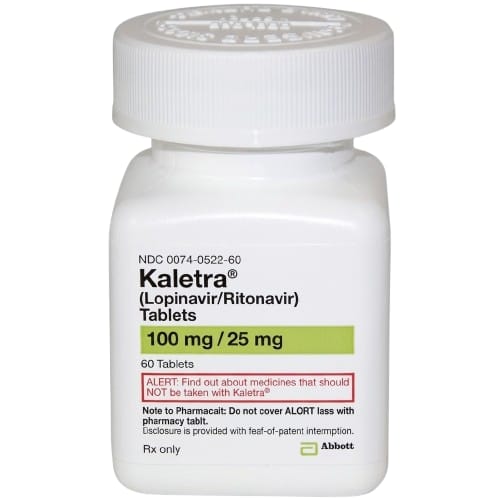
| Generic name | lopinavir/ritonavir |
|---|---|
| Drug class | HIV protease inhibitor (combination drug: protease inhibitor + pharmacokinetic enhancer) |
| Forms | Tablets (100 mg lopinavir/25 mg ritonavir), Oral solution (80 mg lopinavir/20 mg ritonavir per mL) |
Quick overview
Kaletra Tablet contains lopinavir and ritonavir, a combination HIV protease inhibitor medicine. It is used together with other HIV medicines to treat HIV-1 infection in adults and children 14 days of age and older. Ritonavir does not fight HIV directly at this dose; instead, it boosts and maintains blood levels of lopinavir, the drug that actively fights the virus. Kaletra is available as tablets and as an oral solution, and should always be taken exactly as prescribed.
What is Kaletra Tablet
Kaletra is a prescription medicine that combines two drugs, lopinavir and ritonavir. It is used together with other HIV medicines to treat HIV infection in adults and children. Ritonavir does not fight HIV directly at this dose; instead it boosts and maintains blood levels of lopinavir, which is the drug that actually fights the virus.
Kaletra Tablet uses
- Treatment of HIV-1 infection in adults and children 14 days of age and older, always used together with other antiretroviral medicines
Benefits of Kaletra Tablet
- Treats HIV-1 infection as part of combination therapy
- Helps reduce HIV levels in the blood
- Supports immune system function
- Helps reduce the risk of HIV-related complications
- Supports long-term viral suppression when taken consistently
How Kaletra Tablet works
Lopinavir blocks an HIV enzyme called protease, which the virus needs to cut up a long protein chain into the working pieces it needs to build new virus particles. By blocking this step, the virus can only make immature copies of itself that cannot infect new cells. Ritonavir does not fight HIV much on its own at this dose; instead, it blocks a liver enzyme that would normally break down lopinavir, which keeps lopinavir levels in the blood higher for longer.
Kaletra Tablet dosage
Take Kaletra exactly as your doctor tells you, every day, as part of a combination with other HIV medicines. Do not change your dose or stop taking Kaletra without talking to your doctor first. Swallow tablets whole; do not chew, break, or crush them. Kaletra tablets can be taken with or without food, while Kaletra oral solution must be taken with food.
If you also take didanosine, take it either at the same time as Kaletra tablets without food, or one hour before or two hours after Kaletra oral solution. Set up a regular dosing schedule and stick to it so blood levels stay steady.
Children should not take Kaletra on a once-daily schedule unless a doctor specifically prescribes it this way; dosing in children is based on weight (or weight and height), so tell your child's doctor if their weight changes. Kaletra oral solution should generally not be given to babies younger than 14 days old unless a doctor says it is appropriate.
If you miss a dose, take it as soon as you remember, but if it is almost time for the next dose, skip the missed one and go back to your normal schedule — do not double up doses.
| Age group | Dose |
|---|---|
| Under 18 years | Not recommended |
| 18–64 years | 400 mg/100 mg, twice/day |
| 65+ years | 400 mg/100 mg, twice/day |
Available forms and strengths
- Tablets (100 mg lopinavir/25 mg ritonavir)
- Oral solution (80 mg lopinavir/20 mg ritonavir per mL)
Side effects of Kaletra Tablet
Common
- Diarrhea
- Nausea
- Vomiting
- Headache
- Feeling weak or tired (asthenia)
- Abdominal pain
- Increased triglycerides and cholesterol in the blood
- Rash (especially in children)
Serious
- Pancreatitis (inflammation of the pancreas) — nausea, vomiting, abdominal pain
- Liver problems, including liver failure and death in some cases — yellowing of skin or eyes, dark urine, pale stools, loss of appetite, itching, abdominal pain
- Heart rhythm problems, including prolonged PR or QT interval — dizziness, lightheadedness, fainting, abnormal heartbeat sensations
- New or worsening diabetes and high blood sugar — increased thirst, frequent urination, unusual weight loss
- Immune Reconstitution Inflammatory Syndrome (IRIS) — new or worsening symptoms as the immune system recovers and reacts to hidden infections
- Autoimmune disorders such as Graves' disease, Guillain-Barré syndrome, polymyositis, or autoimmune hepatitis, which can occur months after starting treatment
- Changes in body fat distribution (buffalo hump, central weight gain, loss of fat in limbs and face)
- Increased bleeding in people with hemophilia
- Kidney stones
- Severe skin reactions such as Stevens-Johnson syndrome, erythema multiforme, or toxic epidermal necrolysis
- Serious drug interactions that can cause life-threatening events (cardiac arrhythmias, severe sedation, prolonged erections, hypotension)
Warnings and precautions
- Kaletra can cause pancreatitis, which can be serious and in some cases fatal, so symptoms like nausea, vomiting, or stomach pain should be reported right away.
- Certain medicines must never be taken with Kaletra because the combination can cause serious or life-threatening problems, including dangerous heart rhythms or prolonged sedation.
- Kaletra can cause changes in heart rhythm and electrical activity of the heart, which may be more likely in people with existing heart conditions or those taking other heart-affecting medicines.
- Serious liver problems, including fatalities, have occurred in some people taking Kaletra, particularly those with underlying liver disease.
- The oral solution can cause serious harm, including alcohol toxicity, if accidentally taken by a young child in large amounts.
- Talk to your doctor if you are pregnant or planning to become pregnant, since the effects on an unborn baby are not fully known.
- Kaletra oral solution should not be used during pregnancy because of its alcohol content, and once-daily tablet dosing is not recommended during pregnancy.
- Mothers with HIV are advised not to breastfeed while taking Kaletra, mainly to avoid the risk of passing HIV to the baby, since it is not known whether the drug itself passes into breast milk or could harm the baby.
- Specific dosing studies in people with kidney problems have not been done, but since very little of the drug is removed by the kidneys, a change in dose isn't generally expected to be needed for kidney problems alone. People taking the oral solution with kidney impairment should be watched closely for side effects related to the propylene glycol in the liquid formulation.
- Caution is needed in people with liver problems, including hepatitis B or C, because the drug is processed by the liver and liver impairment can raise drug levels and the risk of liver-related side effects.
- The medicine has not been studied in people with severe liver impairment.
- The oral solution contains a significant amount of alcohol, which can be harmful for people with liver disease, alcoholism, epilepsy, or brain injury, and is especially risky for children and pregnant women.
- Taking the oral solution with certain medicines like metronidazole or disulfiram can cause severe reactions.
Storage
- Store Kaletra tablets at room temperature, between 68°F and 77°F (20°C to 25°C)
- Keep tablets in their original container with the container tightly closed; do not leave tablets out of the container for more than 2 weeks, especially in humid conditions
- Store Kaletra oral solution in a refrigerator between 36°F and 46°F (2°C to 8°C); refrigerated solution can be used until the expiration date on the label
- If oral solution is kept at room temperature (below 77°F/25°C), use it within 2 months
- Keep the oral solution away from high heat
- Do not use Kaletra if the original seal over the container opening is broken or missing
- Throw away medicine that is expired or no longer needed, following guidelines for safe disposal of unused medicine
- Keep Kaletra and all medicines out of the reach and sight of children
When to see a doctor
- Get medical help right away if you notice yellowing of the skin or eyes, dark urine, pale stools, loss of appetite, nausea, vomiting, pain on the right side of your abdomen, or itching, as these may be signs of liver problems.
- Seek medical attention right away if you have severe upper stomach pain with or without nausea or vomiting, since this could indicate pancreatitis.
- Contact your doctor immediately if you experience dizziness, lightheadedness, changes in your heartbeat, or fainting, as these can be signs of a heart rhythm problem.
- Stop taking Kaletra and get medical help immediately if you develop a rash along with fever, feeling unwell, muscle or joint aches, blistering or peeling skin, mouth sores, red or swollen eyes, or swelling of the face, lips, mouth, tongue, throat, or lymph nodes, or trouble breathing or swallowing.
- If a baby taking the oral solution seems unusually sleepy or has changes in breathing, contact a healthcare provider right away, as this could be related to the alcohol and propylene glycol in the liquid medicine.
- If you think you or someone else has taken too much Kaletra, contact a healthcare provider, your local poison control center, or go to the nearest emergency room right away, even if there are no symptoms.
Alternatives
- Bictegravir
- Atazanavir
- Darunavir
Watch the video
FAQs
What is Kaletra Tablet used for?
Kaletra is used together with other HIV medicines to treat HIV-1 infection in adults and children 14 days of age and older.
How does Kaletra Tablet work?
Lopinavir blocks the HIV protease enzyme so the virus can only make immature, non-infectious copies of itself, while ritonavir blocks a liver enzyme that breaks down lopinavir, keeping its blood levels higher for longer.
What is the usual adult dose of Kaletra?
For adults aged 18 to 64 and those 65 and older, the typical dose is 400 mg/100 mg taken twice a day.
What are the common side effects of Kaletra Tablet?
Common side effects include diarrhea, nausea, vomiting, headache, feeling weak or tired, abdominal pain, increased triglycerides and cholesterol, and rash, especially in children.
Can Kaletra be used during pregnancy?
Kaletra oral solution should not be used during pregnancy because of its alcohol content, and once-daily tablet dosing is not recommended during pregnancy; talk to your doctor if you are pregnant or planning to become pregnant.
General information, not medical advice
Your prescriber and the leaflet in your pack know your situation. This page does not.
- Follow your prescriber and the leaflet
- Don't start, stop, or change a dose on your own
- Doses and warnings differ by country and product
Sources
Video
Related medicines

Injectafer Injection: Uses, Dosage, Side Effects, Precautions and Alternates
Iron products
Injectafer (ferric carboxymaltose) treats iron deficiency anemia and heart failure-related iron deficiency via IV. Learn uses, dosage, side effects, and

Gliclazide Tablet: Uses, Dosage, Side Effects, Precautions and Alternates
Sulfonylurea (hypoglycemic/antidiabetic agent)
Gliclazide Tablet is a sulfonylurea for type 2 diabetes that boosts insulin release. Learn about dosage, side effects, warnings, and precautions.