
Safety
General information, not medical advice
Your prescriber and the leaflet in your pack know your situation. This page does not.
- Follow your prescriber and the leaflet
- Don't start, stop, or change a dose on your own
- Doses and warnings differ by country and product
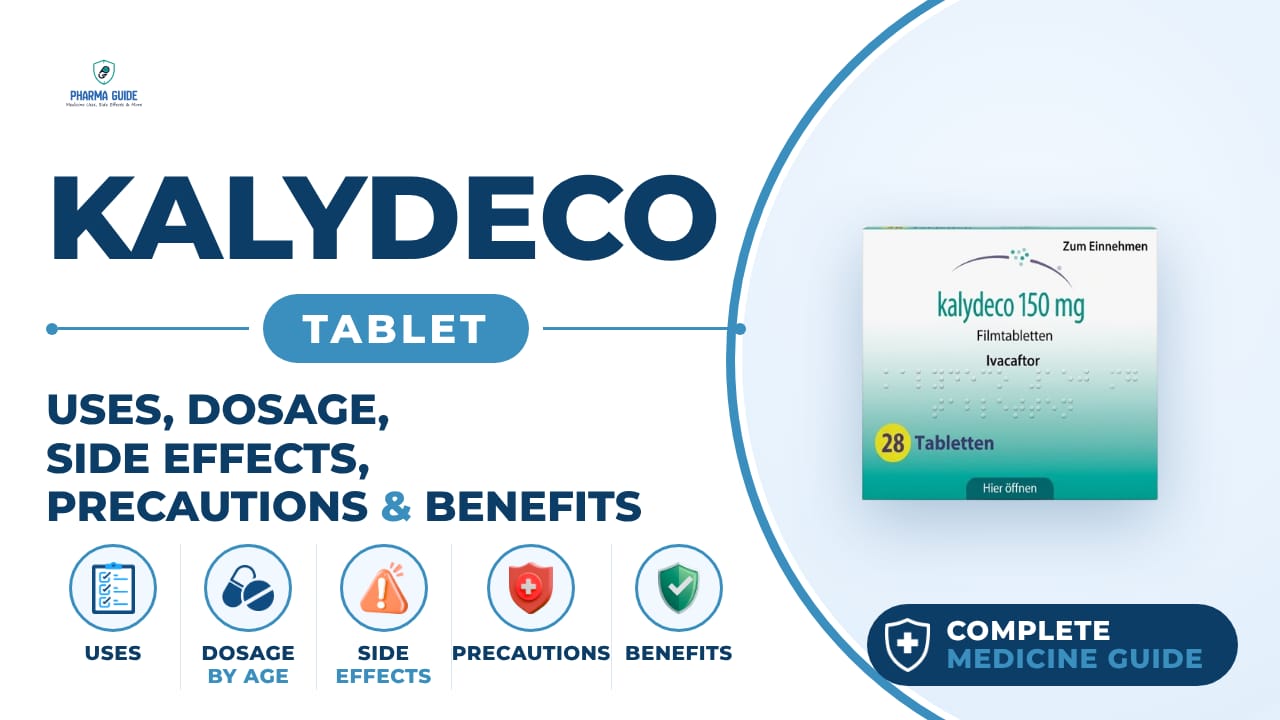
Kalydeco Tablet: Uses, Dosage, Side Effects, Precautions and Alternates
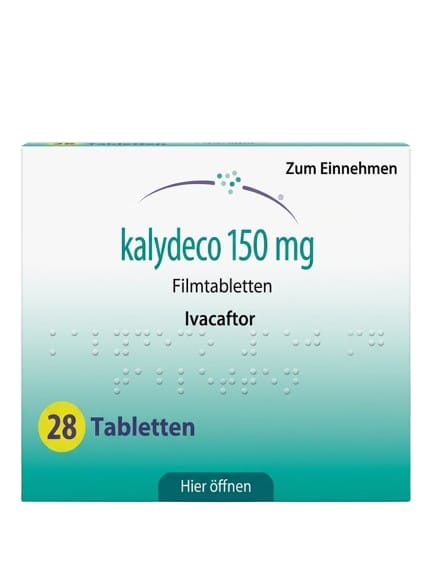
| Generic name | ivacaftor |
|---|---|
| Drug class | CFTR potentiator (cystic fibrosis transmembrane conductance regulator potentiator) |
| Forms | Tablets (150 mg, film-coated), Oral granules (unit-dose packets of 50 mg and 75 mg) |
Quick overview
Kalydeco Tablet (ivacaftor) is a prescription CFTR potentiator used to treat cystic fibrosis in patients age 2 and older who have certain CFTR gene mutations. It is not a cure, but it helps the faulty CFTR protein work better. Kalydeco is not effective in patients with CF who are homozygous for the F508del mutation. It is available as tablets and oral granules, taken 12 hours apart with fat-containing food.
What is Kalydeco Tablet
Kalydeco is a prescription medicine used to treat cystic fibrosis (CF) in people who have certain mutations in their CF gene. It is not a cure, but it helps the faulty protein that causes CF work better.
Kalydeco Tablet uses
- Treatment of cystic fibrosis (CF) in patients age 2 years and older who have one of these mutations in the CFTR gene: G551D, G1244E, G1349D, G178R, G551S, S1251N, S1255P, S549N, or S549R
- Treatment of CF in patients age 2 years and older who have an R117H mutation in the CFTR gene
- Not effective in patients with CF who are homozygous for the F508del mutation in the CFTR gene
Benefits of Kalydeco Tablet
- Improves lung function (FEV1) in patients with a G551D mutation
- Reduces sweat chloride levels, a marker of CFTR function
- Reduces the risk of lung flare-ups (pulmonary exacerbations)
- Helps with weight gain in some patients
- Can improve CF-related respiratory symptoms
How Kalydeco Tablet works
Kalydeco helps open the CFTR protein channel on the surface of cells more often, which allows chloride (a part of salt) to move more easily in and out of the cell. This helps balance salt and water in the body's tissues.
Kalydeco Tablet dosage
Take your doses 12 hours apart, at the same times each day. Tablets should be swallowed whole; do not chew, break, or crush them. Always take with food that contains fat, such as eggs, butter, peanut butter, cheese pizza, or whole-milk dairy products.
Oral granules should be mixed with one teaspoon of soft food or liquid that is at or below room temperature, such as pureed fruit, yogurt, applesauce, water, milk, or juice. Granules must be completely consumed within one hour of mixing and should not be stored for later use. Give fat-containing food just before or just after the granule dose.
Avoid food or drinks containing grapefruit or Seville oranges while taking this medicine. If a dose is missed within 6 hours of the usual time, take it as soon as possible with fat-containing food. If more than 6 hours have passed since the usual dosing time, skip the missed dose and resume the normal schedule; do not double up doses. Children should be supervised by a parent or caregiver when taking this medicine.
| Age group | Dose |
|---|---|
| Under 18 years | Not recommended |
| 18–64 years | 150 mg, twice/day |
| 65+ years | 150 mg, twice/day |
Available forms and strengths
- Tablets (150 mg, film-coated)
- Oral granules (unit-dose packets of 50 mg and 75 mg)
Side effects of Kalydeco Tablet
Common
- Headache
- Sore throat or mouth pain
- Upper respiratory tract infection (common cold)
- Nasal or sinus congestion
- Runny nose
- Stomach (abdominal) pain
- Diarrhea
- Rash
- Acne
- Nausea
- Dizziness
- Muscle or joint pain
- Changes in bacteria found in sputum
Serious
- Liver problems: pain or discomfort in the upper right stomach area, yellowing of the skin or eyes, loss of appetite, nausea or vomiting, dark urine, pale stools, itching
- Cataracts (clouding of the eye lens), mainly reported in children and teens
- Low blood sugar (hypoglycemia)
- Allergic reaction: hives, difficulty breathing, swelling of the face, lips, tongue, or throat
- Unusual headache, blurred or double vision, or vision loss
- New or worsening mental health problems such as anxiety, depression, suicidal thoughts, or trouble sleeping
Warnings and precautions
- This medicine can raise liver enzyme levels. Your doctor will check your liver with blood tests before starting treatment, every 3 months during the first year, and once a year after that.
- Taking this medicine with certain drugs that strongly affect its breakdown in the body, such as rifampin or St. John's wort, is not recommended because it may make the medicine less effective.
- Clouding of the eye lens (cataracts) has been seen in children taking this medicine. Eye exams are recommended before and during treatment in children.
- This medicine does not work for people with CF who have two copies of the F508del mutation, so it should not be used in that group.
- Avoid grapefruit, grapefruit juice, and Seville oranges while taking this medicine, as they can raise the amount of drug in your body.
- It is not known if this medicine could harm an unborn baby. You and your doctor should decide together whether you should take it during pregnancy.
- It isn't known if this medicine passes into breast milk. You and your doctor should decide together whether you should take it while breastfeeding.
- Tell your doctor if you have kidney problems. Caution is needed in people with severe kidney impairment or kidney failure.
- Tell your doctor if you have liver problems. Your dose may need to be lowered if you have moderate or severe liver impairment, and your liver will be checked with blood tests before and during treatment.
- This medicine can cause dizziness. Don't drive, use machinery, or do anything that requires alertness until you know how it affects you.
Storage
- Store at room temperature between 68°F to 77°F (20°C to 25°C)
- Short excursions to 59-86°F (15-30°C) are permitted
- Keep out of the reach and sight of children
- Do not use after the expiration date on the package
- Keep the medicine in its original packaging
When to see a doctor
- Get emergency help right away if you have signs of an allergic reaction, such as hives, trouble breathing, or swelling of the face, lips, tongue, or throat.
- Call your doctor right away if you notice signs of liver problems, such as pain in the upper right stomach area, yellowing skin or eyes, loss of appetite, nausea or vomiting, or dark urine.
- Call your doctor if you have new or worsening mental health symptoms, such as anxiety, depression, trouble sleeping, or thoughts of suicide.
- If you think you have taken too much of this medicine, contact your doctor, go to the nearest hospital emergency department, or call your local poison control center right away, even if you feel fine.
Alternatives
- Trikafta
- Symdeko
- Orkambi
Watch the video
FAQs
What is Kalydeco Tablet used for?
Kalydeco is used to treat cystic fibrosis in patients age 2 years and older who have certain CFTR gene mutations, such as G551D, G1244E, G1349D, G178R, G551S, S1251N, S1255P, S549N, S549R, or R117H.
Is Kalydeco effective for all CF patients?
No, Kalydeco is not effective in patients with CF who are homozygous for the F508del mutation in the CFTR gene.
How should Kalydeco Tablet be taken?
Doses should be taken 12 hours apart at the same times each day, with fat-containing food. Tablets should be swallowed whole and not chewed, broken, or crushed.
What foods should be avoided while taking Kalydeco?
You should avoid food or drinks containing grapefruit or Seville oranges while taking this medicine, as they can raise the amount of drug in your body.
What are the serious side effects of Kalydeco?
Serious side effects include liver problems, cataracts (mainly in children and teens), low blood sugar, allergic reactions, vision changes, and new or worsening mental health problems.
General information, not medical advice
Your prescriber and the leaflet in your pack know your situation. This page does not.
- Follow your prescriber and the leaflet
- Don't start, stop, or change a dose on your own
- Doses and warnings differ by country and product
Sources
Video
Related medicines

Injectafer Injection: Uses, Dosage, Side Effects, Precautions and Alternates
Iron products
Injectafer (ferric carboxymaltose) treats iron deficiency anemia and heart failure-related iron deficiency via IV. Learn uses, dosage, side effects, and

Gliclazide Tablet: Uses, Dosage, Side Effects, Precautions and Alternates
Sulfonylurea (hypoglycemic/antidiabetic agent)
Gliclazide Tablet is a sulfonylurea for type 2 diabetes that boosts insulin release. Learn about dosage, side effects, warnings, and precautions.