
Safety
General information, not medical advice
Your prescriber and the leaflet in your pack know your situation. This page does not.
- Follow your prescriber and the leaflet
- Don't start, stop, or change a dose on your own
- Doses and warnings differ by country and product
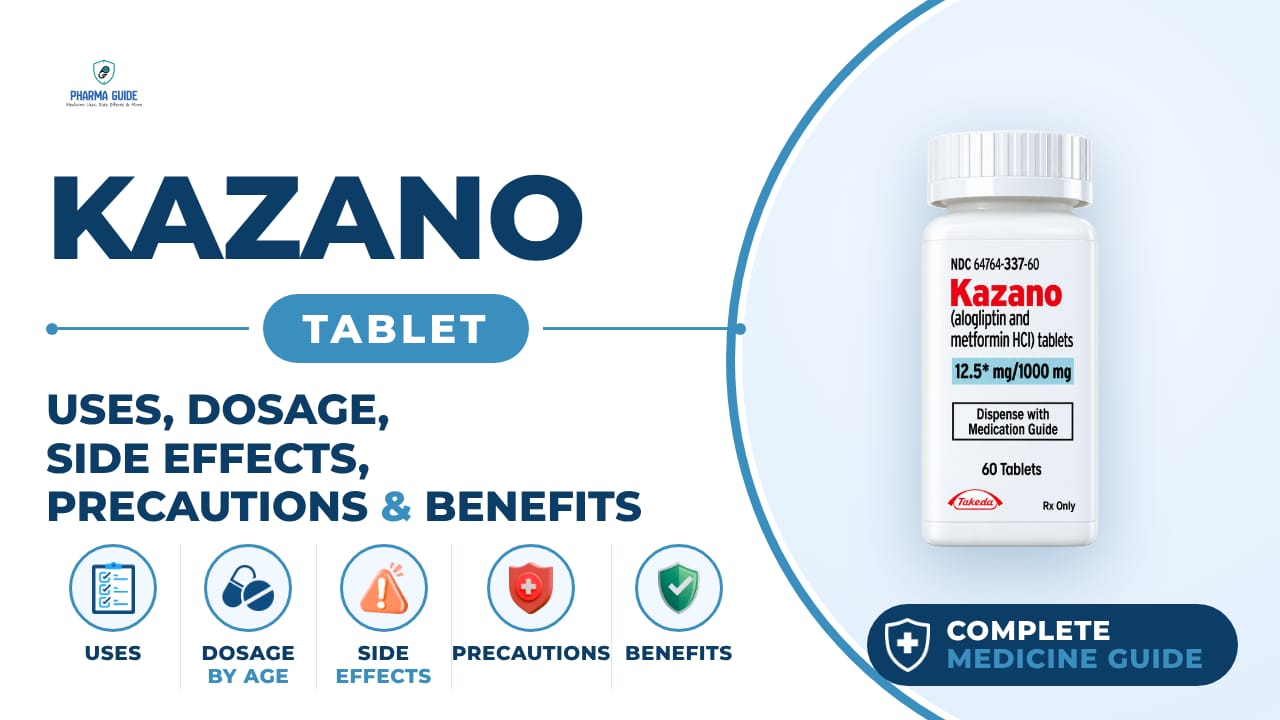
Kazano Tablet: Uses, Dosage, Side Effects, Precautions and Alternates
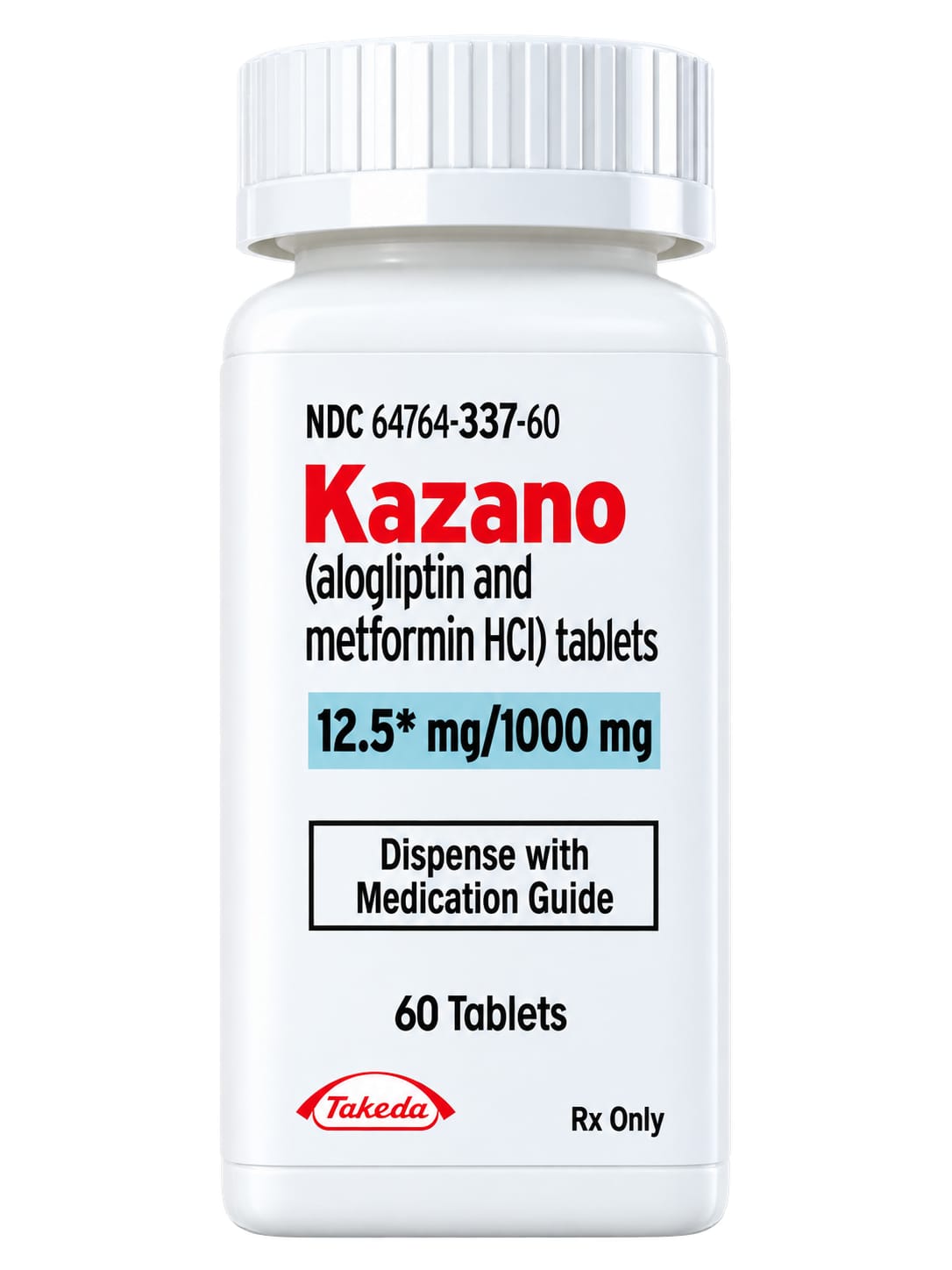
| Generic name | alogliptin and metformin hydrochloride |
|---|---|
| Drug class | DPP-4 inhibitor and biguanide combination (antidiabetic combination) |
| Forms | Film-coated tablets (12.5 mg/500 mg, 12.5 mg/850 mg, and 12.5 mg/1000 mg alogliptin/metformin hydrochloride) |
Quick overview
Kazano Tablet combines alogliptin and metformin hydrochloride, a DPP-4 inhibitor and biguanide combination used to control blood sugar in adults with type 2 diabetes. It is used together with diet and exercise, either alone or alongside other diabetes medicines such as pioglitazone or insulin. Kazano works through two complementary mechanisms to lower blood sugar levels and improve long-term glucose control.
What is Kazano Tablet
Kazano is a tablet that combines two diabetes medicines, alogliptin and metformin, used together with diet and exercise to help control blood sugar in adults with type 2 diabetes.
Kazano Tablet uses
- Used with diet and exercise to improve blood sugar control in adults with type 2 diabetes
- Used in patients whose diabetes is not controlled on metformin alone
- Used in patients already taking alogliptin and metformin together
- Used in combination with pioglitazone for patients whose diabetes is not controlled with metformin and pioglitazone
- Used in combination with insulin for patients whose diabetes is not controlled with insulin and metformin
Benefits of Kazano Tablet
- Helps lower blood sugar (glucose) levels in people with type 2 diabetes
- Helps improve long-term blood sugar control (HbA1c) when added to other diabetes treatments
- Combines two glucose-lowering medicines in one tablet
- Targets blood sugar through complementary mechanisms
- Can improve fasting and post-meal glucose control
- May simplify treatment compared with taking alogliptin and metformin separately
How Kazano Tablet works
Kazano combines two medicines that lower blood sugar in different ways. Alogliptin helps the body release more insulin after meals and reduces the amount of sugar the liver makes. Metformin lowers the amount of sugar made by the liver.
Kazano Tablet dosage
Take exactly as your healthcare professional has told you. Swallow the tablet whole with water; do not split, break, or cut the tablet before swallowing. Take with food to reduce the chance of an upset stomach. It is taken twice daily. If you forget a dose, take it as soon as you remember, but if it is almost time for your next dose, skip the missed dose; do not take two doses at the same time.
| Age group | Dose |
|---|---|
| Under 18 years | Safety and effectiveness are not established; there is no standard pediatric dose |
| 18–64 years | Usually 12.5 mg alogliptin + 500 mg metformin twice daily or 12.5 mg + 1000 mg twice daily, depending on previous treatment and tolerance |
| 65–74 years | Same adult strengths may be used, but dosing should be based on kidney function and glucose control |
Available forms and strengths
Film-coated tablets (12.5 mg/500 mg, 12.5 mg/850 mg, and 12.5 mg/1000 mg alogliptin/metformin hydrochloride)
Side effects of Kazano Tablet
Common
- Nausea, diarrhea, stomach upset, abdominal bloating, gas and appetite loss
- Constipation
- Vomiting
- Indigestion, heartburn
- Abdominal pain
- Stomach pain
- Shortness of breath
- Cold or flu-like symptoms such as sore throat, stuffy or blocked nose, feeling tired, fever, chills, body aches, dry cough
- Coughing, wheezing, difficulty breathing, with or without fever
- Headache
- Difficulty sleeping
- Fatigue
- Itchy and red eyes, with or without discharge (pink eye)
- Dry, itchy skin, with or without hives, rash
- Swollen or irritated blood vessels in the anus and rectum (hemorrhoids)
- Gallstones
- Kidney stones
- Bruising
- Back pain
- Muscle and/or bone pain (including chest)
- Cramps
- A metallic taste in the mouth
- Toothache
- Swelling of extremities
- Pins and needles or numbness usually in the hands, arms, legs, or feet
- Pain, weakness, numbness, or tingling in the leg (sciatica)
- High blood pressure
- Increased blood pressure (severe headache, blurred vision, pounding in neck or ears)
Serious
- Lactic acidosis (a serious build-up of acid in the blood)
- Allergic reaction: severe rash, hives, swallowing or breathing problems, swelling of lips, face, throat or tongue, and feeling faint
- Pancreatitis (inflamed pancreas): severe and persistent pain around the top of the stomach that may reach the back, with or without vomiting
- Hemolytic anemia: fatigue, pale color, rapid heartbeat, shortness of breath, dark urine, chills, and backache
- Hypothyroidism: fatigue, feeling cold, dry skin, poor memory and concentration, weight gain
- Peripheral neuropathy: numbness, prickling or tingling in feet or hands, which can spread upward, pain, extreme sensitivity to touch, lack of coordination and falling, muscle weakness
- Encephalopathy: muscle weakness, poor decision-making, involuntary twitching, trembling, difficulty speaking or swallowing, seizures
- Liver disorders: yellowing of the skin or eyes, dark urine, abdominal pain, nausea, vomiting, loss of appetite, fatigue
- Stevens-Johnson syndrome: serious rash, skin reddening, pain, swelling of lips, eyes or mouth, skin peeling, flu-like symptoms
- Bullous pemphigoid: blistering of the skin, redness or peeling skin
- Rhabdomyolysis: muscle spasms, weakness, red-brown (tea-coloured) urine
- Severe and disabling joint pain (arthralgia)
- Tubulointerstitial nephritis (kidney problems): decreased urination, blood in urine
- Hypoglycemia (low blood sugar): trembling, sweating, anxiety, blurred vision, tingling lips, paleness, mood change, or confusion
Warnings and precautions
- Kazano should not be used during pregnancy because it is not known to be safe for an unborn baby.
- It should not be used while breastfeeding because metformin passes into breast milk and a risk to the baby cannot be ruled out.
- Kazano should not be used in people with severe kidney disease, end-stage kidney disease, or those on dialysis, and should not be used in moderate kidney impairment either. It should generally be avoided in people with liver disease, since liver problems can increase the risk of a serious condition called lactic acidosis.
- Do not drink alcohol in excess while taking Kazano, as alcohol increases the risk of lactic acidosis. Kazano can cause low blood sugar, especially when combined with certain other diabetes medicines, so avoid driving or operating machinery if you feel this happening.
- Lactic acidosis is a rare but serious and sometimes fatal complication that can occur because of metformin building up in the body.
- Kazano should not be used in people with type 1 diabetes or for treating diabetic ketoacidosis.
- Serious allergic reactions, including anaphylaxis, swelling, and severe skin reactions, have been reported with this medicine.
- Cases of acute pancreatitis, including severe and fatal forms, have occurred with this medicine.
- Serious and sometimes fatal liver problems have been reported with alogliptin, one of the ingredients in Kazano.
- A serious skin reaction called bullous pemphigoid, which causes blistering, has been reported with this type of medicine.
- Treatment should be stopped before surgery or certain imaging tests that use injected dye, because of a higher risk of kidney problems and lactic acidosis.
- Long-term use may lower vitamin B12 levels, which can lead to nerve problems or anemia.
Storage
- Store at 15-30°C
- Keep this medicine out of the sight and reach of children
- Do not use this medicine after the expiry date stated on the carton and bottle or blister
- This medicinal product does not require any special storage conditions
- Do not throw away any medicines via wastewater or household waste; ask your pharmacist how to throw away medicines you no longer use
When to see a doctor
- Get medical help right away if you feel very weak or tired, have unusual muscle pain, trouble breathing, stomach pain with nausea or vomiting or diarrhea, feel cold, feel dizzy or lightheaded, or have a slow or irregular heartbeat — these can be signs of lactic acidosis.
- Get medical help immediately if you have a severe allergic reaction, such as rash, hives, trouble swallowing or breathing, or swelling of your lips, face, throat, or tongue.
- Get medical help right away if you have severe, persistent pain around the top of your stomach that may spread to your back, with or without vomiting, as this may be pancreatitis.
- Contact your healthcare professional right away if you notice blisters or skin erosions, as this could be a serious skin reaction.
- Seek medical advice promptly if you develop signs of liver problems, such as yellowing skin or eyes, dark urine, stomach pain, nausea, vomiting, loss of appetite, or unusual tiredness.
- If you think you or someone you are caring for has taken too much Kazano, contact a healthcare professional, hospital emergency department, or your regional poison control center immediately, even if there are no symptoms.
Alternatives
- Janumet
- Jentadueto
- Kombiglyze XR
Watch the video
FAQs
What is Kazano Tablet used for?
Kazano is used with diet and exercise to improve blood sugar control in adults with type 2 diabetes, either alone or combined with other diabetes medicines such as pioglitazone or insulin.
How does Kazano Tablet work?
Kazano combines two medicines that lower blood sugar differently: alogliptin helps the body release more insulin after meals and reduces liver sugar production, while metformin lowers the amount of sugar made by the liver.
How should I take Kazano Tablet?
Take Kazano exactly as prescribed, swallowing the tablet whole with water without splitting, breaking, or cutting it. Take with food to reduce upset stomach, usually twice daily.
What are the serious side effects of Kazano Tablet?
Serious side effects include lactic acidosis, severe allergic reactions, pancreatitis, hemolytic anemia, liver disorders, Stevens-Johnson syndrome, rhabdomyolysis, kidney problems, and hypoglycemia.
Who should not take Kazano Tablet?
Kazano should not be used during pregnancy or breastfeeding, in people with severe or end-stage kidney disease or on dialysis, moderate kidney impairment, or generally in people with liver disease, and it should not be used in type 1 diabetes or diabetic ketoacidosis.
General information, not medical advice
Your prescriber and the leaflet in your pack know your situation. This page does not.
- Follow your prescriber and the leaflet
- Don't start, stop, or change a dose on your own
- Doses and warnings differ by country and product
Sources
Video
Related medicines

Injectafer Injection: Uses, Dosage, Side Effects, Precautions and Alternates
Iron products
Injectafer (ferric carboxymaltose) treats iron deficiency anemia and heart failure-related iron deficiency via IV. Learn uses, dosage, side effects, and

Gliclazide Tablet: Uses, Dosage, Side Effects, Precautions and Alternates
Sulfonylurea (hypoglycemic/antidiabetic agent)
Gliclazide Tablet is a sulfonylurea for type 2 diabetes that boosts insulin release. Learn about dosage, side effects, warnings, and precautions.