
Safety
General information, not medical advice
Your prescriber and the leaflet in your pack know your situation. This page does not.
- Follow your prescriber and the leaflet
- Don't start, stop, or change a dose on your own
- Doses and warnings differ by country and product
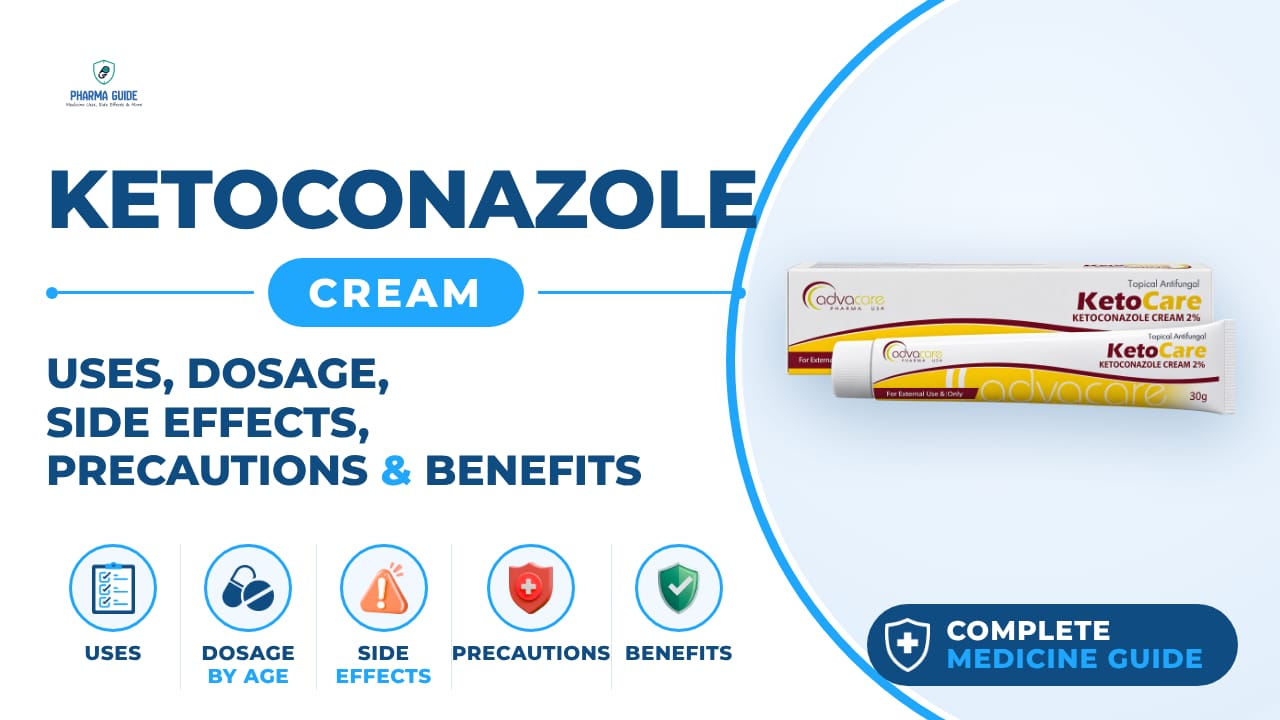
Ketoconazole Cream: Uses, Dosage, Side Effects, Precautions and Alternates
| Generic name | Ketoconazole |
|---|---|
| Drug class | Antifungal (azole antifungal) |
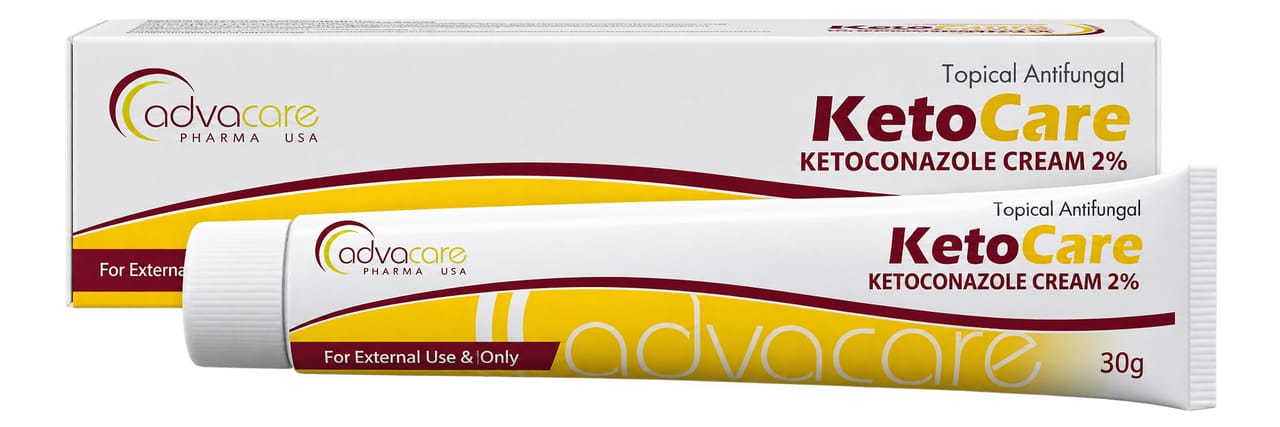
| Forms | Cream (2%) |
Quick overview
Ketoconazole Cream is a topical antifungal medicine used to treat certain fungal and yeast infections of the skin, such as ringworm, jock itch, athlete's foot, tinea versicolor, cutaneous candidiasis, and seborrheic dermatitis. It works by damaging the fungus's protective outer cell membrane, stopping the fungus from growing and spreading. Skin often starts improving within a few days, and the cream has few side effects for most people. It is applied directly to the affected area and is approved for use in adults.
What is Ketoconazole Cream
Ketoconazole Cream is a topical antifungal medicine used to treat certain fungal and yeast infections of the skin. It helps reduce the growth of fungi and yeast on the skin, which eases itching, redness, flaking, and discomfort.
Ketoconazole Cream uses
- Ringworm (tinea corporis)
- Jock itch (tinea cruris)
- Athlete's foot (tinea pedis)
- Tinea (pityriasis) versicolor, a fungal condition causing lighter or darker patches of skin
- Cutaneous candidiasis (yeast infection of the skin)
- Seborrheic dermatitis
Benefits of Ketoconazole Cream
- Reduces itching, redness, flaking, and discomfort caused by fungal or yeast skin infections
- Skin usually starts improving within a few days of starting treatment
- Applied directly to the affected area
- Has few side effects for most people
How Ketoconazole Cream works
Ketoconazole works by damaging the fungus's protective outer cell membrane, which stops the fungus from growing and spreading, allowing the infection to gradually clear.
Ketoconazole Cream dosage
Wash and dry the affected area of skin before applying the cream. Apply a thin layer over the affected area and a small margin of the normal-looking skin around it, since the fungus may extend beyond the visible rash. Wash your hands after applying the cream, unless the hands are the area being treated. Use the cream only on the skin; avoid the eyes, nose, mouth, and other mucosal surfaces.
Continue using the cream for the full recommended course, even if the rash starts to look better, to reduce the chance of the infection coming back. Avoid tight dressings or heavy covering of the treated area unless told otherwise by a doctor. Wear breathable clothing and keep the area dry to support treatment. Do not share creams, towels, socks, or clothing with others while the infection is active.
This cream is approved for use in adults only; safety and effectiveness in children have not been established.
| Age group | Dose |
|---|---|
| Under 12 years | Safety/effectiveness not well established; use with medical advice |
| 12–17 years | Apply a thin layer once daily, when prescribed |
| 18–64 years | Apply a thin layer once daily to affected and surrounding skin |
| 65+ years | Usually the same adult application |
Available forms and strengths
- Cream (2%)
Side effects of Ketoconazole Cream
Common
- Itchiness at the application site
- Skin irritation
- Stinging or burning
- Rash
- Dryness or redness of the skin
Serious
- Severe allergic reaction: hives, swelling of the face or tongue, trouble breathing
- Contact dermatitis
- Painful allergic skin reaction
- Marked swelling, severe rash, or blistering after application
Warnings and precautions
- This cream is not meant to be used in or near the eyes.
- This cream contains a sulfite ingredient that can cause allergic-type reactions, including severe or life-threatening asthma symptoms, in some sensitive people. This is more common in people with asthma.
- Do not use this cream if you have shown an allergic reaction to ketoconazole or any of the other ingredients in this cream.
- If the cream causes irritation or a reaction suggesting sensitivity, stop using it.
- Safety and effectiveness of this cream in children have not been established.
- There are no adequate and well-controlled studies of this cream in pregnant women. It should be used during pregnancy only if the potential benefit justifies the potential risk to the baby.
- It is not known if enough of the medicine passes into breast milk to affect a nursing baby. A decision should be made about whether to stop breastfeeding or stop using the cream, based on how important the medicine is for the mother.
Storage
- Store below 77°F (25°C)
- Keep out of reach of children
When to see a doctor
- Get medical help right away if you have a severe allergic reaction, such as hives, swelling of the face or tongue, or trouble breathing.
- See a doctor if the rash becomes much redder, swollen, blistered, or more painful, since this may not be an expected reaction.
- Talk to your prescriber if your skin infection does not improve or gets worse after finishing treatment, since a different medication might be needed.
- If there is no clinical improvement after the treatment period, the diagnosis should be reassessed by a doctor.
Alternatives
- Luliconazole Cream
- Terbinafine Cream
- Econazole Cream
- Miconazole Cream
- Clotrimazole Cream
Watch the video
FAQs
What is Ketoconazole Cream used for?
It treats fungal and yeast skin infections such as ringworm, jock itch, athlete's foot, tinea versicolor, cutaneous candidiasis, and seborrheic dermatitis.
How does Ketoconazole Cream work?
It damages the fungus's protective outer cell membrane, stopping the fungus from growing and spreading, which allows the infection to gradually clear.
How long does it take for Ketoconazole Cream to work?
Skin often starts improving within a few days of starting treatment.
What are the common side effects of Ketoconazole Cream?
Common side effects include itchiness at the application site, skin irritation, stinging or burning, rash, and dryness or redness of the skin.
Can Ketoconazole Cream be used in children?
It is approved for use in adults only; safety and effectiveness in children have not been established.
General information, not medical advice
Your prescriber and the leaflet in your pack know your situation. This page does not.
- Follow your prescriber and the leaflet
- Don't start, stop, or change a dose on your own
- Doses and warnings differ by country and product
Sources
- American Academy of Dermatology
- National Health Service
- Mayo Clinic
- MedlinePlus
- Centers for Disease Control and Prevention
- American Academy of Allergy, Asthma & Immunology. (2024). Sulfite and sulfa drugs.
- Choi, F. D, et al. (2019). Topical ketoconazole: A systematic review of current dermatological applications and future developments. Journal of Dermatological Treatment.
- Encube Ethicals Private Limited. (2024). Ketoconazole- ketoconazole cream, 2% cream [package insert]. DailyMed.
Video
Related medicines

Injectafer Injection: Uses, Dosage, Side Effects, Precautions and Alternates
Iron products
Injectafer (ferric carboxymaltose) treats iron deficiency anemia and heart failure-related iron deficiency via IV. Learn uses, dosage, side effects, and

Gliclazide Tablet: Uses, Dosage, Side Effects, Precautions and Alternates
Sulfonylurea (hypoglycemic/antidiabetic agent)
Gliclazide Tablet is a sulfonylurea for type 2 diabetes that boosts insulin release. Learn about dosage, side effects, warnings, and precautions.