
Safety
General information, not medical advice
Your prescriber and the leaflet in your pack know your situation. This page does not.
- Follow your prescriber and the leaflet
- Don't start, stop, or change a dose on your own
- Doses and warnings differ by country and product
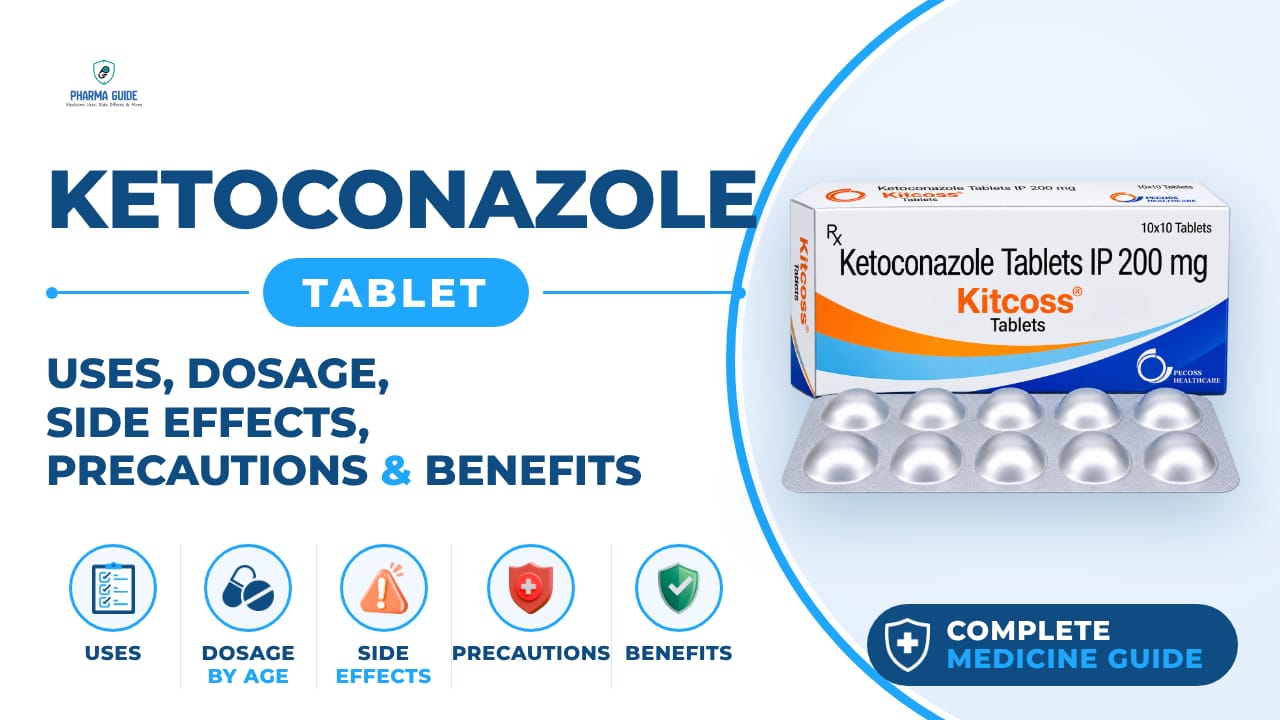
Ketoconazole Tablet: Uses, Dosage, Side Effects, Precautions and Alternates
| Generic name | Ketoconazole |
|---|---|
| Drug class | Antifungal |
| Forms | Tablet |
Quick overview
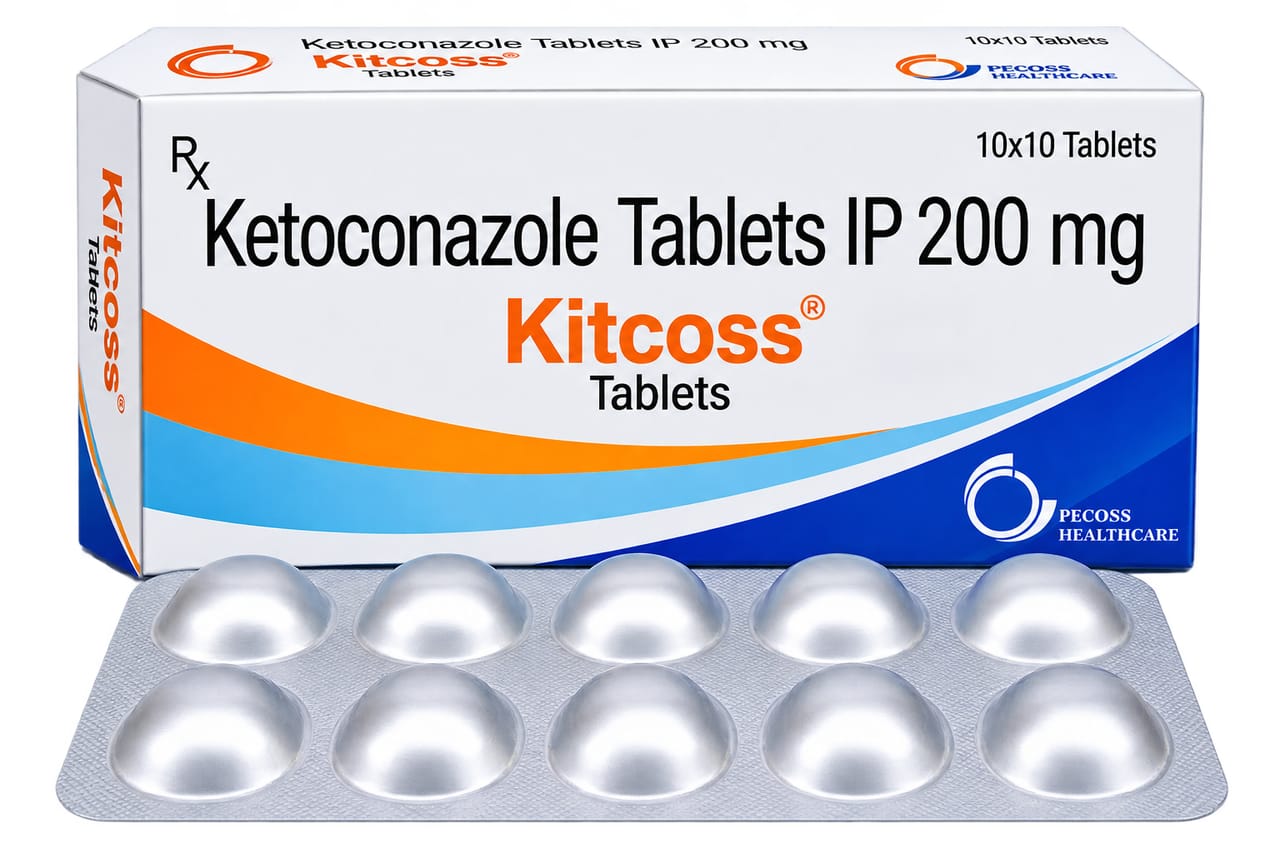
Ketoconazole Tablet is a prescription antifungal medicine used to treat serious fungal or yeast infections. It will not treat colds, the flu, or infections caused by bacteria or viruses. It works by killing the fungus or yeast causing the infection, or by stopping it from growing. Ketoconazole carries important warnings about liver problems and heart rhythm changes, so it should be used exactly as prescribed.
What is Ketoconazole Tablet
Ketoconazole is a prescription medicine used to treat serious fungal or yeast infections. It belongs to a group of medicines called antifungals and will not treat colds, the flu, or infections caused by bacteria or viruses.
Ketoconazole Tablet uses
- Serious fungal infections such as candidiasis (thrush, oral thrush)
- Blastomycosis (Gilchrist's disease)
- Coccidioidomycosis (Valley fever, San Joaquin Valley fever)
- Histoplasmosis (Darling's disease)
- Chromoblastomycosis (chromomycosis)
- Paracoccidioidomycosis (South American blastomycosis, Lutz-Splendore-Almeida disease)
- Parasitic fungal infections on the skin (such as athlete's foot or ringworm) that cannot be treated with topical medicine or griseofulvin, or in patients who cannot take griseofulvin
Benefits of Ketoconazole Tablet
- Kills the fungus or yeast causing the infection, or stops it from growing
How Ketoconazole Tablet works
Ketoconazole works by killing the fungus or yeast causing the infection, or by stopping it from growing.
Ketoconazole Tablet dosage
Take this medicine exactly as directed by your doctor and do not stop without checking with your doctor first. It is best to take this medicine with food, at the same time every day. Keep taking the full course of treatment even if you feel better after the first few doses, because the infection may not clear up if you stop too soon.
If you also take an antacid or other medicine that reduces stomach acid, take it at least 1 hour before or 2 hours after this medicine. If you miss a dose, take it as soon as you remember, but if it is almost time for your next dose, skip the missed dose and do not double up.
Take this medicine by mouth with a glass of water. Talk to your care team about special considerations for use in children.
| Age group | Dose |
|---|---|
| 2–11 years | 3.3–6.6 mg/kg once daily, only under specialist supervision |
| 12–17 years | Specialist-prescribed, weight-based dosing |
| 18–64 years | 200 mg once daily; may increase to 400 mg once daily for serious infections or inadequate response |
| 65+ years | Individualized dosing with close medical supervision |
Available forms and strengths
- Tablet
Side effects of Ketoconazole Tablet
Common
- Nausea
- Headache
- Diarrhea
- Stomach pain
- Abnormal liver function test results
- Sleepiness or unusual drowsiness
- Hair loss or thinning of hair
- Decreased interest in sexual intercourse
- Swelling of the breasts or breast soreness
Serious
- Liver problems (loss of appetite, weight loss, nausea or vomiting, feeling tired, stomach pain or tenderness, dark urine or light-colored stools, yellowing of skin or eyes, fever or rash)
- Changes in heart rhythm (QT prolongation) causing irregular or fast heartbeat, dizziness, feeling faint or lightheaded, chest pain, trouble breathing
- Serious allergic reactions including anaphylaxis (rash, itching, hives, swelling of the face, lips, tongue, or throat, trouble breathing or swallowing)
- Adrenal insufficiency (tiredness, weakness, dizziness, nausea, and vomiting)
- Muscle problems when taken with certain other medicines
- Blood in urine or stools, black tarry stools, unusual bleeding or bruising
- Vision changes, blurred vision, or changes in color vision
Warnings and precautions
- Ketoconazole tablets are not the only medicine available to treat fungal infections and should only be used when other medicines are not right for you. Ketoconazole can cause serious liver problems that have led to death or the need for a liver transplant in some people. It can also cause changes in the heart's electrical activity called QT prolongation, which can lead to life-threatening irregular heartbeats, especially when taken with certain other medicines.
- Do not take ketoconazole tablets together with certain medicines such as lurasidone, simvastatin, lovastatin, eplerenone, dihydroergotamine, ergotamine, ergometrine, methylergometrine, nisoldipine, triazolam, midazolam, or alprazolam, because serious interactions can occur. Ketoconazole tablets are not approved for fungal nail infections, advanced prostate cancer, or Cushing's syndrome.
- It is not known if ketoconazole tablets will harm an unborn baby. Tell your healthcare provider if you are pregnant or plan to become pregnant.
- Ketoconazole can pass into breast milk. You and your healthcare provider should decide whether you will take this medicine or breastfeed, not both.
- Do not take ketoconazole tablets if you have liver problems. Liver problems, sometimes serious and even fatal, can occur during treatment. Call your healthcare provider right away if you notice loss of appetite, nausea or vomiting, tiredness, stomach pain, dark urine, light-colored stools, or yellowing of skin or eyes.
- Do not drink alcohol while taking ketoconazole tablets.
Storage
- Store the medicine in a closed container at room temperature, away from heat, moisture, and direct light
- Keep from freezing
- Keep out of the reach of children and pets
- Do not keep outdated medicine or medicine no longer needed
- Ask your healthcare professional how you should dispose of any medicine you do not use
- Store at room temperature between 20 and 25 degrees C (68 and 77 degrees F)
- Protect from moisture and keep the container tightly closed
- Get rid of any unused medication after the expiration date
When to see a doctor
- Call your healthcare provider right away if you have signs of liver problems, such as loss of appetite or weight loss, nausea or vomiting, tiredness, stomach pain or tenderness, dark urine or light-colored stools, yellowing of your skin or eyes, or fever or rash
- Tell your healthcare provider right away if you feel faint, lightheaded, dizzy, or notice your heart beating irregularly or fast, since these may be signs of a heart rhythm problem
- Stop taking ketoconazole tablets and go to the nearest hospital emergency room right away if you get a rash, itching, hives, fever, swelling of the lips or tongue, chest pain, or have trouble breathing, as these could be signs of a serious allergic reaction
- Call your healthcare provider right away if you have symptoms of adrenal insufficiency such as tiredness, weakness, dizziness, nausea, and vomiting
- If you think you have taken too much of this medicine, contact a poison control center or emergency room right away
Alternatives
- Fluconazole
- Itraconazole
- Terbinafine
- Voriconazole
- Posaconazole
- Isavuconazole
- Griseofulvin
Watch the video
FAQs
What is Ketoconazole Tablet used for?
It is used to treat serious fungal or yeast infections such as candidiasis, blastomycosis, coccidioidomycosis, histoplasmosis, chromoblastomycosis, paracoccidioidomycosis, and certain skin fungal infections like athlete's foot or ringworm that cannot be treated with topical medicine or griseofulvin.
How should I take Ketoconazole Tablet?
Take it exactly as directed by your doctor, with food, at the same time every day, and complete the full course even if you feel better. Take with a glass of water, and if you use antacids or acid-reducing medicine, take them at least 1 hour before or 2 hours after this medicine.
What are the serious side effects of Ketoconazole Tablet?
Serious side effects include liver problems, changes in heart rhythm (QT prolongation), serious allergic reactions including anaphylaxis, adrenal insufficiency, muscle problems with certain other medicines, unusual bleeding or bruising, and vision changes.
What medicines should not be taken with Ketoconazole Tablet?
Do not take it with lurasidone, simvastatin, lovastatin, eplerenone, dihydroergotamine, ergotamine, ergometrine, methylergometrine, nisoldipine, triazolam, midazolam, or alprazolam, because serious interactions can occur.
What is the usual adult dosage of Ketoconazole Tablet?
For adults 18-64 years, the usual dose is 200 mg once daily, which may be increased to 400 mg once daily for serious infections or inadequate response.
General information, not medical advice
Your prescriber and the leaflet in your pack know your situation. This page does not.
- Follow your prescriber and the leaflet
- Don't start, stop, or change a dose on your own
- Doses and warnings differ by country and product
Sources
Video
Related medicines
Terbicip Tablet: Uses, Dosage, Side Effects, Precautions and Alternates
Antifungal
Terbicip Tablet contains terbinafine and treats fungal infections like athlete's foot, ringworm, jock itch, and nail infections. Know uses, dosage, and side
Ketoconazole Shampoo: Uses, Dosage, Side Effects, Precautions and Alternates
Antifungal
Ketoconazole Shampoo is an antifungal treatment for dandruff, seborrheic dermatitis, and scalp fungal infections. Learn uses, dosage, and side effects.