
Safety
General information, not medical advice
Your prescriber and the leaflet in your pack know your situation. This page does not.
- Follow your prescriber and the leaflet
- Don't start, stop, or change a dose on your own
- Doses and warnings differ by country and product
Terbicip Tablet: Uses, Dosage, Side Effects, Precautions and Alternates

| Generic name | Terbinafine |
|---|---|
| Drug class | Antifungal |
| Forms | Tablet |
Quick overview
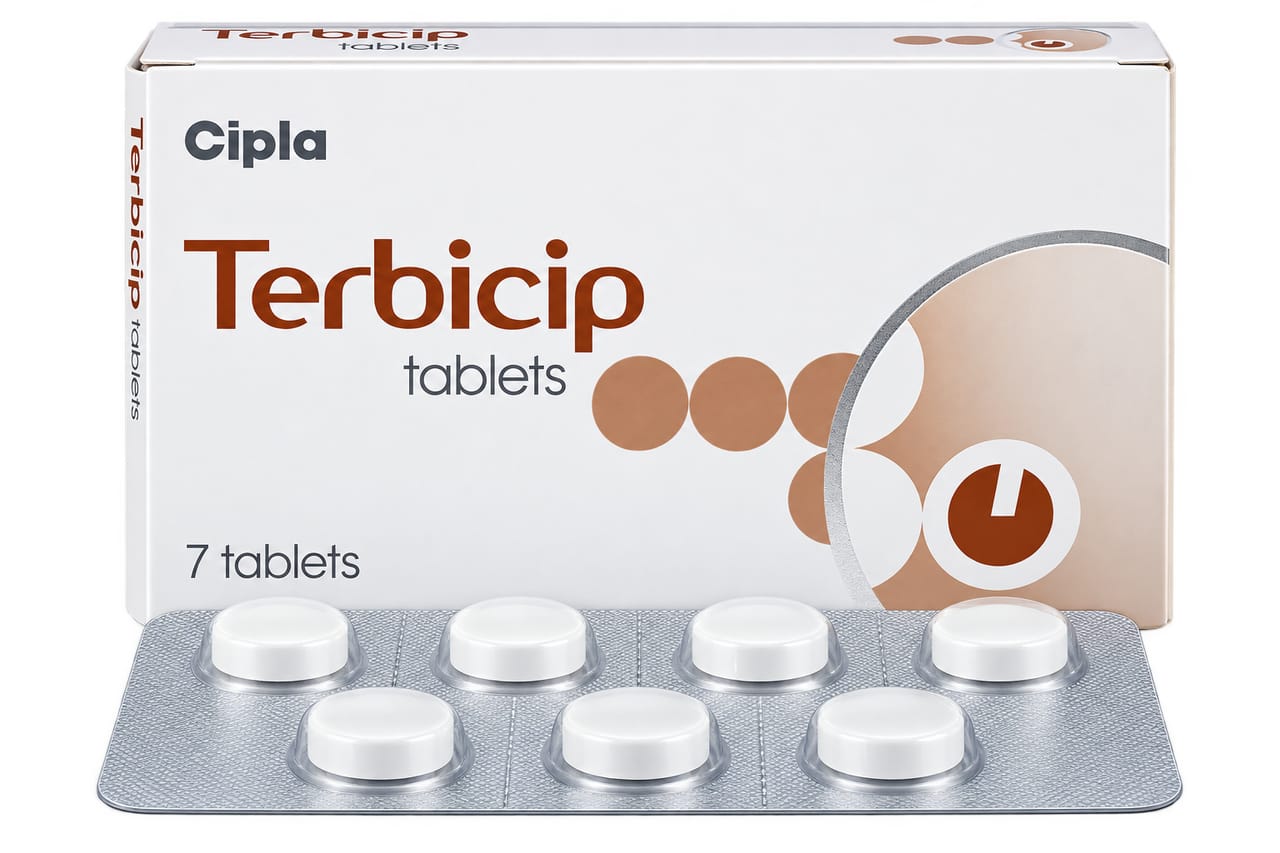
Terbicip Tablet is an antifungal medicine that contains terbinafine as its active ingredient. It is used to treat fungal infections of the skin, hair, and nails, such as athlete's foot, ringworm, jock itch, and nail fungal infections. It works by acting on the fungal cell membrane to stop the fungus from growing and spreading. It should be used exactly as prescribed by your doctor, with attention to liver health and other precautions.
What is Terbicip Tablet
Terbicip Tablet is an antifungal medicine. It contains terbinafine as its active ingredient. It is used to treat fungal infections of the skin, hair, and nails.
Terbicip Tablet uses
- Athlete's foot
- Ringworm infection
- Jock itch
- Onychomycosis (fungal infection of the nails)
- Fungal infections of the scalp and hair follicles (such as tinea capitis)
Benefits of Terbicip Tablet
- Fungal Infection Treatment: Treats certain fungal infections affecting the skin and nails.
- Nail Fungus Support: Helps eliminate susceptible fungal infections of fingernails and toenails.
- Ringworm Treatment: Used for certain dermatophyte infections such as ringworm.
- Athlete's Foot Support: Helps treat fungal infections affecting the feet.
- Jock Itch Treatment: Can help manage susceptible fungal infections of the groin.
- Antifungal Action: Inhibits fungal growth by interfering with fungal cell-membrane formation.
How Terbicip Tablet works
Terbinafine works by acting on the fungal cell membrane, stopping the fungus from dividing and eventually killing it, which prevents the infection from spreading.
Terbicip Tablet dosage
Swallow the tablet whole with a glass of water. Do not cut, break, or chew the tablet. It can be taken with or without food, and taking it with food may help reduce stomach discomfort. Take it in the dose and frequency your doctor prescribes, and do not take it for longer than prescribed.
| Age group | Dose |
|---|---|
| Under 12 Years | Use only if prescribed by a specialist |
| 12–17 Years | Dose determined according to body weight and infection |
| Older Adults (65+ years) | 250 mg once daily; medical evaluation recommended |
Available forms and strengths
- Tablet
Side effects of Terbicip Tablet
Common
- Nausea
- Vomiting
- Diarrhoea
- Stomach pain
- Headache
- Decrease in appetite
- Loss of appetite
- Taste changes
- Joint pain
- Mild rash or itching
- Indigestion
Serious
- Dark urine
- Yellowing of skin and eyes
- Increase in liver enzymes
- Rare liver injury
Warnings and precautions
- Do not use if you are allergic to terbinafine or other active ingredients in this medicine, or if you have an active or serious liver problem. Tell your doctor if you have liver or kidney problems, develop an allergic reaction, are pregnant or breastfeeding, have a weakened immune system, or have lupus erythematosus.
- This medicine can cause serious skin reactions such as Stevens-Johnson syndrome, or a rash linked to raised white blood cell levels.
- This medicine may not work well if you have pityriasis versicolor, a common yeast skin infection.
- This medicine may increase skin sensitivity to sunlight, so use sunscreen when outdoors.
- Complete the full course of treatment even if you feel better after a few doses. Stopping early may cause the infection to come back or worsen, making it harder to treat.
- This medicine can interact with other medicines including other antifungals, antibiotics, blood-thinning medicines, antacids, and medicines for psychiatric illness, high blood pressure, heart problems, or tuberculosis. Tell your doctor about everything you take.
- Never skip doses, and if you miss one, take it as soon as possible without doubling up.
- Overdose symptoms may include headache, nausea, upper abdominal pain and dizziness.
- There is limited information about the safety of Terbicip Tablet in pregnant women. Talk to your doctor before use, and seek medical advice right away if you become pregnant while taking this medicine.
- It is not recommended to use Terbicip Tablet while breastfeeding because terbinafine passes into breast milk. Talk to your doctor first.
- Use this medicine with caution if you have kidney problems, and tell your doctor if you have any kidney issues.
- Use with caution if you have liver problems; your doctor may check your liver function regularly during treatment. Avoid this medicine if you have active or chronic liver disease, and tell your doctor right away if you notice yellowing of the eyes or skin, dark urine, or stomach pain.
- Alcohol should be avoided because it increases strain on the liver. If you drink regularly, check with your doctor.
- It is not known whether this medicine affects mental alertness. If you feel dizzy or have any other unusual effect, avoid driving or operating machinery.
Storage
- Store the Terbicip Tablet in a cool and dry place, protected from direct sunlight, moisture and heat.
- Keep it away from children and pets.
When to see a doctor
- Seek urgent medical help if you think you have taken too much of this medicine or notice symptoms like headache, nausea, upper abdominal pain, or dizziness.
- Tell your doctor right away if you notice yellowing of your eyes or skin, dark urine, or stomach pain.
- Contact your doctor if you experience vomiting, fatigue, dark urine, abdominal pain, or other unusual symptoms.
Alternatives
- Itraconazole
- Fluconazole
- Griseofulvin
Watch the video
FAQs
What is Terbicip Tablet used for?
Terbicip Tablet is used to treat fungal infections of the skin, hair, and nails, including athlete's foot, ringworm, jock itch, onychomycosis (nail fungal infection), and fungal infections of the scalp such as tinea capitis.
How does Terbicip Tablet work?
Terbinafine, the active ingredient in Terbicip Tablet, acts on the fungal cell membrane, stopping the fungus from dividing and eventually killing it, which prevents the infection from spreading.
What are the common side effects of Terbicip Tablet?
Common side effects include nausea, vomiting, diarrhoea, stomach pain, headache, decreased or loss of appetite, taste changes, joint pain, mild rash or itching, and indigestion.
Can Terbicip Tablet be taken during pregnancy or breastfeeding?
There is limited information about the safety of Terbicip Tablet in pregnant women, so a doctor should be consulted before use. It is not recommended during breastfeeding because terbinafine passes into breast milk.
Is alcohol safe while taking Terbicip Tablet?
Alcohol should be avoided because it increases strain on the liver. If you drink regularly, you should check with your doctor.
General information, not medical advice
Your prescriber and the leaflet in your pack know your situation. This page does not.
- Follow your prescriber and the leaflet
- Don't start, stop, or change a dose on your own
- Doses and warnings differ by country and product
Sources
Video
Related medicines

Ketoconazole Shampoo: Uses, Dosage, Side Effects, Precautions and Alternates
Antifungal
Ketoconazole Shampoo is an antifungal treatment for dandruff, seborrheic dermatitis, and scalp fungal infections. Learn uses, dosage, and side effects.
Ketoconazole Tablet: Uses, Dosage, Side Effects, Precautions and Alternates
Antifungal
Ketoconazole Tablet treats serious fungal infections but carries liver damage and heart rhythm risks. Learn uses, dosage, side effects, and warnings.