Ketorolac Tablet: Uses, Dosage, Side Effects, Precautions and Alternates
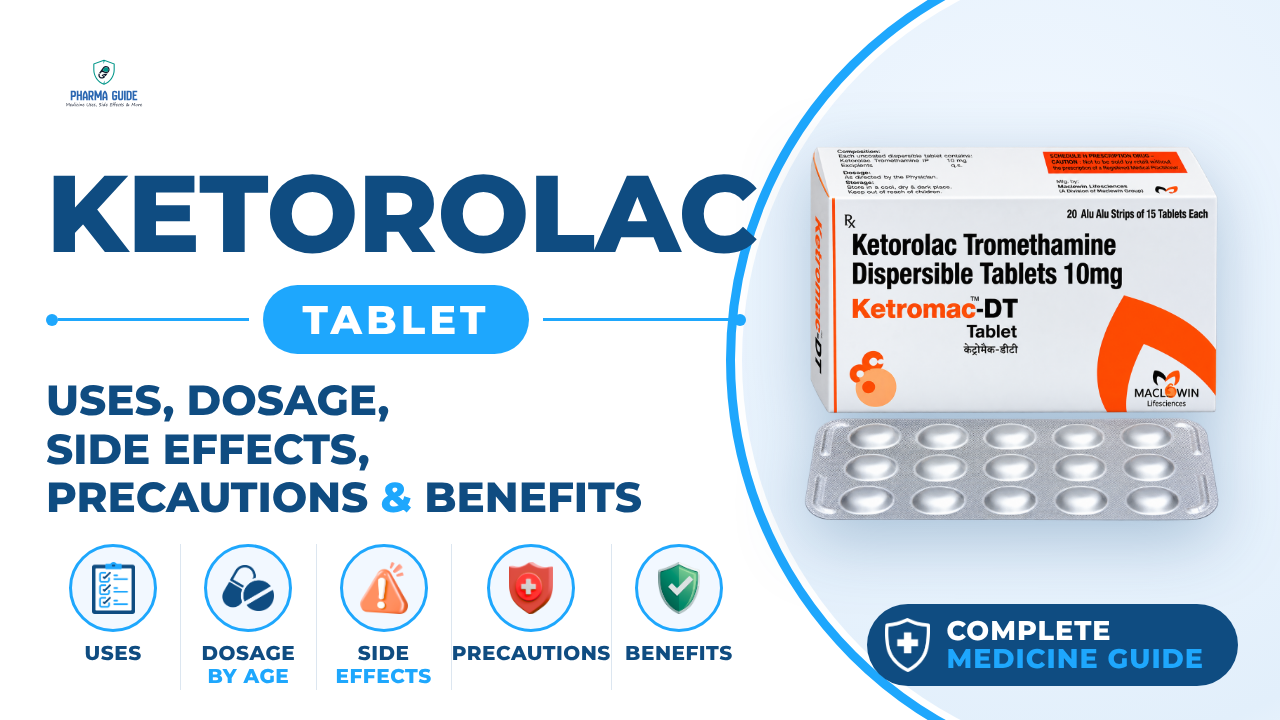
| Generic name | Ketorolac tromethamine |
|---|---|
| Drug class | Non-Steroidal Anti-Inflammatory Drug (NSAID) |
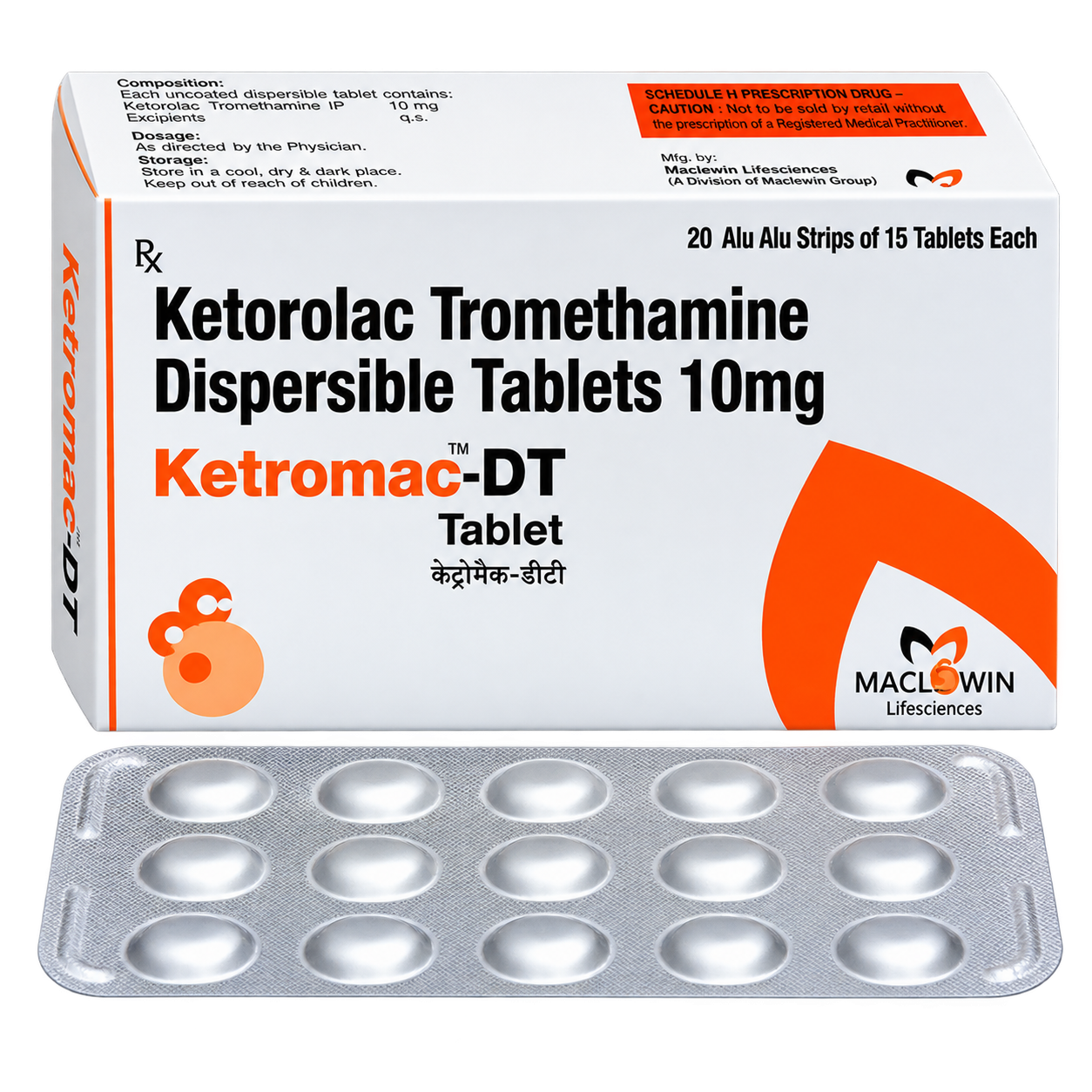
| Forms | Tablet, Dispersible tablet (DT), Intramuscular injection |
Quick overview
Ketorolac Tablet (generic name: Ketorolac tromethamine) is a Non-Steroidal Anti-Inflammatory Drug (NSAID) used for short-term relief of moderate to severe acute pain. It works by decreasing inflammation and is believed to work by blocking prostaglandin production. It is intended for short-term use only, as taking it for more than 5 days increases the risk of bleeding, stomach problems, and kidney injury.
What is Ketorolac Tablet
Ketorolac is a medicine that treats short-term moderate to severe pain. It works by decreasing inflammation and belongs to a group of medicines called NSAIDs.
Ketorolac Tablet uses
- Short-term relief of moderate to severe acute pain
- Pain after surgery (post-surgical pain)
- Pain after labour or from muscle or joint injury
- Post-partum uterine cramping pain
- Dental pain (toothache)
Benefits of Ketorolac Tablet
- Relieves pain and reduces swelling for as long as you keep taking it
How Ketorolac Tablet works
Ketorolac reduces the chemicals your body makes that cause pain and swelling. It is believed to work by blocking prostaglandin production.
Ketorolac Tablet dosage
- Take this medicine by mouth as directed on the prescription label, at the same time every day.
- You can take it with or without food. If it upsets your stomach, take it with food or milk.
- To lessen stomach upset, take it right after a meal, though food may delay the start of pain relief.
- Stay standing or sitting upright for about 15 to 30 minutes after taking the medicine to help prevent throat irritation and trouble swallowing.
- Do not take it more often or for longer than your care team recommends. Use the lowest dose for the shortest time.
- Taking it for more than 5 days increases the risk of bleeding, stomach problems, and kidney injury.
- Talk to your care team about the use of this medicine in children, as special care may be needed.
- People 65 years and older may have a stronger reaction and need a smaller dose.
- Do not take aspirin or other NSAIDs such as ibuprofen or naproxen while taking this medicine.
| Age group | Dose |
|---|---|
| Under 17 years | Not recommended for routine oral use; specialist guidance required |
| 17–64 years, ≥50 kg | 10 mg every 4–6 hours as needed; maximum 40 mg/day |
| 17–64 years, <50 kg | 10 mg every 4–6 hours; maximum 40 mg/day |
| 65+ years | 10 mg every 4–6 hours; maximum 40 mg/day |
Available forms and strengths
- Tablet
- Dispersible tablet (DT)
- Intramuscular injection
Side effects of Ketorolac Tablet
Common
- Headache
- Loss of appetite
- Nausea
- Upset stomach (indigestion)
- Diarrhea
- Constipation
- Dizziness
- Drowsiness
- Stomach pain
- Flatulence (gas)
- Heartburn
- Vomiting
Serious
- Allergic reactions such as skin rash, itching, hives, swelling of the face, lips, tongue, or throat
- Bleeding such as bloody or black tar-like stools, vomiting blood or material that looks like coffee grounds, red or dark brown urine, unusual bruising or bleeding
- Heart attack signs such as chest pain or tightness, nausea, shortness of breath, cold or clammy skin, feeling faint
- Heart failure signs such as shortness of breath, swelling of the ankles, feet or hands, sudden weight gain, unusual weakness
- Increase in blood pressure
- Kidney injury such as decreased urine or swelling of the ankles, hands or feet
- Liver injury such as upper belly pain, dark urine, yellowing of the skin or eyes, unusual weakness
- Serious skin reactions such as rash, blistering, peeling, or loosening of the skin
- Stroke signs such as sudden numbness or weakness, trouble speaking, confusion, trouble walking, severe headache, vision changes
- Aseptic meningitis (stiff neck, severe headaches, fever)
Warnings and precautions
- This medicine is for short-term treatment only.
- Taking it for more than 5 days increases the risk of bleeding, stomach problems, and kidney injury.
- This medicine can cause serious bleeding, ulcers, or tears in the stomach.
- These can happen at any time without warning signs and are more common with long-term use.
- This medicine increases the risk of blood clots, heart attack, and stroke, which can occur at any time and are more common with long-term use and in those with heart disease.
- This medicine may cause serious skin reactions that can happen weeks to months after starting it.
- Do not take this medicine if you have had or are planning to have heart bypass surgery (CABG).
- Do not take aspirin or other NSAIDs such as ibuprofen or naproxen while taking this medicine, as side effects like upset stomach, nausea, and ulcers are more likely.
- This medicine may cause temporary infertility.
- Do not share this medicine with others; it is only for you.
- Do not take this medicine at 28 weeks of pregnancy or more.
- Taking it after 20 weeks of pregnancy may cause serious birth defects, and use after 30 weeks is not recommended.
- Talk to your care team if you may be pregnant.
- Do not use this medicine if you are breastfeeding or planning to breastfeed, because of the potential for serious adverse reactions in nursing infants.
- Do not use this medicine if you have moderate to severe kidney impairment.
- It can cause kidney injury, and those with lesser kidney impairment need a reduced dose and close monitoring.
- Do not use this medicine if you have severe liver impairment or active liver disease.
- Use with caution if you have a history of liver disease.
- Do not drink alcoholic beverages while taking this medicine because you would be more likely to develop stomach problems.
- This medicine may make you drowsy, dizzy or light-headed. If this happens, do not drive or operate machinery and be careful with activities that require alertness.
Storage
- Store at room temperature between 15 and 30 degrees C (59 and 86 degrees F).
- Protect from moisture and light. Keep the container tightly closed.
- Keep out of the reach of children and pets.
- Get rid of any unused medicine after the expiration date.
- Do not keep outdated medicine or medicine no longer needed; return unused medicine to your pharmacist.
- To dispose of medicine, take it to a medicine take-back program, or if safe to put in the trash, mix it with cat litter, dirt, or coffee grounds, seal it in a bag, and put it in the trash.
When to see a doctor
- Talk to your care team right away if you have stomach pain, bloody or black tar-like stools, or vomit blood that is red or looks like coffee grounds.
- Talk to your care team right away if you have fever or flu-like symptoms with a rash, which may turn into blisters or peeling skin, or a red rash with swelling of the face, lips, or lymph nodes.
- Stop taking this medicine and get emergency medical help immediately if you have bloody or black tarry stools, trouble breathing, wheezing, chest tightness, or a skin rash, hives, swelling or itching.
- Check with your care team immediately if you develop chills, fever, muscle aches, or flu-like symptoms, especially before or with a skin rash, as these may be the first signs of a serious allergic reaction.
- If you think you have taken too much of this medicine, contact your local poison control center or emergency room at once.
Alternatives
- Etoricoxib
- Meloxicam
- Aceclofenac
- Mefenamic acid
- Ketoprofen
- Paracetamol (acetaminophen)
FAQs
What is Ketorolac Tablet used for?
It is used for short-term relief of moderate to severe acute pain, including pain after surgery, labour, muscle or joint injury, post-partum uterine cramping, and dental pain.
How long can I take Ketorolac Tablet?
It is intended for short-term use only. Taking it for more than 5 days increases the risk of bleeding, stomach problems, and kidney injury.
Can I take Ketorolac Tablet with other NSAIDs like ibuprofen?
No, you should not take aspirin or other NSAIDs such as ibuprofen or naproxen while taking this medicine, as side effects like upset stomach, nausea, and ulcers are more likely.
Is Ketorolac Tablet safe during pregnancy?
No, you should not take it at 28 weeks of pregnancy or more. Taking it after 20 weeks of pregnancy may cause serious birth defects, and use after 30 weeks is not recommended.
What are the common side effects of Ketorolac Tablet?
Common side effects include headache, loss of appetite, nausea, indigestion, diarrhea, constipation, dizziness, drowsiness, stomach pain, flatulence, heartburn, and vomiting.
Sources
Video
Related medicines
Non-steroidal anti-inflammatory drug (NSAID)
Ibuprofen Gel: Uses, Dosage, Side Effects, Precautions and Alternates
Ibuprofen Gel is a topical NSAID for muscle and joint pain, strains, sprains and backache. Learn uses, dosage, side effects and precautions.
Non-Steroidal Anti-Inflammatory Drug (NSAID)
Naprosyn Tablet: Uses, Dosage, Side Effects, Precautions and Alternates
Naprosyn Tablet (naproxen) relieves pain and inflammation in arthritis, period pain and muscle conditions. Learn dosage, side effects, and precautions.