Naprosyn Tablet: Uses, Dosage, Side Effects, Precautions and Alternates
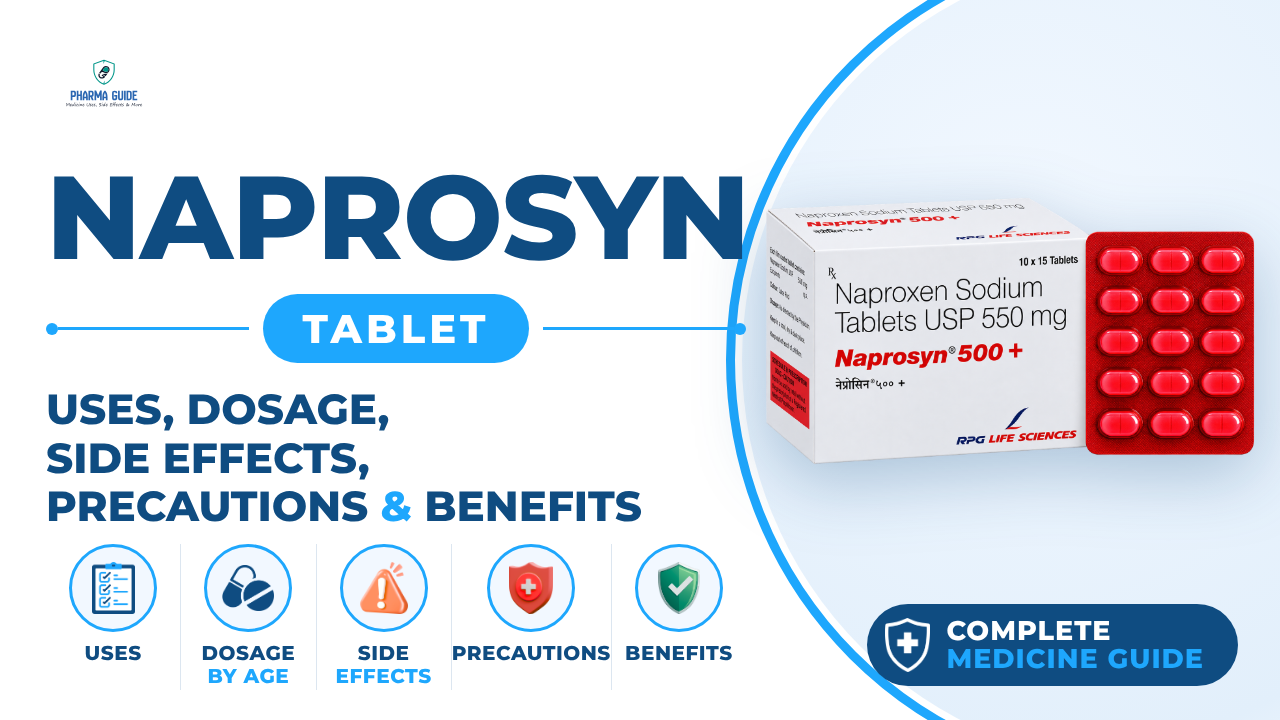
| Generic name | Naproxen |
|---|---|
| Drug class | Non-Steroidal Anti-Inflammatory Drug (NSAID) |
| Forms | Tablet, Gastro-resistant tablet, Suspension, Gel, Sustained-release (SR) tablet |
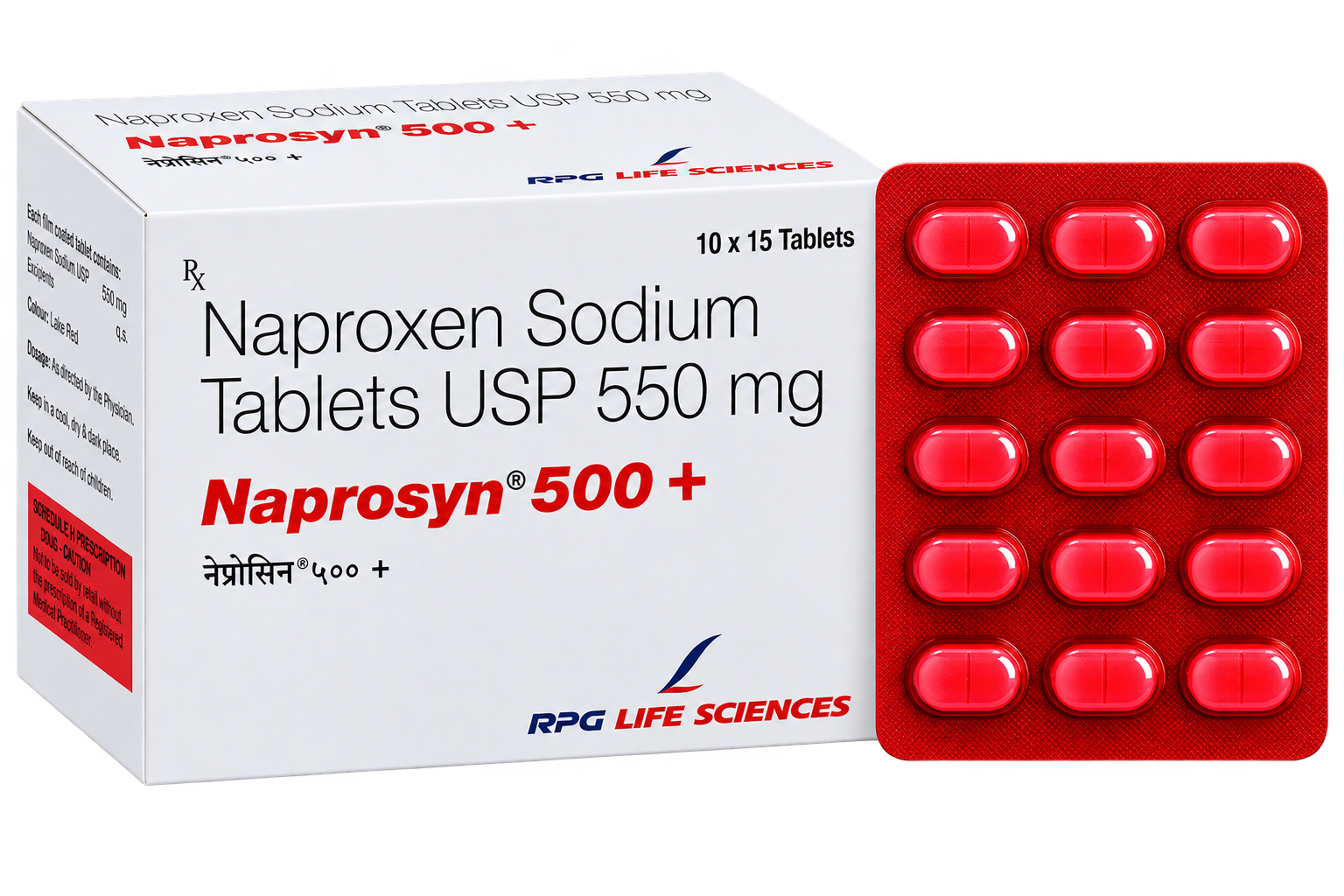
Quick overview
Naprosyn Tablet contains naproxen, a non-steroidal anti-inflammatory drug (NSAID), that reduces pain, swelling, redness and heat (inflammation). It is used to treat painful joint and muscle conditions such as arthritis, as well as period pain. Naprosyn should be taken exactly as prescribed, with important precautions around stomach, heart, kidney and liver health.
What is Naprosyn Tablet
Naprosyn Tablet contains naproxen, a non-steroidal anti-inflammatory drug (NSAID). It lessens pain, swelling, redness and heat (inflammation) and is used to treat several painful joint and muscle conditions as well as period pain.
Naprosyn Tablet uses
- Rheumatoid arthritis
- Osteoarthritis
- Ankylosing spondylitis
- Gout
- Muscle, joint and tendon problems such as sprains and strains
- Period pain (dysmenorrhoea)
- Back pain and stiffness
Benefits of Naprosyn Tablet
- Relieves pain and swelling in conditions like arthritis and ankylosing spondylitis
- Eases menstrual (period) pain
- Helps relieve stiffness and pain in the back and joints
How Naprosyn Tablet works
It works by stopping the formation of certain substances in the body that cause pain and swelling.
Naprosyn Tablet dosage
- Take this medicine with or after food to avoid stomach irritation.
- Swallow the tablets whole with a little water.
- Do not break, chew or crush the tablet.
- Take this medicine at around the same time daily.
- Do not stop taking this medicine without talking to your doctor, even if you feel better.
- Make sure you drink enough fluid and stay well hydrated while taking this medicine, especially if you have kidney problems.
- Gastro-resistant tablets are coated so they pass undissolved through the stomach into the small intestine; swallow them whole and do not chew.
| Age group | Dose |
|---|---|
| Under 2 years | Not routinely recommended; specialist advice required |
| 2–17 years | Dose is generally weight-based, not simply age-based; use only when prescribed |
| Adults (18–64) | Commonly 250–500 mg twice daily, depending on the condition |
| 65+ years | Usually the lowest effective dose for the shortest duration, because stomach, kidney, and bleeding risks are higher |
Available forms and strengths
- Tablet
- Gastro-resistant tablet
- Suspension
- Gel
- Sustained-release (SR) tablet
Side effects of Naprosyn Tablet
Common
- Nausea and vomiting
- Heartburn and indigestion
- Stomach pain
- Bloating
- Constipation
- Diarrhoea
- Wind
- Headache
- Dizziness
- Drowsiness
- Ringing in the ears
- Skin rash
- Inflammation of the mouth, lips, cheeks, gums or throat
Serious
- Bleeding from the stomach or gut (vomit with blood or coffee-ground-like bits, black or bloody stools)
- Ulcers or holes forming in the stomach or gut
- Problems with your pancreas (severe stomach pain spreading to the back)
- Worsening of ulcerative colitis or Crohn's disease
- Allergic reactions with swelling of the throat, face, hands or feet and breathing difficulty
- Severe skin reactions with blisters or peeling skin
- Liver problems including jaundice and hepatitis
- Heart attack (chest pain spreading to neck, shoulders and left arm)
- Stroke (muscle weakness, numbness, altered senses, confusion)
- Meningitis (fever, stiff neck, headache, sensitivity to light, confusion)
- Kidney problems including blood in the urine
- Blood disorders such as anaemia and changes in white blood cells
Warnings and precautions
- Medicines such as naproxen may be linked to a small increased risk of heart attack or stroke.
- This risk is more likely with higher doses and longer treatment, so do not exceed the recommended dose or duration.
- Do not take this medicine if you have now or have ever had stomach or gut problems like an ulcer or bleeding.
- This medicine is not recommended before, during or after coronary artery bypass graft (CABG) surgery as it may increase the risk of heart attack and stroke.
- This medicine is not recommended if you have a history of NSAID-induced asthma as it may worsen your condition.
- This medicine should be used with extreme caution if you have active bleeding or clotting disorders as it may prolong bleeding time.
- Use with caution in the elderly due to an increased risk of side effects; the minimum dose for the shortest time should be used.
- This medicine is not recommended during pregnancy, especially in the last three months, as it can harm your unborn baby.
- If taken from about 20 weeks it can cause kidney and heart problems in the baby.
- Talk to your doctor before use if you are pregnant, planning a pregnancy or having trouble becoming pregnant.
- This medicine may pass into breast milk in small amounts. One source advises against use while breast-feeding, so talk to your doctor before taking it.
- Use this medicine with extreme caution if you have kidney problems, as it may increase the risk of kidney toxicity. Your doctor will monitor your kidney function.
- Use this medicine with extreme caution if you have liver problems, as it may raise liver enzyme levels and increase the risk of liver toxicity. Your doctor will monitor your liver function.
- Avoid alcohol while taking this medicine as it can increase the risk of stomach and intestinal bleeding.
- This medicine may cause sleepiness or dizziness.
- Avoid driving vehicles or operating heavy machinery until you know how it affects you.
Storage
- Keep this medicine out of the sight and reach of children.
- Do not use this medicine after the expiry date shown on the label or carton. The expiry date refers to the last day of that month.
- Do not store above 25°C.
- Store the tablets in the package or container supplied and do not transfer them to another container.
- Do not throw away any medicines via wastewater or household waste. Ask your pharmacist how to throw away medicines you no longer use.
When to see a doctor
- Stop taking the medicine and seek immediate medical help if you pass blood in your stools, pass black tarry stools, or vomit blood or dark particles that look like coffee grounds.
- Stop taking the medicine and tell your doctor straight away if you have signs of an allergic reaction such as swelling of the throat, face, hands or feet, difficulty breathing, or skin rashes and blisters.
- Seek emergency medical treatment in case of an overdose. Take the container and any remaining tablets with you to the hospital or doctor.
- Stop taking the medicine and tell your doctor if you experience indigestion, heartburn, stomach pain or other abnormal stomach symptoms.
Alternatives
- Ibuprofen
- Diclofenac
- Aceclofenac
- Meloxicam
- Etodolac
FAQs
What is Naprosyn Tablet used for?
Naprosyn Tablet is used to treat painful joint and muscle conditions such as rheumatoid arthritis, osteoarthritis, ankylosing spondylitis, gout, sprains and strains, back pain and stiffness, as well as period pain (dysmenorrhoea).
How should I take Naprosyn Tablet?
Take it with or after food to avoid stomach irritation, swallowing the tablets whole with water without breaking, chewing or crushing them. Take it at around the same time daily and do not stop without talking to your doctor, even if you feel better.
What is the usual adult dose of Naprosyn Tablet?
For adults aged 18 to 64, the common dose is 250–500 mg twice daily depending on the condition. Those 65 and over usually need the lowest effective dose for the shortest duration due to higher risks of stomach, kidney and bleeding problems.
What are the serious side effects of Naprosyn Tablet?
Serious side effects include bleeding or ulcers in the stomach or gut, pancreas problems, worsening of ulcerative colitis or Crohn's disease, allergic reactions, severe skin reactions, liver problems, heart attack, stroke, meningitis, kidney problems, and blood disorders.
Can I take Naprosyn Tablet during pregnancy?
Naprosyn is not recommended during pregnancy, especially in the last three months, as it can harm the unborn baby and, if taken from about 20 weeks, can cause kidney and heart problems in the baby. Talk to your doctor before use if pregnant or planning pregnancy.
Sources
- Medicines.org.uk. 2021. Naproxen 500 mg tablets - Summary of Product Characteristics (SmPC) - (emc).
- Accessdata.fda.gov FDA label for naproxen.
- Dailymed.nlm.nih.gov. Naproxen Sodium Tablets Drug Facts.
- MedlinePlus Drug Information: Naproxen.
- PubChem: Naproxen.
- emc Patient Information Leaflet: Naproxen 250mg & 500mg Tablets, Wockhardt UK Ltd.
- TEVA UK Limited Patient Leaflet: Naproxen 250mg Gastro-resistant Tablets.
Video
Related medicines
Non-steroidal anti-inflammatory drug (NSAID)
Ibuprofen Gel: Uses, Dosage, Side Effects, Precautions and Alternates
Ibuprofen Gel is a topical NSAID for muscle and joint pain, strains, sprains and backache. Learn uses, dosage, side effects and precautions.
Non-Steroidal Anti-Inflammatory Drug (NSAID)
Ketorolac Tablet: Uses, Dosage, Side Effects, Precautions and Alternates
Ketorolac Tablet is an NSAID for short-term relief of moderate to severe acute pain. Learn about its uses, dosage, side effects, and warnings.