
Safety
General information, not medical advice
Your prescriber and the leaflet in your pack know your situation. This page does not.
- Follow your prescriber and the leaflet
- Don't start, stop, or change a dose on your own
- Doses and warnings differ by country and product
Kevzara Injection: Uses, Dosage, Side Effects, Precautions and Alternates
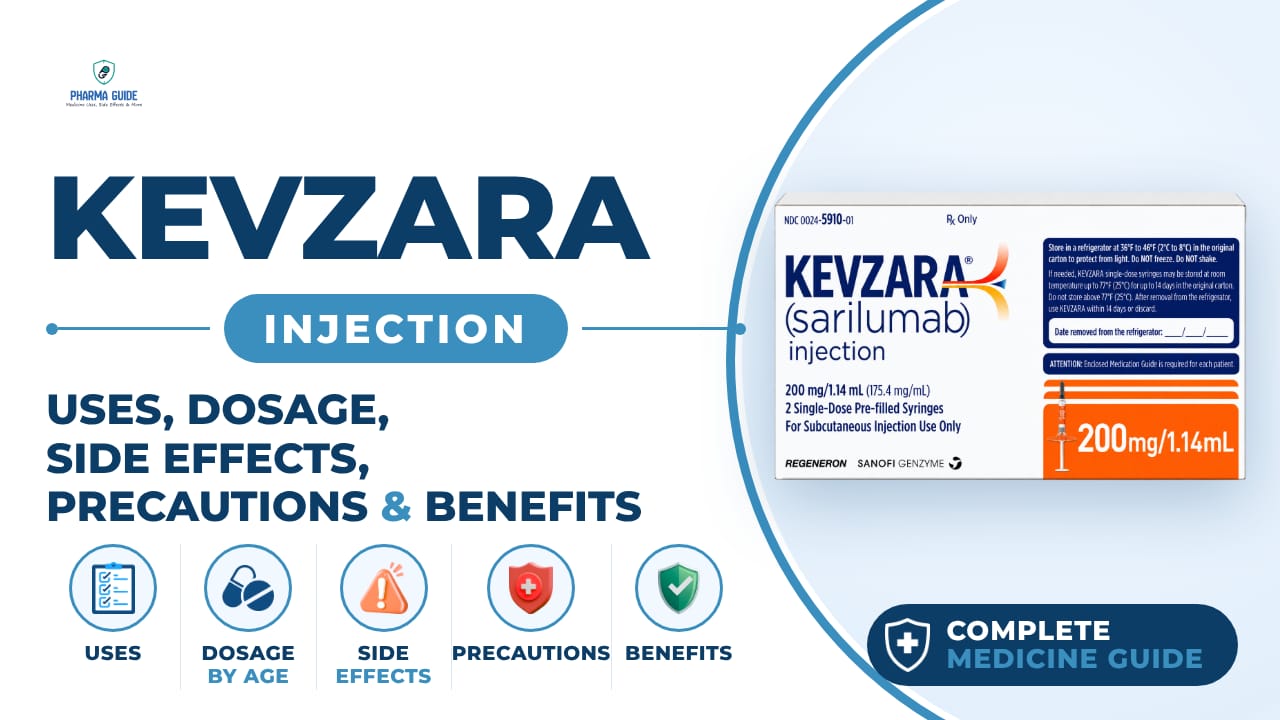
| Generic name | Sarilumab |
|---|---|
| Drug class | Interleukin-6 (IL-6) receptor antagonist |
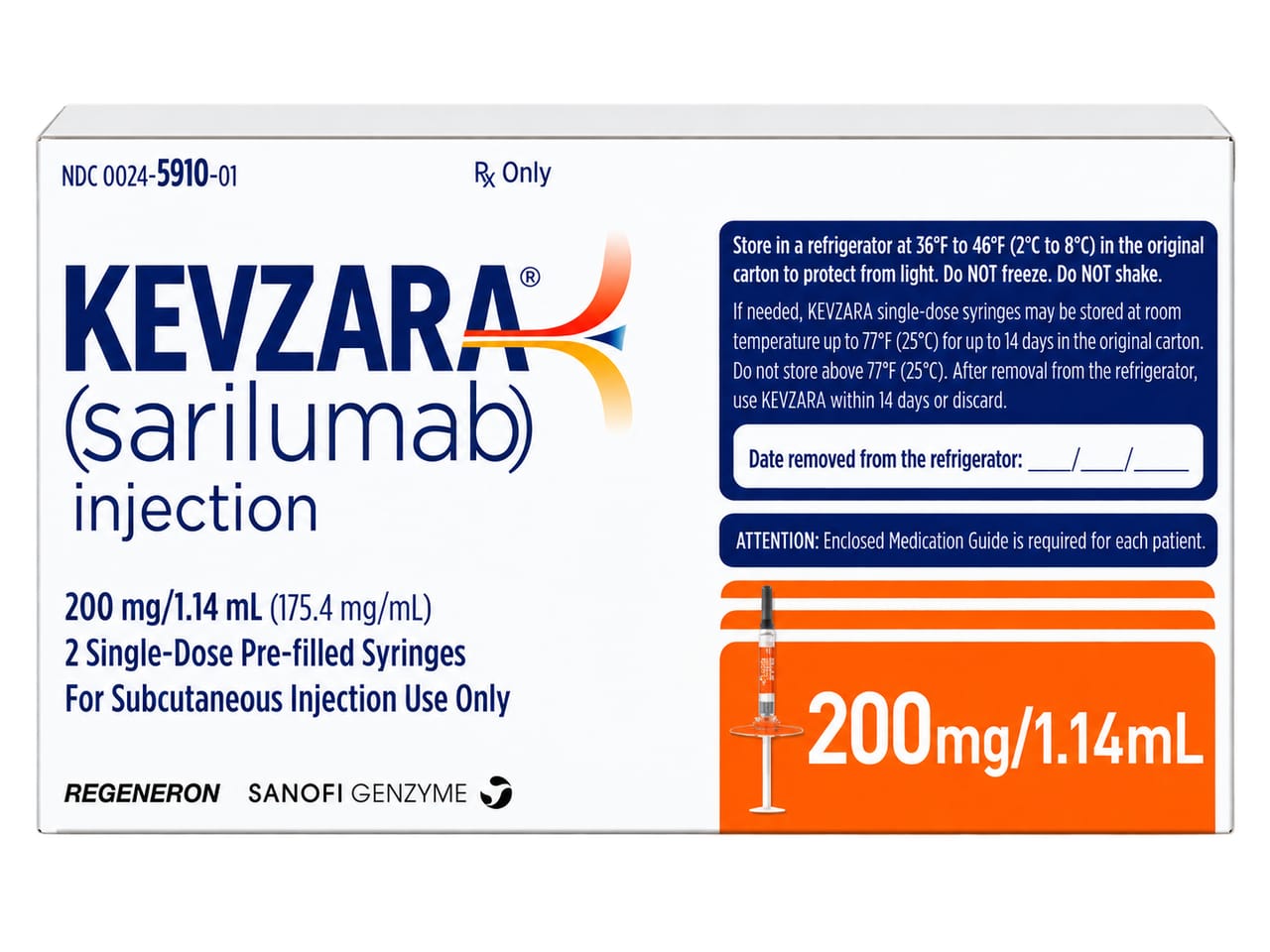
| Forms | Pre-filled syringe (150 mg/1.14 mL or 200 mg/1.14 mL), Pre-filled pen (150 mg/1.14 mL or 200 mg/1.14 mL) |
Quick overview
Kevzara Injection (sarilumab) is an Interleukin-6 (IL-6) receptor antagonist given as a subcutaneous injection. It is used to treat adults with moderately to severely active rheumatoid arthritis who have not responded well to DMARDs, and adults with polymyalgia rheumatica who have had an inadequate response to corticosteroids or who relapse during steroid taper. It works by blocking IL-6, a protein that drives inflammation in these conditions. It is typically injected once every two weeks using a pre-filled syringe or pre-filled pen.
What is Kevzara Injection
Kevzara is an injectable prescription medicine called an Interleukin-6 (IL-6) receptor blocker. It is given as an injection under the skin and is used to treat certain inflammatory conditions in adults.
Kevzara Injection uses
- Treatment of adults with moderately to severely active rheumatoid arthritis (RA) who have had an inadequate response or intolerance to one or more Disease-Modifying Anti-Rheumatic Drugs (DMARDs)
- Treatment of adults with polymyalgia rheumatica (PMR) who have had an inadequate response to corticosteroids, or who have experienced a relapse during corticosteroid taper
Benefits of Kevzara Injection
- Can be used in combination with methotrexate or other traditional DMARDs for RA, or as monotherapy if methotrexate/DMARDs are not tolerated
- May help reduce joint damage progression in RA over time
- Used with a tapering dose of steroids, may help relieve signs and symptoms of PMR and allow gradual reduction of steroid dose
How Kevzara Injection works
Kevzara blocks a protein called Interleukin-6 (IL-6), which is found at high levels in the joints of people with RA or PMR and plays a major role in causing inflammation and symptoms. By blocking IL-6, Kevzara helps stop the immune system from attacking healthy tissue.
Kevzara Injection dosage
Kevzara is given as an injection under the skin (subcutaneous injection), once every two weeks. It comes as a single-dose pre-filled syringe or pre-filled pen; a healthcare provider will prescribe the dose that is best for you. You or a caregiver should receive proper training before giving injections at home.
Let the pre-filled syringe sit at room temperature for 30 minutes before injecting; let the pre-filled pen sit at room temperature for 60 minutes before injecting; do not warm it any other way. Inject the full amount in the syringe or pen as directed. Rotate injection sites with each injection; do not inject into skin that is tender, damaged, or has bruises or scars.
You can inject into the thigh or belly, except the area around the belly button; a caregiver can also use the upper arm. Do not inject through clothing.
If you miss a dose and it has been 3 days or less, take the dose as soon as you can, then resume your regular schedule; if it has been 4 days or more, or you are unsure, call your healthcare provider for instructions.
| Age group | Dose |
|---|---|
| Pediatric patients ≥63 kg with pJIA | 200 mg subcutaneously once every 2 weeks |
| 18–64 years | 200 mg subcutaneously once every 2 weeks |
Available forms and strengths
- Pre-filled syringe (150 mg/1.14 mL or 200 mg/1.14 mL)
- Pre-filled pen (150 mg/1.14 mL or 200 mg/1.14 mL)
Side effects of Kevzara Injection
Common
- Injection site redness and itching
- Upper respiratory tract infection (cough, cold, sore throat, runny nose, congestion, sneezing)
- Urinary tract infection (burning when you urinate or urinating more often than normal)
- Nasal congestion, sore throat, and runny nose
- Cold sores
- Low levels of white blood cells (shown by blood test)
Serious
- Serious infections, including tuberculosis and infections caused by bacteria, fungi, or viruses that can spread throughout the body; some people have died from these infections
- Low neutrophil count
- Low platelet count
- Increase in certain liver function tests
- Tears (perforation) in the stomach or intestines, often with fever and stomach pain, nausea, vomiting, constipation, or diarrhea
- Diverticulitis
- Serious allergic reactions (anaphylaxis)
- Increased risk of certain cancers
- Changes in blood cholesterol levels
Warnings and precautions
- Kevzara affects the immune system and can lower your body's ability to fight infections. Serious infections, including tuberculosis and infections that can spread throughout the body, have occurred, and some people have died. You should be tested for tuberculosis before starting treatment.
- Do not start Kevzara if you have an active infection of any kind.
- Some people using Kevzara have developed tears (perforations) in the stomach or intestines, most often those also taking NSAIDs, corticosteroids, or methotrexate.
- Regular blood tests are needed to check for low white blood cell counts, low platelet counts, and liver enzyme changes, as these can be common and sometimes severe.
- Kevzara may increase the risk of certain cancers by changing how the immune system works.
- Avoid receiving live vaccines while being treated with Kevzara.
- Kevzara should only be used during pregnancy if the potential benefit justifies the potential risk to the baby. It is not known if Kevzara will harm an unborn baby, and women planning pregnancy should discuss this with their healthcare provider. There is a pregnancy registry for women exposed to Kevzara during pregnancy.
- It is not known if Kevzara passes into breast milk or how it might affect a breastfed baby. You and your healthcare provider should decide whether you will use Kevzara or breastfeed, not both.
- No dose adjustment is needed for mild to moderate kidney impairment. Kevzara has not been studied in people with severe kidney impairment.
- Kevzara is not recommended for people with active liver disease or liver impairment, as it has not been studied in these patients, including those with hepatitis B or C.
- Discuss alcohol use with the treating clinician, particularly if liver tests are abnormal.
- Kevzara usually does not directly impair driving, but avoid driving if dizziness or weakness occurs.
Storage
- Do not use this medicine after the expiry date which is stated on the label and carton
- Store in a refrigerator (2°C - 8°C). Do not freeze
- Keep the syringe or pen in the outer carton in order to protect from light
- Do not expose to intense heat or direct sunlight
- The pre-filled syringe should be left at room temperature for 30 minutes prior to use; the pre-filled pen should be left at room temperature for 60 minutes prior to use
- The syringe or pen should be used within 14 days after being taken out of the refrigerator
- A puncture-resistant container for disposal of syringes or pens should be used and should be kept out of the reach of children
- Keep out of reach and sight of children
When to see a doctor
- Get medical help right away if you notice any signs of a serious allergic reaction, such as trouble breathing, swelling of the lips, tongue or face, chest pain, feeling dizzy or faint, or stomach pain or vomiting.
- Call your healthcare provider right away if you notice any symptoms of an infection.
- Call your healthcare provider right away if you have fever and stomach (abdominal) pain that does not go away, as this could be a sign of a serious bowel problem.
Alternatives
- Tocilizumab
- Adalimumab
- Etanercept
Watch the video
FAQs
What is Kevzara Injection used for?
Kevzara is used to treat adults with moderately to severely active rheumatoid arthritis who have had an inadequate response or intolerance to DMARDs, and adults with polymyalgia rheumatica who have had an inadequate response to corticosteroids or who relapse during steroid taper.
How is Kevzara Injection given?
Kevzara is given as a subcutaneous injection once every two weeks using a single-dose pre-filled syringe or pre-filled pen, typically into the thigh or belly, after letting it sit at room temperature beforehand.
What are the common side effects of Kevzara Injection?
Common side effects include injection site redness and itching, upper respiratory tract infection, urinary tract infection, nasal congestion, sore throat, runny nose, cold sores, and low white blood cell levels.
What should I do if I miss a dose of Kevzara?
If it has been 3 days or less since your missed dose, take it as soon as you can and resume your regular schedule; if it has been 4 days or more, or you are unsure, call your healthcare provider for instructions.
Who should not use Kevzara Injection?
Kevzara should not be started if you have an active infection of any kind, and it is not recommended for people with active liver disease or liver impairment.
General information, not medical advice
Your prescriber and the leaflet in your pack know your situation. This page does not.
- Follow your prescriber and the leaflet
- Don't start, stop, or change a dose on your own
- Doses and warnings differ by country and product
Sources
Video
Related medicines

Injectafer Injection: Uses, Dosage, Side Effects, Precautions and Alternates
Iron products
Injectafer (ferric carboxymaltose) treats iron deficiency anemia and heart failure-related iron deficiency via IV. Learn uses, dosage, side effects, and

Gliclazide Tablet: Uses, Dosage, Side Effects, Precautions and Alternates
Sulfonylurea (hypoglycemic/antidiabetic agent)
Gliclazide Tablet is a sulfonylurea for type 2 diabetes that boosts insulin release. Learn about dosage, side effects, warnings, and precautions.