
Safety
General information, not medical advice
Your prescriber and the leaflet in your pack know your situation. This page does not.
- Follow your prescriber and the leaflet
- Don't start, stop, or change a dose on your own
- Doses and warnings differ by country and product
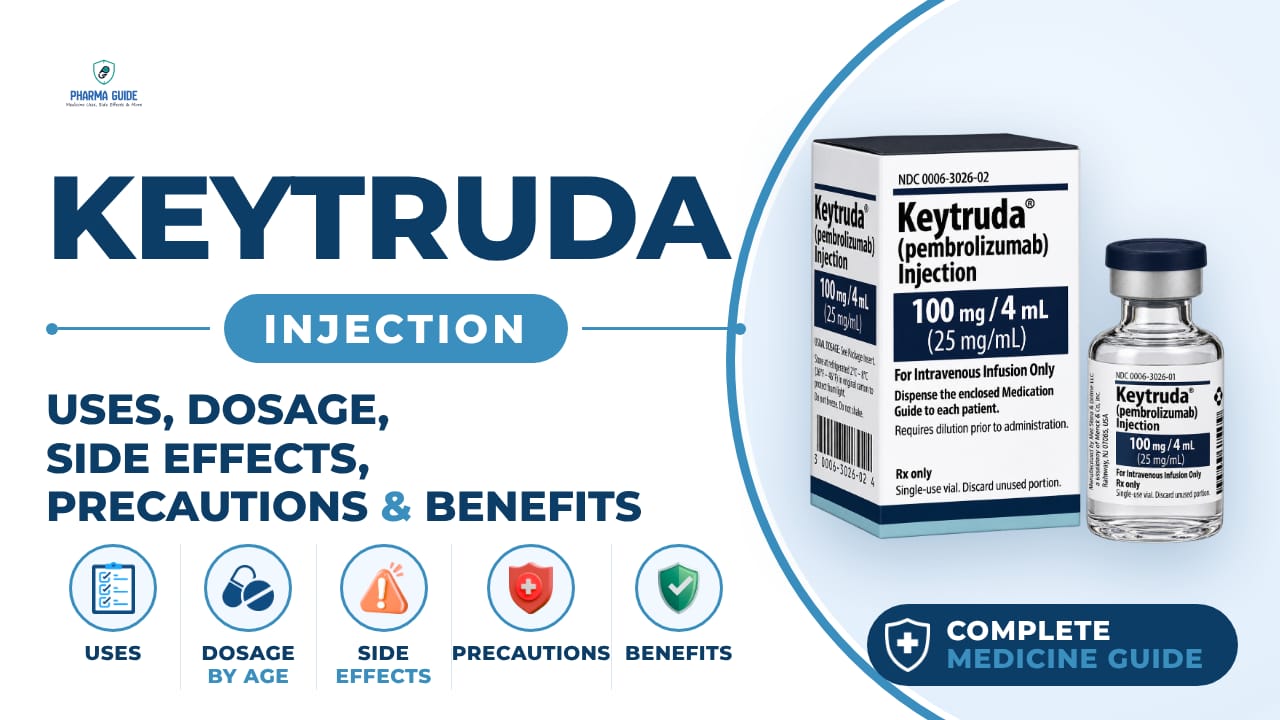
Keytruda Injection: Uses, Dosage, Side Effects, Precautions and Alternates
| Generic name | pembrolizumab |
|---|---|
| Drug class | Immune checkpoint inhibitors (PD-1 and PD-L1 inhibitors) |
| Forms | Single-dose vial for intravenous infusion, Injection, powder, lyophilized, for solution, Injection, solution |
Quick overview
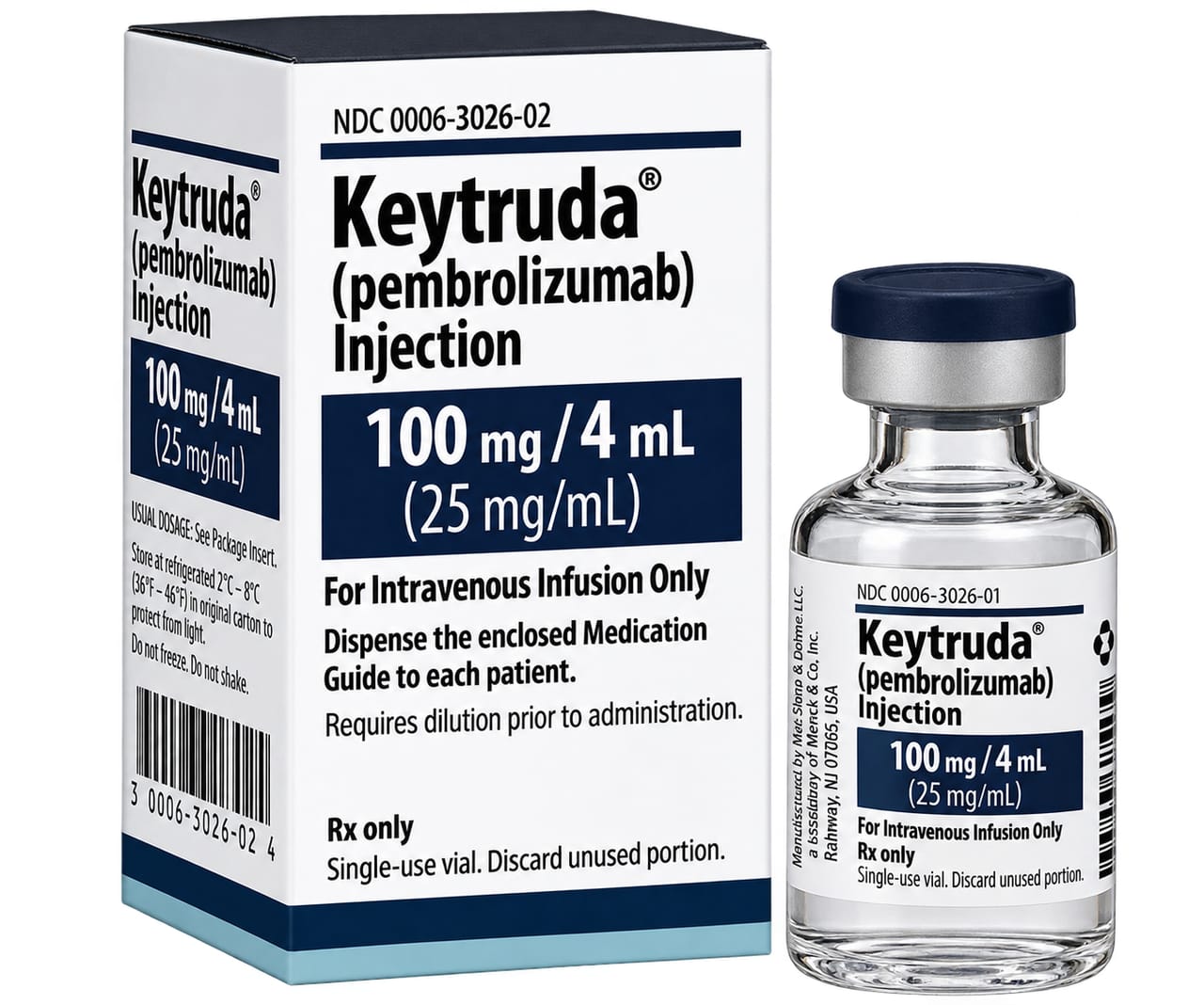
Keytruda Injection (pembrolizumab) is an immune checkpoint inhibitor given as an intravenous infusion to treat many types of cancer. It works by helping the body's own immune system find and attack cancer cells, rather than attacking cancer cells directly like chemotherapy does. It is approved for more than 20 cancer types and can be used alone or combined with other cancer treatments. Keytruda carries important warnings related to immune-related side effects and requires regular monitoring during treatment.
What is Keytruda Injection
Keytruda is an immunotherapy medicine given as an intravenous (IV) infusion. It is used to treat many types of cancer by helping the body's own immune system find and attack cancer cells, rather than attacking cancer cells directly like chemotherapy does. Its generic name is pembrolizumab, and it belongs to the drug class known as immune checkpoint inhibitors (PD-1 and PD-L1 inhibitors).
Keytruda Injection uses
- Melanoma (a type of skin cancer)
- Non-small cell lung cancer (NSCLC)
- Triple-negative breast cancer
- Urothelial (bladder and urinary tract) cancer
- Renal cell carcinoma (kidney cancer)
- Head and neck squamous cell cancer
- Cervical cancer
- Endometrial carcinoma (uterine cancer)
- Gastric (stomach) cancer
- Esophageal cancer
- Colorectal cancer that is MSI-H or dMMR
- Classical Hodgkin lymphoma
- Hepatocellular carcinoma (a type of liver cancer)
- Biliary tract cancer
- Malignant pleural mesothelioma
- Ovarian cancer
- Cutaneous squamous cell carcinoma
- Merkel cell carcinoma
- Primary mediastinal large B-cell lymphoma
- Tumor mutational burden-high (TMB-H) solid tumors
- Microsatellite instability-high (MSI-H) or mismatch repair-deficient (dMMR) solid tumors
Benefits of Keytruda Injection
- Helps the immune system recognize and destroy cancer cells that would otherwise hide from it
- Approved for more than 20 cancer types, giving many patients a treatment option
- Can be used alone or combined with chemotherapy or other cancer drugs depending on the cancer type
How Keytruda Injection works
Keytruda blocks a protein called PD-1 found on immune cells called T cells. Some cancer cells use a matching protein called PD-L1 to switch off T cells so they can't be attacked. By blocking PD-1, Keytruda stops cancer cells from doing this, so T cells can recognize and attack the cancer again.
Keytruda Injection dosage
Keytruda is given as an infusion into a vein (IV), usually taking about 30 minutes. In adults, infusions are usually given every 3 weeks or every 6 weeks, depending on the dose your doctor prescribes. In children, infusions are usually given every 3 weeks. Your healthcare provider will decide how many treatments you need and how often you receive them. You will need regular blood tests during treatment to check for side effects, so do not miss follow-up visits. If you miss an appointment, call your healthcare provider as soon as possible to reschedule.
| Age group | Dose |
|---|---|
| Under 2 years | Not established; specialist-directed |
| 2–17 years | 2 mg/kg IV every 3 weeks (maximum 200 mg), for applicable pediatric indications |
| 18–64 years | 200 mg IV every 3 weeks or 400 mg IV every 6 weeks |
| 65+ years | 200 mg IV every 3 weeks or 400 mg IV every 6 weeks |
Available forms and strengths
- Single-dose vial for intravenous infusion
- Injection, powder, lyophilized, for solution
- Injection, solution
Side effects of Keytruda Injection
Common
- Feeling tired or weak
- Pain in muscles, bones, or joints
- Rash or itching
- Diarrhea or constipation
- Fever
- Cough
- Decreased appetite
- Shortness of breath
- Nausea
- Low levels of thyroid hormone
- Stomach-area (abdominal) pain
Serious
- Lung problems such as cough, shortness of breath, or chest pain
- Intestinal problems such as diarrhea, blood or mucus in stools, or severe stomach pain
- Liver problems such as yellowing skin or eyes, dark urine, severe nausea or vomiting, or easy bruising
- Hormone gland problems such as persistent headaches, rapid heartbeat, extreme tiredness, weight changes, or feeling unusually hungry or thirsty
- Kidney problems such as reduced urination, blood in urine, or swelling of the ankles
- Skin problems such as rash, blistering, peeling, or painful mouth/nose/throat sores
- Severe infusion-related reactions such as chills, dizziness, itching, flushing, fever, or trouble breathing
- Rejection of a transplanted organ or tissue
- Complications of a donor stem cell transplant, including graft-versus-host disease
- Severe allergic reactions such as hives, trouble breathing, or facial/throat swelling
Warnings and precautions
- Keytruda can cause your immune system to attack normal organs and tissues anywhere in the body. These problems can become severe or life-threatening and can happen at any time during or after treatment.
- Keytruda is not recommended for multiple myeloma when combined with certain drugs (thalidomide, lenalidomide, or pomalidomide) plus dexamethasone, outside of clinical trials, because this combination was linked to increased deaths in studies.
- People who have had an organ or stem cell transplant may be at risk of transplant rejection or serious complications like graft-versus-host disease, which can be serious and even fatal.
- Before starting Keytruda, tell your doctor if you have an autoimmune disorder, have had an organ or stem cell transplant, have had radiation to your chest, or have a nervous system condition such as myasthenia gravis or Guillain-Barré syndrome.
- Keytruda can harm an unborn baby. Your doctor will test you for pregnancy before starting treatment, and you should use effective birth control during treatment and for at least 4 months after your last dose.
- It isn't known if Keytruda passes into breast milk. You should not breastfeed during treatment and for at least 4 months after your last dose.
- Keytruda should be used carefully in people with kidney disease, since there's a higher chance of side effects. Your kidney function will be checked regularly during treatment.
- Keytruda should be used carefully in people with liver disease, since there's a higher chance of side effects. Your liver function will be checked regularly during treatment.
- It isn't known how alcohol interacts with Keytruda, so check with your doctor before drinking.
- This medicine may sometimes cause dizziness. Avoid driving or operating machinery if you feel dizzy during treatment.
When to see a doctor
- Call or see your healthcare provider right away if you get new or worsening lung symptoms like cough, shortness of breath, or chest pain.
- Get medical help right away for intestinal symptoms like frequent or loose bowel movements, black or bloody stools, or severe stomach pain.
- Get medical help right away if you notice yellowing of skin or eyes, dark urine, severe nausea or vomiting, easy bruising, or pain on the right side of your abdomen, which can mean liver problems.
- Seek care for signs of hormone gland problems such as ongoing headaches, rapid heartbeat, extreme tiredness, unusual hunger or thirst, or mood changes.
- Seek care if you notice signs of kidney problems, such as less urine than usual, swollen ankles, blood in urine, or loss of appetite.
- Seek care for skin problems like rash, itching, painful mouth or genital sores, fever, blistering or peeling skin, or swollen lymph nodes.
- Get emergency help right away for signs of a severe allergic reaction, such as hives, difficulty breathing, or swelling of the face or throat, or a severe skin reaction with fever, sore throat, burning eyes, or skin blistering and peeling.
- Watch for signs of an infusion reaction during or soon after your infusion, such as chills, dizziness, itching, flushing, fever, or trouble breathing, as these can sometimes be severe.
Alternatives
- Nivolumab
- Cemiplimab
- Dostarlimab
Watch the video
FAQs
What is Keytruda Injection used for?
Keytruda is used to treat many types of cancer, including melanoma, non-small cell lung cancer, triple-negative breast cancer, bladder cancer, kidney cancer, head and neck cancer, cervical cancer, and more than 20 cancer types in total.
How does Keytruda work?
Keytruda blocks a protein called PD-1 on immune T cells. Some cancer cells use a matching protein called PD-L1 to switch off T cells. By blocking PD-1, Keytruda stops this, allowing T cells to recognize and attack cancer cells again.
How is Keytruda given and how often?
Keytruda is given as an IV infusion, usually taking about 30 minutes. In adults, it's typically given every 3 weeks or every 6 weeks depending on the dose, while in children it's usually given every 3 weeks.
What are the serious side effects of Keytruda?
Serious side effects include lung problems, intestinal problems, liver problems, hormone gland problems, kidney problems, skin problems, severe infusion reactions, organ transplant rejection, and severe allergic reactions.
Can Keytruda be used during pregnancy or breastfeeding?
Keytruda can harm an unborn baby, so effective birth control should be used during treatment and for at least 4 months after the last dose. Breastfeeding should also be avoided during treatment and for at least 4 months after the last dose.
General information, not medical advice
Your prescriber and the leaflet in your pack know your situation. This page does not.
- Follow your prescriber and the leaflet
- Don't start, stop, or change a dose on your own
- Doses and warnings differ by country and product
Sources
- https://www.drugs.com/keytruda.html
- https://www.goodrx.com/keytruda/pembrolizumab-used-for-many-types-of-cancer
- https://www.practo.com/medicine-info/keytruda-injection-55807
- Keytruda Medication Guide
- Keytruda Prescribing Information
Video
Related medicines

Injectafer Injection: Uses, Dosage, Side Effects, Precautions and Alternates
Iron products
Injectafer (ferric carboxymaltose) treats iron deficiency anemia and heart failure-related iron deficiency via IV. Learn uses, dosage, side effects, and

Gliclazide Tablet: Uses, Dosage, Side Effects, Precautions and Alternates
Sulfonylurea (hypoglycemic/antidiabetic agent)
Gliclazide Tablet is a sulfonylurea for type 2 diabetes that boosts insulin release. Learn about dosage, side effects, warnings, and precautions.