
Safety
General information, not medical advice
Your prescriber and the leaflet in your pack know your situation. This page does not.
- Follow your prescriber and the leaflet
- Don't start, stop, or change a dose on your own
- Doses and warnings differ by country and product
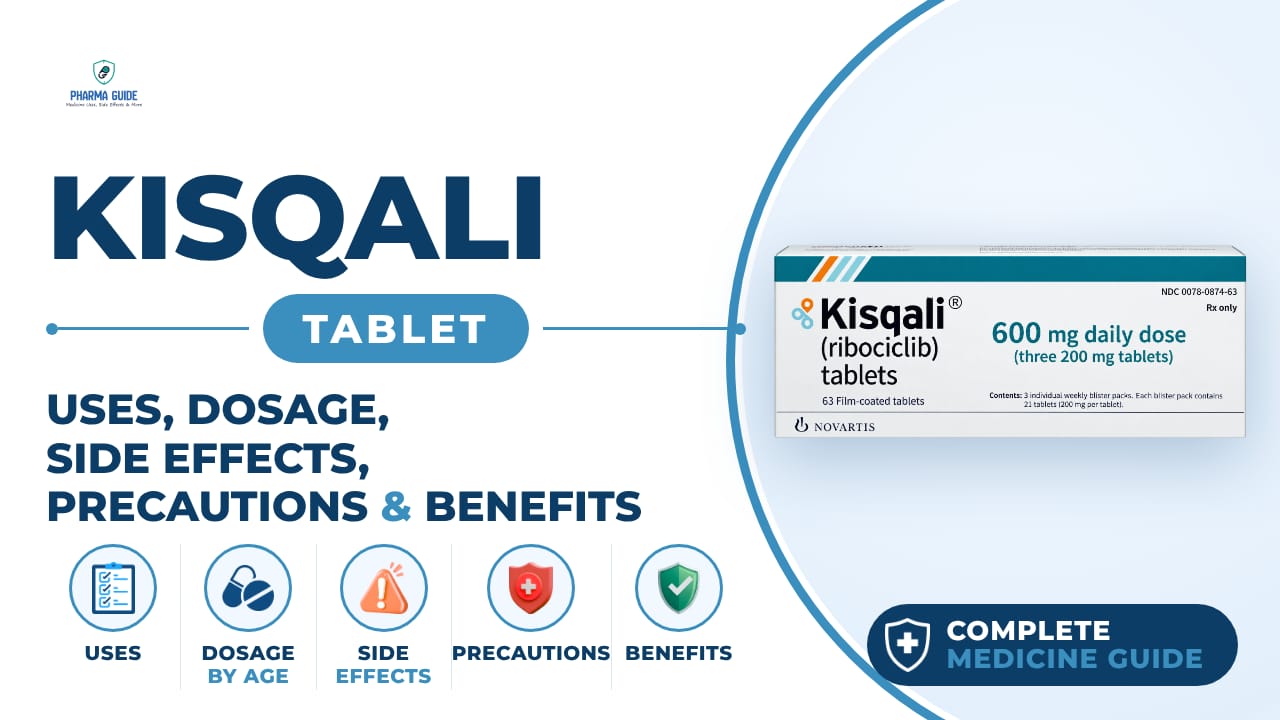
Kisqali Tablet: Uses, Dosage, Side Effects, Precautions and Alternates
| Generic name | ribociclib |
|---|---|
| Drug class | kinase inhibitor (CDK4/6 inhibitor) |
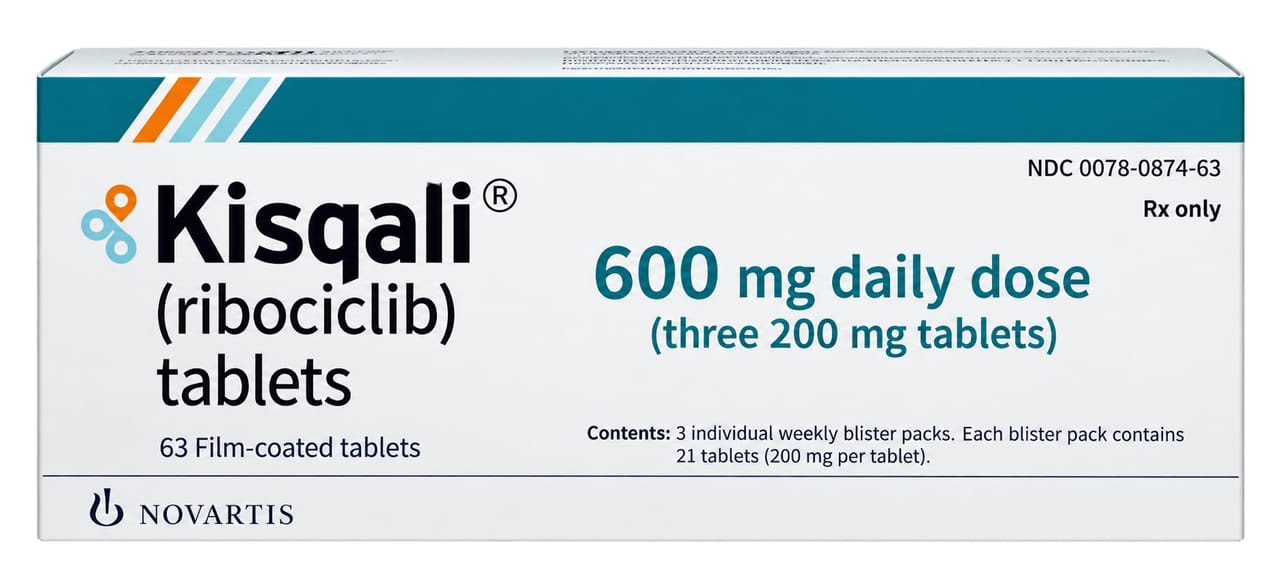
| Forms | Film-coated tablet (200 mg) |
Quick overview
Kisqali Tablet contains ribociclib, a kinase inhibitor (CDK4/6 inhibitor) used together with hormone therapy to treat certain types of hormone receptor (HR)-positive, HER2-negative breast cancer in adults. It is combined with an aromatase inhibitor or with fulvestrant depending on the stage and treatment history of the cancer. Kisqali works by blocking proteins that cancer cells need to grow and divide. It is available as a 200 mg film-coated tablet taken on a specific schedule within a 28-day cycle.
What is Kisqali Tablet
Kisqali is a prescription medicine that contains ribociclib, a kinase inhibitor. It is used together with hormone therapy to treat certain types of breast cancer in adults.
Kisqali Tablet uses
- Combined with an aromatase inhibitor to treat adults with hormone receptor (HR)-positive, HER2-negative stage II and III early breast cancer that has a high risk of coming back
- Combined with an aromatase inhibitor as the first hormone-based treatment for HR-positive, HER2-negative advanced or metastatic breast cancer
- Combined with fulvestrant as the first hormone-based treatment, or after the cancer has worsened on previous hormone therapy, for HR-positive, HER2-negative advanced or metastatic breast cancer
Benefits of Kisqali Tablet
- In early breast cancer, more patients taking Kisqali with an aromatase inhibitor were alive without cancer recurrence after three years compared with an aromatase inhibitor alone
- In advanced or metastatic breast cancer, patients taking Kisqali plus hormone therapy lived longer without their cancer getting worse compared with hormone therapy alone
How Kisqali Tablet works
Kisqali blocks two proteins called CDK4 and CDK6 that cancer cells need to grow and divide. By blocking these proteins, it stops a chain of signals that normally let the cell move through its growth cycle, which slows down or reduces the growth of breast cancer cells.
Kisqali Tablet dosage
Take Kisqali with or without food. Take your dose at about the same time every day, preferably in the morning. Swallow tablets whole; do not chew, crush, or split them before swallowing. Do not take a tablet that is broken, cracked, or otherwise does not look intact. If you vomit after taking a dose or miss a dose, do not take an extra dose that day; take your next dose at the usual time. Kisqali is taken for 21 days in a row, followed by 7 days without the medicine, as part of a 28-day cycle, in combination with an aromatase inhibitor or fulvestrant.
| Age group | Dose |
|---|---|
| Under 18 years | Not recommended |
| 18–64 years | 400–600 mg, once/day |
| 65+ years | 400–600 mg, once/day |
Available forms and strengths
- Film-coated tablet (200 mg)
Side effects of Kisqali Tablet
Common
- Low white blood cell counts
- Low red blood cell counts
- Increased liver function tests
- Infections
- Increased kidney function tests
- Decreased platelet counts
- Nausea
- Headache
- Tiredness
- Diarrhea
- Vomiting
- Constipation
- Hair loss
- Cough
- Rash
- Back pain
- Low blood sugar level
Serious
- Severe or life-threatening lung inflammation (interstitial lung disease/pneumonitis)
- Severe skin reactions including Stevens-Johnson syndrome, toxic epidermal necrolysis, and DRESS
- Heart rhythm problems (QT interval prolongation)
- Serious liver problems
- Low white blood cell counts (neutropenia) leading to serious infections
- Fertility problems in males
Warnings and precautions
- Kisqali can cause severe or life-threatening lung inflammation. Report any new or worsening breathing symptoms to your healthcare provider right away.
- Serious skin reactions can occur and require immediate medical attention.
- Kisqali can cause a heart rhythm problem called QT prolongation, which can be serious and may require heart monitoring before and during treatment.
- Serious liver problems can occur, and liver function should be checked before and during treatment.
- Low white blood cell counts are common and can lead to serious infections.
- This medicine should not be used together with tamoxifen because it may increase the risk of heart rhythm problems.
- Strong inhibitors or inducers of a liver enzyme called CYP3A, and other medicines that affect heart rhythm, should be avoided while taking this medicine.
- Kisqali can harm an unborn baby. Pregnancy should be ruled out before starting treatment, and effective birth control should be used during treatment and for a period after the last dose.
- It is not known if Kisqali passes into breast milk. Breastfeeding should be avoided during treatment and for a period after the last dose.
- No dose change is needed for mild to moderate kidney problems, but a lower starting dose is recommended for people with severe kidney impairment.
- No dose change is needed for mild liver impairment. A lower starting dose is recommended for people with moderate or severe liver impairment when used for advanced or metastatic breast cancer.
- Alcohol has not been identified as interacting with this medicine, but you should check with your doctor about whether drinking alcohol is safe for you during treatment.
Storage
- Store at room temperature between 68°F to 77°F (20°C to 25°C)
- Store KISQALI in the original blister pack
- Keep KISQALI and all medicines out of the reach of children
When to see a doctor
- Get medical help right away for trouble breathing, shortness of breath, cough, or chest pain.
- Seek medical help right away for a severe or worsening rash, reddened skin, flu-like symptoms, skin pain or burning, blistering of the lips, eyes or mouth, or skin peeling, with or without fever.
- Contact your healthcare provider right away if you notice a change in your heartbeat (fast or irregular), or if you feel dizzy or faint.
- Seek medical attention right away for signs of liver problems such as yellowing of the skin or eyes, dark urine, extreme tiredness, loss of appetite, pain in the upper right abdomen, or easy bruising or bleeding.
- Contact your healthcare provider right away if you have signs of infection such as fever and chills, which may indicate low white blood cell counts.
Alternatives
- Afinitor
- Ibrance
- Verzenio
Watch the video
FAQs
What is Kisqali Tablet used for?
Kisqali is used with an aromatase inhibitor or fulvestrant to treat adults with hormone receptor (HR)-positive, HER2-negative breast cancer, including certain early-stage cancers at high risk of recurrence and advanced or metastatic breast cancer.
How does Kisqali Tablet work?
Kisqali blocks two proteins called CDK4 and CDK6 that cancer cells need to grow and divide, which stops signals that let the cell move through its growth cycle and slows down or reduces the growth of breast cancer cells.
How is Kisqali Tablet taken?
Kisqali is taken with or without food at about the same time each day, preferably in the morning. Tablets should be swallowed whole without chewing, crushing, or splitting, and are taken for 21 days in a row followed by 7 days off, as part of a 28-day cycle.
What are the serious side effects of Kisqali Tablet?
Serious side effects include severe or life-threatening lung inflammation, severe skin reactions such as Stevens-Johnson syndrome and DRESS, heart rhythm problems (QT prolongation), serious liver problems, low white blood cell counts leading to serious infections, and fertility problems in males.
Can Kisqali Tablet be taken with tamoxifen?
No, Kisqali should not be used together with tamoxifen because it may increase the risk of heart rhythm problems.
General information, not medical advice
Your prescriber and the leaflet in your pack know your situation. This page does not.
- Follow your prescriber and the leaflet
- Don't start, stop, or change a dose on your own
- Doses and warnings differ by country and product
Sources
Video
Related medicines

Injectafer Injection: Uses, Dosage, Side Effects, Precautions and Alternates
Iron products
Injectafer (ferric carboxymaltose) treats iron deficiency anemia and heart failure-related iron deficiency via IV. Learn uses, dosage, side effects, and

Gliclazide Tablet: Uses, Dosage, Side Effects, Precautions and Alternates
Sulfonylurea (hypoglycemic/antidiabetic agent)
Gliclazide Tablet is a sulfonylurea for type 2 diabetes that boosts insulin release. Learn about dosage, side effects, warnings, and precautions.